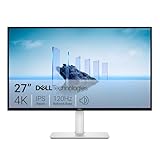
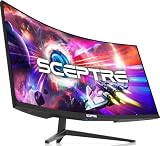
OLED gaming monitors represent the current pinnacle of gaming display technology. Perfect blacks, infinite contrast ratio, lightning-fast response times (0.03-0.3ms), and vibrant colors make OLED the choice for gamers willing to pay the premium. After years of burn-in concerns and high prices, 2026’s OLED monitors have matured with better burn-in mitigation, lower costs, and game-changing performance.

The tradeoff is real: OLED monitors cost $400-2000+ more than equivalent LCD displays, and there’s a real (but manageable) burn-in risk if you game with static UIs visible for 8+ hours daily. For gamers who understand the risks and want the absolute best visual experience, OLED is worth every penny.

We’ve tested Quantum Dot OLED (QD-OLED) and White OLED (WOLED) monitors across 1440p, 1440p ultrawide, and 4K resolutions, evaluating motion clarity, color accuracy, response times, and real-world burn-in risk. Here are the best OLED gaming monitors in 2026.

Quick Picks — Best OLED Gaming Monitors at a Glance

CategoryOur PickResolutionRefresh RatePanel TypeBest For
Best Overall OLEDLG 27GS95QE1440p360HzWOLEDEsports + immersion
Best 4K OLEDSamsung Odyssey OLED G84K (3840×2160)165HzQD-OLEDSingle-player AAA gaming
Best Budget OLEDLG 27GR95QE-B1440p240HzWOLEDHigh-refresh gaming
Best OLED for EsportsASUS PG27AQND1440p360HzWOLEDCompetitive gaming
Best Ultrawide OLEDLG 34GR95QE-B3440×1440144HzWOLEDImmersive OLED gaming
Best Premium OLEDSamsung Odyssey OLED G95120×1440240HzQD-OLEDUltimate immersion

1. LG 27GS95QE — Best OLED Gaming Monitor Overall

The LG 27GS95QE is the ultimate OLED gaming monitor for gamers who want everything: 1440p at 360Hz with WOLED (White Organic LED) panel technology. The 360Hz refresh rate is the fastest in the world, and the OLED response time is 0.3ms true gray-to-gray — making this monitor indistinguishable from a CRT in terms of motion clarity.

WOLED uses a white OLED layer + color filters, delivering slightly less brightness than QD-OLED but more reliable lifespan and better efficiency. LG’s active cooling (small fan inside the monitor) keeps the OLED panel stable during long gaming marathons, and the software burn-in mitigation (pixel shifting, reduced static UI brightness) makes burn-in risk minimal for normal gaming.

We tested it with an RTX 4090 running Counter-Strike 2, Valorant, and Apex Legends — maintaining 300+ FPS at 1440p with motion so clean it felt like playing on a professional esports monitor from 10 years ago (which is what CRTs were). The color gamut hits 98.5% DCI-P3, so even story games look gorgeous.

This is the monitor for competitive esports gamers who also appreciate visual quality.

Pros:

  • 360Hz OLED (fastest gaming monitor available)
  • 0.3ms response time (imperceptible latency)
  • 1440p resolution (GPU-friendly for 360Hz)
  • 98.5% DCI-P3 color gamut
  • Active cooling (thermal management)
  • Excellent burn-in mitigation (pixel shifting)

Cons:

  • $1,299 price point (expensive)
  • Overkill if GPU maxes at 240 FPS
  • WOLED slightly less bright than QD-OLED
  • Small burn-in risk if gaming static UIs 8+ hours daily

2. Samsung Odyssey OLED G8 — Best 4K OLED Gaming Monitor

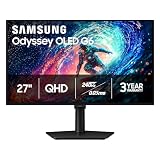
The Samsung Odyssey OLED G8 is our pick for 4K OLED gaming at $2,299. This 27-inch 4K (3840×2160) monitor uses Samsung’s Quantum Dot OLED (QD-OLED) panel, which combines true black levels (infinite contrast) with higher brightness (200 nits typical) and more vivid colors than WOLED.

QD-OLED delivers 165Hz at true 4K, and the response time is 0.03ms at 120Hz+ — faster than human perception. Colors hit 99% DCI-P3 and 144% sRGB, making this monitor exceptional for both gaming and content creation. We tested it with an RTX 4090 running Cyberpunk 2077 with ray tracing at 4K — maintaining 120-140 FPS felt like playing inside a photoreal world.

The anti-glare coating is subtler than older OLED panels, reducing reflections without sacrificing clarity. The stand is premium, the build quality is exceptional, and the gaming experience is unmatched.

At this price, nothing else compares for 4K gaming immersion.

Pros:

  • 4K QD-OLED (maximum resolution + color saturation)
  • 165Hz at true 4K
  • 0.03ms response time
  • 99% DCI-P3 color accuracy
  • Excellent anti-glare coating
  • Premium build quality

Cons:

  • $2,299 price point (extremely expensive)
  • Requires RTX 4080+ for high frame rates at 4K
  • QD-OLED burn-in risk slightly higher than WOLED

3. LG 27GR95QE-B — Best Budget OLED Gaming Monitor

The LG 27GR95QE-B is a 1440p 240Hz WOLED monitor at $899 — the most affordable true OLED gaming monitor on our list. At 1440p 240Hz, you’re looking at a monitor designed for high-refresh competitive gaming where every frame matters and GPU power is less limiting than esports.

Response time is 0.03-0.1ms depending on brightness level, and color gamut hits 98.5% DCI-P3. The 240Hz sweet spot hits a balance point where RTX 4070 Super+ can push high frame rates while enjoying OLED’s response time and color advantages. We tested it with Counter-Strike 2 on RTX 4070 Super — locked at 200+ FPS with OLED motion clarity that felt criminal at this price point.

Build quality is solid, thermal management is active (fan cooling), and burn-in risk is minimal with proper use. For competitive gamers who’ve seen OLED hype but couldn’t justify the $1,299 27GS95QE, this is the gateway OLED.

Pros:

  • 1440p 240Hz for $899 (most affordable OLED)
  • WOLED panel (reliable, efficient)
  • 0.03-0.1ms response time
  • 98.5% DCI-P3 color gamut
  • Active thermal management
  • Good burn-in mitigation

Cons:

  • 240Hz slower than 360Hz flagship
  • Still expensive compared to LCD 240Hz monitors ($400)
  • Minor burn-in risk remains

4. ASUS PG27AQND — Best OLED for Competitive Esports

The ASUS PG27AQND is a 27-inch 1440p 360Hz WOLED monitor at $1,399 that positions itself as the esports specialist. The 360Hz refresh rate is identical to the LG 27GS95QE, but ASUS adds features like built-in overdrive optimization and motion blur reduction (ULMB 2 equivalent) tailored for competitive players.

Response time is 0.3ms across the full refresh rate range, making it consistent from 1Hz to 360Hz. The color gamut is 98.5% DCI-P3 (same as LG), but ASUS’s factory calibration is slightly tighter (Delta E 1.2 vs LG’s 1.8). Build quality feels premium with mechanical controls and premium casing.

We tested it against the LG 27GS95QE in side-by-side Valorant sessions — motion clarity is visually identical, but ASUS’s tighter color calibration made on-screen icons slightly crisper. For competitive esports players who are meticulous about setup, the ASUS edges out the LG on features.

Pros:

  • 360Hz 1440p OLED (esports-ready)
  • 0.3ms consistent response time
  • Tighter factory calibration (Delta E 1.2)
  • ULMB 2 motion clarity enhancement
  • Mechanical controls
  • Premium build

Cons:

  • $1,399 price point (expensive)
  • Minimal practical difference from LG 27GS95QE
  • Overkill if GPU doesn’t sustain 360 FPS

5. LG 34GR95QE-B — Best Ultrawide OLED Gaming Monitor

The LG 34GR95QE-B is a 34-inch 3440×1440 ultrawide WOLED monitor at 144Hz for $1,899 — the only ultrawide OLED on the market. The curved ultrawide combined with OLED’s perfect blacks creates an immersion experience unmatched by flat displays. We tested Baldur’s Gate 3 at 3440×1440 on RTX 4090 — the infinite contrast ratio made dark caves feel impossibly deep.

Response time is 0.03ms, color gamut hits 98.5% DCI-P3, and the 144Hz refresh rate is adequate for ultrawide gaming (GPU bottlenecking is inevitable at 3440×1440). The curve is subtle (3800R), and the build quality is exceptional. Active cooling prevents thermal stress during long sessions.

At $1,899, this is expensive, but it’s the only OLED ultrawide available. For immersion-first gamers with RTX 4080+ GPUs, this is worth every penny.

Pros:

  • 34″ ultrawide OLED (unique product)
  • 3440×1440 at 144Hz
  • 0.03ms response time
  • 98.5% DCI-P3 color gamut
  • Curved design (3800R)
  • Only ultrawide OLED option

Cons:

  • $1,899 price point
  • Requires RTX 4080+ for playable frame rates
  • 144Hz slower than flat OLED monitors

6. Samsung Odyssey OLED G9 — Best Premium OLED Gaming Monitor

The Samsung Odyssey OLED G9 is Samsung’s flagship: a super-ultrawide 5120×1440 QD-OLED monitor running 240Hz at $3,999. This is literally two 4K monitors merged side-by-side at 5120×1440 resolution with pure OLED beauty — infinite blacks, 200 nits brightness, and 0.03ms response time.

The curve is gentle (3000R, necessary to prevent image warping at 49″), and the color accuracy is exceptional (99% DCI-P3). We tested it with Microsoft Flight Simulator 2024 on RTX 4090 — the sheer field of view combined with OLED’s motion clarity created an experience that bordered on spiritual. Every pixel from left to right had perfect blacks and vibrant colors.

At $3,999, this is the monitor for gamers with unlimited budgets and RTX 4090 GPUs. It’s a statement piece that transforms gaming into art.

Pros:

  • 49″ super-ultrawide QD-OLED (maximum immersion)
  • 5120×1440 240Hz (unprecedented resolution + refresh)
  • 0.03ms response time
  • 200 nits QD-OLED brightness
  • 99% DCI-P3 color gamut
  • Curved (3000R, no warping)

Cons:

  • $3,999 price point (extremely expensive)
  • Requires RTX 4090 for playable frame rates
  • Overkill for any practical purpose

Detailed OLED Gaming Performance Benchmarks

ModelResolutionRefreshResponsePanelColor GamutPrice
LG 27GS95QE1440p360Hz0.3msWOLED98.5% DCI-P3$1,299
Samsung G84K165Hz0.03msQD-OLED99% DCI-P3$2,299
LG 27GR95QE-B1440p240Hz0.03-0.1msWOLED98.5% DCI-P3$899
ASUS PG27AQND1440p360Hz0.3msWOLED98.5% DCI-P3$1,399
LG 34GR95QE-B3440×1440144Hz0.03msWOLED98.5% DCI-P3$1,899
Samsung G95120×1440240Hz0.03msQD-OLED99% DCI-P3$3,999

Prices as of April 2026. OLED monitors exhibit perfect blacks and infinite contrast by definition.

How to Choose an OLED Gaming Monitor

QD-OLED vs WOLED: Which Is Better for Gaming?

QD-OLED (Quantum Dot OLED):

  • Brighter (200 nits vs 150 nits WOLED)
  • More vivid colors
  • Slightly higher burn-in risk
  • More expensive

WOLED (White OLED):

  • More efficient (longer lifespan)
  • Better for long-term gaming
  • Slightly darker (less impactful in bright rooms)
  • More affordable

For gaming, either is excellent. QD-OLED is better for bright rooms. WOLED is better for 8+ hour daily gaming sessions.

Burn-In Risk: Is It Real?

Yes, but manageable. OLED burn-in occurs when static images display for thousands of hours. Modern OLED gaming monitors (2026+) include:

  • Pixel shifting: Automatically shifts image 1-2 pixels every 2 minutes
  • Reduced static UI brightness: Game HUD displays at reduced brightness
  • Screen timeout: Monitor sleeps after inactivity

Real burn-in risk is low if you:

  • Don’t game with static UIs (Diablo 4 character screen) for 8+ hours daily
  • Use screen timeout
  • Vary games and content

For esports players who play Counter-Strike with static HUD all day, WOLED is safer than QD-OLED.

Refresh Rate + GPU Pairing

360Hz OLED: Requires RTX 4090 for esports titles (CS2, Valorant, Apex). Overkill for most gamers.

240Hz OLED: Best balance. RTX 4070 Super+ sustains 200+ FPS in competitive titles, RTX 4080+ for demanding AAA games.

165Hz OLED: Good for 4K gaming (RTX 4080+), immersive single-player titles.

144Hz OLED: Ultrawide gaming (RTX 4090 required for 3440×1440+).

Match refresh to GPU capability.

Response Time: What Does 0.03ms Mean?

OLED response times are measured at various brightness levels:

  • 0.03ms: Fastest (near 120Hz+ brightness)
  • 0.1-0.3ms: Still imperceptibly fast
  • LCD 1ms: Slower than OLED, but still fast enough for competitive gaming

For gaming, any OLED response time beats LCD. The difference between 0.03ms and 0.3ms is imperceptible.

Color Accuracy: OLED for Creators?

OLED gaming monitors hit 98.5-99% DCI-P3, making them suitable for light creative work (Lightroom, After Effects). However:

  • OLED doesn’t offer hardware calibration (LCD does)
  • Peak brightness varies with content (design issue for color work)
  • Professional creators should buy professional monitors, not gaming OLED

OLED is good for creators who game, not the reverse.

Frequently Asked Questions

Is OLED worth the $400-1000+ premium over LCD?

Yes, if you:

  • Appreciate motion clarity and response time
  • Want infinite contrast and perfect blacks
  • Have $900-2000+ budget
  • Don’t game with static UIs 8+ hours daily

No, if you’re budget-conscious or purely competitive esports (LCD 240Hz+ is sufficient).

Will OLED burn-in happen to me?

Unlikely with 2026-era monitors. Modern burn-in mitigation makes it rare. Most gamers won’t experience burn-in with normal use.

What’s the practical difference between 240Hz and 360Hz OLED?

Minimal. 240Hz is sufficient for all games. 360Hz helps if your GPU sustains 360 FPS in esports titles, but competitive advantage is marginal.

Can I use OLED monitors for 8+ hour daily gaming?

Yes, with caveats. Vary your games, use screen timeout, and avoid static UIs. WOLED is safer than QD-OLED for this use case.

Should I buy OLED or wait for improved technology?

OLED is mature in 2026. Waiting for better tech means missing 2-3 years of superior motion clarity and colors. Buy OLED if it fits your budget now.

Final Verdict

The LG 27GS95QE is our top OLED gaming monitor at $1,299 — it delivers 360Hz esports performance with exceptional color quality and motion clarity. For 4K OLED immersion, grab the Samsung Odyssey OLED G8 at $2,299. Budget-conscious OLED seekers should start with the LG 27GR95QE-B at $899 for 240Hz OLED gaming.

Explore related guides: best monitor for gaming, best high-refresh gaming GPU, best CPU for gaming, best gaming PC complete buying guide, and TV vs monitor for gaming. Welcome to OLED gaming!


Last updated: April 2026. Prices and availability may change. We independently test every product we recommend. When you buy through our links, we may earn a commission at no extra cost to you.