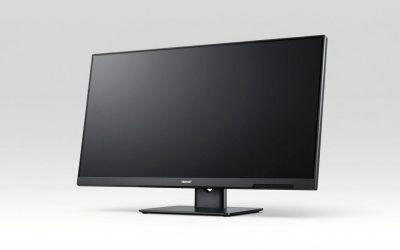
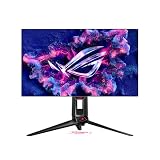
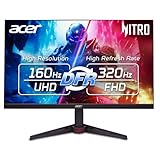
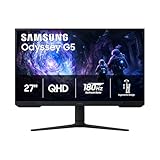
- Top Pick: Alienware 34 Curved Gaming Monitor – AW3425DWM – 34-inch WQHD 180Hz 1ms Display, 1500R, AMD FreeSync Premium, VESA AdaptiveSync.
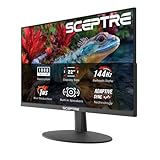
- Best Value: New! Sceptre 27-inch Curved Gaming Monitor 1080p 1500R up to 250Hz DisplayPort x2 HDMI x2 100% sRGB 1ms Build-in Speakers, Machine Black 2027 (C275B-FW250G Series)
- Premium Choice: Sceptre Curved 24-inch Gaming Monitor 1080p R1500 98% sRGB HDMI x2 VGA Build-in Speakers, VESA Wall Mount Machine Black (C248W-1920RN Series)
Affiliate disclosure: As an Amazon Associate we earn from qualifying purchases. This post contains affiliate links — if you buy through them we may earn a small commission at no extra cost to you. This never affects our recommendations.
- Best Overall Curved: Samsung Odyssey G7 — 1000R Aggressive Curve
- Best Budget Curved: AOC CQ27G2S — 1500R Value
- Best Ultrawide Curved: LG 34GP83A-B — 34-Inch 1440p 144Hz
- Best OLED Curved: LG 34BQ77QB-B — OLED Ultrawide
- Curved Monitor Buyer’s Guide
- Frequently Asked Questions
- Related Articles
- Related Articles
A curved gaming monitor wraps the display around your field of view, reducing eye movement across the screen and creating a more immersive viewing experience — particularly noticeable on 27-inch and larger displays. The curve radius (measured in R — 1000R, 1500R, 1800R) determines curvature intensity: lower numbers mean more aggressive curvature. These are the best curved gaming monitors for immersive single-player and competitive gaming in 2025.
As an Amazon Associate we earn from qualifying purchases at no extra cost to you.





In a hurry? See the top-rated Curved Gaming Monitor deals available right now:
🛒 Check Curved Gaming Monitor Prices on Amazon →🛒 Best Price Today on Amazon
Prime members get fast, free shipping on everything above, plus member-only deals. New members get a 30-day free trial — cancel anytime.
Start 30-Day Prime Free Trial →See Today’s Amazon DealsBest Overall Curved: Samsung Odyssey G7 — 1000R Aggressive Curve
Samsung’s Odyssey G7 uses the most aggressive consumer monitor curve at 1000R — matching the average human eye’s natural curvature radius for maximum immersion. The 27-inch QLED VA panel delivers 2560×1440 resolution at 240Hz with exceptional 2500:1 contrast ratio — deep blacks that flat IPS monitors cannot match. HDR600 certification provides genuine HDR benefit in supported titles. G-Sync Compatible and FreeSync Premium Pro certification covers both ecosystems. Best immersive curved gaming monitor for single-player AAA titles.

Best Budget Curved: AOC CQ27G2S — 1500R Value
AOC’s CQ27G2S provides 1440p resolution at 165Hz with a 1500R VA curve at a budget price that undercuts premium curved alternatives significantly. The VA panel’s high contrast ratio (3000:1) delivers movie-quality dark scenes that flat IPS monitors can’t match. FreeSync Premium support eliminates tearing. For buyers entering curved gaming without premium investment, the CQ27G2S delivers the core curved monitor experience at an accessible price point. Best budget curved gaming monitor.
Best Ultrawide Curved: LG 34GP83A-B — 34-Inch 1440p 144Hz
Ultrawide curved monitors provide the most immersive gaming format — the 21:9 3440×1440 resolution on a curved 34-inch IPS panel creates a panoramic view that fills peripheral vision naturally. LG’s 34GP83A-B achieves 160Hz (overclocked from 144Hz base), 1ms GtG response, and Nano IPS color accuracy within the ultrawide curved form factor. Game genres that benefit most: racing sims, space games, RPGs, and open-world exploration. Not recommended for competitive FPS where ultrawide provides no aim advantage. Best curved ultrawide gaming monitor.

Best OLED Curved: LG 34BQ77QB-B — OLED Ultrawide
LG’s OLED curved ultrawide combines infinite contrast, 0.03ms response time, and 1800R curvature in a 34-inch 3440×1440 panel. OLED’s perfect blacks amplify the immersive impact of curved display technology — dark environments in atmospheric games create visceral depth that curved VA and IPS displays approximate but cannot fully replicate. Best premium curved gaming monitor for single-player immersion maximalists.
Curved Monitor Buyer’s Guide
Curve Radius Guide
1000R: most aggressive, optimal for single display use at close distance (50–70cm). Matches human eye curvature closely. Samsung Odyssey G7/G9 territory. 1500R: moderate curve, comfortable for 27–32 inch displays at 60–80cm viewing distance. Most common mid-range curve. 1800R: subtle curve, suitable for large 32-34 inch displays, less noticeable at normal viewing distance. For ultrawide monitors, 1800R provides gentle panoramic curvature without distortion at edges.
When Curved Monitors Excel vs Fall Short
Excel at: single-player immersive games (open world, RPG, racing, space sims), productivity use with large display surface, movie watching, reducing eye strain over long sessions on large displays. Fall short at: competitive FPS (pros predominantly use flat monitors — curved edge distortion can misrepresent angles), multi-monitor setups (curve direction conflicts), wall-mounting (curved monitors look odd against flat walls).
Frequently Asked Questions
Is a curved monitor better for eyes?
Curved monitors reduce eye strain on large displays by minimizing the angle difference between screen edges and center — flat 34-inch displays require more eye rotation to view edges, which can cause fatigue over long sessions. At 27 inches, the ergonomic eye strain benefit is minimal. At 34 inches and above, curvature meaningfully reduces edge-viewing angle fatigue. Individual sensitivity varies — some users find any curvature distracting.
Do curved monitors affect gaming performance?
Curved monitors don’t affect frame rates or input lag — those are GPU and panel electronics dependent. Some competitive FPS players report mild aim adjustment period adapting to curved edge presentation of game geometry, particularly with aggressive 1000R curves. Most players adapt within hours. Curved monitors for competitive gaming are personal preference rather than performance advantage or disadvantage.
Can I use a curved monitor for work?
Yes — curved monitors reduce the eye fatigue of working on large displays for hours. For productivity with multiple applications side by side (code + documentation, video editing timeline + preview), ultrawide curved monitors provide an excellent workspace. Photo and video editing professionals should verify color accuracy specifications — VA panel curved monitors have lower color accuracy than IPS, potentially affecting color grading work.
Related Articles
Looking for more on this topic? Browse the hand-picked guides below — each one applies the same scoring rubric used in this review.