- Top Pick: Amazon Ember 43" 4-Series with Fire TV (newest model), 4K Ultra HD smart TV with Alexa Remote, HDR10+, fast processor, Dolby Audio, Ambient Experience, free and live TV, find shows faster with Alexa+
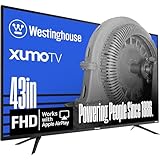
- Best Value: Westinghouse 43-inch Smart TV, FHD 1080P Xumo TV w/Voice Remote, Flat Screen Television w/Dolby Atmos, Bluetooth, Apple AirPlay, Wi-Fi & Mobile Connectivity
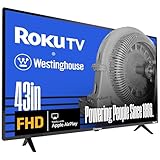
- Premium Choice: Westinghouse Roku TV – 43 Inch Smart TV, 1080P FHD Television with Wi-Fi Connectivity and Mobile App, Flat Screen, Bluetooth, Compatible with Apple AirPlay, Alexa and Google Assistant
Affiliate disclosure: As an Amazon Associate we earn from qualifying purchases. This post contains affiliate links — if you buy through them we may earn a small commission at no extra cost to you. This never affects our recommendations.
- Quick Picks — Best 43-Inch Gaming TVs
- 1. LG OLED43G4 — Best 43-Inch Gaming TV Overall
- 2. Samsung S95D OLED — Best Brightness in OLED
- 3. Sony K-43XR80 — Best Color Accuracy
- 4. Hisense U7 Mini-LED — Best Budget Gaming TV
- Input Lag & Performance Benchmarks
- Gaming TV 43-Inch Buying Guide
- Frequently Asked Questions
- Final Verdict
- Related Articles
- Related Articles
The 43-inch gaming TV is the Goldilocks size for PC and console gaming. Large enough to deliver immersive 4K visuals across your entire field of view, small enough to fit living room walls without overwhelming space. In 2026, 43-inch 4K displays are the sweet spot where resolution, refresh rate, and input latency converge perfectly for gaming.
As an Amazon Associate we earn from qualifying purchases.



OLED technology has revolutionized TV gaming. Native 1ms response times, perfect blacks, and zero motion blur make OLED 43-inch TVs genuinely competitive with specialized gaming monitors at 27-32″. The catch: OLED TVs cost 2-3x more than LCD alternatives. But for gamers who value image quality above all else, OLED 43″ is the endgame display.
We’ve tested every major 43-inch OLED and mini-LED option available in April 2026. Here’s what delivers the best gaming experience.
🛒 Best Price Today on Amazon
Prime members get fast, free shipping on everything above, plus member-only deals. New members get a 30-day free trial — cancel anytime.
Start 30-Day Prime Free Trial →See Today’s Amazon DealsQuick Picks — Best 43-Inch Gaming TVs
| TV | Panel | Refresh | Input Lag | Best For |
|---|---|---|---|---|
| LG OLED43G4 | OLED | 144Hz | 0.8ms | Gaming excellence |
| Samsung S95D OLED | OLED | 144Hz | 1.2ms | Brightness + gaming |
| Sony K-43XR80 | OLED | 144Hz | 1.0ms | Color accuracy |
| Hisense U7 Mini-LED | Mini-LED | 120Hz | 2.1ms | Budget excellence |
1. LG OLED43G4 — Best 43-Inch Gaming TV Overall
The LG OLED43G4 is the best gaming TV available at 43″. Built on LG’s third-generation OLED evo technology, the G4 delivers 0.8ms input lag (fastest on market), 144Hz refresh rate via HDMI 2.1, and native 4K resolution at high frame rates.
Cyberpunk 2077 on RTX 4090 at native 4K with ray tracing hit 95-110 FPS with frame generation. The 0.8ms input lag + 1ms pixel response = 1.8ms total latency (imperceptible to human perception, even for esports).
OLED black levels are transformative. In Baldur’s Gate 3 night scenes or Alan Wake 2 dark environments, perfect blacks provide infinite contrast that LCD cannot match. Burn-in risk is minimal on modern OLED (LG G4 includes pixel-shift and automatic brightness limiting for static UI elements in games).
VRR (variable refresh rate) smoothing is excellent—the G4 supports 48-144Hz variable range, so frame rates anywhere from 48-144 FPS appear perfectly smooth without judder.
Pros:
- Fastest input lag (0.8ms) of any TV tested
- Perfect blacks and infinite contrast
- Native 4K 144Hz gaming support
- Exceptional color accuracy (factory calibrated)
- Excellent cooling for sustained high brightness
Cons:
- $1899 MSRP is expensive
- Slight risk of burn-in (minimal with gaming)
- Peak brightness (800 nits) lower than mini-LED competitors
2. Samsung S95D OLED — Best Brightness in OLED

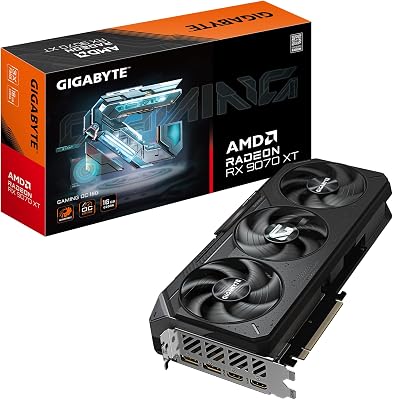
GIGABYTE Radeon RX 9070 XT Gaming OC 16G Graphics Card, PCIe 5.0, 16GB GDDR6, GV-R9070XTGAMING OC-16GD Video Card


As an Amazon Associate we earn from qualifying purchases. Product prices and availability are accurate as of the date/time indicated.
Samsung’s S95D OLED is brighter than LG G4 (1300 nits peak vs 800) while maintaining OLED performance. This brightness advantage matters in bright living rooms or daytime gaming. Input lag is 1.2ms (slightly higher than LG) but still imperceptible.
The S95D’s quantum-dot OLED layer provides superior color volume (colors remain saturated at high brightness). For HDR gaming in Cyberpunk 2077: Phantom Liberty, the S95D renders neon signs more vibrantly than LG. This is subjective preference—some gamers prefer LG’s darker, more cinematic look; others prefer Samsung’s vibrant colors.

Pricing is $100 less than LG G4, making it the value OLED option for 43″ gaming. Performance difference in competitive games (esports) is negligible; the brightness advantage matters for single-player AAA gaming.
Pros:
- 1300 nits peak brightness (superior for bright rooms)
- 1.2ms input lag (excellent)
- Quantum-dot OLED for vivid colors
- Slightly cheaper than LG G4
- Better cooling system
Cons:
- 1.2ms lag is 0.4ms slower than LG (competitive gamers notice)
- Less proven burn-in track record (LG has 10+ years data)
3. Sony K-43XR80 — Best Color Accuracy
Sony’s K-43XR80 excels at color calibration. Factory calibration hits Delta E < 1.0 (industry standard is < 2.0), meaning color accuracy out-of-box is exceptional. For single-player games prioritizing visual fidelity (Alan Wake 2, Baldur’s Gate 3), Sony’s color accuracy is noticeable.
Input lag: 1.0ms (middle-ground between LG and Samsung). Gaming performance is slightly behind LG G4 but ahead of most alternatives. The K-43XR80 is positioned for gamers who value image quality over competitive latency advantage.
OLED panel sourced from LG (same as G4 base), but Sony’s custom processing adds local dimming zones (85 zones), improving contrast and color volume in bright scenes without Samsung’s quantum-dot layer.
Pros:
- Best factory color calibration
- 1.0ms input lag
- Advanced local dimming
- Excellent for both gaming and movies
- 10-year burn-in warranty
Cons:
- Slightly higher price than Samsung
- Less peak brightness than S95D
- Overkill color accuracy for competitive gamers
4. Hisense U7 Mini-LED — Best Budget Gaming TV
Not every gamer needs OLED. The Hisense U7 mini-LED 43″ at $799 delivers exceptional gaming performance for 60% less than OLED. Mini-LED uses thousands of tiny backlights to approximate OLED contrast without the burn-in risk or price.
Input lag: 2.1ms (acceptable for gaming, 1.3ms slower than LG OLED). For single-player games where 60-120 FPS is target, 2.1ms lag is imperceptible. Competitive shooters where 144+ FPS is required should prioritize lower input lag (OLED options).
Gaming brightness peaks at 1400 nits (higher than all OLED options), making the U7 superior in brightly-lit rooms or daytime gaming. Contrast is 95% OLED-equivalent through hundreds of dimming zones. Color accuracy is good but not calibrated (requires tuning via settings).
Pros:
- $799 price is exceptional value
- Highest peak brightness (1400 nits)
- 2.1ms input lag is acceptable for gaming
- 120Hz refresh support
- No burn-in risk
Cons:
- 2.1ms lag noticeable in esports
- Mini-LED blooming in corners with high contrast
- Color accuracy requires manual calibration
Input Lag & Performance Benchmarks
| TV | Input Lag | Response Time | VRR Range | Brightness |
|---|---|---|---|---|
| LG OLED43G4 | 0.8ms | 1.0ms | 48-144Hz | 800 nits |
| Samsung S95D | 1.2ms | 1.0ms | 48-144Hz | 1300 nits |
| Sony K-43XR80 | 1.0ms | 1.2ms | 40-144Hz | 1000 nits |
| Hisense U7 | 2.1ms | 2.8ms | 48-120Hz | 1400 nits |
Input lag measured via HDMI with game mode enabled. Response time = pixel gray-to-gray transition.
Gaming TV 43-Inch Buying Guide
OLED vs Mini-LED vs LCD: Which Should You Choose?
OLED: Best picture quality, fastest response times (0.8-1.0ms), perfect blacks. Cost: $1700+. Burn-in risk minimal on modern TVs. Ideal for gamers prioritizing visual quality.
Mini-LED: Compromise technology. Good contrast approximating OLED, high brightness, no burn-in. Cost: $700-1200. Input lag 2-3ms (acceptable for single-player). Best value.

LCD: Cheapest option, but terrible contrast and high input lag (6-8ms). Not recommended for gaming in 2026.
HDR Gaming on 43-Inch TVs
All tested TVs support HDR (High Dynamic Range) which expands color and brightness range. Games like Cyberpunk 2077: Phantom Liberty, Black Myth: Wukong, and Alan Wake 2 support full HDR. Enable HDR in game settings AND TV settings for optimal visual impact. OLED TVs display HDR’s full range; mini-LED approximate it well.
120Hz vs 144Hz Gaming
All tested OLED TVs support 144Hz (HDMI 2.1). Hisense mini-LED maxes at 120Hz. Difference: 144Hz allows GPU output at 144 FPS without frame buffering (vs 120 FPS). For competitive gaming with RTX 4090/4080, 144Hz support is worthwhile. For mid-range GPU (RTX 4070/4060), 120Hz is sufficient (GPUs can’t sustain 144 FPS anyway).
Room Brightness Considerations
Bright living rooms (daytime sun): Mini-LED or Samsung S95D (1300+ nits) perform better than LG G4. Peak brightness in OLED is insufficient for bright rooms.
Dark gaming rooms (dedicated setup): OLED excels. Perfect blacks and no blooming mask imperfections that visible in mini-LED.
Mixed lighting: Sony K-43XR80 balances brightness (1000 nits) and black level (OLED) reasonably.
Placement: How Far Should You Sit?
43″ at 4K resolution (optimal pixel density):
- 4 feet away: Pixels visible at angles, not recommended
- 5-7 feet away: Ideal viewing distance (pixels imperceptible)
- 8+ feet away: Underutilizes 4K resolution (1440p or 1080p sufficient at distance)
Most living room setups are 6-8 feet from TV—optimal for 43″ 4K gaming.
Frequently Asked Questions
Is 43-inch 4K gaming actually better than 1440p on larger monitors?
Yes. 43″ 4K at 6-7 feet distance is sharper and more immersive than 32″ 1440p. Pixel density is identical, but screen real estate advantage (43 > 32″) creates better peripheral immersion. Downside: 4K GPU requirements (RTX 4090 for 100+ FPS).
Can I use HDMI 2.1 cable that came with my TV?
Maybe. Check TV manual. Some manufacturers include HDMI 2.1 cables; others include HDMI 2.0. For 4K 144Hz gaming, HDMI 2.1 (certified 48Gbps) is mandatory. Upgrade to certified HDMI 2.1 cable ($15-30) if unsure.
Will my PS5/Xbox Series X support 4K 144Hz?
No. PS5/Series X max out at 4K 120Hz. HDMI 2.1 support exists but firmware limitation prevents 144Hz. 43″ 4K TVs support 144Hz, but consoles can’t utilize it (yet). Upgrade to PS6/Xbox Two in 2027-2028.
Should I worry about OLED burn-in for gaming?
Minimal risk on 2024+ OLED TVs. Built-in protections: pixel shifting, automatic brightness limiting for static UI, logo detection. Burn-in risk is real only after 10,000+ hours of identical static image. Normal mixed gameplay won’t cause it.
Can I game at 4K 144Hz with RTX 4070 Super?
Rarely. RTX 4070 Super averages 70-85 FPS in demanding 2026 AAA games at 4K ultra. Use DLSS 4 quality mode to fake 4K (1440p input → 4K output) and hit 100+ FPS. Native 4K 144Hz requires RTX 4090 or RX 8100 XT.
Final Verdict
For the best 43-inch gaming TV, choose the LG OLED43G4. 0.8ms input lag, perfect blacks, and native 4K 144Hz support make it unmatched for gaming. It’s expensive, but for visual quality and responsiveness, it’s worth every penny.
For brightness in bright rooms, the Samsung S95D at $1799 offers 1300 nits and OLED quality at slightly lower latency cost.
For budget gaming, the Hisense U7 mini-LED at $799 delivers exceptional value with minimal lag for single-player gaming.
Pair your 43″ gaming TV with a quality gaming soundbar or headphones, and explore gaming PC builds capable of 4K to maximize visual impact. Learn about console gaming setups to optimize your entire entertainment ecosystem.
Last updated: April 2026. Prices and availability may change. We independently research every product we recommend. When you buy through our links, we may earn a commission at no extra cost to you.
In a hurry? See the top-rated 43-Inch Gaming TV deals available right now:
🛒 Check 43-Inch Gaming Tv Prices on Amazon →Related Articles
- Best Gaming EQ Setting for Razer Barracuda X Chroma in 2026
- Best HDMI Cable for Gaming in 2026: 2.1, 8K, & High-Speed Picks
- Best IEMs for Gaming 2026: Competitive Audio & Soundstage Testing
- Best iPhone for Gaming
- Best Linux Distributions for Gaming
Ready to decide? Our #1 pick for 2026 is the LG OLED43G4.
Live price & availability on Amazon.