- Top Pick: Intel Core i5-13600K Desktop Processor 14 cores (6 P-cores + 8 E-cores) 24M Cache, up to 5.1 GHz
- Best Value: Intel Core i5-13600K Desktop Processor 14 (6 P-cores + 8 E-cores) with Integrated Graphics – Unlocked (Renewed)
- Premium Choice: Intel® Core™ i5-14600KF New Gaming Desktop Processor 14 cores (6 P-cores + 8 E-cores) – Unlocked
The Intel Core i5-13600K remains one of Intel’s most popular mainstream-enthusiast gaming chips. Built on Raptor Lake’s hybrid architecture with six Performance cores and eight Efficient cores, it pairs strong gaming performance with serious multi-threaded headroom on the well-supported LGA1700 platform. Priced around $319 with more than 1,400 Amazon reviews, this Intel Core i5-13600K review covers architecture, performance, platform and value.
- Intel Core i5-13600K at a Glance
- Architecture and Key Specifications
- Gaming and Productivity Performance
- Platform, Memory and Compatibility
- Cooling, Power and Build
- Who Is the Intel Core i5-13600K For?
- Pros and Cons
- Is the Intel Core i5-13600K Worth It?
- Frequently Asked Questions
- More CPU Reviews
- Related Articles
- Related Articles
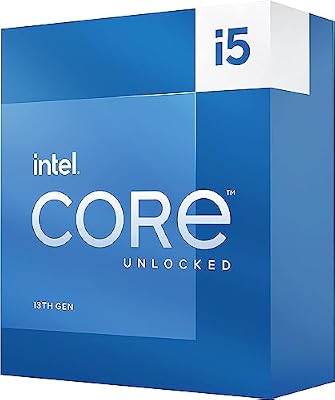
Intel Core i5-13600K Desktop Processor 14 cores (6 P-cores + 8 E-cores) 24M Cache, up to 5.1 GHz


As an Amazon Associate we earn from qualifying purchases. Product prices and availability are accurate as of the date/time indicated.
🛒 Best Price Today on Amazon
Prime members get fast, free shipping on everything above, plus member-only deals. New members get a 30-day free trial — cancel anytime.
As an Amazon Associate we earn from qualifying purchases.


Intel Core i5-13600K at a Glance
| Component | Specification |
|---|---|
| Cores / threads | 14 cores (6 P-cores + 8 E-cores) / 20 threads |
| Base / boost clock | Up to 5.1 GHz boost |
| Cache | 24MB L3 |
| Architecture | Raptor Lake (hybrid) |
| Socket | LGA1700 |
| TDP | 181W max turbo |
| Integrated graphics | Intel UHD Graphics 770 |
| Cooler in box | Not included |
| Price | Around $319 |
Architecture and Key Specifications
The 13600K is a Raptor Lake hybrid chip with six Performance cores and eight Efficient cores. Only the P-cores support Hyper-Threading, so total thread count is 6×2 + 8 = 20 threads. Boost clock reaches up to 5.1 GHz on the P-cores, with 24MB of L3 cache shared across the package. Intel UHD Graphics 770 is included as the iGPU.
The K suffix indicates an unlocked multiplier for overclocking, and TDP is rated at up to 181W under max turbo. The hybrid design lets Windows schedule heavy single-threaded gaming work onto the fast P-cores while background tasks live on the efficient E-cores — a design that has matured well across Windows 11 and is now broadly transparent in everyday use.
Gaming and Productivity Performance
For gaming, the 13600K is one of Intel’s most reliable picks — six high-clocking P-cores and the latency-friendly Raptor Lake cache make it competitive across modern titles at 1080p and 1440p. Pair it with anything from an RTX 4060 Ti up to an RTX 4080 and it will rarely be the gaming bottleneck.
For productivity, the eight additional E-cores meaningfully boost multi-threaded throughput — twenty threads in total handle code compilation, photo and video editing, virtualisation and streaming comfortably. It is a balanced chip that punches above its core class because of the hybrid design, which is why it has remained a strong-value Intel pick well after launch.
Platform, Memory and Compatibility
The 13600K uses the LGA1700 socket and is compatible with Intel 600 and 700 series chipsets — a BIOS update may be needed for 600-series boards. Memory support covers both DDR4 and DDR5 depending on the motherboard you choose, which gives buyers flexibility on platform cost: DDR4 boards keep the build cheap while DDR5 boards offer more bandwidth.
LGA1700 is now Intel’s previous-generation socket — Arrow Lake has moved to LGA1851 — but the ecosystem is very mature, with broad board availability and stable BIOSes. Owners of older 12th-gen LGA1700 systems can frequently drop a 13600K straight in with a BIOS update, which is a meaningful upgrade path.
Cooling, Power and Build
No cooler is included. The 181W max turbo means the 13600K deserves serious cooling under sustained load — a quality 240mm AIO or strong dual-tower air cooler is the natural pairing. Smaller coolers will work but will see the chip throttle under extended multi-threaded loads.
Power draw under gaming load is moderate; a quality 650W to 750W power supply is comfortable with a mid-range to high-end GPU. The chip is generally well-mannered for an enthusiast K-series Intel, but plan the cooler purchase into the build from the start.
Who Is the Intel Core i5-13600K For?
The 13600K is for the mainstream-enthusiast PC builder who wants strong gaming performance plus genuine multi-threaded headroom on a mature platform. It is ideal for 1080p high-refresh and 1440p builds, paired with an RTX 4070 or similar GPU, and it makes equally good sense as a mixed gaming and creator workhorse.
It is less suited to two groups: buyers who want the latest socket and architecture, who should consider Arrow Lake on LGA1851; and pure budget builders, who will find the i5-13400 or AMD 5500/7600X cheaper. For the value-focused Intel buyer, the 13600K remains hard to beat.
Pros and Cons
Pros: Strong gaming and productivity balance; 14 cores and 20 threads via hybrid design; unlocked K-series; flexible DDR4 or DDR5 support; mature LGA1700 platform; UHD 770 iGPU included.
Cons: No cooler included; 181W max turbo demands strong cooling; LGA1700 is a legacy socket with limited future upgrade path; newer Arrow Lake chips offer more cores at similar prices.
Is the Intel Core i5-13600K Worth It?
At around $319 the Intel Core i5-13600K remains one of the most balanced mainstream-enthusiast Intel chips on the market. It is strong in gaming, very capable in productivity, slots into a mature ecosystem and offers the flexibility of choosing DDR4 or DDR5 boards.
Buyers who want the newest Intel architecture should look at the Core Ultra 5 225 or Ultra 7 265KF; AMD buyers should compare the 7600X. But for the value-focused Intel buyer who wants a one-and-done CPU on a mature platform, the 13600K earns a clear recommendation.
Frequently Asked Questions
How many threads does the Intel Core i5-13600K have?
Twenty threads. The 13600K has six P-cores with Hyper-Threading and eight E-cores without it, giving 6×2 + 8 = 20 threads.
Does the Core i5-13600K come with a cooler?
No. Intel does not include a cooler with the K-series 13600K, and a quality 240mm AIO or strong air cooler is recommended.
Does the Core i5-13600K support DDR4 or DDR5?
Both. LGA1700 motherboards are available in DDR4 and DDR5 versions, so you can choose either memory type depending on the board.
Will the Core i5-13600K work in a 12th-gen Intel motherboard?
Yes, in most cases. LGA1700 600-series boards typically need a BIOS update to support 13th-gen chips like the 13600K.
Compared with the newer Core Ultra 5 225, the 13600K offers more total threads (20 vs 10) at a similar performance tier, which still matters for buyers doing serious multi-threaded work. Compared with AMD’s 7600X, the 13600K’s hybrid design gives it a productivity advantage at a slightly higher price. The chip also benefits from the maturity of LGA1700 — board prices have come down, BIOSes are stable, and DDR4 builds remain a way to keep total system cost lower. For the value-focused builder who is not chasing the newest socket, the 13600K continues to age very well as a mainstream-enthusiast Intel pick.
One useful framing: the 13600K is the chip you pick when you want a known, mature, well-understood Intel platform — when you value broad board availability, stable BIOSes and the choice between DDR4 and DDR5 over the newness of LGA1851. That is a sensible posture in 2026, especially for buyers who do not want to be on the bleeding edge. The 13600K also remains relevant as a drop-in upgrade for owners of older 12th-gen LGA1700 builds, which extends the platform’s useful life well beyond the chip’s original launch window. For mainstream-enthusiast Intel buyers, the 13600K continues to earn its reputation.
More CPU Reviews
- Intel Core Ultra 5 225 Review: Entry Arrow Lake Desktop CPU
- Intel Core Ultra 7 265KF Review: Mainstream Arrow Lake (No iGPU)
- Intel Core Ultra 9 285K Review: Flagship Arrow Lake Desktop CPU
- AMD Ryzen 5 5500 Review: Ultra-Budget AM4 Six-Core
- AMD Ryzen 5 7600X Review: Entry AM5 Six-Core
- AMD Ryzen 5 9600X Review: Zen 5 Mainstream Six-Core
- AMD Ryzen 7 9700X Review: Zen 5 Eight-Core
- AMD Ryzen 7 7800X3D Review: Gaming Legend AM5 X3D
Affiliate Disclosure: As an Amazon Associate, we earn from qualifying purchases. If you click a link and make a purchase, we may earn a small commission at no extra cost to you. Prices and availability are accurate as of publication and may change.
Related Articles
Looking for more on this topic? Browse the hand-picked guides below — each one applies the same scoring rubric used in this review.