

- Top Pick: HP 17 Inch Laptop, Intel 10-Core i7 1355U, 32 GB RAM, 1 TB SSD, 17.3" FHD IPS Display, Intel Iris Xe GPU, WiFi 6, BT 5.4, Windows 11 Pro, Copilot, Business & Home Office Computer, w/AI Voice Recorder
- Best Value: Glorlin Mini PC Ryzen 7 6800H(up to 4.7GHz), 16GB LPDDR5 512GB NVMe SSD, Radeon 680M, Triple 4K Display HDMI/DP/Type-C, Dual LAN, WiFi 6 BT5.3, Mini Desktop Computer for Office, Home & Gaming
- Premium Choice: GMKtec G3S Mini PC Intel N95 Processor (Up to 3.4GHz) 8GB RAM 256GB M.2 SSD
🛒 Best Price Today on Amazon
Prime members get fast, free shipping on everything above, plus member-only deals. New members get a 30-day free trial — cancel anytime.
- Top Gpus Home Office Picks for 2026
- Best GPUs for a Home Office at a Glance
- 1. NVIDIA RTX PRO 4000 SFF Blackwell 24GB GDDR7 ECC
- 2. ASUS GeForce GT 1030 2GB GDDR5 (GT1030-2G-CSM)
- 3. MSI GeForce GT 710 2GB GDDR3 (HDMI/VGA/DVI)
- 4. ASUS Dual GeForce RTX 3050 6GB OC Edition
- 5. MSI GeForce GTX 1660 Super 6GB GDDR6
- 6. MSI Gaming GeForce RTX 3060 12GB GDDR6
- How to Choose a GPU for a Home Office
- Related Guides
- Frequently Asked Questions
- Related Guides
- Related Articles
Top Gpus Home Office Picks for 2026
Here are our current top gpus home office picks, compared on real Amazon owner reviews, price, and features. Live prices update below.
As an Amazon Associate we earn from qualifying purchases at no extra cost to you.






Prime
Editor's Pick
Youhauchair Mesh Office Chair, Ergonomic Home Office Desk Chairs with Flip-up Arms and Lumbar Support, Height Adjustable, Black


A home-office GPU has a very different job from a gaming card. At a work desk the priorities are quiet operation, low power draw and heat, rock-solid multi-monitor output, and just enough acceleration to keep video calls, spreadsheets, browser tabs and the occasional Photoshop or light video task smooth. Raw frame rates barely matter. This guide rounds up the best GPUs for a home office in 2026 with that intent front and centre: cool, quiet cards that drive several displays cleanly without turning your desk into a space heater or a leaf blower.
Our picks were chosen on what genuinely matters for office and productivity use: low thermal and power footprint, quiet (or fanless-friendly) cooling, the number and type of display outputs, physical size for small-form-factor and prebuilt cases, and value. We have included a deliberate spread, from a roughly $75 fanless-class display adapter up to a low-profile professional card, with a couple of more capable options for anyone who also dabbles in light creative work. Crucially, we are honest about fit: a couple of these are powerful gaming-class cards that are genuinely overkill — and noisier and hotter than necessary — for pure office use, and we flag that clearly. Below is an at-a-glance comparison of all six, then a closer look at each and a buyer’s guide built around power, noise and displays.
Best GPUs for a Home Office at a Glance
| Graphics Card | Best For | Standout Spec | Approx Price |
|---|---|---|---|
| NVIDIA RTX PRO 4000 SFF Blackwell 24GB | Pro multi-monitor + light creative | Low-profile, ECC, 4x mDP, SFF | around $2,049 |
| ASUS GeForce GT 1030 2GB | Quiet basic multi-display | Low-power, low-profile, HDMI/DVI | around $104 |
| MSI GeForce GT 710 2GB | Cheapest display add-in | Very low power, HDMI/VGA/DVI | around $75 |
| ASUS Dual RTX 3050 6GB OC | Light creative + occasional game | 75W-class 6GB, no extra power | around $240 |
| MSI GeForce GTX 1660 Super 6GB | Heavier creative work | 6GB GDDR6, capable but warmer | around $234 |
| MSI GeForce RTX 3060 12GB | Overkill for pure office | 12GB, gaming-class, runs hotter | around $399 |
1. NVIDIA RTX PRO 4000 SFF Blackwell 24GB GDDR7 ECC

7
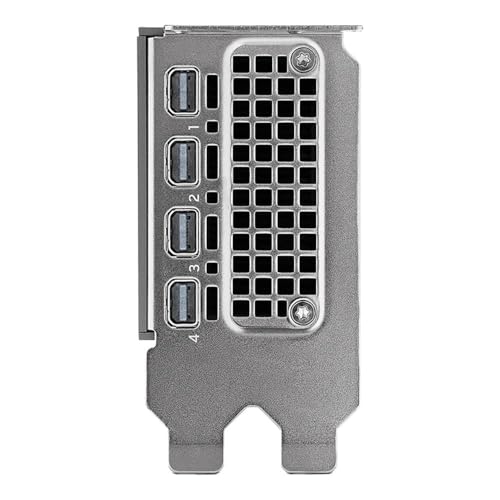
NVIDIA RTX PRO 4000 SFF Blackwell 24GB GDDR7 ECC – PCIe 5.0×8, 4X mDP 2.1b, Low-Profile Dual-Slot AI Workstation GPU Retail
In Stock
Updated: May 27, 2026


As an Amazon Associate we earn from qualifying purchases. Product prices and availability are accurate as of the date/time indicated.
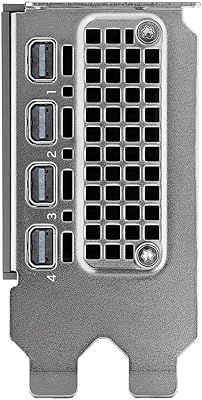
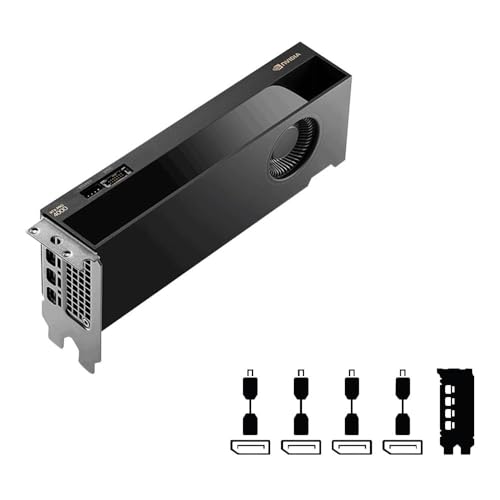
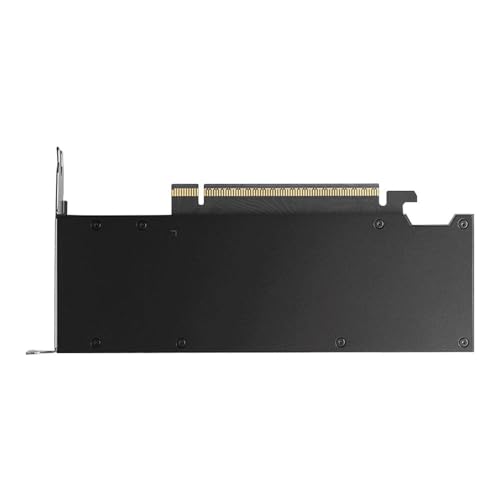
The NVIDIA RTX PRO 4000 SFF is the professional’s home-office pick, and the one card here purpose-built for a serious productivity workstation. It is a low-profile, small-form-factor Blackwell card with a generous 24GB of GDDR7 memory with ECC (error-correcting) protection, PCIe 5.0 connectivity, and four Mini DisplayPort 2.1b outputs for driving a wall of high-resolution monitors. At around $2,049 it is by far the most expensive option here, and it is aimed squarely at professionals rather than casual desks.
This is the card to choose if your home office is really a creative or engineering workstation — heavy multi-monitor layouts, GPU-accelerated design, CAD, AI inference or video work where memory capacity and ECC reliability justify the outlay. The low-profile SFF design slips into compact professional chassis, the four Mini DisplayPort outputs make many-monitor setups trivial, and the workstation-class drivers prioritise stability over headline gaming numbers. For a high-end, quiet, display-rich professional office GPU, nothing else on this list competes — just be honest about whether your workload truly needs it.
Pros: Low-profile SFF design, 24GB ECC memory, four Mini DisplayPort 2.1b outputs, workstation-grade stability.
Cons: Very expensive; overkill unless you run demanding professional workloads.
2. ASUS GeForce GT 1030 2GB GDDR5 (GT1030-2G-CSM)

12
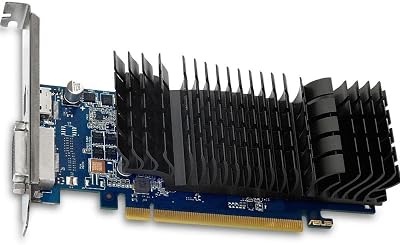
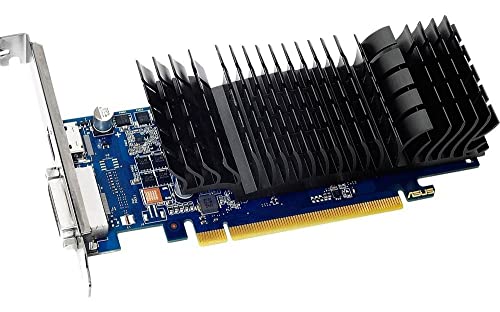
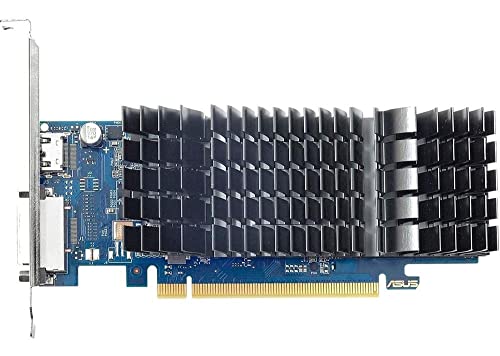
ASUS GeForce GT 1030 2GB GDDR5 HDMI DVI Graphics Card (GT1030-2G-CSM)
In Stock
$124.96
Save $21.27
Updated: May 27, 2026




As an Amazon Associate we earn from qualifying purchases. Product prices and availability are accurate as of the date/time indicated.
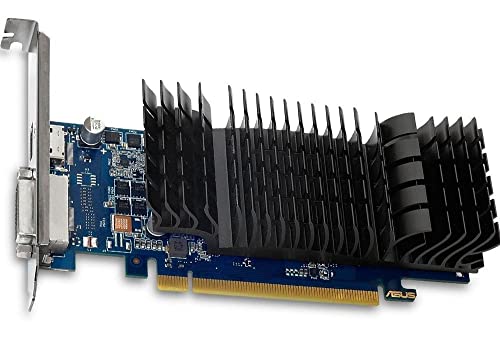
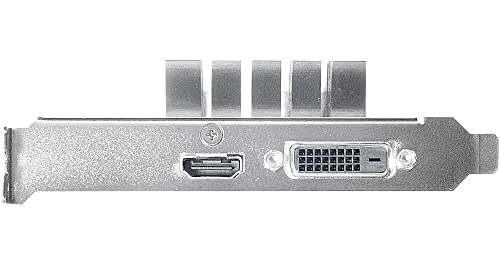
The ASUS GT 1030 is the sweet-spot pick for a quiet, no-fuss office machine. It is a low-power, low-profile-friendly card with 2GB of GDDR5, HDMI and DVI outputs, and a small cooler that stays quiet under typical desktop loads. At around $104 it is an inexpensive way to add a clean, modern display output to a PC that lacks integrated graphics or needs a second monitor.
This is the card for the classic home office: email, documents, dozens of browser tabs, video calls and crisp multi-monitor output, all without noise or meaningful heat. The GT 1030 sips power, runs cool and quiet, and drives a sharp desktop on one or two displays comfortably. It is not for gaming or creative rendering, and it should not pretend to be — but as a quiet, low-power office display card that just works, it is one of the most sensible buys here.
Pros: Low power draw, quiet small cooler, low-profile friendly, clean 1080p/desktop output for the price.
Cons: Only 2GB and entry-level performance; not for gaming or heavy creative work.
3. MSI GeForce GT 710 2GB GDDR3 (HDMI/VGA/DVI)

9
Prime
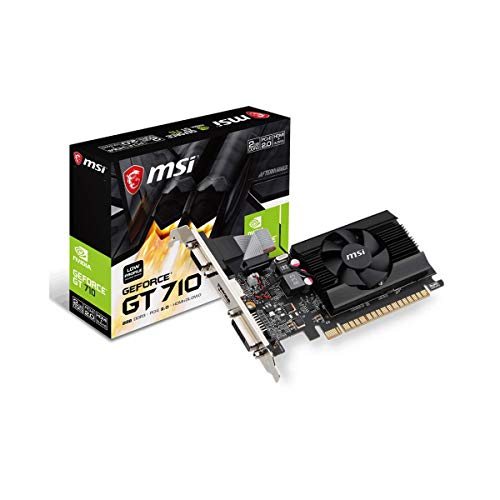
msi Gaming GeForce GT 710, Graphics Card, Desktop, HDMI/VGA/DVI – 2GB GDRR3 64-bit HDCP Support DirectX 12 OpenGL 4.5 Single Fan Low Profile, Nvidia
In Stock
Updated: May 27, 2026



As an Amazon Associate we earn from qualifying purchases. Product prices and availability are accurate as of the date/time indicated.
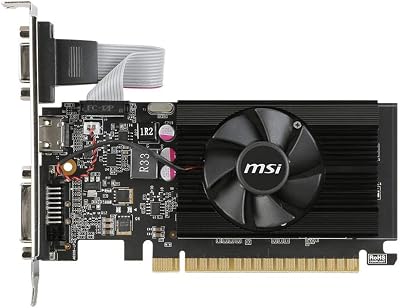
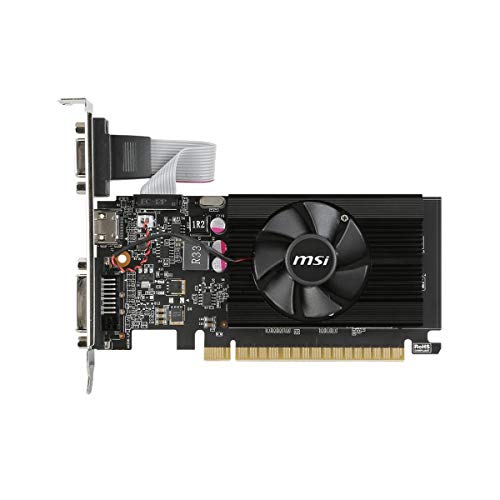
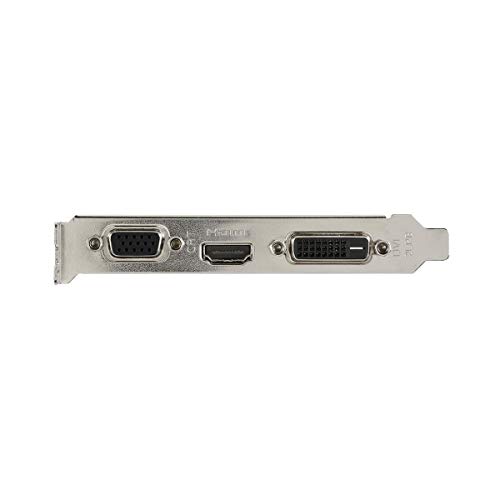
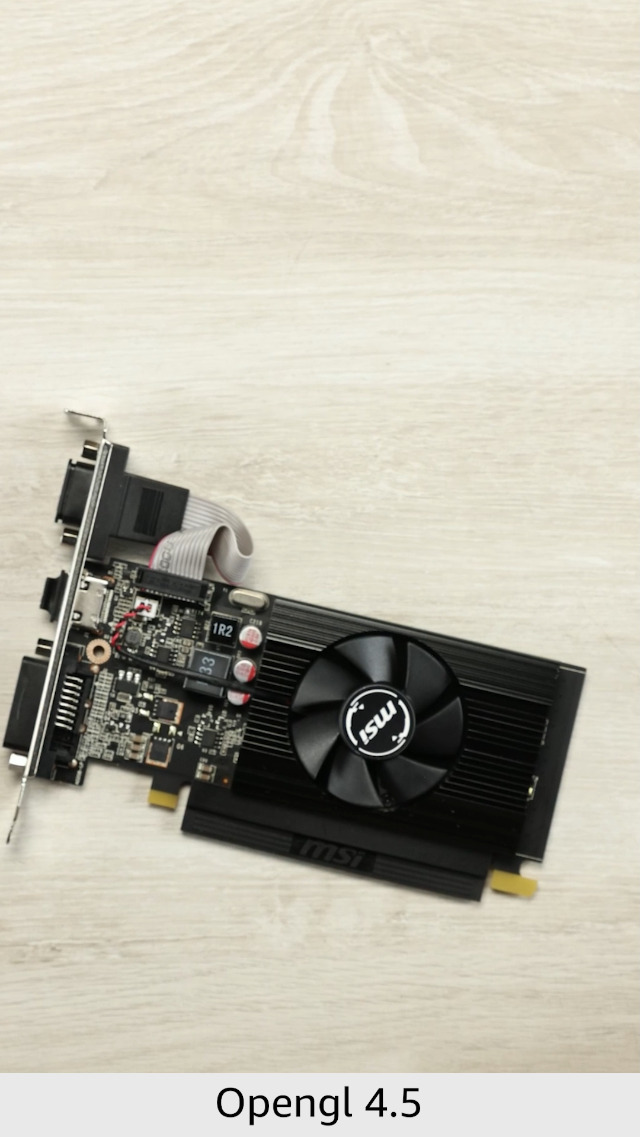
The MSI GT 710 is the cheapest, lowest-power way onto this list and the ultimate basic display adapter. It is a tiny, very low-power card with 2GB of GDDR3 and a trio of HDMI, VGA and DVI outputs, often available with passive or near-silent cooling. At around $75 it exists to do one thing well: give an older or graphics-less PC reliable, quiet desktop output.
This is the card for a secretarial or reception-style office PC, a server box that just needs a console output, or reviving an old desktop with a dead iGPU. The VGA port is genuinely useful for older monitors and projectors, the power draw is minimal, and the near-silent operation suits a quiet room. It will not accelerate modern creative apps and is weak even next to the GT 1030, but for the absolute basics of a quiet, cheap, multi-output office display, it does exactly the job and nothing more.
Pros: Extremely low power, near-silent, HDMI/VGA/DVI for legacy monitors, lowest price here.
Cons: Very weak and dated GDDR3; strictly for basic desktop display, not real work acceleration.
4. ASUS Dual GeForce RTX 3050 6GB OC Edition

31
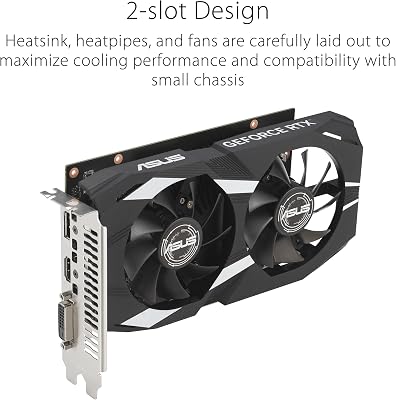
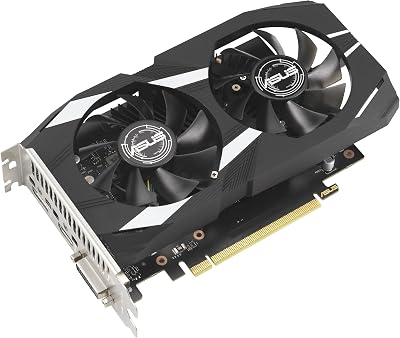
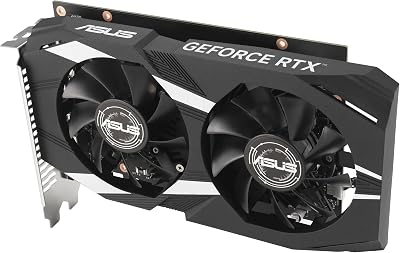
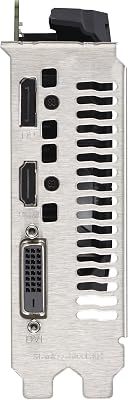
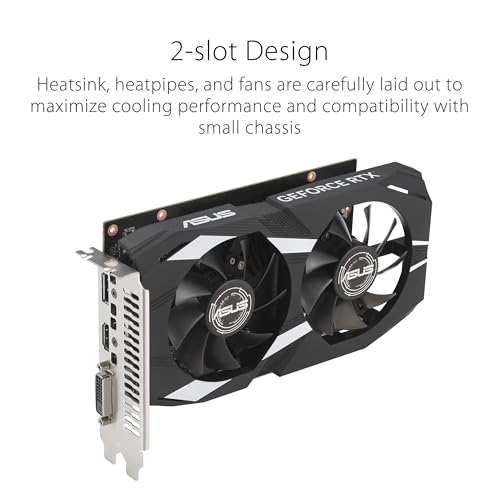
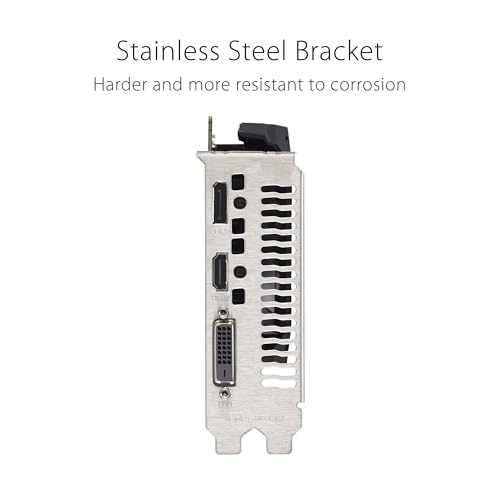
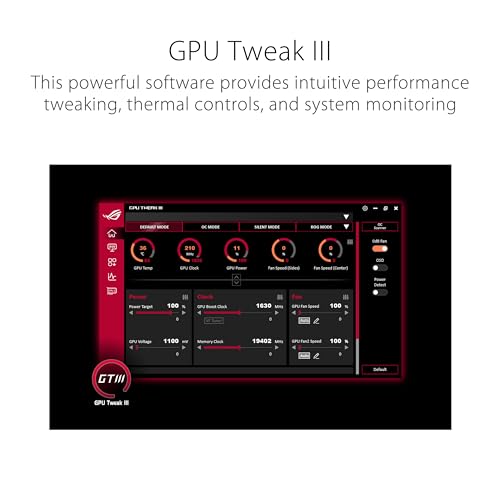
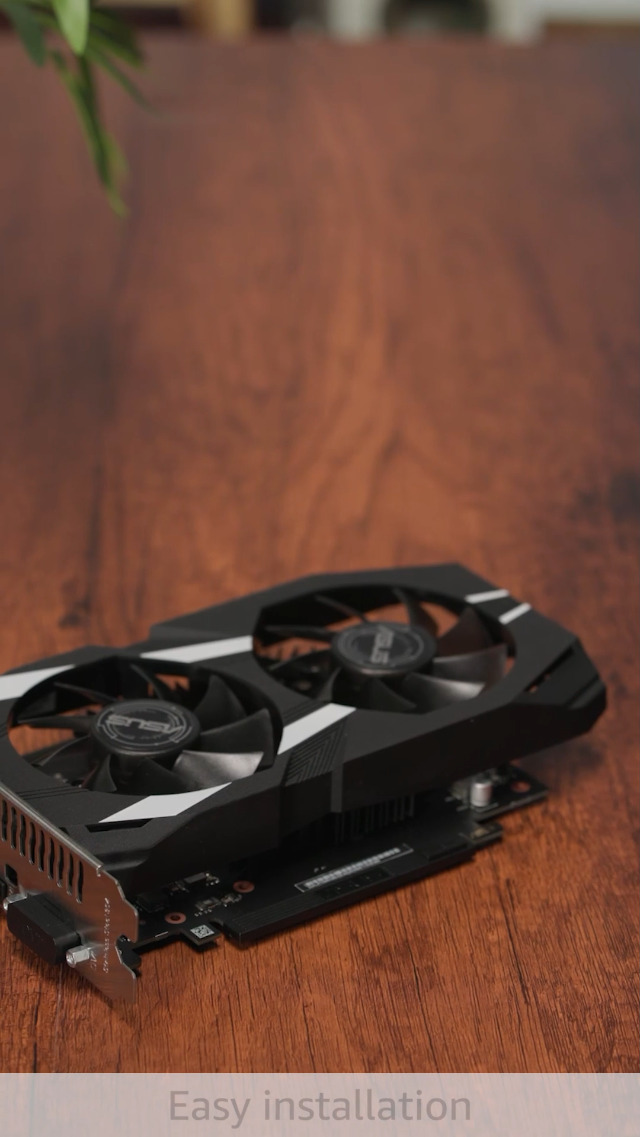
ASUS Dual NVIDIA GeForce RTX 3050 6GB OC Edition Gaming Graphics Card – PCIe 4.0, 6GB GDDR6 Memory, HDMI 2.1, DisplayPort 1.4a, 2-Slot Design, Axial-tech Fan Design, 0dB Technology, Steel Bracket
In Stock
Updated: May 27, 2026















As an Amazon Associate we earn from qualifying purchases. Product prices and availability are accurate as of the date/time indicated.
The ASUS Dual RTX 3050 6GB is the pick for a home office that also handles light creative work. The 6GB variant is a 75W-class card that typically draws its power straight from the PCIe slot with no extra connector, keeping it compact and easy to fit, while still offering modern RTX features and enough muscle for Photoshop, light video editing and casual gaming after hours. At around $240 it bridges office and creative use neatly.
This is the card for the home worker who needs more than a basic display adapter but does not want a hot, power-hungry gaming GPU. The low power draw keeps heat and noise modest for a card of this capability, the 6GB of memory and current architecture accelerate creative apps and GPU-assisted tasks, and the dual-fan ASUS cooler stays reasonably quiet at desktop loads. For a balanced office-plus-light-creative GPU that sips power relative to its ability, the RTX 3050 6GB is the smart middle-ground choice.
Pros: Low 75W-class power, no extra power connector, 6GB and modern features for light creative work.
Cons: More than pure office work needs; fans spin up under sustained creative or gaming load.
5. MSI GeForce GTX 1660 Super 6GB GDDR6
35
Prime
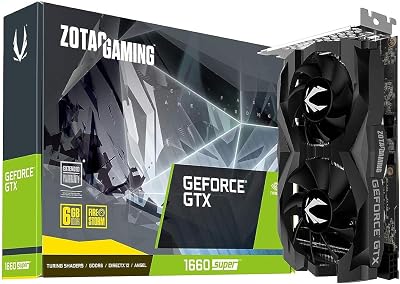
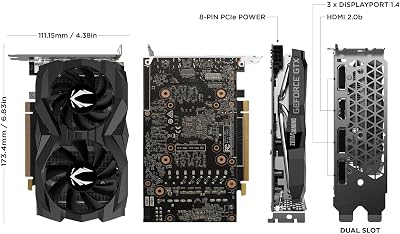
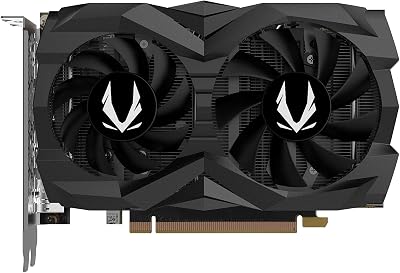
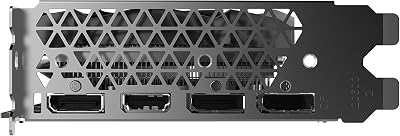
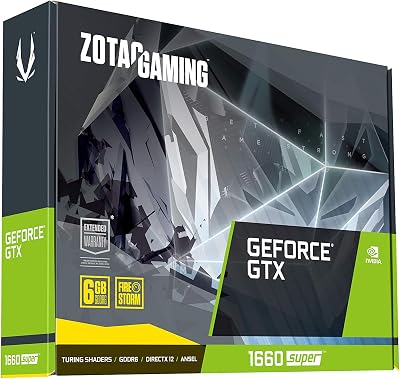
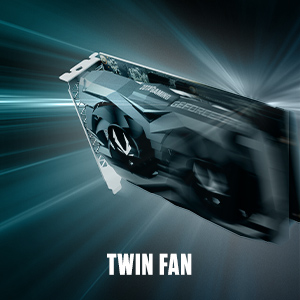
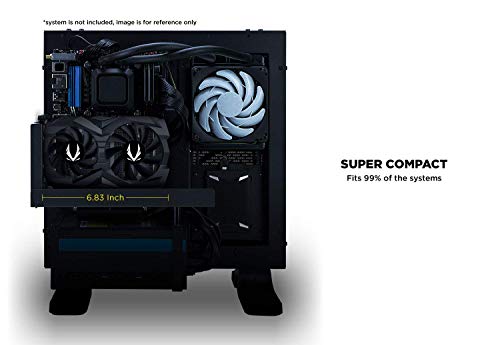
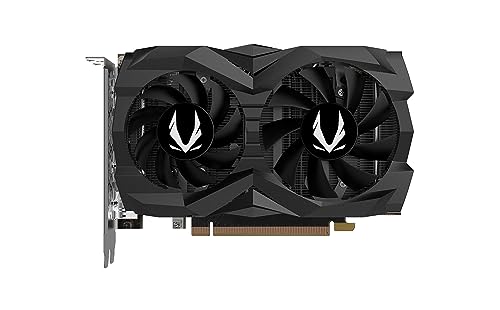
ZOTAC Gaming GeForce GTX 1660 Super 6GB GDDR6 192-bit Gaming Graphics Card, Super Compact, ZT-T16620F-10L
In Stock
Updated: May 27, 2026











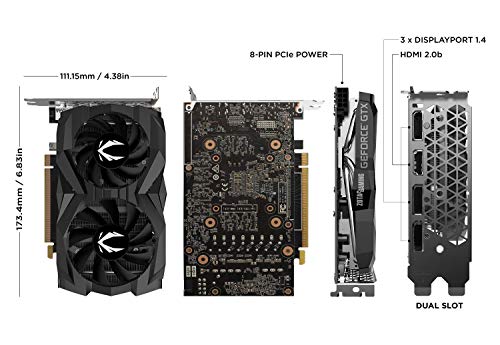
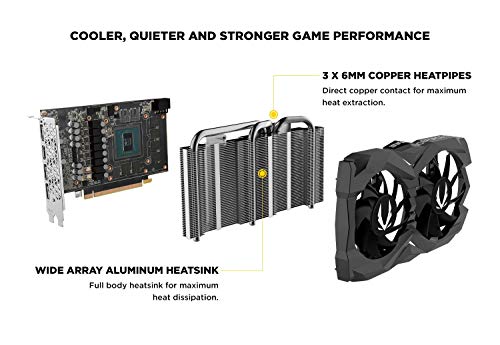
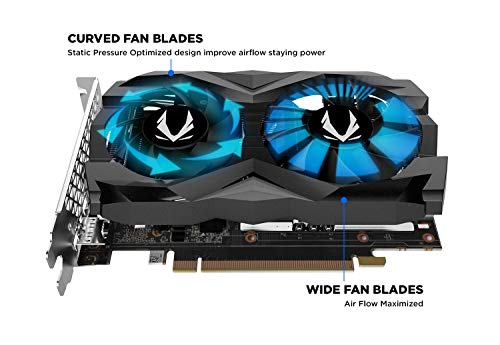
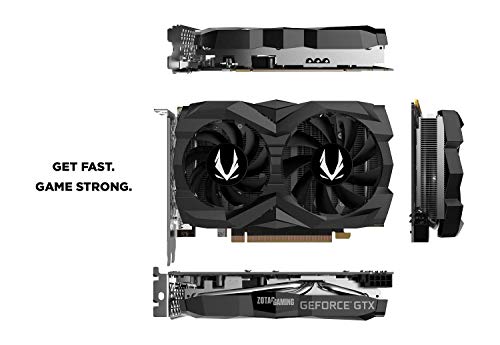
As an Amazon Associate we earn from qualifying purchases. Product prices and availability are accurate as of the date/time indicated.
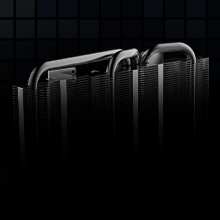
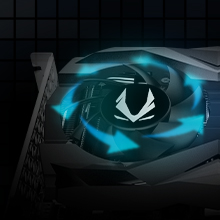
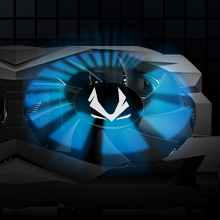
The MSI GTX 1660 Super is the pick for a home office that leans into heavier creative work. It pairs 6GB of faster GDDR6 with a capable mid-range GPU and MSI’s twin-fan Torx cooling, giving you noticeably more horsepower than the office-focused cards for photo and video editing or 3D viewport work. At around $234 it is priced similarly to the RTX 3050 6GB but trades newer features for a bit more raw rasterisation grunt.
This is the card for the creator-leaning home office where rendering and editing speed matter more than the lowest possible power and noise. The GDDR6 memory and stronger GPU chew through creative timelines faster than the entry cards, and the twin-fan cooler keeps it stable. Be aware, though, that it draws more power and runs warmer and louder than the GT 1030 or GT 710 — for pure email-and-spreadsheet duty it is more than you need. As a value engine for a desk that does real creative work, however, it earns its place.
Pros: Faster 6GB GDDR6, capable mid-range performance for creative work, proven twin-fan cooling.
Cons: Higher power, heat and fan noise than office-focused cards; lacks the newest RTX features.
6. MSI Gaming GeForce RTX 3060 12GB GDDR6

msi Katana 15 15.6” 165Hz QHD Gaming Laptop: Intel Core i7-13620H, NVIDIA Geforce RTX 4070, 16GB DDR5, 1TB NVMe SSD, Cooler Boost 5, Win 11: Black B13VGK-2000US
In Stock
Updated: May 26, 2026
As an Amazon Associate we earn from qualifying purchases. Product prices and availability are accurate as of the date/time indicated.
Rounding out the list is the MSI RTX 3060 12GB, and we include it with a clear caveat: for a pure home office it is genuine overkill. It is a gaming-class card with 12GB of GDDR6, PCIe 4.0, a Torx Twin Fan cooler and the power and heat output to match. At around $399 it is the most expensive consumer card here, and that money buys gaming and heavy-creative performance an office simply will not use.
Where this card makes sense is a dual-purpose machine that works hard by day and games or renders seriously by night. The 12GB framebuffer is excellent for demanding creative apps and higher-resolution gaming, and the cooler keeps it in check under load. But for quiet, low-power office duty it draws far more power, runs hotter and spins its fans up more than the GT 1030, GT 710 or even the RTX 3050 6GB — none of which an office workload justifies. Buy it if you genuinely game or render; for office-only use, save money and noise with a lower-power pick above.

Pros: Strong 12GB gaming and creative performance, capable cooler, plenty of memory headroom.
Cons: Overkill, hotter and louder than a pure office needs; highest power draw and price of the consumer cards.
How to Choose a GPU for a Home Office
Choosing a home-office GPU starts with a mindset shift: you are optimising for quiet, cool, reliable desktop output, not frame rates. Power draw is the first thing to weigh, because it directly drives heat and fan noise. Low-power cards like the GT 710 and GT 1030 — and the 75W-class RTX 3050 6GB that needs no extra power connector — stay cool and near-silent at a desk, whereas a gaming-class card like the RTX 3060 will run hotter and louder doing work it barely taxes. For a pure office, less power is genuinely better.
Display outputs are the next priority, and arguably the most important office-specific spec. Count how many monitors you run and at what resolution, then make sure the card has the right ports — HDMI and DisplayPort for modern panels, DVI or VGA on cards like the GT 710 for older monitors and projectors. If you run a serious multi-monitor wall, a card such as the RTX PRO 4000 SFF with four Mini DisplayPort outputs is built for it; for one or two screens, a GT 1030 is plenty.
Match the card to the actual work, and be honest about it. If your day is email, documents, browser tabs and video calls, an entry display card or integrated graphics is all you need, and spending up only adds cost, heat and noise. If you do real creative work — photo editing, light video, 3D — step up to the RTX 3050 6GB or GTX 1660 Super for meaningful acceleration. Only choose a gaming-class card like the RTX 3060 if the same machine genuinely games or renders heavily; for office-only duty it is overkill.
Finally, confirm physical fit and noise tolerance before you buy. Many office PCs and prebuilts are small-form-factor, so check length and whether you need a low-profile card — the GT 1030, GT 710 and the SFF RTX PRO 4000 are all compact-friendly. Consider your room, too: in a quiet home office, a card that idles fanless or stays near-silent is worth prioritising over a few percent of performance you will never feel. Set your monitor count, match power and ports to the job, respect your case and your ears, and pick the office GPU on this list that fits your real workload.
Frequently Asked Questions
What GPU do I actually need for a home office?
For typical office work — email, documents, browser tabs, video calls and multi-monitor output — you need very little graphics power. A low-power card like the ASUS GT 1030, or even the basic GT 710 for simple display duty, drives one or two monitors cleanly while staying quiet and cool. Integrated graphics often suffice too; you mainly add a card for more display outputs or if your CPU lacks an iGPU.
Is a gaming graphics card overkill for office work?
For pure office use, yes. A gaming-class card like the RTX 3060 12GB draws more power, runs hotter and spins its fans up more than an office workload ever requires, so you pay for performance you will not use. A gaming GPU only makes sense in a dual-purpose machine that also games or does heavy creative rendering. For office-only duty, a quiet low-power card is the smarter, cheaper choice.
How many monitors can these GPUs drive?
It depends on the card’s outputs. Entry cards like the GT 1030 and GT 710 typically handle one or two displays via their HDMI, DVI or VGA ports, which covers most home offices. For large multi-monitor walls, a professional card such as the RTX PRO 4000 SFF, with four Mini DisplayPort 2.1b outputs, is purpose-built to run many high-resolution screens at once.
Which of these is quietest and lowest power for an office?
The MSI GT 710 and ASUS GT 1030 are the lowest-power, quietest picks, ideal for a silent office where you only need crisp desktop output on a screen or two. If you also do light creative work, the 75W-class RTX 3050 6GB stays relatively cool and quiet for its capability. The higher-powered GTX 1660 Super and RTX 3060 run warmer and louder and are better suited to creative or gaming loads.
Related Guides
- Best GPUs for Your Build
- Best Low-Profile GPUs
- Best Monitors for Work and Play
- Best Monitor Arms for Multi-Display Setups
- Best Prebuilt and Office PCs
- Best Budget Desk Setup
Affiliate Disclosure: As an Amazon Associate, we earn from qualifying purchases. If you click a link and make a purchase, we may earn a small commission at no extra cost to you. Prices and availability are accurate as of publication and may change.
Ready to decide? Our #1 pick for 2026 is the NVIDIA RTX PRO 4000 SFF Blackwell 24GB.
Live price & availability on Amazon.


