

- Top Pick: Retroid Pocket 5 Retro Handheld Game Console, 8+128G, 5.5-inch touchscreen 1080p Portable Android Gaming Handheld with Adreno 650 GPU & WiFi 6/BT5.1, Snapdragon 865 Processor, Android 13 (GC)
- Best Value: Retroid Pocket Classic Retro Handheld Game Console, 3.92" OLED Touchscreen, Portable Android Gaming Handheld with 6+128GB, 5000mah Battery, Android 14, WiFi 5 Classic Games Console (Classic 6)
- Premium Choice: Anbernic RG35XX Pro Retro Handheld Game Console, 3.5" IPS OCA Screen, Linux System, 64GB, WiFi Bluetooth, HDMI Output, 7H Battery, Ideal for Travel Commute Home Outdoor RG35XXPro Teal T
The best retro gaming consoles in 2026 depend on how you want to play: the Analogue Pocket leads for FPGA-accurate handheld play, MiSTer FPGA remains the most accurate home option for enthusiasts, Polymega is the standout choice if you own original discs, while the Miyoo Mini+ and Retroid Pocket 5 offer the best value as emulation handhelds for budget and for higher-end portable play respectively.
- Quick Pick by What You Want to Do
- Retro Consoles at a Glance (October 2026)
- How to Choose the Right Retro Console in 2026
- FPGA Consoles: For Accuracy and Original Media
- All-in-One System for Disc Collectors
- Handheld Emulation Consoles: For Value and Portability
- More Retro Consoles Worth Considering in 2026
- Best Option Without Buying New Hardware
- Decision Matrix: Which Retro Console Should You Buy?
- FPGA vs. Emulation: A Practical Comparison
- What to Check Before You Buy Any Retro Console
- Recommended Settings and Setup Tips That Improve Any System
- How We Chose These Retro Consoles
- Retro Console Mistakes to Avoid
- Frequently Asked Questions
- More Retro Console Questions
- Retro Console Questions: Lag, TVs and First Systems
- Related Guides
- Sources
Quick answer: Choose the Analogue Pocket for accurate cartridge play or the MiSTer FPGA for versatile home console reproduction. If you collect original CD media like PlayStation or Saturn games, the Polymega is the standout choice. For portable emulation on a budget, the Miyoo Mini+ handles up to PlayStation 1, while the Retroid Pocket 5 is ideal for sixth-generation 3D systems like GameCube and PlayStation 2.
Last updated: October 2026.
As an Amazon Associate we earn from qualifying purchases at no extra cost to you.
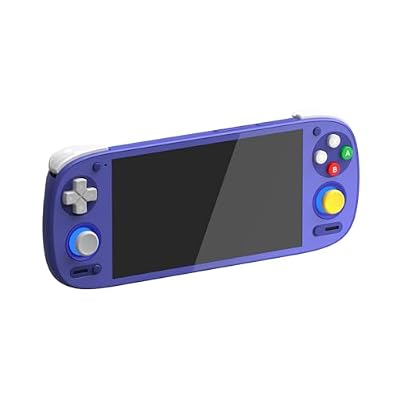


Quick Pick by What You Want to Do
| Your goal | Best fit on this page | Why |
|---|---|---|
| Play original cartridges with cycle accuracy | Analogue Pocket | Hardware-level FPGA reproduction delivers precise timing, visual fidelity, and native support for Game Boy family cartridges. |
| Play original retro CD and optical discs | Polymega | Features a built-in optical drive that directly reads and installs original PlayStation, Saturn, and CD-based games. |
| Affordable, pocket-sized emulation | Miyoo Mini+ | A compact Linux handheld that smoothly runs 8-bit, 16-bit, and PlayStation titles at a budget price point. |
| Portable 3D gaming for 6th generation games | Retroid Pocket 5 | Combines a vibrant OLED screen with processing power capable of handling GameCube, PlayStation 2, and N64 games. |
| Accurate home setup for modern TVs and CRTs | MiSTer FPGA | An open-source, modular home platform providing low-latency cycle-accurate playback for arcade and home console cores. |
| Play multi-format cartridges on modern TVs | Hyperkin RetroN 5 | Accepts NES, SNES, Genesis, and GBA cartridges while adding software features like save states and screen filters. |
| Play officially licensed physical media collections | Evercade EXP-R | Runs curated, licensed multi-game cartridges on a dedicated portable system without requiring digital downloads. |
Retro Consoles at a Glance (October 2026)
If you want the short version before the detailed sections, this table lines up every system covered in this guide by what it plays, how it plays it and roughly where it sits on price. Price tiers are broad bands, because retro hardware prices move often and limited batches sell out quickly.
| System | Type | Best For | Plays | Watch For | Price Tier |
|---|---|---|---|---|---|
| Analogue Pocket | FPGA handheld | Game Boy family cartridges | GB, GBC, GBA carts; more via adapters and openFPGA cores | Limited batches, dock sold separately | Upper-mid |
| MiSTer FPGA | FPGA home system | Accuracy on TV and CRT | Dozens of console, arcade and computer cores | DIY assembly and setup time | Upper-mid to premium |
| Polymega | Disc and cartridge console | Original CD-era discs | PS1, Saturn, Sega CD, TurboGrafx-CD, Neo Geo CD; carts via modules | Long order waits, modules add cost | Premium |
| Miyoo Mini+ | Linux emulation handheld | Pocketable 8-bit to PS1 play | Your own game backups up to PS1 | No N64 or PS2-class power | Budget |
| Anbernic RG35XXSP | Linux clamshell handheld | GBA SP style and long battery | Your own game backups up to PS1 | Small 3.5-inch screen | Budget |
| Retroid Pocket 5 | Android handheld | PS2, GameCube on the go | Your own game backups through 6th generation | More setup than Linux devices | Mid-range |
| Retroid Pocket Flip 2 | Android clamshell | DS-style folding design | Your own game backups through 6th generation | Check which chip version you get | Mid-range |
| Hyperkin RetroN 5 | Cartridge console | Many original carts in one box | NES, SNES, Genesis, GB, GBC, GBA carts | Software emulation, 720p output | Mid-range |
| Retro-Bit Super Retro Trio HD Plus | Clone console | Cheapest way to run three cart systems | NES, SNES, Genesis carts | 16:9 stretched HDMI image | Budget |
| Evercade EXP-R | Licensed cartridge handheld | Legal, curated collections | Evercade cartridges | No TV output on this model | Budget to mid-range |
| Atari 2600+ | Licensed cartridge console | Original Atari carts on HDMI | Atari 2600 and 7800 carts | Narrow library by design | Budget to mid-range |
| Nintendo Switch Online + Expansion Pack | Subscription | Switch owners | Curated Nintendo and Sega libraries | Rotating, curated selection | Subscription |
How to Choose the Right Retro Console in 2026
Retro consoles now fall into three distinct categories, and understanding the difference will save you from buying the wrong system. FPGA hardware recreates original chips at the circuit level for cycle-accurate behavior with original cartridges or discs. Software emulation handhelds run emulators on modern chips to play ROM files across many systems from a single device. Modern compilation services like Nintendo Switch Online provide legal access to curated libraries via subscription without dedicated retro hardware.
Your decision should start with three questions. First, what do you already own? If you have a shelf of original Game Boy, Genesis, or PlayStation discs and cartridges, you want hardware that uses them directly. Second, where will you play most? Handhelds with their own screens, docks for TV play, and home consoles that stay under your TV serve different habits. Third, how important is absolute accuracy versus convenience and library breadth? FPGA gives you the closest to original timing and compatibility but covers fewer systems out of the box, while emulation trades a small amount of accuracy for supporting everything from NES to PlayStation and beyond in one device.
FPGA Consoles: For Accuracy and Original Media
Analogue Pocket – Best FPGA Handheld for Cartridge Collectors
The Analogue Pocket is a dedicated FPGA handheld designed around original portable cartridges, primarily Game Boy, Game Boy Color, and Game Boy Advance, with adapters available for Game Gear, Neo Geo Pocket Color, and Atari Lynx. Its appeal is accuracy and display quality. Because it recreates the hardware rather than emulating it in software, timing, sound, and visual quirks specific to original hardware are preserved, which matters for games sensitive to frame timing.
The 3.5-inch display uses a very high resolution panel that maps each original pixel to multiple modern pixels without blur, so Game Boy and GBA games appear sharp while retaining their original aspect ratio and color. The system also supports community-developed FPGA cores through its OpenFPGA platform, which extends it to home systems like NES, SNES, and Genesis when you supply your own game files. Consider the optional Dock if TV output is important to you, as it adds HDMI output and controller support for docked play.
This is the right pick if you collect cartridges, value a premium build and screen, and want the most faithful way to play portable Nintendo libraries on modern hardware. It is less suited if you want a low-cost entry point or want to play disc-based systems that require a different form factor.
MiSTer FPGA – Best FPGA Home Console for Enthusiasts
MiSTer FPGA is an open-source project built around the Terasic DE10-Nano board with additional memory and I/O boards. Unlike a single-product console, it is a modular system that runs a large library of cores covering arcade hardware and home consoles including NES, SNES, Genesis, TurboGrafx-16, Neo Geo, and computer platforms like Amiga.
Its strength is breadth and fidelity on a TV. With both HDMI and analog video output options, it works equally well with modern flat panels and CRTs, and it supports original controllers via USB or SNAC adapters for the lowest-latency input path. Setup is more involved than a plug-and-play console because you assemble the boards, case, and storage yourself and manage cores and updates via scripts. Once configured, it offers one of the most accurate and low-latency ways to play a wide range of pre-2000 systems from a single device under your TV.
Choose MiSTer FPGA if you want a permanent home setup that prioritizes accuracy, supports many systems, and can connect to both modern and vintage displays. Look elsewhere if you want a simple out-of-the-box handheld or prefer a system that plays original discs directly without additional hardware.
All-in-One System for Disc Collectors
Polymega – Best for Original PlayStation, Saturn, and CD-Based Libraries
Polymega is unique in the current market because its base unit includes an optical drive that reads original discs for PlayStation, Sega Saturn, Sega CD, TurboGrafx-CD, and Neo Geo CD. This solves a specific problem: most retro hardware focuses on cartridges, leaving disc collectors without a modern way to use their original media without relying on aging original consoles.
The system installs disc content to internal storage, which enables features like save states and library management that original hardware does not provide, while still requiring the original disc for verification. Cartridge support is added through separate Element Modules for systems such as NES, SNES, Genesis, and TurboGrafx-16, plus a module for Nintendo 64. If you do not own cartridges, the base unit alone covers the disc libraries, and the modular approach lets you expand only for the cartridge systems you actually collect.
This is the most logical option if your collection centers on CD media from the 1990s, especially PlayStation and Saturn. If you primarily collect cartridges or want a portable device, an FPGA handheld or emulation handheld will be more appropriate.
Handheld Emulation Consoles: For Value and Portability
Miyoo Mini+ – Best Budget Handheld for 8-Bit and 16-Bit Libraries
The Miyoo Mini+ has become the default recommendation for affordable handheld emulation because it covers the largest-demand retro libraries – Game Boy, NES, SNES, Genesis, and PlayStation – in a compact, pocketable design with simple controls. It runs a Linux-based operating system, with community firmware such as OnionOS widely used to improve interface speed and save-state management.
The device is best understood as a focused 8-bit and 16-bit plus PlayStation player. Its screen size and button layout suit 4:3 systems and portable Nintendo libraries particularly well, and battery life in this class generally allows for multiple extended sessions before recharging. It is not intended for more demanding systems like Nintendo 64, Dreamcast, or PlayStation Portable, which require significantly more processing power and are better handled by higher-tier Android handhelds.
Pick this category if you want the lowest barrier to entry, a device that fits in a jacket pocket, and reliable performance for everything up to the PlayStation era. Move to a mid-range or premium Android handheld if your library includes Nintendo 64, Dreamcast, GameCube, or PlayStation 2 titles.
Retroid Pocket 5 – Best Mid-Range Android Handheld for 6th Generation Games
The Retroid Pocket 5 represents the current mid-range Android handheld tier with a larger OLED display and a chipset capable of handling more demanding emulation. Where budget handhelds stop at PlayStation, this class reliably extends to PlayStation 2, GameCube, and Wii, with headroom for many PlayStation Portable and Dreamcast titles at higher resolutions.
Because it runs Android, it also functions as a general-purpose device for game streaming services, retro achievements, and front-ends that organize large libraries across systems. That flexibility comes with more configuration than a simple Linux handheld – you will spend more time choosing emulators, setting up controls per system, and adjusting performance profiles. Battery life is typically shorter under heavy 3D emulation compared to low-power 2D systems, which is normal for this performance class.
This is the right tier if portability matters but you want to include sixth-generation console libraries on the go. If you only play 8-bit and 16-bit games, a smaller budget handheld will be more comfortable to carry and simpler to operate.
Anbernic RG405V and Similar Vertical Handhelds – Best Value Alternative
Vertical-format handhelds from Anbernic, including the RG405V and its successors, occupy the same mid-range Android space with a focus on ergonomic controls for retro titles and 4:3 screens that suit SNES and Genesis well. Devices in this family typically ship with Android and offer broad emulator compatibility, expandable microSD storage, and enough performance for Dreamcast and PlayStation 2 in many titles.
These alternatives are worth comparing to the Retroid line on control layout, screen aspect ratio, and software support rather than raw specifications alone. A vertical layout often feels more natural for Game Boy and NES games, while a horizontal layout may suit shoulder-button-heavy systems better. For buyers prioritizing a specific form factor or wanting to stay within a mid-range budget, this group provides strong competition without moving to premium FPGA hardware.
More Retro Consoles Worth Considering in 2026
The systems above cover the main ways to play retro games, but the market in 2026 is wider than FPGA, Polymega and Android handhelds. The picks below fill specific gaps: a clamshell for people who miss the Game Boy Advance SP, cartridge consoles for collectors who want original carts on a modern TV without paying FPGA prices, and licensed systems for buyers who want to stay entirely within official releases. Each entry lists the key specs, who it suits and who should skip it.
Retroid Pocket Flip 2: Best Clamshell Android Handheld

- Display: 5.5-inch 1080p AMOLED that folds shut
- Chip: sold in Snapdragon 865 and Dimensity 1100 versions
- Memory and storage: 8GB RAM, 128GB storage plus microSD
- Battery: 5,000mAh with active cooling
- Video out: DisplayPort over USB-C
Best for: players who want Retroid Pocket 5 class power in a folding shell that protects the screen in a bag. Skip if: you mostly play 4:3 systems and want the screen shape to match, or you want the cheapest route to PS1 games.
The Flip 2 is the same idea as the Retroid Pocket 5 in a Nintendo DS style clamshell. Closing the lid protects the AMOLED panel, and the hinge lets you tilt the screen to a comfortable angle on a table. Performance depends on the version: the Snapdragon 865 model is the stronger choice for PS2, GameCube and light Switch emulation, while the Dimensity 1100 model is a little cheaper but slower and loses some community driver options. Read the listing carefully and confirm which chip is inside before you buy. For a buyer deciding between this and the Retroid Pocket 5, the choice is mainly about form factor, not capability.
Anbernic RG35XXSP: Best Budget Clamshell for GBA and PS1

- Display: 3.5-inch 640×480 IPS, 4:3, fully laminated
- Chip: Allwinner H700 quad-core with Mali-G31 GPU
- Memory: 1GB RAM, dual microSD slots
- Battery: 3,300mAh, rated around 8 hours
- Extras: Wi-Fi, Bluetooth, mini HDMI out
Best for: anyone who wants a pocketable Game Boy Advance SP style device for 8-bit, 16-bit, GBA and PS1 libraries. Skip if: you want N64, Dreamcast or PS2 to run well, or you prefer a larger screen.
The RG35XXSP sits in the same budget tier as the Miyoo Mini+, and the two cover a similar library. The difference is shape and features. The clamshell protects the screen, the 4:3 panel suits GBA and SNES well once you set integer or near-integer scaling, and the HDMI port lets you put it on a TV in a pinch. Battery life is one of its strongest points in this class. Many owners replace the stock firmware with community options such as muOS or Knulli for a cleaner interface. Avoid third-party bundles that advertise thousands of preloaded games; buy a plain unit and load backups of games you own.
Hyperkin RetroN 5: Best Multi-Cartridge Console for TV
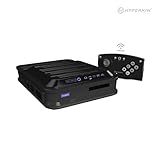
- Cartridge slots: NES, SNES, Genesis, Famicom, Super Famicom, Mega Drive, Game Boy, Game Boy Color, Game Boy Advance
- Output: HDMI, up to 720p
- Features: save states, screen filters, cheat support
- Controller: wireless pad included, original controller ports on the unit
Best for: collectors with a mixed pile of Nintendo and Sega cartridges who want one box under the TV. Skip if: you want FPGA-level accuracy or a sharp 1080p or 4K image.
The RetroN 5 reads your cartridges and runs them through software emulation, which is why it can add save states and filters that original hardware never had. That approach is less accurate than FPGA and output tops out at 720p, so it is not a replacement for MiSTer or Analogue hardware. What it offers is breadth at a middle price: many cartridge formats in one console with original controller ports. If your collection is mostly Game Boy and SNES carts and you play casually, it is a practical middle ground between a cheap clone and an FPGA system.
Retro-Bit Super Retro Trio HD Plus: Best Budget Cartridge Clone

- Cartridge slots: NES, SNES and Genesis
- Output: 720p HDMI plus composite AV
- Controllers: two wired six-button pads, six controller ports
- Region: switch for NTSC and PAL timing
Best for: the lowest-cost way to play NES, SNES and Genesis carts on a modern TV. Skip if: picture accuracy matters to you; HDMI output is stretched to 16:9 and colors are not always faithful.
This is a clone console that runs games on dedicated chips rather than full emulation, and it has no save states or filters. Treat it as a budget floor: it works with most common cartridges and gets old games onto an HDMI TV, but enthusiasts will notice the soft, stretched image. If you can stretch your budget, the RetroN 5 or an FPGA system is a clear step up in flexibility or accuracy.
Evercade EXP-R: Best Licensed Cartridge Handheld

- Display: 4.3-inch 800×480 IPS with TATE (vertical) mode
- Media: official Evercade cartridge collections
- Battery: 3,000mAh class, USB-C charging
- Weight: about 251g
Best for: buyers who want a fully licensed, plug-and-play library and enjoy collecting physical cartridges. Skip if: you want to play your own existing cartridges or need TV output; the EXP-R has no HDMI port.
Evercade sells curated multi-game cartridges from publishers such as Atari, Namco, Data East and Interplay, and every game is licensed. The EXP-R replaced the original EXP in 2024 at a lower price; it drops the built-in Capcom games and the mini HDMI port but keeps the same screen and works with every Evercade cartridge. If you want to play on a TV, Evercade’s VS-R home console uses the same cartridges.
Atari 2600+: Best for Original Atari Cartridges

- Media: original Atari 2600 and 7800 cartridges
- Output: HDMI with 4:3 and 16:9 modes
- In the box: CX40+ joystick and a 10-in-1 game cartridge
- Design: 80 percent scale replica of the four-switch 2600
Best for: anyone who still owns Atari cartridges or wants an official way to play them on a modern TV. Skip if: you want systems beyond the Atari 2600 and 7800 era.
The 2600+ is a narrow product by design. It reads original cartridges, outputs over HDMI and keeps the look and switches of the classic console. Compatibility with the original library is broad but not universal, so check Atari’s published compatibility list for rare titles before you rely on it.
Other 2026 Systems to Know About
Retroid Pocket 6: the step above the Pocket 5, with a Snapdragon 8 Gen 2 chip, a 5.5-inch 120Hz AMOLED screen and a 6,000mAh battery. It handles GameCube and PS2 comfortably and some Switch titles. It is sold mainly through Retroid’s own store, and prices have risen since launch, which puts it in the upper-mid tier.
Analogue 3D and ModRetro M64: two FPGA consoles for original Nintendo 64 cartridges with 4K HDMI output. The Analogue 3D launched in November 2025 with CRT-style display modes; the ModRetro M64 followed in July 2026 at a lower price with open-source firmware. Neither includes a controller, and both are sold direct by their makers.
ModRetro Chromatic: an FPGA handheld built only for Game Boy and Game Boy Color cartridges, with a screen that keeps the original 160×144 resolution. It is a more focused, less flexible alternative to the Analogue Pocket.
Polymega in 2026: Playmaji is shipping a re-engineered base unit with more processing power and a disc tray in batches, and has announced a USB add-on called Polymega Remix for Windows PCs. Order waits have historically been long, so check current shipping estimates before committing.
Best Option Without Buying New Hardware
Nintendo Switch Online + Expansion Pack
For players who already own a Nintendo Switch, the Nintendo Switch Online Expansion Pack provides the simplest legal access to curated NES, SNES, Game Boy, Game Boy Advance, Nintendo 64, and Sega Genesis libraries through a subscription. It requires no additional hardware, includes online play and save-state features, and is maintained directly by Nintendo.
The trade-off is library curation versus completeness. You get a rotating, officially licensed selection rather than the ability to play your entire existing collection, and availability depends on Nintendo’s licensing. It is ideal if your retro interest centers on Nintendo platforms and you want the most convenient way to replay classics on current hardware you already own.
Decision Matrix: Which Retro Console Should You Buy?
Use this matrix to match your primary use case to the right category before comparing specific models.
| Primary Use Case | Recommended Category | Example Systems | Why This Fits |
|---|---|---|---|
| Play original Game Boy / GBA cartridges with highest fidelity | FPGA Handheld | Analogue Pocket | Cycle-accurate support for cartridge media with a high-resolution display designed for pixel art |
| Most accurate home setup for NES, SNES, Genesis on TV and CRT | FPGA Home System | MiSTer FPGA | Broad core library with HDMI and analog output plus support for original controllers |
| Use original PS1, Saturn, and Sega CD discs | Disc-Based Modular Console | Polymega | Only modern console category that directly reads and installs from original CD media |
| Pocketable handheld for NES to PlayStation under a budget range | Budget Emulation Handheld | Miyoo Mini+ | Low cost and compact size with solid coverage up to 16-bit and PlayStation era |
| Portable GameCube, PS2, and Dreamcast | Mid-Range Android Handheld | Retroid Pocket 5, Anbernic RG405V | Higher performance chipset and Android flexibility for 6th generation libraries |
| Already own a Switch and want Nintendo classics | Subscription Service | Nintendo Switch Online + Expansion Pack | No new hardware needed, officially licensed libraries with online features |
FPGA vs. Emulation: A Practical Comparison
FPGA and emulation both play classic games, but they achieve it differently and that affects what you will notice. FPGA recreates the original logic, which typically means fewer timing-related glitches, more accurate sound, and lower inherent latency when using original controllers and when paired with a low-lag display mode. Software emulation translates original code to run on a modern processor, which allows one device to cover dozens of systems and adds convenience features like fast-forward, rewind, and extensive scaling options.
In practice, accurate emulation on modern handhelds is very good for most 8-bit and 16-bit libraries, and many players will not notice differences outside edge cases. The differences become more relevant for games known for strict timing, for speedrunning, or for audiophile attention to sound accuracy. If your priority is a single device that plays the widest library affordably, emulation handhelds win on value. If your priority is reproducing the behavior of original hardware with original cartridges, FPGA is the stronger choice.
What to Check Before You Buy Any Retro Console
Use these concrete criteria to evaluate any device in this category, regardless of brand.
Media compatibility: Confirm whether it uses original cartridges, original discs, or ROM files. Systems that play original media preserve your collection without additional file management, while ROM-based handhelds require you to supply legally sourced backups of games you own.
Video output and scaling: Look for integer scaling options and filters that can be disabled. The sharpest image for pixel art comes from integer scaling that avoids blurring, while optional scanline or shadow-mask filters are a preference for CRT simulation.
Controller and latency path: For TV play, favor systems that support wired controllers or 2.4 GHz wireless with a dedicated receiver, and displays set to game mode. For handhelds, check d-pad quality and whether shoulder buttons are comfortably placed for SNES and PlayStation titles.
Storage and library management: Handhelds that use microSD cards should support at least 128GB cards formatted as exFAT or FAT32 and a front-end that scrapes box art and organizes systems automatically. Home systems that install discs should offer internal storage or SSD expansion.
Power and ergonomics: Consider weight, grip, and button layout for long sessions. Horizontal handhelds generally suit longer play with shoulder buttons, while vertical handhelds feel more natural for Game Boy libraries. Check whether charging is via modern USB-C and whether the device charges while playing.
Software updates and community: Open platforms like MiSTer FPGA and Linux handhelds benefit from active community cores and firmware. A device with regular updates will gain compatibility fixes and new systems over time, which extends its useful life.
Recommended Settings and Setup Tips That Improve Any System
These adjustments apply across FPGA and emulation devices and noticeably improve image quality and responsiveness without additional hardware.
Disable extra post-processing: Turn off motion smoothing, noise reduction, and dynamic contrast on your TV and set the input to game mode. On the console, disable bilinear filtering and enable integer scaling if available for the sharpest pixels.
Match display resolution to content: Run the console at 1080p when possible for retro content, as this divides evenly with many integer scales for 240p sources. Use 720p only if your display handles it with lower lag.
Use save states strategically: Create a save state before difficult sections or experimental settings changes. For disc-based systems like PlayStation and Saturn on Polymega, allow the full installation to complete before testing save states to avoid file errors.
Pair the right controller per system: Use a six-button layout for Genesis and Saturn fighters, a controller with precise d-pad diagonals for platformers, and analog sticks only for Nintendo 64 and later 3D systems. This reduces input errors more than any performance setting.
Organize storage early: Keep ROMs in clearly labeled folders by system and use a front-end that supports scraping. Keeping BIOS files, if required by the emulator, in their documented system folders prevents avoidable loading failures.
How We Chose These Retro Consoles
This guide is research-based rather than based on our own lab testing. The picks were selected by comparing published specifications, maker documentation and independent coverage. We used these criteria:
- How it plays games: FPGA, original-chip clone, software emulation or licensed collections, and whether it uses original cartridges, discs or your own backup files.
- Library coverage: which generations each device handles reliably, judged from chip class and community compatibility reports.
- Display and output: panel type, resolution, aspect ratio and whether TV output is native, docked or missing.
- Support and longevity: firmware updates, active community cores or custom firmware, and whether the maker is still shipping units.
- Value across tiers: at least one sensible choice in each price band from budget to premium.
Sources included manufacturer spec sheets (Analogue, Retroid, Anbernic, Playmaji, Evercade, Atari, Hyperkin, Retro-Bit), the MiSTer project documentation, and specialist retro hardware press. We left out unlicensed devices sold with large preloaded game libraries.
Retro Console Mistakes to Avoid
- Buying a “20,000 games” stick: cheap HDMI sticks and handhelds that advertise huge preloaded libraries usually ship unlicensed ROMs, weak controllers and poor emulation. A budget Linux handheld or a licensed system is a better use of the same money.
- Ignoring the chip version: some handhelds, such as the Retroid Pocket Flip 2, are sold with two different processors. The cheaper version can be noticeably weaker for PS2 and GameCube.
- Expecting one device to do everything: no single console plays original carts, original discs and every emulated system perfectly. Decide which matters most first.
- Forgetting the extras: FPGA consoles often ship without controllers, docks or HDMI cables, and Polymega cartridge support needs separate modules. Budget for them.
- Skipping storage quality: the microSD card bundled with many handhelds is low quality. A name-brand card avoids corrupted saves.
Frequently Asked Questions
Do I need FPGA for an enjoyable retro experience?
No. Modern emulation handhelds provide an enjoyable and visually excellent experience for the vast majority of games. FPGA is recommended when you want the closest match to original hardware behavior, own original cartridges you want to use directly, or play timing-sensitive titles where accuracy is critical.
Can one handheld cover every system?
No single device covers every system perfectly. Budget handhelds handle 8-bit and 16-bit plus PlayStation well, mid-range Android handhelds extend to Dreamcast, PlayStation 2, and GameCube, and FPGA systems cover specific libraries with higher accuracy but require different hardware for disc-based media.
Is it legal to use ROM files on emulation handhelds?
Laws vary by country, but generally you should only use backups of games you legally own and avoid distributing copyrighted files. Services like Nintendo Switch Online provide a fully licensed alternative for supported titles.
Which option is best for playing on a TV?
For handhelds, choose a model with a dock or HDMI output such as the Analogue Pocket with Dock or a Retroid dock accessory. For a dedicated home setup, MiSTer FPGA and Polymega are designed for TV use from the start, with Polymega being the better choice if you need an optical drive for original discs.
Choosing a retro console is ultimately about matching hardware to your library and habits. If you collect cartridges or discs, prioritize FPGA or Polymega to use original media as intended. If you want the broadest library in a pocketable form at a budget or mid-range price tier, emulation handhelds deliver the best overall value. For Nintendo-focused players who already own a Switch, the subscription route may be all you need without buying additional hardware.
More Retro Console Questions
What is the best retro console for most people in 2026?
For most people, a mid-range Android handheld such as the Retroid Pocket 5 is the best all-round choice. It covers everything from NES to PS2 and GameCube in one portable device. Cartridge collectors should look at the Analogue Pocket instead, and buyers on a tight budget will be well served by the Miyoo Mini+ or Anbernic RG35XXSP.
What is the best retro console for playing on a TV?
It depends on your media. MiSTer FPGA gives the most accurate results across many systems, Polymega handles original CD-era discs, and the Hyperkin RetroN 5 is a simpler mid-priced box for mixed Nintendo and Sega cartridges. For original N64 cartridges, the Analogue 3D and ModRetro M64 are the dedicated FPGA options.
Is the Analogue Pocket still worth it in 2026?
Yes, if you own Game Boy, Game Boy Color or Game Boy Advance cartridges. Its high-resolution screen and FPGA hardware make it one of the most faithful ways to play them. If you do not own cartridges and only want to play backups, an emulation handheld costs less and covers more systems.
What is the cheapest good retro handheld?
The Miyoo Mini+ and Anbernic RG35XXSP are the strongest budget choices. Both handle 8-bit, 16-bit, Game Boy Advance and PS1 games well, have sharp 3.5-inch 4:3 screens and are supported by active custom firmware communities. Choose the RG35XXSP if you like a folding design and longer battery life.
Are licensed plug-and-play consoles worth buying?
They are worth it if you want a legal, simple setup and like the included or available games. Evercade cartridges and the Atari 2600+ give you official releases without any file management. The trade-off is a fixed library, so they suit casual players and collectors more than people who want to play everything.
Do retro handhelds come with games?
Reputable handhelds usually ship without games or with only free homebrew. You are expected to load backups of games you own. Listings that advertise thousands of preloaded commercial games are usually unlicensed, and those bundles are worth avoiding.
Retro Console Questions: Lag, TVs and First Systems
What is the primary difference in input lag between FPGA and software emulation?
FPGA hardware re-creates original system circuitry at the logic level, offering virtually zero inherent input lag and exact hardware timing. Software emulation runs games on top of an operating system using standard chips, which introduces slight processing delays. While casual gamers may not notice software lag, speedrunners and enthusiasts sensitive to tight timing generally prefer FPGA devices.
Can retro consoles display properly on modern flat-screen TVs?
Yes, modern retro consoles output high-definition digital signals over HDMI. Systems usually include settings for integer scaling and aspect ratios to prevent image stretching on modern 16:9 displays. Many consoles and emulators also offer optional scanline or shadow-mask filters to simulate the soft look and visual characteristics of classic cathode-ray tube (CRT) televisions.
What should a beginner look for when choosing their first retro gaming system?
Beginners should start by deciding whether they prefer playing original physical media or digital game backups. For a budget-friendly handheld experience focused on classic 8-bit and 16-bit titles, a simple Linux-based emulation handheld offers easy operation. If you already own a Nintendo Switch, subscribing to Nintendo Switch Online provides an immediate, hassle-free way to play classic games legally without extra hardware.
Why do some software emulation handhelds require microSD card upgrades?
Many budget emulation handhelds ship with low-quality, unbranded microSD cards that are prone to data corruption and slow read speeds. Upgrading to a reliable, name-brand microSD card formatted in exFAT or FAT32 helps prevent lost save files, improves system boot stability, and provides ample storage space for game libraries, system firmware updates, and front-end media graphics.
Related Guides
- 13 Best Handhelds For Retro Gaming (2026)
- 13 Best TVs For Retro Gaming (2026)
- 5 Best Mini Retro Consoles in 2026: Plug-and-Play Classics Ranked
- 5 Best Handhelds for Emulation in 2026: Top Retro Gaming Handhelds Ranked
- 7 Best Retro Game Consoles for Your TV (2026)
- Analogue Pocket Review: The Ultimate FPGA Handheld for Retro Gaming in 2026
- Polymega Review: Modular Retro Console for CD-Era Gaming
- Powkiddy RGB30 Review: Square-Screen Retro Gaming On A Budget
Sources
Manufacturer specification pages from Analogue, Retroid, Anbernic, Playmaji (Polymega), Evercade, Atari, Hyperkin, Retro-Bit and ModRetro; the MiSTer FPGA project documentation; Nintendo’s Switch Online service pages; and independent coverage from Time Extension, Notebookcheck and Liliputing.
Last updated: October 2026





