

- Top Pick: Capture Card, 4K HDMI Video Capture Card, Game Capture Card, 1080P 60FPS Video Capture Device, HDMI to USB 3.0 Capture Card for Streaming, Work with Camera/Xbox/PS4/PS5/PC/OBS
- Best Value: Capture Card 4K HDMI Video Streaming to USB 3.0 1080P 60FPS Capture Device
- Premium Choice: XIIXMASK USB 3.0 HDMI Capture Card, 1080P 60FPS Capture, 4K Pass-Through
Affiliate disclosure: As an Amazon Associate we earn from qualifying purchases. This post contains affiliate links — if you buy through them we may earn a small commission at no extra cost to you. This never affects our recommendations.
As an Amazon Associate we earn from qualifying purchases at no extra cost to you.






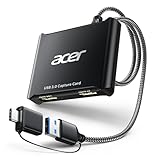
Title: Best Capture Card for Gaming in 2026: 5 Picks for Every Setup
The capture card market has matured significantly. In 2026, even mid-range options support 4K60 HDR passthrough, hardware encoding, and near-zero latency preview — features that were flagship-only two years ago. But the sheer number of SKUs makes choosing harder, not easier.
This guide cuts through the noise. Whether you are a console streamer dealing with HDCP lockouts, a dual-PC broadcaster optimizing for the lowest encode overhead, or a beginner who just wants to clip PS5 gameplay without tanking frame rates, there is a specific card for your setup. We cover five picks across four price tiers, explain the technical tradeoffs that actually matter, and give you a plain-English buyer’s guide at the end.
One note before the picks: if you stream PC games from a single gaming PC, you do not need a capture card at all. OBS can capture your desktop directly via NVENC or AMD VCE with minimal CPU overhead. Capture cards are for console capture or dual-PC streaming setups.
In a hurry? See the top-rated Capture Card for Gaming deals available right now:
🛒 Check Capture Card For Gaming Prices on Amazon →🛒 Best Price Today on Amazon
Prime members get fast, free shipping on everything above, plus member-only deals. New members get a 30-day free trial — cancel anytime.
Start 30-Day Prime Free Trial →See Today’s Amazon DealsQuick Comparison
| Capture Card | Max Input | Max Output (Passthrough) | Connection | Latency (Preview) |
|---|---|---|---|---|
| Elgato HD60 X | 4K30 / 1080p60 HDR | 4K30 HDR | USB 3.0 | ~70 ms |
| AVerMedia Live Gamer Portable 2 Plus | 1080p60 | 1080p60 | USB / SD standalone | ~130 ms |
| Razer Ripsaw HD | 1080p60 | None (no passthrough) | USB 3.0 | ~100 ms |
| Elgato 4K X | 4K60 HDR10+ | 4K144 HDR | USB 4 / Thunderbolt 3 | ~2 ms VRR |
| AVerMedia Live Gamer 4K | 4K60 HDR | 4K60 HDR | PCIe x4 (internal) | ~1 ms |
Prices are street prices as of Q2 2026. Latency figures are manufacturer-rated or community-measured averages.
The 5 Best Capture Cards for Gaming in 2026
Elgato HD60 X
The HD60 X is the default recommendation for console streamers on a moderate budget. It captures up to 4K30 or 1080p60 with HDR10 input, passes through at 4K30 HDR, and connects over USB 3.0 — no PCIe slot required, no driver headaches.
Key Specs
- Max capture resolution: 4K30 or 1080p60 HDR
- Passthrough: 4K30 HDR10
- Connection: USB 3.0
- Encoding: Software (uses host CPU or GPU via OBS NVENC/VCE)
- Compatible: PS5, Xbox Series X/S, Nintendo Switch, PC
- Preview latency: ~70 ms (acceptable for non-reaction-based games)
Pros & Cons
Pros
- Plug-and-play USB — works on Windows and macOS without extra software
- 4K HDR passthrough keeps your TV experience intact while streaming in 1080p60
- Tight OBS integration; recognized automatically as a capture source
- Compact, bus-powered — no external power brick
Cons
- No hardware encoder on the card itself; encode load falls on your PC
- 70 ms preview latency means you must play through your TV (not the capture preview) during live gameplay
- 4K capture is limited to 30 fps — you lose the 60 fps smoothness at 4K
Who It’s For
Console streamers with a mid-range streaming PC (any CPU with NVENC or AMD VCE) who want reliable 1080p60 or occasional 4K30 clips. Also solid for Switch capture. Not the right call if you need 4K60 capture or plan to play through the preview window.
AVerMedia Live Gamer Portable 2 Plus
AVerMedia Live Gamer Portable 2 Plus on Amazon
The LGP2 Plus earns its place as the most versatile card in this lineup. It does something none of the others do: standalone SD card recording. Plug it into power, insert a microSD, connect your console, and it records 1080p60 H.264 footage with no PC in the loop. This is genuinely useful for travel, LAN events, or recording sessions when your streaming PC is not available.
Key Specs
- Max capture resolution: 1080p60
- Passthrough: 1080p60
- Connection: USB 2.0 (PC mode) / standalone SD mode
- Encoding: Hardware H.264 in standalone mode; software encode in PC mode
- Compatible: PS5 (at 1080p), Xbox Series X/S, Switch, Wii U, older consoles
- Preview latency: ~130 ms in PC mode
Pros & Cons
Pros

- Standalone recording mode removes the PC dependency entirely
- Hardware H.264 encode in standalone mode — zero CPU load on any connected device
- Supports older HDMI devices and component video (via optional adapter)
- Budget-friendly at ~$120
Cons
- USB 2.0 limits PC-mode bandwidth; no 4K support at any frame rate
- 130 ms preview latency in PC mode is higher than competitors — definitely play through the TV
- Standalone mode caps at 1080p30 (not 60) on some older firmware versions; update firmware first
- No HDR passthrough
Who It’s For
Mobile streamers, event recorders, or anyone who captures across multiple locations where a streaming PC is not always available. Also the best pick for legacy console capture (PS3, Xbox 360, Wii) where 1080p is the ceiling anyway.
Razer Ripsaw HD
The Ripsaw HD is the budget floor of this list. At ~$80, it captures 1080p60 over USB 3.0 with a dead-simple setup — no drivers, no companion software required. It works immediately as a UVC device in OBS, Streamlabs, XSplit, or any capture software.
Key Specs
- Max capture resolution: 1080p60
- Passthrough: None
- Connection: USB 3.0
- Encoding: Software only (CPU/GPU)
- Compatible: PS5, Xbox Series X/S, Switch, PC (via secondary HDMI out)
- Preview latency: ~100 ms
Pros & Cons
Pros
- Cheapest path to reliable 1080p60 capture
- Zero-driver UVC design works across Windows, macOS, and Linux
- No companion software needed — OBS detects it instantly
- Durable braided cable included
Cons
- No video passthrough — you must use your TV’s HDMI input separately or tolerate 100 ms preview latency
- No HDR support at any stage
- No 4K, no standalone mode, no hardware encode
- Razer’s software suite (Synapse) is optional but clutters installs if you run other Razer peripherals
Who It’s For
Beginners who want to clip console footage cheaply and do not mind the TV-plus-capture split setup. Also useful as a secondary card for interview-style webcam replacement in multi-PC broadcast rigs. Skip it if passthrough matters to you.
Elgato 4K X
The 4K X is the premium external card and the one to buy if you want current-gen console capture at full fidelity. It captures 4K60 HDR10+ and passes through at up to 4K144 with VRR — meaning your TV or monitor sees the full PS5 or Xbox Series X signal, including variable refresh rate, while the card grabs a clean 4K60 stream for OBS.
Key Specs
- Max capture resolution: 4K60 HDR10+
- Passthrough: 4K144 HDR10+, VRR (HDMI 2.1)
- Connection: USB 4 / Thunderbolt 3 (USB 3.2 Gen 2 fallback at reduced resolution)
- Encoding: Software encode via host; HEVC and AV1 supported through OBS hardware encoders
- Compatible: PS5 (4K60, HDCP must be off), Xbox Series X (4K60), PC
- Preview latency: ~2 ms in Ultra Low Latency mode
Pros & Cons
Pros
- 2 ms preview latency in ULL mode — you can actually play through the capture preview on a fast monitor
- Full HDMI 2.1 passthrough preserves VRR and 4K120 on the TV side
- 4K60 HDR capture is the highest quality available from an external USB card in 2026
- Compact form factor; bus-powered over USB 4
Cons
- Requires USB 4 or Thunderbolt 3 for full 4K60 capture; USB 3.2 fallback drops to 4K30
- ~$200 — nearly double the HD60 X
- HDCP must be disabled on PS5 to capture at all (console setting, not a card limitation)
- Software encode still taxes the CPU/GPU; no on-card hardware encoder
Who It’s For
Serious console streamers or content creators who need broadcast-quality 4K60 footage and want to preserve their TV’s full gaming experience through passthrough. The 2 ms ULL mode makes it viable for dual-monitor setups where you play through the capture window. Requires a modern laptop or desktop with a USB 4 / Thunderbolt 3 port.
AVerMedia Live Gamer 4K
AVerMedia Live Gamer 4K on Amazon
The Live Gamer 4K is the only internal PCIe card on this list — and that distinction matters. By sitting on your motherboard’s PCIe x4 lane, it bypasses USB bandwidth constraints entirely, delivering stable 4K60 HDR capture with sub-1 ms latency. It also includes an on-board hardware H.264/H.265 encoder, meaning the card itself handles compression with near-zero CPU impact.

Key Specs
- Max capture resolution: 4K60 HDR (HDR10, HLG)
- Passthrough: 4K60 HDR
- Connection: PCIe x4 (internal)
- Encoding: Hardware H.264/HEVC on-card + software encode option
- Compatible: PS5, Xbox Series X/S, PC (secondary GPU output)
- Preview latency: ~1 ms
Pros & Cons
Pros
- On-card hardware encoder — offloads encoding from CPU completely; critical for high-end gaming PCs where every frame matters
- Sub-1 ms latency; effectively zero delay on the capture preview
- PCIe bandwidth eliminates the USB bottleneck — rock-solid 4K60 at all times
- No external cables, no hub conflicts, no power brick
Cons
- Requires a desktop PC with a free PCIe x4 slot — no laptop support
- Installation requires opening the case; more involved than USB options
- At ~$180, similar price to the 4K X but without HDMI 2.1 passthrough (tops at 4K60 HDR, not 4K144)
- Companion software (RECentral) is mediocre; most users skip it and go straight to OBS
Who It’s For
Dual-PC streamers with a dedicated desktop streaming rig. The hardware encoder means your streaming PC can encode 4K60 HEVC while running OBS, chat, alerts, and browser tabs without breaking a sweat. Also the best choice for anyone doing long 4K recording sessions where thermal stability and consistent bitrate matter more than portability.
Buyer’s Guide: Which Setup Do You Actually Need?
Solo PC Gaming (No Card Needed)
If you play games on the same PC you stream from, skip the capture card entirely. OBS with NVENC (NVIDIA) or HW H.265 (AMD) captures your desktop at 1080p60 or 1440p60 with 2-4% CPU overhead on any recent GPU. Adding a capture card in this scenario adds latency, complexity, and cost for zero benefit.
Dual-PC Streaming Setup
A dual-PC rig uses a dedicated streaming PC separate from your gaming PC. The gaming PC outputs HDMI to the capture card in the streaming PC. This decouples game performance from stream encode — your gaming PC runs at maximum frame rate while the streaming PC handles OBS.
For this setup, the AVerMedia Live Gamer 4K (PCIe) wins on performance. Its hardware encoder keeps the streaming PC’s CPU idle, and PCIe gives you the most stable capture path. If your streaming PC is a laptop, the Elgato 4K X over USB 4 is the next best option.
HDCP note: PS5 and Xbox Series X encrypt their HDMI output with HDCP by default. All capture cards fail with HDCP enabled — the signal simply will not pass. On PS5: Settings > System > HDCP > Disable. On Xbox: the Series X disables HDCP automatically when a capture device is detected. Always verify this before your first stream.
Console-Only Streamers (Single PC)
You have one gaming PC and a console. The console HDMI runs to the capture card, the card connects to your PC via USB, and you stream in OBS while the passthrough goes to your TV.
For PS5 / Xbox Series X at 4K: Elgato 4K X (USB 4 required).
For 1080p60 on a budget: Elgato HD60 X or Razer Ripsaw HD.
For Switch or retro consoles: AVerMedia LGP2 Plus.
Internal vs. External: When PCIe Wins
External USB cards are convenient and work on both desktops and laptops, but they share bandwidth with every other USB device on your system. On busy systems (USB headsets, external SSDs, webcams), this can cause dropped frames or stutter at high bitrates. Internal PCIe cards have dedicated bandwidth — they are immune to USB bus congestion. If you have a desktop streaming PC and you capture at 4K60 routinely, the PCIe option is worth the extra installation step.
Hardware vs. Software Encoding
Software encode uses your CPU or GPU (via NVENC/AMD VCE) through OBS. It produces higher-quality output at the same bitrate but uses host resources. On a powerful streaming PC this is fine. On a weaker machine, it will tank performance.
Hardware encode on the card (Live Gamer 4K only, in this lineup) offloads the task to dedicated silicon on the PCIe card. Quality is slightly below software NVENC at the same bitrate, but the CPU impact is near zero — ideal for streaming PCs that also run OBS overlays, browser source alerts, and chat simultaneously.

OBS Integration Tips
- Set your OBS capture source to the card’s device name, not a window or display capture
- Enable low latency mode in OBS > Video Capture Device settings for the minimum preview delay
- For PS5 capture, set your PS5 output to YUV 4:2:0 (not 4:2:2) — some cards choke on 4:2:2 at 4K60
- If you see a black screen, HDCP is almost certainly still enabled on the console
- Use HEVC (H.265) output in OBS if your streaming PC supports it — same visual quality at roughly half the bitrate of H.264
FAQ
Do I need a capture card for PC game streaming?
No. OBS captures PC gameplay directly. Capture cards are for console input or dual-PC rigs.
Will a capture card work with my PS5?
Yes, but you must disable HDCP in PS5 system settings first. All five cards above are PS5-compatible once HDCP is off.
What is video passthrough and why does it matter?
Passthrough sends the console’s HDMI signal through the card to your TV unmodified, at full resolution and refresh rate. Without it, you either play through the capture preview (with lag) or need a separate HDMI connection to your TV.
Can I use a capture card without a streaming PC?
The AVerMedia LGP2 Plus supports standalone SD card recording — no PC required. All others need a PC connected.
What resolution should I stream at?
Most platforms (Twitch, YouTube) recommend 1080p60 for live streams. 4K capture is mainly useful for local recording and edited VODs, not live output.
Verdict
- Best overall: Elgato 4K X — 4K60 HDR capture, HDMI 2.1 passthrough, and 2 ms ULL mode in one external package
- Best budget: Razer Ripsaw HD — dead-simple 1080p60 capture under $80
- Best for dual-PC rigs: AVerMedia Live Gamer 4K — hardware encoding and PCIe stability make it the pro streaming choice
- Best for portability / travel: AVerMedia LGP2 Plus — standalone SD recording sets it apart
- Best mid-range: Elgato HD60 X — reliable 4K30 passthrough and 1080p60 capture at a fair price
Match the card to your actual setup. Overspending on a 4K card when you stream at 1080p is wasted money. Underspending on a card without passthrough will frustrate you the first time you try to play a reaction-heavy game through a 100 ms preview.
Related Articles
Looking for more on this topic? Browse the hand-picked guides below — each one applies the same scoring rubric used in this review.
Frequently Asked Questions
Do I need an internal or external capture card?
Internal PCIe cards give lower latency and higher sustained throughput, making them ideal for a single powerful streaming PC. External USB cards are more flexible, work with laptops and move between setups easily. If you run a dedicated two-PC setup, internal is the stronger choice; for portability and console capture, external wins.
What is passthrough and why does it matter?
Passthrough sends the console signal straight to your monitor or TV with no processing delay while a copy goes to the capture card. Without it you would play on the delayed captured feed, which is unplayable in fast games. Confirm the passthrough spec supports your target resolution and refresh rate, not just the recording spec.
Can a capture card record 4K120 or 1440p high refresh?
Higher-end 2026 cards record 4K60 or 1440p120 while passing through 4K120 with VRR and HDR intact. Cheaper cards often pass through 4K60 only, which will lock a PS5 or Series X out of its 120Hz modes. Read the passthrough and record specs separately, since marketing usually quotes the more impressive number.
Does HDCP stop me capturing console gameplay?
It can. PS5 applies HDCP to media apps and, by default, to some system output; disable HDCP in the console’s system settings to capture gameplay legitimately. Xbox does not apply it to gameplay. Streaming copyrighted video content is a separate matter and remains blocked, which is exactly what HDCP is designed to do.
What PC specs do I need alongside a capture card?
For 1080p60 capture with software encoding, a six-core CPU is adequate. For 4K capture, budget a modern eight-core CPU, 16GB or more of RAM, and a fast NVMe drive, because uncompressed capture writes enormous files. Using GPU encoding through NVENC or AMF offloads most of the work and keeps CPU usage low.
Ready to decide? Our #1 pick for 2026 is the Capture Card.
Live price & availability on Amazon.


