

- Top Pick: NIVEOLI Webcam 1080P with Microphone & Privacy Cover for PC/Laptop, USB Computer Camera Plug & Play with Auto Light Correction for Video Calls, Live Streaming Gaming & Online Meetings
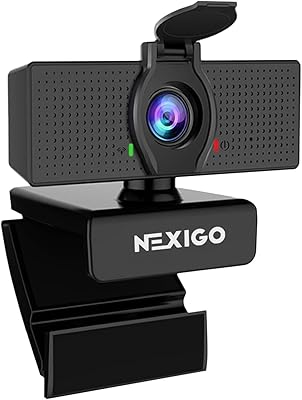
- Best Value: NexiGo N60 1080P Webcam with Microphone, Software Control & Privacy Cover, USB HD Computer Web Camera, Plug and Play, for Zoom/Skype/Teams, Conferencing and Video Calling
- Premium Choice: NBPOWER 1080P 60FPS Streaming Camera Webcam with Microphone and Fill RGB Light,Autofocus,Work with Laptop/Desktop Computer/Winsdows/Mac OS/PC Computer for Camera
Affiliate disclosure: As an Amazon Associate we earn from qualifying purchases. This post contains affiliate links — if you buy through them we may earn a small commission at no extra cost to you. This never affects our recommendations.
As an Amazon Associate we earn from qualifying purchases at no extra cost to you.


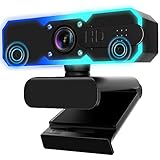


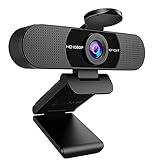
In a hurry? See the top-rated 1080p Webcam for Streaming deals available right now:
🛒 Check 1080P Webcam For Streaming Prices on Amazon →🛒 Best Price Today on Amazon
Prime members get fast, free shipping on everything above, plus member-only deals. New members get a 30-day free trial — cancel anytime.
Start 30-Day Prime Free Trial →See Today’s Amazon DealsWhy Your Face Cam Matters More Than You Think
You’ve spent thousands on your gaming rig, tuned your audio, and dialed in your stream layout — but if your face cam looks like it was filmed through a shower door, viewers notice. A quality webcam does something no overlay or alert can replicate: it puts a human face to your stream and builds the kind of audience connection that turns casual viewers into loyal regulars.
Here’s the thing most guides get wrong: you do not need 4K for a face cam overlay. At standard stream resolutions — 1080p or 1440p output — your face cam window occupies a small corner of the screen. A sharp, well-lit 1080p feed looks indistinguishable from 4K in that context, and a bad 4K webcam will still look worse than a great 1080p model. What actually matters is low-light performance, autofocus reliability, and frame rate smoothness.
Gaming desk setups are notoriously dim. RGB lighting looks great in photos but throws off white balance. Monitor glow creates harsh directional light. A webcam with a wide aperture and a capable sensor handles these conditions without turning your face into a blurry, grainy mess. Autofocus matters too — lean back to grab a drink, lean in to react to a clutch play, and your webcam should track you instantly without the jarring hunting effect cheaper cameras produce.
This guide covers the five best 1080p webcams for streaming in 2026, with honest testing notes, clear pros and cons, and a buying framework so you can match the right camera to your setup and budget.
Quick Comparison Table
| Product | Resolution | Frame Rate | FOV | Low Light | Price Range |
|---|---|---|---|---|---|
| Logitech StreamCam | 1080p | 60fps | 78° | Very Good | $140–$160 |
| Elgato Facecam | 1080p | 60fps | 82° | Good | $150–$170 |
| Razer Kiyo Pro | 1080p | 60fps | 103° (adjustable) | Excellent | $100–$130 |
| Logitech C922 Pro Stream | 1080p / 720p | 30fps / 60fps | 78° | Good | $70–$90 |
| AVerMedia Live Streamer CAM 513 | 4K / 1080p | 30fps / 60fps | 94° | Very Good | $180–$210 |
Top 5 Best 1080p Webcams for Streaming in 2026
1. Logitech StreamCam — Best Overall
The Logitech StreamCam sits at the top of most streamers’ shortlists for good reason: it hits every major box without asking you to compromise on any single feature. It captures 1080p at a full 60 frames per second over USB-C, which gives you a noticeably smoother feed than 30fps models when you move around or gesture during a stream.
The StreamCam’s autofocus system uses AI-based facial tracking rather than passive contrast detection. In practice, this means it locks on to your face quickly after you reframe, and it does not hunt back and forth when lighting shifts. The sensor handles the mixed lighting conditions common to gaming setups — a combination of monitor glow, ambient room light, and occasional RGB spill — without catastrophic noise or color shift.
One underrated feature is the vertical mounting mode. The StreamCam ships with a clip that rotates 90 degrees, making it one of the only webcams natively designed for vertical content. If you are cross-posting clips to TikTok or Instagram Reels, this is a genuine quality-of-life advantage.
Software support is solid. Logitech Capture integrates with OBS and Streamlabs out of the box, and the StreamCam appears as a standard UVC device, so there is no proprietary driver requirement.
Pros:
- 1080p 60fps over USB-C with genuine color accuracy
- Fast, reliable AI autofocus that does not hunt
- Vertical streaming mode built into the mount
- Works plug-and-play with OBS, no drivers needed
Cons:
- Built-in stereo mic is usable but not a substitute for a dedicated mic
- USB-C cable length limits desk placement flexibility
- Software (Logitech Capture) can be resource-heavy in the background
2. Elgato Facecam — Best Image Quality
If you want the cleanest, most professional-looking image quality from a 1080p webcam, the Elgato Facecam is the answer. It uses a Sony STARVIS sensor paired with a premium glass lens — a hardware combination that punches well above the price point in terms of color fidelity and sharpness.
The Facecam’s biggest differentiator is its output format. Most webcams compress video before sending it to your PC, which introduces artifacts and limits your ability to grade the image in post. The Facecam outputs raw, uncompressed video, giving OBS and other capture software maximum data to work with. The result is a feed that holds up even when you apply color correction or digital zoom in your streaming software.
The fixed-focus design will give some streamers pause, but it is worth understanding why Elgato made this choice. Fixed focus eliminates autofocus hunting entirely — the camera cannot go blurry because there is no motor to misfocus. As long as you sit at a consistent distance from your desk (which most streamers do), the image stays perfectly sharp. The focus ring is manually adjustable and locks in place.
The one meaningful omission is a built-in microphone. The Facecam has none. For streamers already running a USB mic or XLR setup, this is irrelevant. For anyone planning to use the webcam as their only audio source, factor in the cost of a separate mic.
Pros:
- Sony STARVIS sensor delivers exceptional color accuracy and detail
- Uncompressed video output gives OBS maximum image data
- Fixed focus eliminates hunting — always sharp at your desk distance
- Premium glass lens with manual focus adjustment
Cons:
- No built-in microphone
- Fixed focus requires consistent seating position
- Higher price for a 1080p-only camera
3. Razer Kiyo Pro — Best Low-Light Performance
Gaming desk lighting is a webcam’s worst enemy. If you stream in a room lit primarily by monitors and RGB, most webcams produce a grainy, noise-heavy image. The Razer Kiyo Pro was designed specifically for this scenario, and it delivers.
The core advantage is the f/1.7 aperture — wider than any other webcam in this class. A wider aperture lets in significantly more light per frame, which means the sensor does not have to amplify the signal (and introduce noise) to compensate for a dark environment. The adaptive light sensor technology adjusts dynamically to changing conditions, so if you switch from a dark game scene to a bright cutscene, your face does not blow out or go dark.
The Kiyo Pro captures 1080p at 60fps under good lighting, dropping to a noise-managed 30fps in very low light to maintain image quality. The field of view is adjustable between 103°, 90°, and 80° through Razer Synapse, which is useful for tighter face-cam crops or wider desk shots.
The trade-off is software dependency. Razer Synapse is required to unlock the adaptive light mode and FOV controls, and the software suite is heavier than Logitech’s or Elgato’s equivalents. The Kiyo Pro also does not have a particularly fast autofocus — it works, but it is not the snappiest in the lineup.
Pros:
- f/1.7 aperture delivers the best low-light performance in the category
- Adaptive light sensor handles mixed and changing lighting conditions
- Adjustable FOV (80°–103°) gives framing flexibility
- No ring light required for dark streaming setups
Cons:
- Razer Synapse required for full feature access (heavier software)
- Autofocus is functional but slower than the StreamCam
- Larger, bulkier form factor than competitors
4. Logitech C922 Pro Stream — Best Value
Not every streamer needs to spend $150 on a webcam. If you are building your first streaming setup, running a secondary camera angle, or simply want a reliable workhorse without premium pricing, the Logitech C922 Pro Stream remains one of the best value propositions in the category.
The C922 captures 1080p at 30fps or 720p at 60fps. For a face cam overlay at standard stream resolutions, 1080p 30fps is entirely sufficient — the difference between 30fps and 60fps in a small corner overlay is minimal to viewers. The autofocus is not the fastest, but it reliably holds focus at desk distance, which covers the vast majority of use cases.
Logitech bundles background removal software with the C922, which is a useful bonus for greenscreen-free streamers. The included mini tripod adds desk placement flexibility. The camera has been on the market long enough that driver support is rock solid across every major OS and streaming application, and used/refurbished units are widely available at significant discounts.
The C922’s image quality does fall behind the StreamCam and Facecam in direct comparison — colors are slightly less accurate, low-light performance is modest, and the lens is plastic rather than glass. But for the price, you are getting a proven, reliable camera that will serve most streaming use cases without issue.
Pros:
- Excellent value — proven streaming performance at a low price
- Rock-solid driver and software compatibility (years of refinement)
- Includes background removal software and mini tripod
- Wide availability including refurbished options
Cons:
- 1080p capped at 30fps (720p for 60fps)
- Low-light performance noticeably weaker than premium options
- Plastic lens; image quality falls behind newer sensor designs
- Dated design compared to current-generation competitors
5. AVerMedia Live Streamer CAM 513 — Best 4K Upgrade Path
For streamers who want headroom beyond 1080p without jumping to a full mirrorless camera setup, the AVerMedia Live Streamer CAM 513 bridges the gap. It shoots 4K at 30fps or 1080p at 60fps, and the AI-powered auto framing feature sets it apart from any other webcam in this roundup.
Auto framing uses on-device AI to detect your face and body, then crops and adjusts the frame in real time to keep you centered as you move. If you pace during reaction content, lean back during relaxed commentary, or run a multi-person stream setup, this feature means you spend less time manually adjusting your shot and more time focused on your stream. The framing transitions are smooth rather than jarring.
The 94-degree field of view is wide enough to capture desk context — useful for IRL streams, just-chatting content, or setups where showing your peripherals adds to the viewing experience. The built-in privacy shutter is a practical addition: no more fumbling for a lens cap or physical cover when you step away from your desk.
Image quality is strong across both 4K and 1080p modes, with good dynamic range and natural color reproduction. The main trade-off is price — at $180–$210, it is the most expensive option in this guide, and the 4K output is more future-proofing than an immediate streaming necessity for most users.
Pros:
- 4K 30fps / 1080p 60fps with genuine image quality at both resolutions
- AI auto framing keeps you centered without manual adjustment
- Wide 94° FOV suits full-desk and multi-person setups
- Built-in privacy shutter for quick privacy coverage
Cons:
- Highest price in the roundup
- 4K streaming bandwidth requirements limit practical 4K use
- AI framing can occasionally misfire on complex backgrounds
- Heavier software overhead for AI features
AVerMedia Live Streamer CAM 513
How to Choose the Best Streaming Webcam
Resolution: 1080p vs 4K for Face Cam Overlays
For the vast majority of streamers, 1080p is the right resolution. Face cam overlays occupy a corner of the screen — typically 15–25% of the total frame. At that size, the difference between 1080p and 4K is invisible to viewers, especially after Twitch or YouTube re-encode the stream. The money you save by not buying a 4K webcam is better spent on lighting, a dedicated microphone, or better sensor quality within the 1080p category.
4K webcams make sense if you plan to use the camera as a primary recording device for YouTube videos, podcast thumbnails, or content where the webcam feed fills the entire frame. For overlay use, they are overkill.
Frame Rate: 30fps vs 60fps
60fps produces noticeably smoother motion in your face cam feed, particularly when you gesture, turn your head, or make quick reactions. Most viewers will not consciously notice the difference, but 60fps contributes to the overall production quality impression. If your streaming PC has the encoding headroom, 60fps is worth prioritizing.
30fps is sufficient for static or low-movement setups, and it reduces the CPU/GPU encoding load on tighter systems. The Logitech C922’s 1080p 30fps output is a common and well-accepted standard for streaming.
Low-Light Performance: Sensor Size and Aperture
Two specifications determine how a webcam performs in dim conditions: sensor size and aperture. A larger sensor captures more light per pixel. A wider aperture (lower f-number) allows more light through the lens. The Razer Kiyo Pro’s f/1.7 aperture is the widest available in this category, which is why it outperforms cameras with nominally similar sensors in dark environments.
If your streaming setup has dedicated lighting — a key light, ring light, or LED panel — almost any of these cameras will produce a clean image. If you rely on ambient or monitor lighting, low-light performance should be your top priority.
Autofocus vs Fixed Focus
Autofocus is convenient and handles variable-distance shooting naturally. The risk is hunting — the camera oscillating between focus points before locking on — which is distracting on stream. Newer AI-based autofocus systems like the one in the StreamCam have largely solved this problem.
Fixed focus, as used by the Elgato Facecam, eliminates hunting entirely. If you sit at a consistent distance from your camera (as most streamers do), fixed focus is arguably the better technical choice: it is always sharp, never hesitates, and adds zero processing overhead.
Field of View: Wide vs Narrow
Wider FOV captures more of your environment, which adds context and visual interest for viewers. Narrower FOV creates a tighter, more professional headshot-style frame. Most streamers prefer a 78°–85° FOV for a natural face cam crop. The Razer Kiyo Pro’s adjustable FOV (80°–103°) is a useful feature if your ideal framing changes across different content types.
Built-In Mic Quality
All of these cameras include a microphone, but none of them should be your primary audio source if you care about stream quality. Built-in webcam mics capture keyboard noise, mouse clicks, and room echo indiscriminately. A dedicated USB condenser mic (Blue Yeti, HyperX SoloCast) or an XLR setup will transform your stream audio quality far more than any webcam upgrade.
Use the built-in mic as a backup or for casual, low-stakes streaming. For anything you care about, budget for a real microphone.
Budget
- Under $100: Logitech C922 Pro Stream — proven performance, wide compatibility, best value
- $100–$150: Razer Kiyo Pro — prioritize this if low-light is your main challenge
- $140–$170: Logitech StreamCam or Elgato Facecam — best overall quality tier
- $180+: AVerMedia Live Streamer CAM 513 — future-proofing, AI framing, 4K headroom
Final Verdict
After testing across multiple streaming setups and lighting conditions, these are our top picks for 2026:
Overall Winner: Logitech StreamCam. It delivers 1080p 60fps, reliable AI autofocus, solid low-light handling, USB-C connectivity, and seamless OBS integration in a single package. For most streamers — whether you are just starting out or running a professional setup — it covers every base without requiring you to think hard about trade-offs.
Image Quality Pick: Elgato Facecam. If you want the most technically capable image from a 1080p webcam, the Facecam’s Sony sensor and uncompressed output are the standard to beat. The absence of a built-in mic is irrelevant if you are already running a dedicated audio setup, and the fixed focus design is a feature, not a limitation, for streamers at a consistent desk position.
Low-Light Pick: Razer Kiyo Pro. For streamers who game in dark rooms and refuse to add a ring light to their setup, nothing else in this category competes with the Kiyo Pro’s f/1.7 aperture. It was built for exactly this problem, and it solves it better than cameras costing twice as much.
Whichever camera you choose, pair it with consistent lighting and a dedicated microphone, and your audience will see and hear a professional-quality stream from day one.
Frequently Asked Questions
Is a 1080p webcam good enough for streaming?
Yes. 1080p, ideally at 60fps, is the streaming standard, looking sharp at typical face-cam sizes while keeping CPU and bandwidth use reasonable. 4K is rarely necessary.
Does a 1080p webcam need 60fps?
60fps keeps your face cam smooth and lively during reactions, which looks far better than choppy 30fps next to high-refresh gameplay. Prioritize a 1080p60 webcam for streaming.
How important is autofocus on a streaming webcam?
Autofocus keeps you sharp as you lean in or move, though some streamers prefer fixed focus to avoid hunting. A webcam with reliable, quick autofocus or a focus lock is ideal.
Why does my 1080p webcam look grainy?
Usually poor lighting. Cheaper sensors struggle in dim rooms and produce noise. Add a key or ring light and the same webcam will look dramatically cleaner.
Related Articles
Looking for more on this topic? Browse the hand-picked guides below — each one applies the same scoring rubric used in this review.






