- Top Pick: KOTIN Prebuilt Gaming PC RTX 5070 12GB, Ryzen 7 9700X, 32GB DDR5, 1TB SSD
- Best Value: KOTIN Gaming PC Desktop, Ryzen 7 8700F, RTX 5060 Ti 8GB, 16GB DDR5, 1TB SSD
- Premium Choice: CyberPowerPC Gamer Xtreme VR Gaming PC, Intel Core i9-14900KF 3.2GHz, GeForce RTX 5070 12GB, 32GB DDR5, 2TB PCIe 4.0 SSD, WiFi Ready & Windows 11 Home (GXiVR8080A39)
Affiliate disclosure: As an Amazon Associate we earn from qualifying purchases. This post contains affiliate links — if you buy through them we may earn a small commission at no extra cost to you. This never affects our recommendations.
Building your own gaming PC in 2026 gives you better performance per dollar than any prebuilt at equivalent pricing — and it’s more accessible than ever with tool-free cases, modular PSUs, and comprehensive online resources. Whether you’re on a tight $600 budget or ready to invest in a $1800 powerhouse, we’ve done the hard work of choosing compatible, value-optimized parts for each tier.
Each build below is balanced — no single component bottlenecks another, and every part has been selected for reliability, value, and gaming performance at its target resolution.
As an Amazon Associate we earn from qualifying purchases at no extra cost to you.





In a hurry? See the top-rated Gaming PC Build deals available right now:
🛒 Check Gaming Pc Build Prices on Amazon →🛒 Best Price Today on Amazon
Prime members get fast, free shipping on everything above, plus member-only deals. New members get a 30-day free trial — cancel anytime.
Start 30-Day Prime Free Trial →See Today’s Amazon DealsBuild Tier 1: $600 — 1080p 144Hz Gaming PC
This budget build targets smooth 1080p 144Hz gaming in all current AAA titles. Every part was chosen for the best fps-per-dollar ratio at this resolution.
Part List — $600 Budget Build
| Component | Part |
|---|---|
| CPU | AMD Ryzen 5 7600X |
| Motherboard | MSI PRO B650M-A WiFi |
| RAM | 16 GB DDR5-5600 (2×8 GB) |
| GPU | NVIDIA RTX 4060 |
| Storage | 1 TB NVMe SSD (PCIe 4.0) |
| PSU | 650W 80+ Gold Modular |
| Case | Fractal Pop Air (mid-tower ATX) |
| Total |
Note: Adjust by substituting the B650M board for a B550 + Ryzen 5 5600X combo to bring closer to $700 if B650 pricing hasn’t dropped in your region.
Performance Expectations
- Targets 100–144 fps at 1080p High/Ultra in demanding AAA titles (Cyberpunk 2077, Alan Wake 2, The Witcher 4).
- Hits 200–300+ fps in esports titles (CS2, Valorant, Apex Legends) at 1080p Medium-High settings.
- RTX 4060 + DLSS 3 Frame Generation pushes well past native fps in supported games — effectively free performance.
- The Ryzen 5 7600X is a fast, efficient CPU with no meaningful bottleneck for the RTX 4060 at 1080p.
Compatibility Notes
- B650 boards require DDR5; no DDR4 support — ensure RAM kit matches.
- RTX 4060 uses a single 8-pin or 16-pin PCIe connector; standard 650W PSU handles it comfortably.
- The Fractal Pop Air has excellent airflow for budget builds — no premium cooling required with the 7600X’s included cooler.
Build Tier 2: $1000 — 1440p 144Hz Gaming PC
This mid-range build hits the sweet spot for PC gaming in 2026: 1440p at 100–144 fps in demanding titles with no major compromises. It’s the build we’d recommend to most gamers upgrading from console or an aging 1080p rig.
Part List — $1000 Build
| Component | Part |
|---|---|
| CPU | AMD Ryzen 5 7600X or Intel i5-14600K |
| Motherboard | ASUS Prime B650-Plus WiFi |
| RAM | 32 GB DDR5-6000 (2×16 GB) |
| GPU | AMD RX 7800 XT |
| Storage | 1 TB NVMe SSD PCIe 4.0 |
| CPU Cooler | DeepCool AK400 (120mm tower) |
| PSU | 750W 80+ Gold Modular |
| Case | Lian Li LANCOOL 216 |
| Total |
Performance Expectations
- Averages 90–115 fps at 1440p Ultra in demanding AAA titles; 130+ fps at High settings.
- FSR 3 Frame Generation available on the RX 7800 XT pushes fps above 140 in many supported titles.
- 32 GB RAM is future-proof for gaming and light content creation workloads without compromise.
- Comfortably handles 1080p 240Hz gaming as a secondary use case — great for esports titles.
Compatibility Notes
- RX 7800 XT draws up to 263W; the 750W PSU provides comfortable headroom with the Ryzen 5 7600X.
- If choosing the i5-14600K, use a B760 or Z790 motherboard instead — not B650.
- DDR5-6000 CL30 hits AMD’s EXPO sweet spot for Zen 4; enable XMP/EXPO in BIOS after first boot.
- The LANCOOL 216 ships with two 160mm front fans — excellent thermal performance out of the box.
Build Tier 3: $1800 — 4K Gaming PC
This high-end build is designed for 4K gaming at 60fps+ natively in demanding titles, or 100fps+ with DLSS/FSR upscaling. It also handles creative workloads like video editing, 3D rendering, and streaming without breaking a sweat.
Part List — $1800 Build
| Component | Part |
|---|---|
| CPU | Intel Core i7-14700K |
| Motherboard | MSI MAG Z790 Tomahawk WiFi DDR5 |
| RAM | 32 GB DDR5-6400 (2×16 GB) |
| GPU | NVIDIA RTX 4080 Super |
| Storage | 2 TB NVMe SSD PCIe 4.0 |
| CPU Cooler | be quiet! Dark Rock Pro 4 or 240mm AIO |
| PSU | 850W 80+ Gold Modular |
| Case | Fractal Torrent (mesh, ATX) |
| Total |
Trim to ~$1800 by substituting an RX 7900 XT or RTX 4070 Ti Super for the RTX 4080 Super, or choosing a $149 B760 board with the i5-14600K.
Performance Expectations
- RTX 4080 Super averages 75–95 fps native at 4K Ultra in demanding AAA titles; above 60 fps in virtually everything.
- DLSS 3 Quality mode boosts effective 4K fps to 110–130 fps in supported titles — approaching 4K 120Hz viability.
- The i7-14700K provides ample CPU performance headroom for streaming, video editing, and running background workloads simultaneously.
- 2 TB NVMe storage handles large modern game libraries (most AAA titles are 50–150 GB) without constant management.
Compatibility Notes
- RTX 4080 Super requires a 16-pin (PCIe 5.0 connector) or the included 3×8-pin adapter; verify your PSU has three 8-pin PCIe cables.
- 850W PSU is recommended minimum for RTX 4080 Super + i7-14700K under sustained load; a 1000W unit provides extra margin.
- The i7-14700K runs hot under all-core load — a 240mm AIO or high-end air cooler like the be quiet! Dark Rock Pro 4 is strongly recommended.
- Z790 boards are required for i7-14700K overclocking; B760 is sufficient if you won’t overclock and want to cut $100.
Buying Guide
Where to Splurge vs. Save
Always prioritize GPU budget — it’s the single biggest determinant of gaming performance. CPU is second; a mid-range CPU like the Ryzen 5 7600X is rarely the bottleneck in any gaming scenario. RAM: 32 GB DDR5 is future-proof; don’t go below 16 GB. Storage: NVMe SSD is standard in 2026 — SATA SSDs and HDDs are not worth choosing as a primary drive. Case: spend just enough for adequate airflow; the visual premium of a $200 case over a $80 case is purely cosmetic. PSU: never cheap out — a quality 80+ Gold modular unit protects your entire investment.
Prebuilt vs. DIY in 2026
DIY builds consistently offer 15–25% more performance per dollar than prebuilt PCs at equivalent price points. Prebuilts often use lower-end PSUs, budget coolers, and slower RAM to hit their price tags. However, prebuilts make sense if you lack build confidence, want warranty service on the whole system, or need the PC immediately without assembly time. If you go prebuilt, check the GPU tier and PSU wattage before buying — these are the most commonly cut corners.
Upgrade Path Planning
Choose your platform with future upgrades in mind. AM5 (Ryzen 7000 and 9000 series) supports CPUs through at least 2027 per AMD’s roadmap — a solid long-term platform. Intel’s LGA1851 (Core Ultra 200 series) is newer but equally supported. Avoid LGA1700 (12th/13th/14th gen) for a fresh build in 2026 — it’s end-of-life from Intel’s perspective. Plan your GPU upgrade cycle: most gamers upgrade GPU every 3–4 years, so choose a platform that will still be current when you swap GPU next.
Monitor Recommendation by Build Tier
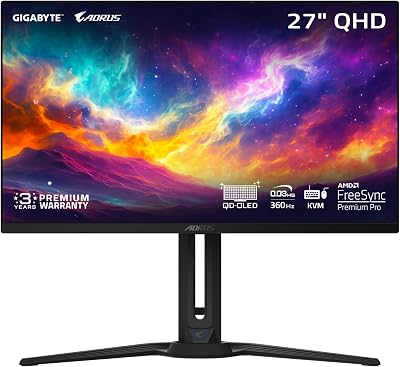
Your monitor should match your build. For the $600 build: a 24″ 1080p 144Hz IPS panel ($150–200) is ideal. For the $1000 build: a 27″ 1440p 144Hz or 165Hz IPS ($250–350) maximizes the RX 7800 XT. For the $1800 build: a 27″ or 32″ 4K 144Hz OLED or IPS ($500–800) is the right pairing for the RTX 4080 Super. Don’t pair a $1800 GPU build with a 1080p monitor — you’ll waste the majority of your GPU’s capability.
FAQ
- How much should I spend on a gaming PC in 2026?
- Spend what matches your target resolution and refresh rate. $700–900 for 1080p 144Hz, $1000–1300 for 1440p 144Hz, and $1800–2200 for serious 4K gaming. Don’t overspend for a resolution you won’t use.
- Is AMD or Intel better for gaming builds in 2026?
- Both are excellent choices. AMD Ryzen 7000/9000 series on AM5 offers strong multi-core performance and a long-term platform. Intel 14th gen competes closely in gaming fps. The Ryzen 7 7800X3D has the best pure gaming performance of any CPU due to 3D V-Cache, though it costs more than budget-tier Intel options.
- Do I need 32 GB RAM for gaming in 2026?
- 16 GB is adequate for gaming-only builds, but 32 GB is recommended for anyone who streams, records, uses Chrome with many tabs, or runs background applications while gaming. The cost difference is small enough that 32 GB is the standard recommendation for new builds.
- Can I upgrade parts later if I start with the $600 build?
- Yes — the AM5 platform in the $600 build supports future Ryzen CPU upgrades. The GPU slot is PCIe 5.0, compatible with any future AMD or NVIDIA GPU. Focus on GPU and RAM first as upgrade priorities; the Ryzen 5 7600X will remain capable for gaming through 2027+.
- Is it worth building your own PC or buying prebuilt?
- DIY offers 15–25% more performance per dollar at most price points. If you’re comfortable following a build guide (which takes 2–4 hours), DIY is strongly recommended. Prebuilts are worth considering only if you value the warranty coverage, immediate availability, or don’t want to assemble yourself.
Final Verdict
The best gaming PC build in 2026 is the one that matches your resolution target without overspending on what you won’t use. Our $600 1080p build delivers exceptional value with the RTX 4060 and Ryzen 5 7600X. The $1000 1440p build is where most gamers should land — the RX 7800 XT at 1440p is a genuinely impressive gaming experience for the money.

If you’re ready to invest in 4K, the $1800 build with the RTX 4080 Super is the current gold standard — powerful enough to stay relevant through the decade and capable of handling creative workloads alongside gaming. Whatever your budget, build smart: prioritize GPU, don’t skimp on PSU, and pair your system with a monitor worthy of its performance.
Related Articles
Looking for more on this topic? Browse the hand-picked guides below — each one applies the same scoring rubric used in this review.
Frequently Asked Questions
How much should I spend for 1080p, 1440p and 4K?
As a rough 2026 guide, a solid 1080p high-refresh build lands around $700 to $900, a 1440p high-settings build around $1200 to $1600, and a genuine 4K build with headroom starts near $2000. Those figures exclude monitor, keyboard and mouse, so budget another $250 to $500 for peripherals.
How do I balance CPU and GPU spending?
The higher your resolution, the more the GPU dominates, so at 4K you can pair a mid-range CPU with a top-tier card. At 1080p with a high-refresh monitor the CPU sets your frame ceiling, so spend more there. A common split is roughly one third CPU and platform, half GPU, and the remainder on everything else.
What power supply do I need?
Size the PSU to the GPU plus about 200 watts of headroom for transient spikes. Most mid-range builds are comfortable at 650 to 750 watts, high-end at 850 to 1000. Choose an 80 Plus Gold unit from a reputable OEM, and prefer ATX 3.1 with a native 12V-2×6 connector if your card uses one.
Is DDR5 worth it and how much RAM should I buy?
DDR5 is now the default on both AM5 and modern Intel platforms, and 32GB in two sticks is the 2026 sweet spot since several recent games exceed 16GB. Target 6000MT/s with CL30 on AMD and 6400MT/s or higher on Intel, and remember to enable EXPO or XMP in BIOS or you will run at base speed.
Should I build it myself or buy a prebuilt?
Building saves roughly 10 to 20 percent, gives you full part choice, and takes two to three hours with a modern manual. Prebuilts win on single-point warranty, immediate availability and occasionally GPU pricing during shortages. If you buy prebuilt, verify the PSU brand, motherboard model and whether the RAM runs in dual channel.