

A full gaming PC tower costs roughly $650–$800 for a budget 1080p build, $1,400–$1,700 for a strong 1440p machine, and $2,800–$4,000+ for a high-end 4K rig in 2026 — and the tables below show exactly where every dollar goes. If you searched for a CPU-and-all-parts price list to plan a real build, this is the current state of the market: processor, motherboard, RAM, storage, PSU, GPU, cooler, and case, priced across three tiers with totals that actually add up.
All figures are typical US street price ranges, not single-store listings. Component prices drift with sales cycles, GPU launch timing, and DRAM/NAND supply swings, so treat these as planning numbers rather than quotes.
As an Amazon Associate we earn from qualifying purchases at no extra cost to you.


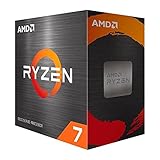

CPU and All Parts Price List at a Glance
| Component | Budget tier | Mid-range tier | High-end tier |
|---|---|---|---|
| CPU | $100–$220 | $250–$400 | $450–$650 |
| GPU | $250–$350 | $550–$900 | $1,000–$2,800 |
| Motherboard | $80–$130 | $140–$220 | $280–$500 |
| RAM | $35–$60 | $90–$140 | $130–$250 |
| Storage (NVMe SSD) | $45–$70 | $100–$140 | $160–$300 |
| PSU | $50–$75 | $90–$140 | $150–$230 |
| Case | $50–$80 | $90–$150 | $160–$300 |
| CPU cooler | $0–$40 | $50–$100 | $130–$200 |
| Realistic total | $650–$800 | $1,400–$1,700 | $2,800–$4,000 |
The GPU should eat roughly 35–45% of your total budget. If your planned GPU share is under 30%, you’re overspending somewhere else; over 50% and you’ve probably starved the CPU, PSU, or storage.
CPU Price List: What Each Tier Buys
| Tier | Example processors | Typical price | Cores / threads |
|---|---|---|---|
| Budget | Intel Core i5-12400F | $100–$130 | 6 / 12 |
| Budget | AMD Ryzen 5 5600 | $110–$140 | 6 / 12 |
| Budget | AMD Ryzen 5 7600 | $180–$220 | 6 / 12 |
| Mid-range | AMD Ryzen 5 9600X | $200–$260 | 6 / 12 |
| Mid-range | Intel Core i5-14600K | $230–$280 | 14 / 20 |
| Mid-range | Intel Core Ultra 5 245K | $270–$320 | 14 / 14 |
| Mid-range | AMD Ryzen 7 7800X3D | $340–$400 | 8 / 16 |
| High-end | Intel Core Ultra 7 265K | $350–$420 | 20 / 20 |
| High-end | AMD Ryzen 7 9800X3D | $450–$550 | 8 / 16 |
| High-end | AMD Ryzen 9 9950X | $550–$650 | 16 / 32 |
The jump that matters most for pure gaming is the X3D line — AMD’s 3D V-Cache chips consistently outpace non-X3D parts at the same core count, which is why the 7800X3D still commands a premium years after launch. Chips above ~$400 only pay off at high refresh rates or in mixed gaming-plus-productivity workloads; a 9800X3D paired with a $300 GPU wastes money in both directions.
GPU Price List: The Biggest Line Item
| Tier | Example cards | Typical price | Target resolution |
|---|---|---|---|
| Budget | Intel Arc B580 (12GB) | $250–$300 | 1080p high / 1440p medium |
| Budget | AMD RX 7600 | $250–$280 | 1080p |
| Budget | NVIDIA RTX 4060 | $280–$330 | 1080p high |
| Mid-range | AMD RX 7800 XT | $430–$500 | 1440p |
| Mid-range | NVIDIA RTX 5070 | $550–$700 | 1440p high refresh |
| Mid-range | AMD RX 9070 XT | $600–$750 | 1440p maxed / 4K entry |
| High-end | NVIDIA RTX 5070 Ti | $750–$900 | 4K |
| High-end | NVIDIA RTX 5080 | $1,000–$1,300 | 4K high refresh |
| High-end | NVIDIA RTX 5090 | $2,000–$2,800 | 4K maxed, no compromises |
VRAM is the spec that ages a card fastest. For 2026, treat 8GB as the floor for 1080p, 12GB as the practical minimum for 1440p, and 16GB as the comfort zone for 4K — texture-heavy games and ray tracing push past 8GB even at lower resolutions now.
Three Real Builds, Priced Out
Ranges are useful, but here’s what the math looks like when you pick actual parts. These are representative totals, not quotes.
| Part | Budget (~$700) | Mid-range (~$1,550) | High-end (~$2,800) |
|---|---|---|---|
| CPU | Core i5-12400F — $110 | Ryzen 7 7800X3D — $360 | Ryzen 7 9800X3D — $480 |
| GPU | Arc B580 — $270 | RTX 5070 — $600 | RTX 5080 — $1,100 |
| Motherboard | B760 DDR4 — $100 | B650 — $160 | X870E — $330 |
| RAM | 16GB DDR4-3200 — $40 | 32GB DDR5-6000 — $110 | 32GB DDR5-6400 — $160 |
| Storage | 1TB Gen3/4 NVMe — $50 | 2TB Gen4 NVMe — $115 | 2TB Gen5 NVMe — $180 |
| PSU | 550W Bronze — $55 | 750W Gold — $110 | 1000W Gold ATX 3.1 — $180 |
| Case | $60 | $120 | $200 |
| Cooler | Stock — $0 | Tower air — $45 | 360mm AIO — $160 |
| Total | ~$685 | ~$1,505 | ~$2,780 |
Notice the cooler and case scaling: cheap cases with poor airflow force louder fan curves, and a stock cooler on a 65W part is fine — but putting one under a 14600K or above is leaving performance on the table through thermal throttling.
Match the Tier to Your Monitor, Not Your Ego
The most common build mistake is buying for resolution and ignoring refresh rate. High-refresh 1080p is CPU-bound — the GPU finishes frames fast and waits on the processor — while 4K is almost entirely GPU-bound. That inverts which part deserves the money:
| Your monitor / goal | CPU tier | GPU tier | Sensible total |
|---|---|---|---|
| 1080p 60–144Hz | Budget | Budget | $650–$800 |
| 1080p 240Hz+ esports | High-end (X3D strongly preferred) | Budget / mid | $900–$1,300 |
| 1440p 144–165Hz | Mid-range | Mid-range | $1,400–$1,700 |
| 4K 120Hz+ / heavy ray tracing | Mid / high | High-end | $2,800+ |
| Gaming + streaming / video editing | High-end (more cores) | Mid / high | $2,000–$3,500 |
The counterintuitive row is the second one: a competitive esports player at 1080p 360Hz gets more from a 9800X3D plus a mid-range GPU than from an RTX 5080 paired with a $110 processor. Pair parts so neither component sits idle waiting on the other.
Sizing the PSU: A Quick Worked Calculation
PSU wattage is the one number buyers guess at. The formula that works: CPU peak draw + GPU rated power + ~100W for the motherboard, drives, fans, and USB devices — then buy so that total lands near 50% of the PSU’s rated capacity, where efficiency and acoustics are best.
- Budget example: i5-12400F (~117W turbo) + Arc B580 (190W) + 100W ≈ 407W. A 550W unit puts typical load around 74% — acceptable, but 650W is the better buy at nearly the same price.
- Mid-range example: 7800X3D (~120W) + RTX 5070 (250W) + 100W ≈ 470W. A 750W Gold unit lands the load at ~63% — ideal.
- High-end example: 9800X3D (~160W) + RTX 5080 (360W) + 100W ≈ 620W, but flagship GPUs spike to 2× rated draw for milliseconds. An ATX 3.1-certified 1000W unit absorbs those transients without tripping protection — which is why wattage and the ATX 3.x spec matter more than Bronze-vs-Gold at this tier.
Where to Save — and Where Not To
- Save on the motherboard. A $150 B650 or B760 board runs a 9800X3D just as fast as a $450 flagship. You pay for extra M.2 slots, USB4, and VRM headroom you’ll never load — buy features you’ll actually use.
- Save on storage speed. Game load times differ by 1–2 seconds between Gen3 and Gen5 drives. Buy capacity (2TB minimum in 2026 — games routinely exceed 150GB), not sequential speed numbers.
- Don’t cut the PSU. A failed bargain unit can take the GPU and motherboard with it. Stick to known platforms with at least an 80+ Bronze rating and a 5+ year warranty.
- Don’t cut RAM capacity to fund RGB. 32GB DDR5 is the 2026 sweet spot; 16GB is already forcing pagefile hits in some titles with browsers and Discord open.
- Watch the DDR4 fork. A 12400F/5600 on DDR4 saves $80–$120 total versus AM5 — real money at the budget end — but it’s a dead-end socket. If you plan a CPU upgrade within two years, pay the DDR5 platform tax now instead of buying a motherboard twice.
FAQ
Is building still cheaper than buying prebuilt?
At the budget tier, barely — prebuilt margins are thin below $800 and you get a warranty covering the whole machine. From ~$1,200 up, self-building typically saves 10–20% or buys noticeably better parts for the same money, since prebuilts at that level often hide a cheap PSU, single-fan GPU, or slow RAM behind a flagship CPU name.
When do prices drop?
GPUs fall hardest in the months after a successor launches and during major sale events. CPUs drop steadily once the next generation ships — last-gen chips like the 7800X3D often hit their best prices right as the new part launches. RAM and SSD prices follow DRAM/NAND supply cycles rather than launch calendars, so a quote that’s cheap today can drift 20% in either direction within a quarter.
What do people forget to budget for?
Roughly $100–$200 beyond the tower: a Windows license if you need one, thermal paste, cable extensions if you care about looks, and occasionally a better case fan set. First-time builders also forget the monitor belongs in the budget — a $2,800 build driving a 1080p 60Hz panel is money spent on frames you’ll never see.





