- Top Pick: Razer Pro Click V2 Vertical Wireless Mouse, 6 Button Ergonomic Design
- Best Value: Attoe Gaming Mouse with 5 D Rocker, Wireless Vertical Mouse with [24000 DPI] [12 Programmable Buttons], Computer Mouse for Gamer/PC/E-Sports/Laptop (Black)
- Premium Choice: Nulea Ergonomic Vertical Mouse Wired with 11 RGB Backlight and 6 Buttons
Affiliate disclosure: As an Amazon Associate we earn from qualifying purchases. This post contains affiliate links — if you buy through them we may earn a small commission at no extra cost to you. This never affects our recommendations.
As an Amazon Associate we earn from qualifying purchases at no extra cost to you.

![Attoe Gaming Mouse with 5 D Rocker, Wireless Vertical Mouse with [24000 DPI] [12 Programmable Buttons], Computer Mouse for Gamer/PC/E-Sports/Laptop (Black)](https://m.media-amazon.com/images/I/41XVdqDE3aL._SL160_.jpg)



If you have ever finished a long gaming session with a sore wrist, tingling fingers, or aching forearm, the problem is almost certainly your mouse grip. The standard horizontal mouse forces your hand into a pronated position — palm facing downward — which twists the radius and ulna bones in your forearm and puts sustained strain on the muscles and tendons running along your wrist. Vertical ergonomic mice fix this by rotating the grip roughly 57–60 degrees, placing your hand in a natural handshake position that significantly reduces forearm pronation and takes pressure off the carpal tunnel. In 2026, that design has expanded well beyond office accessories into genuine gaming hardware, with options spanning 7200 DPI sensors, wireless connectivity, and programmable buttons. This guide ranks the five best vertical ergonomic gaming mice available now, covering specs, real-world performance, honest trade-offs, and who each mouse is actually built for.
In a hurry? See the top-rated Vertical Ergonomic Gaming Mouse deals available right now:
🛒 Check Vertical Ergonomic Gaming Mouse Prices on Amazon →🛒 Best Price Today on Amazon
Prime members get fast, free shipping on everything above, plus member-only deals. New members get a 30-day free trial — cancel anytime.
Start 30-Day Prime Free Trial →See Today’s Amazon DealsThe 5 Best Vertical Ergonomic Gaming Mice in 2026
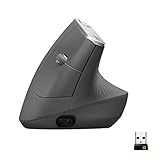
Logitech MX Vertical
The Logitech MX Vertical is the benchmark that every other vertical mouse gets measured against, and after years on the market it still earns that position. The 57-degree grip angle feels immediately natural — most people adapt within a day rather than the week some reviews suggest — and the textured rubber side surface gives secure contact even during extended sessions. Logitech has built this around right-handed medium-to-large hands, so if your hand length is under 17cm you may find the reach to the forward thumb button slightly awkward. That is a real limitation worth knowing before you buy.
The optical sensor tops out at 4000 DPI, which is honest territory for a productivity-leaning device but will frustrate competitive gamers who want the flexibility to push past 3200 DPI for low-sensitivity high-speed play. For strategy games, MMOs, MOBAs, and casual shooters at moderate sensitivities, 4000 DPI is entirely sufficient. The connection options are genuinely excellent: Bluetooth for cable-free flexibility and a USB-C receiver (Logitech’s Logi Bolt) that delivers a more stable 2.4GHz signal when latency matters. Battery life on a full charge runs around 4 months with the receiver and roughly 2 months over Bluetooth — effectively a non-issue for most users.
Where the MX Vertical earns its price is build quality and software polish. Logitech Options+ allows per-app DPI switching, button remapping across all four programmable buttons, and gesture controls. The mouse wheel is precise with a satisfying tactile ratchet. The main clicks use Logitech’s proven contact switches with a clean, low-effort actuation that does not fatigue fingers during long sessions. The trade-off against pure gaming mice is that click latency, while perfectly acceptable for most gaming contexts, is not as competition-optimized as Razer or Logitech’s own G-series hardware.
Verdict: The gold standard for vertical ergonomic mice. Best for gamers who split time between productivity and gaming, need reliable multi-device support, and prioritize build quality and software over raw DPI headroom.
Anker Vertical Ergonomic Mouse
The Anker Vertical Ergonomic Mouse is the most accessible entry point into vertical ergonomics, and it does the core job well enough to recommend without heavy qualification. At a fraction of the MX Vertical’s price, it delivers the fundamental benefit — a proper 57-degree grip angle that genuinely reduces forearm strain — in a wired package that needs no charging and no software installation to function out of the box.
The sensor caps at 1600 DPI across three switchable levels (800, 1200, 1600). That ceiling is the most significant limitation. At 1600 DPI you are locked into mid-to-high in-game sensitivity settings to maintain comfortable cursor speed across modern high-resolution displays, which reduces fine motor control for precise aiming. For casual gaming, RTS titles, and desktop work, this is not a dealbreaker. For any shooter where pixel-level tracking matters, it is. The wired connection via USB-A is plug-and-play reliable, and the braided cable has reasonable length and flexibility without adding much drag on a mouse pad.
Build quality is serviceable rather than impressive. The plastic shell is slightly hollow-feeling compared to the MX Vertical, and the scroll wheel has a lighter, less defined feel. The five buttons — left click, right click, scroll wheel click, DPI toggle, and a back button — all function cleanly, though the button travel is longer than premium mice. The grip surface uses a textured matte finish that manages sweat adequately during typical sessions. At roughly 130g the mouse feels solid without being fatiguing, and the size suits medium hands comfortably.
Verdict: The right pick if you want to test vertical ergonomics without committing budget. Excellent for office and casual gaming use. Upgrade if you play shooters competitively or need DPI above 1600.
Razer Pro Click
The Razer Pro Click is the result of Razer’s collaboration with Humanscale, a company that designs workplace ergonomics hardware for corporate environments — and that DNA shows throughout. This is Razer’s most productivity-leaning mouse, built with a silent click mechanism, premium materials, and serious wireless technology rather than RGB lighting and aggressive styling. For gamers who also do long hours of work and want a single mouse that handles both without compromise, it is one of the most capable options on this list.

The sensor reaches 16,000 DPI, which is the headline spec that separates it from the rest of the vertical ergonomic category. In practice, most people will never use DPI beyond 3200–6400 for gaming, but having the headroom means you can dial in any sensitivity configuration for any game or workflow without hitting a ceiling. The Razer HyperSpeed wireless technology delivers sub-1ms latency with the USB dongle — performance that holds up in fast-paced gaming scenarios. Bluetooth is also available for multi-device flexibility, though latency is higher on Bluetooth as expected.
The silent click mechanism cuts actuation noise by roughly 90% compared to standard switches. This matters more in shared workspaces than gaming, but the click feel itself is satisfying — lighter than the MX Vertical with a fast, clean return. The scroll wheel is Razer’s precision design with smooth, near-silent scrolling. Battery life is competitive at around 400 hours with the receiver, which translates to multiple months of regular use. The grip angle is slightly less aggressive than the MX Vertical, sitting closer to 50 degrees, which some users prefer as a gentler transition from a standard mouse. The primary drawback is price — this is the most expensive mouse on the list, and the wrist health and DPI benefits require that premium.
Verdict: The best vertical ergonomic mouse for hybrid gamer-professionals. Silent clicks, 16,000 DPI, and HyperSpeed wireless make it a genuine all-rounder — if the price fits your budget.
Evoluent VerticalMouse 4
The Evoluent VerticalMouse 4 is the purist’s vertical mouse. While Logitech and Razer approach vertical ergonomics as a design angle layered onto familiar mouse conventions, Evoluent built the VerticalMouse 4 from the ground up around clinical ergonomic research, and the difference is tangible. The grip angle is a full 90 degrees — more aggressive than any other mouse on this list — placing the hand in a completely neutral vertical position rather than a modified diagonal. For users with diagnosed RSI, carpal tunnel syndrome, or serious wrist conditions, this is the design that physical therapists most commonly recommend.
The sensor reaches 2600 DPI across six programmable levels (400, 600, 800, 1000, 1800, 2600). That range is enough for comfortable desktop and casual gaming use, though competitive gaming at high DPI is again off the table. Where the VerticalMouse 4 distinguishes itself is the button layout: five programmable buttons are positioned specifically to minimize finger extension and forearm rotation, with the scroll wheel and side buttons positioned so the thumb and fingers barely need to move from rest position. The wired USB connection is stable and requires no software for basic functionality, though the Evoluent utility allows button customization.
The build quality is above average for the price category — the shell feels dense and well-finished, and the main clicks have a satisfying short-travel actuation. The right-side thumb rest is shaped and sized more specifically than most competitors, which means fit is more dependent on hand size: this mouse is designed for medium-to-large right hands and does not accommodate small hands or left-handers (a left-handed version exists as a separate SKU). Weight at around 148g is on the heavier side, which some users find stabilizing and others find tiring.
Verdict: The most ergonomically rigorous option on the list. Best for users prioritizing wrist health over gaming performance metrics, especially those managing existing hand or wrist conditions.
ZLOT Vertical Gaming Mouse
The ZLOT Vertical Gaming Mouse is the outlier on this list in the best possible way: it is built specifically for gaming rather than adapted from productivity ergonomics, and the specs reflect that priority. A 7200 DPI optical sensor, wireless connectivity, and six programmable buttons with onboard memory put this firmly in gaming hardware territory rather than office peripheral territory — just packaged in a vertical grip.
The sensor delivers 7200 DPI with adjustable levels at 800, 1600, 2400, 4800, and 7200 DPI, enough to satisfy most competitive gaming sensitivity configurations. The 2.4GHz wireless connection via USB receiver performs reliably with low latency suitable for fast-paced gaming. Battery life runs approximately 30–40 hours per charge via USB-C, which is shorter than the MX Vertical’s months-long endurance but trades battery size for a lighter, more maneuverable chassis at around 105g — the lightest mouse on this list by a meaningful margin. The lighter weight helps with faster flick movements that gaming demands.
The grip angle sits at approximately 60 degrees, close to the Logitech MX Vertical standard. Six programmable buttons include two thumb buttons positioned for quick access during gaming, a DPI toggle accessible without repositioning the hand, and standard left, right, and wheel clicks. The RGB lighting ring on the base is a genuine gaming aesthetic choice that adds nothing to function but signals clearly which market this mouse is aimed at. Build quality is solid for the price range though not premium — the plastic housing is rigid without feeling dense, and the side grips use a slightly softer rubberized material that handles sweat well.

Verdict: The best vertical ergonomic mouse for gamers who refuse to sacrifice DPI and wireless performance for wrist health. The highest-spec purely gaming-focused option in the vertical category.
Comparison Table
| Mouse | DPI | Connection | Weight | Price (USD) |
|---|---|---|---|---|
| Logitech MX Vertical | 4,000 | Bluetooth + USB-C (2.4GHz) | 135g | ~$100 |
| Anker Vertical Ergonomic Mouse | 1,600 | Wired USB-A | 130g | ~$30 |
| Razer Pro Click | 16,000 | Bluetooth + 2.4GHz (HyperSpeed) | 106g | ~$100 |
| Evoluent VerticalMouse 4 | 2,600 | Wired USB | 148g | ~$90 |
| ZLOT Vertical Gaming Mouse | 7,200 | 2.4GHz Wireless (USB receiver) | 105g | ~$45 |
How to Choose the Best Vertical Ergonomic Gaming Mouse
Understand what vertical ergonomics actually fixes — and what it does not.
A vertical mouse reduces forearm pronation. That is its primary biomechanical benefit. If your wrist pain stems from pronation-related strain, a vertical mouse will likely provide meaningful relief. If your pain comes from aggressive wrist deviation (bending the wrist sideways to position the cursor), excessive grip pressure, or poor desk height, a vertical mouse alone may not solve the problem. Good ergonomics are a system: chair height, desk height, monitor position, and mouse design all interact.
DPI range for gaming.
For casual and strategy gaming, anything above 2000 DPI is sufficient. For shooters and fast-action games, you want at minimum 3600–4800 DPI to have enough range across sensitivity settings. If competitive FPS play is your primary use case, only the Razer Pro Click and ZLOT Vertical Gaming Mouse offer enough DPI headroom to match purpose-built gaming mice. The Logitech MX Vertical’s 4000 DPI ceiling is borderline — workable but limiting for low-sensitivity high-resolution setups.
Wired vs wireless.
Wired mice eliminate charging management and deliver consistent latency with zero risk of wireless interference. For gaming, the Anker and Evoluent options cover this. Wireless mice — the MX Vertical, Razer Pro Click, and ZLOT — add convenience at the cost of battery management and (on Bluetooth specifically) slightly higher latency. The Razer’s HyperSpeed and Logitech’s Logi Bolt receiver both deliver sub-1ms performance that is indistinguishable from wired for most gaming applications.
Hand size and grip fit.
Vertical mice are significantly less forgiving of hand size mismatch than standard mice because the grip geometry is more specific. As a general guide: under 17cm hand length favors the lighter, shorter ZLOT or Razer Pro Click; 17–20cm suits the Logitech MX Vertical or Anker; above 20cm typically fits the Evoluent VerticalMouse 4’s larger shell best. If possible, handle a vertical mouse in-store before committing — the geometry difference from a standard mouse means what feels good in photos may not feel right in hand.
Adaptation period.
Expect 3–7 days of adjustment when switching from a standard mouse. Your forearm muscles are accustomed to the pronated position, and the vertical grip uses slightly different muscle groups for lateral movement. Initial precision may feel reduced. Most users report that after a week, vertical grip movement feels natural, and precision returns to or exceeds their previous baseline due to reduced muscle fatigue during long sessions.

Software and button programmability.
If you rely on macro keys, DPI switching shortcuts, or per-game profiles, prioritize mice with software support: Logitech Options+ and Razer Synapse are the most feature-complete in this category. The Anker and ZLOT offer basic DPI toggle functions without full software ecosystems. Evoluent’s utility covers basic button remapping but is less polished than the major-brand alternatives.
Final Verdict
The best vertical ergonomic gaming mouse in 2026 depends entirely on what you are optimizing for.
For most gamers who want the best overall package, the Logitech MX Vertical is the right answer. It has the best build quality, the most reliable wireless performance for general gaming, and software that makes multi-device and multi-app use seamless. The 4000 DPI ceiling is a real limitation for competitive shooters, but for the majority of gaming genres it is not a practical constraint.
For competitive and high-DPI gaming specifically, the Razer Pro Click at 16,000 DPI and HyperSpeed wireless is the performance leader in the vertical category. If you play fast-paced shooters and need a vertical mouse that matches the specs of standard gaming mice, this is the only option that fully delivers.
For gaming on a budget, the ZLOT Vertical Gaming Mouse offers the best spec-to-price ratio: 7200 DPI, wireless, and a genuinely gaming-focused layout at roughly half the price of the Logitech or Razer.
For clinical ergonomic priority — RSI management, diagnosed wrist conditions, or recommendation from a physical therapist — the Evoluent VerticalMouse 4 is the most rigorously designed option on the list and the one with the strongest track record in therapeutic contexts.
For anyone testing vertical ergonomics for the first time without committing significant budget, the Anker Vertical Ergonomic Mouse does the core job at a price that makes the experiment low-risk.
The shift to a vertical mouse is genuinely worth making if you log long hours at a desk. The biomechanical benefit is real and well-documented. Pick the mouse that matches your gaming use case, budget, and hand size — and give it a week before judging whether the grip works for you.
Related Articles
Looking for more on this topic? Browse the hand-picked guides below — each one applies the same scoring rubric used in this review.
Frequently Asked Questions
What is the best gaming mouse vertical ergonomic in 2026?
The best gaming mouse vertical ergonomic depends on your budget and how you plan to use it. The options compared above are our top-rated picks based on real customer ratings, build quality, and overall value — start with the highest-rated model that fits your budget.
How much should I expect to spend on a gaming mouse vertical ergonomic?
Prices vary by brand and features. Budget options cover the essentials, while mid-range and premium models add durability, performance, and extra features. Compare the prices in the list above to find the best value for your needs.
What should I look for when buying a gaming mouse vertical ergonomic?
Focus on what matters most for your use case — build quality, compatibility, performance, warranty, and verified customer reviews. Every pick above is selected to balance these factors.
Are budget gaming mouse vertical ergonomic options worth it?
Yes. For most people a well-reviewed budget or mid-range gaming mouse vertical ergonomic delivers excellent value. You only need to spend more if you specifically require premium materials or top-tier performance.
How did we choose these gaming mouse vertical ergonomic picks?
We compare current Amazon ratings, review counts, key features, and price to surface the options with the best real-world value. The list is refreshed as ratings and availability change.
Ready to decide? Our #1 pick for 2026 is the Mouse.
Live price & availability on Amazon.