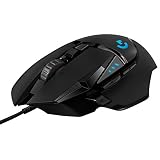
- Top Pick: Razer Pro Click V2 Vertical Wireless Mouse, 6 Button Ergonomic Design
- Best Value: Attoe Gaming Mouse with 5 D Rocker, Wireless Vertical Mouse with [24000 DPI] [12 Programmable Buttons], Computer Mouse for Gamer/PC/E-Sports/Laptop (Black)
- Premium Choice: TECKNET Ergonomic Mouse, 4800 DPI Wireless Bluetooth Vertical, 3-Device
Affiliate disclosure: As an Amazon Associate we earn from qualifying purchases. This post contains affiliate links — if you buy through them we may earn a small commission at no extra cost to you. This never affects our recommendations.
As an Amazon Associate we earn from qualifying purchases at no extra cost to you.

![Attoe Gaming Mouse with 5 D Rocker, Wireless Vertical Mouse with [24000 DPI] [12 Programmable Buttons], Computer Mouse for Gamer/PC/E-Sports/Laptop (Black)](https://m.media-amazon.com/images/I/41XVdqDE3aL._SL160_.jpg)




Long gaming sessions are hard on your wrists. Hours of gripping a flat, pronated mouse puts constant rotational stress on your forearm tendons — and for millions of players, that eventually turns into repetitive strain injury (RSI), carpal tunnel symptoms, or a dull, persistent ache that doesn’t go away between sessions. Vertical mice solve the root cause by rotating the handshake grip roughly 57–70 degrees, keeping your forearm in a natural, neutral position rather than twisting it flat against a desk.
This guide breaks down the best vertical gaming mice in 2026 for every budget, play style, and hand size. Whether you’re a casual weekend gamer nursing early-stage wrist pain or a daily driver looking to prevent long-term injury without sacrificing performance, there’s a pick here for you.
In a hurry? See the top-rated Vertical Gaming Mouse deals available right now:
🛒 Check Vertical Gaming Mouse Prices on Amazon →🛒 Best Price Today on Amazon
Prime members get fast, free shipping on everything above, plus member-only deals. New members get a 30-day free trial — cancel anytime.
Start 30-Day Prime Free Trial →See Today’s Amazon DealsWhy Vertical Mice Reduce Wrist Strain
A standard horizontal mouse forces your forearm into full pronation — palm facing down. That position compresses the muscles and tendons running along your forearm and keeps the carpal tunnel under chronic, low-level pressure. Over time, this is a recipe for tendonitis, ulnar deviation stress, and RSI.
A vertical mouse rotates the grip so your thumb points upward and your palm faces inward, mimicking a natural handshake. This position:
- Eliminates forearm pronation — the primary driver of mouse-related wrist pain
- Reduces grip tension — the slanted form lets gravity assist your hold, so you squeeze less
- Lowers pressure on the carpal tunnel — the median nerve has more space
- Distributes weight more evenly across wrist, palm, and fingers
The trade-off is real: vertical mice have a steeper learning curve and most designs favor precision and comfort over twitch-speed gaming. For competitive FPS players who need extreme flick accuracy, a vertical mouse may feel slower until muscle memory adapts. For everyone else — MOBA, RPG, strategy, casual shooters, and everyday PC use — the ergonomic benefit far outweighs any short-term adjustment.
Quick Comparison Table
| Mouse | Connectivity | DPI Range | Weight | Best For | Price Range |
|---|---|---|---|---|---|
| Logitech MX Vertical | Bluetooth / USB | 400–4,000 | 135 g | Office + light gaming | $$$ |
| Anker Ergonomic Vertical | USB wired | 800–1,600 | 105 g | Budget buyers | $ |
| Razer Pro Click (semi-vertical) | Bluetooth / USB | 100–16,000 | 106 g | Productivity + gaming hybrid | $$$ |
| Evoluent VerticalMouse 4 Wireless | 2.4 GHz wireless | 400–2,600 | 160 g | RSI recovery, power users | $$$$ |
| Delux M618 Plus | USB wired / wireless | 400–4,000 | 118 g | Value ergonomics | $$ |
Top 5 Best Vertical Gaming Mice in 2026
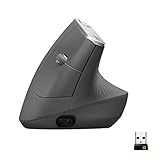
1. Logitech MX Vertical — Best Overall
The Logitech MX Vertical remains the gold standard for vertical mice in 2026. Logitech’s ergonomics team spent years validating the 57-degree tilt angle, and it shows: most users report noticeably less forearm tension within the first week of switching. The sculpted rubber grip surface feels premium, and the large scroll wheel with MagSpeed technology makes scrolling through long documents or patch notes feel effortless.
For gaming, the MX Vertical holds up well in slower-paced titles. The 4,000 DPI ceiling is modest by gaming standards but more than sufficient for most genres. The optical sensor is accurate and consistent on cloth and hard surfaces. Connectivity options are generous — you get both Bluetooth and the Logi Bolt 2.4 GHz USB receiver, with Easy-Switch to pair up to three devices. Battery life is rated at four months on a single charge, and a quick one-minute USB-C charge gives you three hours of use in a pinch.
The main limitation is the DPI ceiling. Hardcore FPS players who prefer low-sensitivity, high-precision setups may feel capped. The mouse is also right-hand only and best suited to medium-to-large hands. Still, as an all-rounder that transitions seamlessly between work and gaming, nothing on this list beats it.
Pros:
- Industry-validated 57-degree ergonomic tilt
- Excellent build quality and rubber grip texture
- Bluetooth + Logi Bolt dual connectivity
- Long battery life with USB-C fast charge
- Smooth MagSpeed scroll wheel
Cons:
- 4,000 DPI max — not ideal for competitive FPS
- Right-hand only
- No programmable side buttons beyond standard two
Best For: Productivity workers who game casually, anyone switching from chronic wrist pain

2. Anker Ergonomic Vertical Mouse — Best Budget Pick
Not everyone can justify spending premium dollars on a peripheral, especially when you’re not sure if a vertical mouse will even work for your grip. The Anker Ergonomic Vertical Mouse is the answer for budget-conscious buyers who want to test the vertical form factor without financial risk.
Anker’s design uses a classic right-hand sculpted shell with a comfortable rubber side grip. It ships as a wired USB device — no dongle to lose, no batteries to charge — which keeps the price low and latency non-existent. The DPI switch cycles through 800, 1,200, and 1,600 settings with a button on the top deck. That DPI range is limited but workable for general gaming; you can compensate with higher in-game sensitivity settings if needed. The scroll wheel is tactile and precise, and the two side thumb buttons are well-placed and satisfying to click.
Build quality is predictably modest at this price. The plastic feels lightweight but not flimsy, and the rubberized grip holds up well over time. The wired cable is braided and reasonably flexible. For students, casual gamers, or anyone wanting a low-risk entry into ergonomic mice, the Anker delivers genuine comfort at a fraction of the cost of premium options.
Pros:
- Very affordable — strong value proposition
- Wired connection means zero latency and no charging
- Comfortable right-hand sculpt with rubber grip
- DPI toggle button on top for quick adjustments
- Plug-and-play, no software required
Cons:
- 1,600 DPI max is restrictive for gaming
- No wireless option
- Basic build quality — not built for heavy daily abuse
- No customizable software or macro support
Best For: Budget buyers, first-time vertical mouse users, students
3. Razer Pro Click — Best Semi-Vertical for Gamers
The Razer Pro Click sits in an interesting middle ground: it’s not a full vertical mouse, but its sculpted right-hand ergonomic design tilts the grip enough to significantly reduce pronation while keeping the sensor specs and click feel that gamers expect. If you love the idea of ergonomic relief but aren’t ready to fully commit to the vertical handshake grip, the Pro Click is your bridge.
The headline spec is the 16,000 DPI Razer 5G optical sensor — the same class of sensor found in Razer’s dedicated gaming mice. That means precise, low-latency tracking at any sensitivity, making the Pro Click one of the few ergonomic-focused mice that can genuinely keep up in fast-paced gaming. Eight programmable buttons give you room to map abilities, macros, or shortcuts. Razer Synapse software (optional) allows full DPI customization in increments as small as 50 DPI, RGB control on select variants, and per-app profile switching.
Battery life is rated at 400 hours on 2.4 GHz wireless via the included HyperSpeed USB dongle, or 650 hours over Bluetooth — both figures are exceptional. The scroll wheel has both a free-spin and ratchet mode. Weight at 106 grams is competitive. The trade-off is the semi-vertical tilt — it won’t fully eliminate forearm pronation the way a true 57-degree vertical will. For RSI recovery, you may want a more aggressive tilt. For a competitive gamer looking for ergonomic improvement without sacrificing sensor quality, this is the strongest option on the list.
Pros:
- 16,000 DPI high-performance optical sensor
- Eight programmable buttons
- Exceptional battery life (400+ hours wireless)
- HyperSpeed 2.4 GHz + Bluetooth dual wireless
- Razer Synapse software for deep customization
Cons:
- Semi-vertical tilt — less aggressive than true vertical mice
- Right-hand only
- Razer Synapse requires account for full features
- Higher price point
Best For: Competitive gamers wanting ergonomic improvement without giving up sensor performance

4. Evoluent VerticalMouse 4 Wireless — Best for RSI Recovery
Evoluent invented the modern vertical mouse category, and the VerticalMouse 4 Wireless remains the most purpose-built RSI recovery device on this list. Where other designs compromise between ergonomics and aesthetics, Evoluent goes all-in on the medical rationale: the grip angle is steep, the palm rest is substantial, and every button is positioned to minimize finger extension and lateral reach.
The shell design elevates your hand higher off the desk than any competitor, removing wrist contact pressure entirely for many users. Six programmable buttons are arranged for minimal reach — the three main buttons run down the side of the right-hand sculpt, and the pointer speed toggle on the thumb side lets you cycle through four DPI presets (400–2,600) without software. The 2.4 GHz wireless connection via USB nano-receiver is rock solid with no perceptible latency, and battery life is rated at six months with AA batteries, making it a truly low-maintenance device.
The trade-off for serious gaming is the 2,600 DPI ceiling and the focus on precision over speed. The sensor performs well for productivity and casual gaming but isn’t designed for the high-frequency tracking demands of competitive FPS. The mouse also commands a premium price — it’s the most expensive option here. But for anyone dealing with diagnosed RSI, carpal tunnel, or persistent wrist pain that hasn’t responded to other interventions, the Evoluent’s clinical-grade ergonomic design is worth every dollar.
Pros:
- Steepest vertical tilt on the list — maximum pronation relief
- Elevated palm rest eliminates wrist desk contact
- Six programmable buttons with minimal finger reach
- Six-month battery life on AA batteries
- No software required for button configuration
Cons:
- 2,600 DPI max — not suited for competitive gaming
- Most expensive option on the list
- Heavier at 160 g
- Right-hand only; left-hand version sold separately
Best For: RSI recovery, chronic wrist pain sufferers, power users who prioritize health over gaming performance
5. Delux M618 Plus — Best Mid-Range Value
The Delux M618 Plus threads the needle between the Anker’s budget simplicity and the MX Vertical’s premium polish. It features a full vertical grip sculpt, a 4,000 DPI adjustable optical sensor, and both wired USB and 2.4 GHz wireless modes — a combination that usually commands a higher price tag. For the money, it delivers genuine ergonomic benefit and respectable gaming capability.
The M618 Plus adds a subtle thumb rest cutout that the Anker lacks, improving comfort during long sessions. The six programmable buttons give you more flexibility than most budget options, and the included software (optional, Windows-compatible) allows DPI customization and macro assignment. The scroll wheel is smooth and reliable. Wireless performance via the USB nano-receiver is stable and responsive. Battery life is rated at approximately 30 days on a single charge via USB-C, which is modest but acceptable.
Build quality is a step above the Anker but a noticeable step below Logitech. The plastic shell feels sturdy enough for daily use, and the rubberized grip panel ages well. For gamers on a tight budget who need wireless connectivity and more DPI headroom than the Anker provides, the M618 Plus is a smart, practical choice that outperforms its price class.
Pros:
- Wired + 2.4 GHz wireless dual connectivity
- 4,000 DPI sensor with adjustable presets
- Six programmable buttons
- Thumb rest cutout for added comfort
- USB-C charging
Cons:

- 30-day battery life is modest vs. premium alternatives
- Software is Windows-only
- Build quality is mid-tier — not as refined as Logitech
- Right-hand only
Best For: Mid-range buyers who want wireless and more DPI than budget options offer
How to Choose the Best Vertical Gaming Mouse
1. Hand Size and Grip Style
Vertical mice are primarily designed for palm grip, where your entire hand rests on the mouse. Measure your hand from wrist to middle finger tip: under 17 cm is small, 17–19 cm is medium, above 19 cm is large. Most vertical mice on this list fit medium and large hands best. The Anker and Delux M618 run slightly smaller; the Evoluent is best for large hands. All five picks are right-hand-only designs — if you’re left-handed, check Evoluent’s dedicated left-hand model.
2. DPI and Sensor Performance
For casual gaming, MMOs, RTS, and productivity use, 2,000–4,000 DPI is more than sufficient. For competitive FPS where precision tracking at low sensitivity matters, the Razer Pro Click’s 16,000 DPI sensor is the only option here that meets the standard. Don’t chase maximum DPI numbers — what matters is sensor accuracy and consistency, not ceiling figures you’ll never use.
3. Wired vs. Wireless
Wired mice (Anker) have zero latency and no charging overhead. Wireless mice (MX Vertical, Razer Pro Click, Evoluent, Delux M618 in wireless mode) offer cable-free freedom at the cost of battery management. For gaming, modern 2.4 GHz wireless is effectively lag-free. Bluetooth adds convenience but typically has slightly higher latency — avoid Bluetooth for competitive gaming sessions.
4. Software and Programmability
Casual users don’t need software at all — the Anker and Evoluent work plug-and-play. Power users who want DPI fine-tuning, macro recording, and per-app profiles will want the Razer Pro Click (Synapse) or Delux M618 (Delux software). Logitech Options+ for the MX Vertical is polished and cross-platform. Evaluate how much customization matters to your workflow.
5. Severity of Wrist Pain
If you’re exploring vertical mice as a preventative measure or because of mild discomfort, any pick on this list will help. If you’re managing diagnosed RSI, carpal tunnel syndrome, or persistent pain prescribed by a medical professional, prioritize the steepest tilt angle and most aggressive palm elevation — that means the Evoluent VerticalMouse 4 Wireless, full stop. Pair any vertical mouse transition with a proper desk height, arm support, and regular breaks for best results.
Final Verdict
For most gamers and productivity users, the Logitech MX Vertical is the safest choice: proven ergonomics, excellent build quality, flexible connectivity, and long battery life at a fair price. If budget is the primary constraint, the Anker Ergonomic Vertical Mouse delivers the core benefit — forearm neutral grip — at a fraction of the cost.
Competitive gamers who need real sensor performance should go straight to the Razer Pro Click — no other ergonomic mouse on this list comes close on DPI ceiling and gaming-grade tracking. Users dealing with serious, ongoing wrist pain should invest in the Evoluent VerticalMouse 4 Wireless, which was built specifically for RSI recovery and outperforms everything here on clinical ergonomic criteria. The Delux M618 Plus fills the mid-range gap cleanly for anyone who needs wireless freedom and 4,000 DPI without paying premium prices.
Switching to a vertical mouse is one of the highest-leverage investments you can make in your long-term gaming health. Your wrists will thank you six months from now.
Prices and availability are subject to change. Amazon links use the gamingpcrev04-20 affiliate tag. Product specs verified as of 2026.
Frequently Asked Questions
How does a vertical mouse help with wrist pain?
A vertical mouse holds your hand in a natural handshake position, reducing forearm twisting and wrist pressure. This can ease discomfort linked to long mouse use and conditions like RSI.
Are vertical mice good for gaming?
They can be, especially for slower-paced games and productivity. For fast competitive FPS the vertical grip can make rapid flicks harder, so they suit comfort-focused gamers more.
Is there a learning curve with a vertical gaming mouse?
Yes. Expect a few days to adjust your aim and grip. Once accustomed, most users move and click naturally, and the ergonomic relief becomes the main benefit.
Who should buy a vertical gaming mouse?
Gamers who experience wrist or forearm discomfort, play longer sessions, or want a more ergonomic setup. Players chasing the fastest competitive aim may prefer a traditional lightweight mouse.
Related Articles
Looking for more on this topic? Browse the hand-picked guides below — each one applies the same scoring rubric used in this review.
Ready to decide? Our #1 pick for 2026 is the Mouse.
Live price & availability on Amazon.