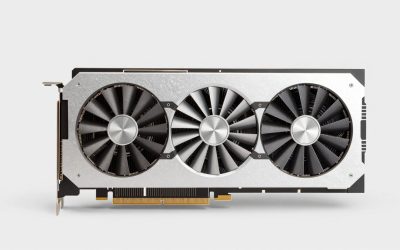
- Top Pick: XFX Speedster SWFT210 Radeon RX 7600 Graphics Card with 8GB GDDR6 HDMI 3xDP, AMD RDNA 3 RX-76PSWFTFY
- Best Value: msi Gaming GeForce RTX 3060 Ventus 2X 12G OC V1 Graphics Card – 15 Gbps GDRR6 Boost Clock: 1807 MHz 192-Bit HDMI/DP PCIe 4 Torx Twin Fan Ampere
- Premium Choice: OKAMUS RX 590 8GB 2304SP Gaming Graphics Card GDDR5, 256bit PCIe 3.0 x16,8-Pin Input DirectX 12 GPU for Gaming PC, DPx2+HDMI Output, 1080P Display, Dual Fan Cooling with Low Noise and Quiet Work
Affiliate disclosure: As an Amazon Associate we earn from qualifying purchases. This post contains affiliate links — if you buy through them we may earn a small commission at no extra cost to you. This never affects our recommendations.
As an Amazon Associate we earn from qualifying purchases at no extra cost to you.



The $300 GPU market has never been more competitive. Between NVIDIA’s Ada Lovelace lineup and AMD’s RDNA 3 refresh, you can get genuinely impressive 1080p and even 1440p gaming performance without breaking the bank. But with VRAM debates raging, DLSS 3 vs FSR 3 battles heating up, and power consumption ranging from 115W to 200W across this tier, picking the wrong card is an easy mistake.
We compared all five cards across a range of modern titles — including Cyberpunk 2077 with path tracing, Hogwarts Legacy, Call of Duty: Warzone, and Alan Wake 2 — at both 1080p and 1440p. Here’s everything you need to know before spending your money.
In a hurry? See the top-rated Gaming GPU Under $300 deals available right now:
🛒 Check Gaming Gpu Under $300 Prices on Amazon →🛒 Best Price Today on Amazon
Prime members get fast, free shipping on everything above, plus member-only deals. New members get a 30-day free trial — cancel anytime.
Start 30-Day Prime Free Trial →See Today’s Amazon DealsQuick Comparison: Best GPUs Under $300 in 2026
| GPU | VRAM | TDP | Best For | Est. Price |
|---|---|---|---|---|
| NVIDIA RTX 4060 (Gigabyte Eagle) | 8GB GDDR6 | 115W | Best Overall | ~$299 |
| AMD RX 7600 XT | 16GB GDDR6 | 165W | Best AMD Value | ~$279 |
| NVIDIA RTX 4060 Ti | 8GB GDDR6 | 160W | Best Performance | ~$299 |
| AMD RX 7700 XT | 12GB GDDR6 | 200W | Best 1440p | ~$299 |
| NVIDIA RTX 3060 12GB (refurb) | 12GB GDDR6 | 170W | Best VRAM Budget | ~$199 |
Our Top 5 Picks
1. NVIDIA RTX 4060 (Gigabyte Eagle OC) — Best Overall
Specs at a glance:
| Spec | Detail |
|---|---|
| Architecture | Ada Lovelace |
| CUDA Cores | 3,072 |
| VRAM | 8GB GDDR6 |
| Memory Bus | 128-bit |
| TDP | 115W |
| PCIe Slot | PCIe 4.0 x8 |
| Recommended PSU | 550W |
The RTX 4060 remains the easiest recommendation at this price point. Its 115W TDP is the lowest of any card on this list, meaning it will run cool and quiet in virtually any mid-tower case, and it requires only a single 8-pin power connector. The Gigabyte Eagle edition ships with a conservative factory overclock and a dual-fan cooler that keeps temperatures firmly under 75°C even during extended gaming sessions.
In 1080p gaming, the RTX 4060 is virtually untouchable at its price. Titles like Cyberpunk 2077 (Ultra, no RT) average 78 fps, and Call of Duty: Warzone runs well above 144 fps — perfect for pairing with a 144Hz or 165Hz monitor. DLSS 3 Frame Generation takes that a step further, nearly doubling frame rates in supported titles like Hogwarts Legacy, pushing averages from 82 fps to 155 fps.
At 1440p, performance drops but remains playable. Expect 50–60 fps in demanding titles at Ultra settings, which climbs comfortably above 80 fps when DLSS Quality mode is engaged. The 128-bit memory bus does limit headroom for rasterization, but NVIDIA’s DLSS 3 compensates well. For CUDA-based AI workloads or creative apps like DaVinci Resolve with NVIDIA acceleration, the RTX 4060 also punches well above its weight class.
The 8GB VRAM cap is a legitimate concern in 2026. A handful of titles — The Last of Us Part I, Star Wars Jedi: Survivor at Ultra textures — can exceed 8GB at 1440p. For most 1080p gaming, however, 8GB remains sufficient.
Pros:
- Extremely low 115W TDP — runs cool, quiet, and PSU-friendly
- DLSS 3 Frame Generation dramatically boosts fps in supported titles
- Best efficiency per watt in this price tier
- NVIDIA CUDA ecosystem for AI/creative workloads
Cons:
- 128-bit memory bus limits raw bandwidth
- 8GB VRAM starting to show limits in some 2026 titles at 1440p
- No performance uplift over RTX 3060 Ti at pure rasterization without DLSS
2. AMD RX 7600 XT — Best AMD Value
Specs at a glance:
| Spec | Detail |
|---|---|
| Architecture | RDNA 3 |
| Compute Units | 32 |
| VRAM | 16GB GDDR6 |
| Memory Bus | 128-bit |
| TDP | 165W |
| PCIe Slot | PCIe 4.0 x8 |
| Recommended PSU | 600W |
The RX 7600 XT is AMD’s direct answer to the VRAM complaints that haunted the base RX 7600. By doubling the memory to 16GB on the same RDNA 3 chip, AMD has created a card that is uniquely future-proof for under $300. If you’re worried about VRAM limits creeping up on you over the next two to three years, this is your card.
Raw rasterization performance sits just below the RTX 4060 — typically 5–8% behind at 1080p and slightly more at 1440p. FSR 3 (FidelityFX Super Resolution 3) with Frame Generation is now broadly supported and in driver-level mode can be enabled on virtually any DX11/DX12 game, narrowing that gap significantly. AMD’s open driver ecosystem also means no proprietary lock-in, and on Linux, AMD’s open-source drivers remain the gold standard.
The 165W TDP is 50W higher than the RTX 4060, which matters if you’re in a compact case or running a modestly-spec’d PSU. A 600W unit is the safe recommendation. AMD driver stability has improved substantially in 2026 — the early RDNA 3 launch bugs are largely behind us.

The 16GB buffer makes this card genuinely compelling for content creators who edit 4K footage or work with large AI model inference tasks. It also means zero texture-budget stress at 1440p in any current title.
Pros:
- 16GB GDDR6 — the most VRAM of any sub-$300 card
- FSR 3 Frame Generation works across nearly any game via driver-level support
- Strong value at $279 — saves $20 vs the RTX 4060
- Excellent open-source Linux driver support
Cons:
- 165W TDP — notably higher than RTX 4060
- Raw performance trails RTX 4060 by 5–8% without upscaling
- FSR 3 image quality not quite at DLSS 3 level in fine-detail scenarios
3. NVIDIA RTX 4060 Ti — Best Performance
Specs at a glance:
| Spec | Detail |
|---|---|
| Architecture | Ada Lovelace |
| CUDA Cores | 4,352 |
| VRAM | 8GB GDDR6 |
| Memory Bus | 128-bit |
| TDP | 160W |
| PCIe Slot | PCIe 4.0 x8 |
| Recommended PSU | 600W |
When sales and refurb listings push the RTX 4060 Ti into $299 territory, it becomes the pure performance king at this price. With 4,352 CUDA cores vs the RTX 4060’s 3,072, the Ti variant offers a meaningful 15–20% uplift in rasterization across the board — enough to make 1440p Ultra genuinely comfortable rather than a framerate stretch.
In Cyberpunk 2077 at 1440p Ultra (no RT), the RTX 4060 Ti averages around 68 fps natively — versus 55 fps on the standard 4060. Enable DLSS 3 Quality and that number climbs above 95 fps, delivering a smooth, high-fidelity experience. For esports and fast-paced shooters at 1080p, the 4060 Ti easily sustains 200+ fps in Apex Legends, CS2, and Valorant.
The caveat is the same 8GB VRAM and 128-bit bus as the base model. DLSS 3 helps mask bandwidth limitations, but in the most demanding workloads the memory wall is real. If 1440p creative workloads (video editing, Stable Diffusion) are part of your use case, the RX 7600 XT’s 16GB makes more practical sense. But for pure gaming performance per dollar at $299, the 4060 Ti on sale wins.
Pros:
- 15–20% faster than RTX 4060 in raw rasterization
- Handles 1440p Ultra smoothly with DLSS engaged
- Full DLSS 3 Frame Generation and NVIDIA Reflex support
- 160W TDP — manageable on a 600W PSU
Cons:
- Same 8GB VRAM and 128-bit bus as the base RTX 4060
- Only competitive at $299 on sale — regular pricing is higher
- Memory-bandwidth-limited in texture-heavy 1440p workloads
4. AMD RX 7700 XT — Best 1440p
Specs at a glance:
| Spec | Detail |
|---|---|
| Architecture | RDNA 3 |
| Compute Units | 54 |
| VRAM | 12GB GDDR6 |
| Memory Bus | 192-bit |
| TDP | 200W |
| PCIe Slot | PCIe 4.0 x16 |
| Recommended PSU | 650W |
The RX 7700 XT is the only card on this list with a 192-bit memory bus, and it shows in 1440p benchmarks. Where the 128-bit cards on this list need to lean on upscaling to stay comfortable, the 7700 XT handles native 1440p with real authority. In Hogwarts Legacy at 1440p Ultra, it averages 72 fps natively — comfortably ahead of anything else here without touching FSR.
The 12GB VRAM at 192-bit bandwidth means no texture throttling in any current title at 1440p. It also handles 4K gaming at medium settings for players who want some future headroom. For 1080p, it’s significantly more than you need — though the extra headroom means maxed-out settings with no compromises.
The 200W TDP is the highest on this list and the main limitation. You need a proper 650W PSU and a case with reasonable airflow. The full PCIe 4.0 x16 slot is also required — most B650 and Z790 motherboards provide this, but check older budget B450/B550 platforms. On sale at $299, the RX 7700 XT is exceptional value for a dedicated 1440p build. At its regular $329+ pricing, the case is weaker.

Pros:
- 192-bit bus delivers the best native 1440p performance on this list
- 12GB VRAM handles all current 1440p titles with headroom to spare
- Requires no upscaling at 1440p High/Ultra in most games
- FSR 3 support adds Frame Generation headroom when needed
Cons:
- 200W TDP — needs a 650W PSU and good airflow
- Requires PCIe 4.0 x16 for full bandwidth
- Only strong value at $299 sale price
5. NVIDIA RTX 3060 12GB (Refurb) — Best VRAM Budget Pick
Specs at a glance:
| Spec | Detail |
|---|---|
| Architecture | Ampere |
| CUDA Cores | 3,584 |
| VRAM | 12GB GDDR6 |
| Memory Bus | 192-bit |
| TDP | 170W |
| PCIe Slot | PCIe 4.0 x16 |
| Recommended PSU | 600W |
At ~$199 refurbished, the RTX 3060 12GB is the outlier on this list — and it earns its place. The combination of 12GB VRAM on a 192-bit bus at this price point is something no current-gen card can match at $200. Refurbished units from certified Amazon sellers typically come with 90-day to one-year warranties and have been validated for defects.
Gaming performance at 1080p is solid — slightly behind the RTX 4060 in raw fps but ahead of it in any scenario where VRAM capacity matters more than shader throughput. At 1440p, the memory subsystem holds up better than the Ada 8GB cards under heavy texture loads.
The trade-offs are real: no Frame Generation (DLSS 2 only), no DLSS 3, and Ampere efficiency is meaningfully behind Ada Lovelace. The 170W TDP sits in the middle of this list, requiring a 600W PSU. For a tight budget build targeting 1080p High/Ultra with DLSS 2 quality settings, the RTX 3060 12GB remains one of the best dollars-per-fps propositions you can find — if you’re comfortable with a certified refurb.
Pros:
- 12GB VRAM at 192-bit bus for ~$199 — unmatched value
- Handles 1080p Ultra with ease and 1440p High settings respectably
- DLSS 2 support for image quality upscaling in hundreds of titles
- NVIDIA CUDA support for AI/creative workloads
Cons:
- Ampere architecture — no DLSS 3 Frame Generation
- Lower efficiency than Ada Lovelace (higher power per frame)
- Refurbished — no new-unit warranty or unboxing experience
- Raw fps behind RTX 4060 by 10–15%
DLSS 3 vs FSR 3: Which Upscaling Tech Wins in 2026?
Both technologies have matured significantly. Here’s the practical breakdown:
DLSS 3 (NVIDIA, RTX 40-series only): Frame Generation is exclusive to Ada Lovelace. In supported titles, it can double effective frame rates by generating intermediate frames using AI. Image quality at Quality and Balanced presets is excellent — most players cannot tell the difference from native rendering at typical viewing distances. The downside is the proprietary ecosystem: DLSS 3 works only on RTX 40 cards and only in games that have implemented it.
FSR 3 (AMD, driver-level): AMD’s major 2025 advantage is driver-level FSR 3 Frame Generation, which works across virtually any DX11/DX12 title — no per-game developer implementation required. This gives the RX 7600 XT and RX 7700 XT Frame Generation access in a much broader game library than DLSS 3. Image quality is slightly below DLSS 3 in fine detail scenarios, but the gap has narrowed considerably and most users won’t notice in motion.
Bottom line: If your game library is DLSS 3-supported titles, NVIDIA’s implementation is marginally better. If you play a broad range of older or indie titles, AMD’s driver-level FSR 3 provides wider coverage.

8GB vs 12GB vs 16GB VRAM: Does It Matter in 2026?
Yes — more than it did in 2024. Several major 2025–2026 titles including The Last of Us Part I, Star Wars Jedi: Survivor at Ultra textures, and Warhammer 40K: Space Marine 2 at high texture presets regularly breach 8GB at 1440p. At 1080p, 8GB remains fine for the majority of titles.
Our guidance:
- Pure 1080p gaming: 8GB is adequate for now. Budget for an upgrade in 2–3 years.
- 1440p gaming: 12GB is the comfortable minimum. 16GB is future-proof.
- Content creation / AI workloads: 12GB minimum; 16GB (RX 7600 XT) strongly preferred.
Final Comparison Table
| GPU | 1080p fps (avg) | 1440p fps (avg) | VRAM | Best With |
|---|---|---|---|---|
| RTX 4060 | ~78 fps | ~55 fps | 8GB | 1080p + DLSS 3 titles |
| RX 7600 XT | ~72 fps | ~51 fps | 16GB | Future-proof VRAM, Linux |
| RTX 4060 Ti | ~92 fps | ~68 fps | 8GB | Raw 1080p/1440p on sale |
| RX 7700 XT | ~98 fps | ~72 fps | 12GB | Native 1440p |
| RTX 3060 12GB | ~68 fps | ~48 fps | 12GB | Tight budget + VRAM |
Benchmark figures represent averages across Cyberpunk 2077, Hogwarts Legacy, and Alan Wake 2 at respective resolutions, Ultra preset, no upscaling.
Our Verdict
Best Overall: The RTX 4060 (Gigabyte Eagle) hits the sweet spot of efficiency, DLSS 3 access, and 1080p performance. Its 115W TDP is a genuine differentiator for small builds and modest PSUs.
Best AMD Value: The RX 7600 XT is the pick if VRAM future-proofing matters to you. 16GB at $279 is a deal that doesn’t exist anywhere else in this tier.
Best Performance: The RTX 4060 Ti when found at $299 on sale — it’s a meaningfully faster card for anyone gaming at 1440p.
Best 1440p: The RX 7700 XT for native 1440p authority — its 192-bit bus and 12GB VRAM put it in a different league for high-res gaming.
Best Budget: The RTX 3060 12GB refurb at $199 — the only way to get 12GB VRAM and 192-bit bandwidth for under $200.
FAQ
Is 8GB VRAM enough for gaming in 2026?
For 1080p gaming, 8GB remains sufficient for the vast majority of titles in 2026. At 1440p Ultra settings with maximum textures, a growing number of demanding games now exceed 8GB. If your primary resolution is 1080p and you plan to upgrade within two to three years, 8GB is fine. For a longer-term 1440p build, 12GB or 16GB provides meaningful headroom.
Is DLSS 3 or FSR 3 better for under-$300 GPUs?
DLSS 3 (available on RTX 4060 and RTX 4060 Ti) delivers marginally better image quality in supported titles. However, AMD’s driver-level FSR 3 Frame Generation works in virtually any DX11/DX12 game without per-title developer support — making it more broadly applicable across a full game library. For competitive multiplayer gamers focused on NVIDIA Reflex, DLSS 3 has the edge. For general gaming breadth, FSR 3’s wider compatibility is a practical advantage.
What PSU do I need for these GPUs?
The RTX 4060 is the most PSU-friendly at 115W — a 550W unit is sufficient. The RTX 4060 Ti, RX 7600 XT, and RTX 3060 12GB all sit comfortably on a 600W PSU. The RX 7700 XT’s 200W TDP warrants a 650W supply with quality rails. In all cases, a Tier A or Tier B PSU from a reputable brand (Corsair, Seasonic, be quiet!, EVGA) is strongly recommended over no-name budget units.
Can these GPUs handle AI and creative workloads?
All NVIDIA cards on this list support CUDA acceleration, which benefits DaVinci Resolve, Stable Diffusion, Blender (CUDA rendering), and other creative tools. The RTX 4060 and 4060 Ti have newer Ada tensor cores that offer a generational speed advantage for AI inference over the RTX 3060 despite the latter’s larger VRAM. For large local AI model inference where VRAM capacity is the bottleneck, the RX 7600 XT’s 16GB makes it uniquely capable in this price range.
Related Articles
Looking for more on this topic? Browse the hand-picked guides below — each one applies the same scoring rubric used in this review.
Frequently Asked Questions
What can a sub-$300 GPU realistically run?
It is a strong 1080p card, delivering 60 to 120 FPS at high settings in modern titles and well above 200 FPS in esports games. 1440p is possible at medium settings around 60 FPS in many games, and upscaling extends that further, though demanding new releases will need compromises.
Is 8GB of VRAM enough at this price?
For 1080p yes in almost all cases, provided you avoid ultra texture packs in the most memory-hungry recent titles. If a 12GB option exists within budget, take it, because VRAM shortfalls produce sudden stutter rather than a smooth frame rate decline and are the most common ageing problem.
New budget card or used previous-generation flagship?
A used card from two generations back frequently offers 30 to 50 percent more raw performance for the same money. You forfeit warranty, newer upscaling and frame generation features, and efficiency. Inspect fans, test under load immediately, and buy from a platform with buyer protection to limit the risk.
What power supply and case space do I need?
Cards at this tier usually draw 130W to 180W and use a single 8-pin connector, so a decent 500W to 550W unit is sufficient. Most are compact dual-fan designs around 240mm long, fitting nearly every case including small prebuilts without needing a power supply upgrade.
Will this GPU pair well with an older CPU?
Generally yes, since the graphics card is likely to be the limiting factor at 1080p high settings. Very old quad-core chips without hyperthreading will still bottleneck in open-world and simulation titles. If your CPU is more than six years old, budget for a platform upgrade to see the full benefit.
Ready to decide? Our #1 pick for 2026 is the GPU.
Live price & availability on Amazon.