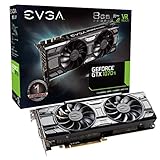
- Top Pick: EVGA GeForce GTX 1070 Ti SC GAMING ACX 3.0 Black Edition 8GB GDDR5 Graphics Card (08G-P4-5671-KR)
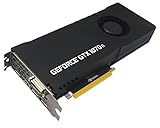
- Best Value: PNY GeForce GTX 1070 Ti Graphics Card (VCGGTX1070T8PB-CG)
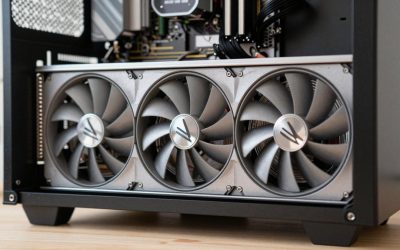
- Premium Choice: GIGABYTE GeForce RTX 4060 Ti WINDFORCE OC 8G Graphics Card, 2X WINDFORCE Fans, 8GB 128-bit GDDR6, GV-N406TWF2OC-8GD Video Card (Renewed)
Moving from a GTX 1070 Ti to an RTX 4060 Ti is a worthwhile upgrade for 1080p and 1440p gamers: expect roughly 1.6x to 2x the frame rate in modern games, hardware ray tracing, DLSS with Frame Generation, and slightly lower power draw. The 16 GB version is the safer long-term choice; the 8 GB version is fine for 1080p, and anyone on a PCIe 3.0 platform should know the RTX 4060 Ti only uses eight PCIe lanes.
The GTX 1070 Ti was a strong card in 2017, but in 2026 it is showing its age in two ways at once: raw speed and missing features. Several newer games now require hardware ray tracing to launch at all, and Nvidia has moved Pascal to a legacy driver track. The RTX 4060 Ti is itself previous-generation now, behind the RTX 5060 Ti, but as a new-old-stock or used purchase it is still a common upgrade path for Pascal owners.
As an Amazon Associate we earn from qualifying purchases at no extra cost to you.


The Spec Gap Across Six Years
| Specification | GTX 1070 Ti | RTX 4060 Ti 8 GB | RTX 4060 Ti 16 GB |
|---|---|---|---|
| Architecture | Pascal | Ada Lovelace | Ada Lovelace |
| Release date | 2 November 2017 | 18 May 2023 | 18 May 2023 |
| Launch MSRP | $399 | $399 | $499 |
| CUDA cores | 2432 | 4352 | 4352 |
| Boost clock | 1683 MHz | 2535 MHz | 2535 MHz |
| Process | 16 nm | 5 nm | 5 nm |
| TDP | 180 W | 160 W | 165 W |
| VRAM | 8 GB GDDR5 | 8 GB GDDR6 | 16 GB GDDR6 |
| Memory bus | 256-bit | 128-bit | 128-bit |
| Bandwidth | 256.3 GB/s | 288.0 GB/s | 288.0 GB/s |
| L2 cache | 2 MB | 32 MB | 32 MB |
| Interface | PCIe 3.0 x16 | PCIe 4.0 x8 | PCIe 4.0 x8 |
| Power connector | 1x 8-pin | 1x 16-pin | 1x 16-pin |
| Length / width | 267 mm, 2-slot | 240 mm, 2-slot | 240 mm, 2-slot |
| Outputs | 1x DVI, 1x HDMI, 3x DP | 1x HDMI 2.1, 3x DP 1.4a | 1x HDMI 2.1, 3x DP 1.4a |
Notice that the RTX 4060 Ti has a narrower memory bus than the older card. Ada compensates with a 32 MB L2 cache, 16x larger than Pascal’s, which cuts trips to VRAM. The trade-off is that the RTX 4060 Ti’s advantage shrinks a bit at 4K, where the cache hit rate drops.
Performance: What Changes in Games
Major outlets rarely include a GTX 1070 Ti in current-generation reviews, so the estimate comes from the chain of cards around it. TechPowerUp’s data places the RTX 4060 Ti close to RTX 3070 level at 1080p and 1440p, and the GTX 1070 Ti near GTX 1080 level. Benchmark aggregates comparing the two directly range from about +55% in older synthetic suites to roughly +90-100% in modern games at 1440p. A reasonable expectation is roughly 1.6x to 2x the frame rate, with the bigger gains in newer titles.
Illustrative scale: a modern AAA game running around 40-50 fps at 1080p medium-high on the GTX 1070 Ti tends to land around 75-95 fps on the RTX 4060 Ti at similar settings, before DLSS. These ranges vary with game, CPU, settings, and patch.
Ray tracing and games that require it
This is the most important change. The GTX 1070 Ti has no RT cores. Several recent games, including Indiana Jones and the Great Circle and Doom: The Dark Ages, require hardware ray tracing support and will not run properly on Pascal at all. The RTX 4060 Ti handles moderate ray tracing at 1080p, and with DLSS it can manage RT at 1440p in many titles.
DLSS and frame generation
The GTX 1070 Ti can only use vendor-neutral upscalers such as FSR and the DP4a path of XeSS. The RTX 4060 Ti gets DLSS 4 Super Resolution with the transformer model, DLSS Frame Generation, Ray Reconstruction, and Reflex. DLSS Multi Frame Generation is RTX 50 only. In supported games, DLSS Quality plus Frame Generation can roughly double displayed frame rates over native rendering, though frame generation adds some latency and works best from a base of around 50-60 fps.
Driver support
Nvidia has said its 580-series driver branch is the last to bring Game Ready support for Maxwell, Pascal, and Volta GPUs, with security updates continuing for a limited period afterward. In practice that means new game optimizations and fixes no longer target the GTX 1070 Ti.
8 GB or 16 GB?
The two RTX 4060 Ti variants perform nearly identically when VRAM is not a limit. TechPowerUp’s review of the 16 GB model found only small average gains over the 8 GB card, but the difference shows up in specific situations:
- 1080p high settings: 8 GB is usually adequate.
- 1080p ultra textures or 1440p in recent AAA games: 10-12 GB of usage is increasingly common, so the 16 GB card avoids stutter and texture pop-in.
- Frame generation and ray tracing: both add VRAM overhead, which pushes the 8 GB card over the edge sooner.
Coming from an 8 GB GTX 1070 Ti, buying another 8 GB card means keeping the same memory ceiling. For a card meant to last several years, the 16 GB version is the better choice if the price difference is modest.
PCIe 3.0 Platforms: A Real Caveat
Many GTX 1070 Ti owners are still on PCIe 3.0 platforms (Intel 8th-10th gen, AMD B450 and similar). The RTX 4060 Ti uses a PCIe 4.0 x8 link, so on PCIe 3.0 it runs at x8 3.0 bandwidth, a quarter of a full 4.0 x16 slot. In most games the penalty is a few percent, but when the 8 GB model overflows VRAM and spills into system memory, the drop can be much bigger. That is another reason to favor the 16 GB model on older boards. An older CPU may also limit frame rates at 1080p, so check CPU usage before assuming the GPU alone will unlock the full gain.
Power, PSU and Fit
The RTX 4060 Ti draws slightly less than the GTX 1070 Ti (160-165 W vs 180 W), so most existing power supplies are fine. PSU sizing with GPU TDP + CPU + about 150 W headroom:
- RTX 4060 Ti 16 GB + 95 W CPU: 165 + 95 + 150 = 410 W, so a quality 550 W unit is comfortable.
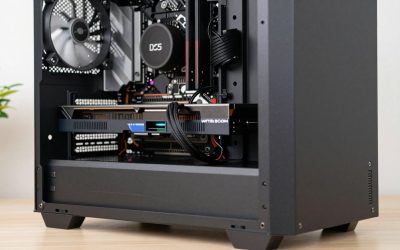
The listed 16-pin connector applies to reference-style designs, which ship with an adapter from a standard 8-pin cable. Many partner RTX 4060 Ti cards use a regular 8-pin connector. The listed 240 mm length is shorter than the GTX 1070 Ti’s 267 mm, so any case that fit the old card fits most RTX 4060 Ti models. One practical note: the RTX 4060 Ti drops the DVI port, so a DVI-only monitor will need an adapter.
Is the Upgrade Worth the Money?
A used GTX 1070 Ti usually sells for about $70-$110 in 2026. A used RTX 4060 Ti 8 GB tends to sell around $240-$290 and the 16 GB around $300-$360. Netting out the resale, the upgrade costs roughly $170-$260 for about 1.6-2x the performance, plus DLSS and access to RT-required games.
| Your setup | Best move |
|---|---|
| 1080p, mostly esports | RTX 4060 Ti 8 GB is plenty |
| 1080p/1440p AAA, keeping 3+ years | RTX 4060 Ti 16 GB |
| PCIe 3.0 motherboard | 16 GB model, or a card with an x16 link |
| Want Multi Frame Generation | Look at RTX 5060 Ti instead |
| CPU is 6+ years old | Budget for a platform upgrade too |
Frequently Asked Questions
How much faster is the RTX 4060 Ti than the GTX 1070 Ti?
In modern games the RTX 4060 Ti is roughly 1.6x to 2x faster, based on review-data positioning and benchmark aggregates. The gain is larger with DLSS and in ray-traced games, which the GTX 1070 Ti cannot run properly. Older games and CPU-limited scenarios show smaller gains.
Can the GTX 1070 Ti still run new games in 2026?
Many games still run at 1080p on lower settings, but some new releases require hardware ray tracing and will not run on Pascal. Nvidia has also moved Pascal to legacy driver status. The card is reaching the end of its useful life for new AAA titles.
Do I need a new PSU to upgrade to the RTX 4060 Ti?
Usually not. The RTX 4060 Ti draws 160-165 W versus 180 W for the GTX 1070 Ti. A quality 550 W PSU is enough with a mainstream CPU, and reference-style cards include an adapter for the 16-pin connector.
Will the RTX 4060 Ti work on a PCIe 3.0 motherboard?
Yes, it works, but it runs at PCIe 3.0 x8 speeds. The loss is usually a few percent, larger when the 8 GB model runs out of VRAM. The 16 GB version is less affected.
Should I buy an RTX 5060 Ti instead?
If budget allows, the RTX 5060 Ti adds DLSS Multi Frame Generation and GDDR7 memory while staying in a similar power class. It is the current-generation equivalent with a full warranty. The RTX 4060 Ti makes sense mainly when it is clearly cheaper.