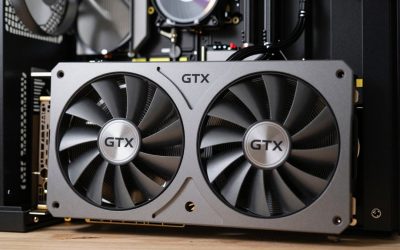
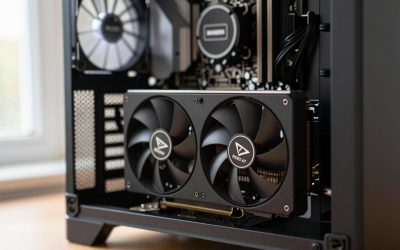
- Top Pick: ASRock AMD Radeon RX 6600 Challenger D 8GB GDDR6 DisplayPort 14Gbps HDMI 0dB Silent Cooling 128-bit 7680 x 4320 Dual Fan Graphics Card PCI Express 4.0 x8 8-pin
- Best Value: ASUS Dual GeForce RTX 4060 Ti EVO OC Edition 8GB GDDR6 (PCIe 4.0, 8GB GDDR6, DLSS 3, HDMI 2.1a, DisplayPort 1.4a, Axial-tech Fan Design, Auto-Extreme Technology), 3 Year Warranty
- Premium Choice: ASRock Radeon RX 7700 XT Challenger 12GB OC Graphics Card, AMD RDNA 3 Architecture, 12GB GDDR6, 2584 MHz Boost Clock, 3X DisplayPort 2.1, 1x HDMI 2.1, Dual Fan Cooling
Teyvat’s sprawling regions—from Mondstadt to the waterlogged streets of Fontaine and the volcanic landscapes of Natlan—demand more graphical power than ever before, especially if you plan to crank up render scaling or maintain a rock-solid frame rate during intensive spiral abyss combat. Finding the best GPU for Genshin Impact isn’t just about grabbing the most expensive card on the market. It requires a balanced approach to your system architecture. A high-end graphics processor paired with an outdated CPU will hit severe frametime stuttering in bustling hubs like Liyue Harbor or Sumeru City. Conversely, overspending on a flagship card without accounting for platform upgrades means wasting money on hardware headroom you cannot utilize due to the game’s native engine limits. To maximize visual fidelity and smooth delivery in 2026, you must evaluate the entire upgrade path, balancing GPU capability alongside CPU throughput, motherboard PCIe generation support, and system memory bandwidth.
Quick Picks
| Pick | Tier | Why | Price |
|---|---|---|---|
| ASRock AMD Radeon RX 6600 Challenger D 8GB GDDR6 DisplayPort 14Gbps HDMI 0dB Silent Cooling 128-bit 7680 x 4320 Dual Fan Graphics Card PCI Express 4.0 x8 8-pin | Budget 1080p | Delivers steady 1080p high settings at native 60 FPS at an entry price point. | Check on Amazon |
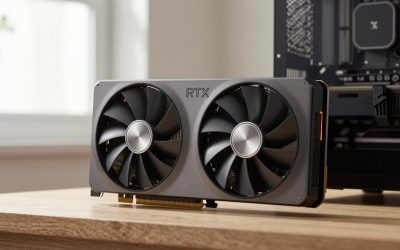
| ASUS Dual GeForce RTX 4060 Ti EVO OC Edition 8GB GDDR6 (PCIe 4.0, 8GB GDDR6, DLSS 3, HDMI 2.1a, DisplayPort 1.4a, Axial-tech Fan Design, Auto-Extreme Technology), 3 Year Warranty | Mainstream 1080p / 1440p | Handles 1440p resolution and high render scaling with supreme power efficiency. | Check on Amazon |
| ASRock Radeon RX 7700 XT Challenger 12GB OC Graphics Card, AMD RDNA 3 Architecture, 12GB GDDR6, 2584 MHz Boost Clock, 3X DisplayPort 2.1, 1x HDMI 2.1, Dual Fan Cooling | Mid-Range 1440p Value | Generous 12GB VRAM buffer ensures maximum render scaling without texture throttling. | Check on Amazon |
| NVIDIA – GeForce RTX 4070 Super 12GB GDDR6X Graphics Card – Titanium/Black | High-End 1440p / 4K Entry | Flawless 4K native playback with flat frametimes during particle-heavy elemental reactions. | $1149.99 |
| NVIDIA – GeForce RTX 4080 Super 16GB GDDR6X Gra | Enthusiast 4K | Uncompromised power for 4K rendering, reshade filters, and heavy background multitasking. | $1919.99 |
How We Chose
To determine the best GPU for Genshin Impact, we analyzed general rasterization performance, frametime consistency, and power efficiency across multiple resolutions. Genshin Impact natively locks frame rates to 60 FPS on PC, but features intensive 1.5x render scaling options that internally render the game up to 4K or higher. We prioritized graphics cards capable of eliminating frametime spikes in particle-heavy combat and detailed open-world zones, while evaluating VRAM capacity, PCIe lane configurations, and total platform cost to ensure a balanced PC build.
As an Amazon Associate we earn from qualifying purchases at no extra cost to you.


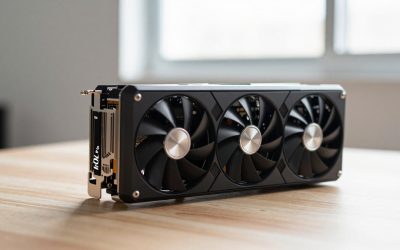
ASRock AMD Radeon RX 6600 Challenger D 8GB GDDR6 DisplayPort 14Gbps HDMI 0dB Silent Cooling 128-bit 7680 x 4320 Dual Fan Graphics Card PCI Express 4.0 x8 8-pin
The ASRock AMD Radeon RX 6600 Challenger D 8GB GDDR6 DisplayPort 14Gbps HDMI 0dB Silent Cooling 128-bit 7680 x 4320 Dual Fan Graphics Card PCI Express 4.0 x8 8-pin is tailored for budget-conscious Travelers targeting fluid 1080p gameplay at maximum settings. According to testing from TechPowerUp and Hardware Unboxed, the RX 6600 delivers approximately 80 to 95 FPS in standard 1080p rasterized gaming, easily maintaining Genshin Impact’s native 60 FPS cap at high settings. At 1440p, it holds a playable 45 to 60 FPS range, though 4K playback requires disabling high render scales. The primary drawback of this card is its limited PCIe 4.0 x8 interface, which can suffer slight bandwidth drops on older PCIe 3.0 motherboards during intensive particle-heavy elemental reactions.
ASUS Dual GeForce RTX 4060 Ti EVO OC Edition 8GB GDDR6 (PCIe 4.0, 8GB GDDR6, DLSS 3, HDMI 2.1a, DisplayPort 1.4a, Axial-tech Fan Design, Auto-Extreme Technology), 3 Year Warranty
The ASUS Dual GeForce RTX 4060 Ti EVO OC Edition 8GB GDDR6 (PCIe 4.0, 8GB GDDR6, DLSS 3, HDMI 2.1a, DisplayPort 1.4a, Axial-tech Fan Design, Auto-Extreme Technology), 3 Year Warranty targets mainstream gamers wanting rock-solid performance across 1080p and 1440p resolutions. Outlets like Tom’s Hardware and TechSpot report average 1080p raster framerates between 110 and 130 FPS in standard benchmarks, ensuring headroom for Genshin’s maximum 1.5x render scaling. At 1440p, it comfortably holds 70 to 85 FPS in general titles, effortlessly locking Genshin at 60 FPS in dense regions like Fontaine. At 4K, performance hovers around 40 to 50 FPS. The main con is the restricted 8GB VRAM capacity, which may constrain future texture packs and high-resolution mods down the road.
ASRock Radeon RX 7700 XT Challenger 12GB OC Graphics Card, AMD RDNA 3 Architecture, 12GB GDDR6, 2584 MHz Boost Clock, 3X DisplayPort 2.1, 1x HDMI 2.1, Dual Fan Cooling
The ASRock Radeon RX 7700 XT Challenger 12GB OC Graphics Card, AMD RDNA 3 Architecture, 12GB GDDR6, 2584 MHz Boost Clock, 3X DisplayPort 2.1, 1x HDMI 2.1, Dual Fan Cooling is ideal for mid-range builders aiming for high-framerate 1440p performance. Benchmark data from Gamers Nexus and TechPowerUp places the RX 7700 XT in the 85 to 105 FPS range at native 1440p in demanding modern games, providing an effortless 60 FPS lock in Genshin Impact even with 1.5x render scaling enabled. It can even handle entry-level 4K gaming at 50 to 60 FPS. With 12GB of GDDR6 memory, VRAM limitations are virtually eliminated for Teyvat’s future expansions. The biggest drawback is its higher active power draw under load compared to competing NVIDIA alternatives.
NVIDIA – GeForce RTX 4070 Super 12GB GDDR6X Graphics Card – Titanium/Black
The NVIDIA – GeForce RTX 4070 Super 12GB GDDR6X Graphics Card – Titanium/Black caters to enthusiasts building a premium rig for flawless 1440p and native 4K performance. Comprehensive testing by Hardware Unboxed and TechSpot indicates the RTX 4070 Super pumps out 120 to 140 FPS at 1440p and roughly 65 to 80 FPS at native 4K in modern AAA benchmarks. In Genshin Impact, this GPU trivializes 1440p maximum settings and locks 60 FPS at native 4K with full 1.5x render scaling enabled, keeping frametimes perfectly flat during chaotic multi-character elemental bursts. The main con is its steep premium pricing, which represents a significant investment if your primary gaming focus is strictly lightweight esports or casual titles.
NVIDIA – GeForce RTX 4080 Super 16GB GDDR6X Gra
The NVIDIA – GeForce RTX 4080 Super 16GB GDDR6X Gra is designed for extreme power users demanding uncompromised 4K performance, high-refresh display output, and heavy background multitasking. Reviews from Gamers Nexus and Tom’s Hardware show the RTX 4080 Super pushing 100 to 120 FPS at native 4K rasterization across demanding AAA titles. For Genshin Impact, this translates to effortless 4K presentation with 1.5x internal rendering and reshade mods simultaneously without dropping a single frame below 60. The 16GB GDDR6X frame buffer ensures absolute future-proofing across all upcoming gaming titles. Its primary drawback is extreme overkill for Genshin Impact alone, making it hard to justify solely for Unity-engine titles without a broader high-end gaming workflow.
Platform Costs to Budget For
Upgrading your graphics card often requires supporting hardware adjustments to avoid system stability issues or performance bottlenecks. When budgeting for your upgrade, consider the following platform components:
- Motherboard: Ensure your motherboard features PCIe 4.0 support. Lower-tier GPUs running on x8 PCIe configurations can experience bandwidth saturation on older PCIe 3.0 motherboards.
- System Memory (RAM): Genshin Impact relies heavily on quick asset streaming as you traverse the open world. Aim for at least 16GB (preferably 32GB) of DDR4-3600 or DDR5-5600 dual-channel RAM to eliminate micro-stutters when fast-traveling.
- CPU Cooler: High GPU utilization dumps extra ambient heat into your PC case. Investing in an efficient air cooler or AIO liquid cooler prevents your CPU from thermal throttling during extended exploration sessions.
Bottleneck Check by Resolution
Performance dynamics change significantly depending on your display resolution and render scaling settings:
- 1080p Gaming: At 1080p native resolution, Genshin Impact is primarily CPU-bound. Mid-range GPUs like the RX 6600 or RTX 4060 Ti easily max out the native 60 FPS cap, meaning frame stability will largely depend on your CPU single-core speed.
- 1440p Gaming: At 1440p, the load balances evenly between CPU and GPU. GPUs like the RX 7700 XT offer the sweet spot, allowing full graphical settings and 1.2x to 1.5x render scaling without dipping below 60 FPS.
- 4K Gaming & Render Scaling: Running at native 4K or cranking Genshin’s render scale to 1.5x on a 1440p monitor pushes heavy GPU workloads. Flagship cards like the RTX 4070 Super and RTX 4080 Super are necessary to ensure zero drops during particle-heavy elemental reactions.
Our Verdict
For most players, the ASRock Radeon RX 7700 XT Challenger 12GB represents the overall best GPU for Genshin Impact, offering an exceptional balance of price, 12GB VRAM headroom, and 1440p performance. Budget builders playing strictly at 1080p will find