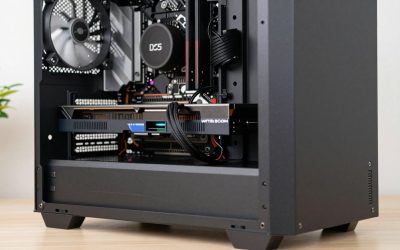
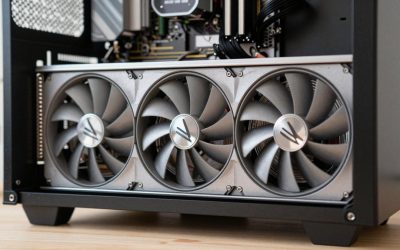
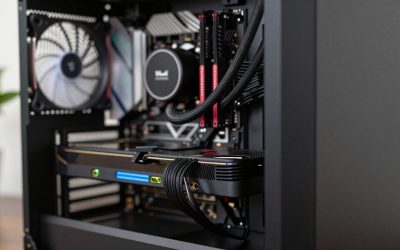
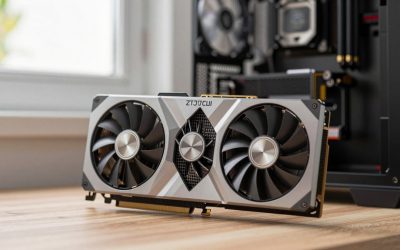
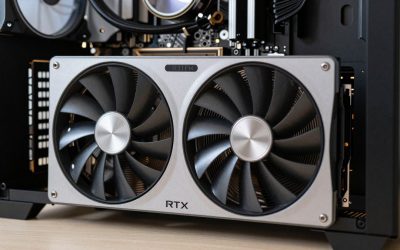
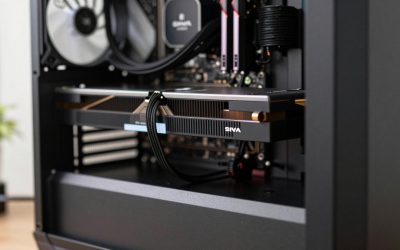
- Top Pick: XFX Rx 5700 XT Raw II 8GB GDDR6 1905MHz 3xDP HDMI PCI Express 4.0 Graphics Card Rx-57XT8OFF6 (Renewed)
- Best Value: XFX RX 5700 XT Triple Dissipation 8GB GDDR6 3xDP HDMI Graphics Card RX-57XT83LD8
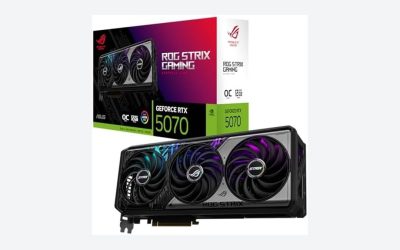
- Premium Choice: MSI GeForce RTX 4060 Ti Ventus 3X 16G OC Graphics Card -NVIDIA RTX 4060 Ti, 16GB GDDR6 Memory, 18Gbps, PCIe 4.0, DLSS3
The RTX 4060 Ti 16GB is the better card for nearly every buyer: it is roughly 20-40% faster than the RX 5700 XT depending on resolution, doubles the VRAM, supports hardware ray tracing and DLSS Frame Generation, and draws far less power; the RX 5700 XT only wins as a cheap used card for raster-only 1080p gaming where its low price outweighs missing features. The feature gap matters more each year, because some 2026 games no longer run at all on hardware without ray tracing support.
As an Amazon Associate we earn from qualifying purchases at no extra cost to you.

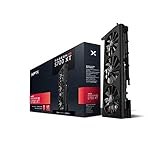

Two Generations Apart, Not Just Two Brands
The RX 5700 XT launched in July 2019 at $399 as the flagship of AMD’s first RDNA generation. It was a strong raster card for its time but predates hardware ray tracing on Radeon. The RTX 4060 Ti 16GB launched in May 2023 at $499 on NVIDIA’s Ada Lovelace architecture, essentially the regular RTX 4060 Ti with double the memory. The two cards overlap mainly through the used market, where an aging 5700 XT can cost a fraction of a 4060 Ti 16GB.
The comparison is unusual because the older card has the stronger memory subsystem on paper: a 256-bit bus and 448 GB/s, against the 4060 Ti’s 128-bit bus and 288 GB/s. Ada’s 32 MB L2 cache closes that gap and then some.
Side-by-Side Specifications
| Specification | RX 5700 XT | RTX 4060 Ti 16GB |
|---|---|---|
| Architecture | RDNA 1.0 | Ada Lovelace |
| Release date | 7 July 2019 | 18 May 2023 |
| Launch MSRP | $399 | $499 |
| Shader units | 2560 | 4352 CUDA cores |
| Boost clock | 1905 MHz | 2535 MHz |
| Process | 7 nm | 5 nm |
| Board power (TDP) | 225 W | 165 W |
| Memory | 8 GB GDDR6 | 16 GB GDDR6 |
| Memory bus | 256-bit | 128-bit |
| Bandwidth | 448.0 GB/s | 288.0 GB/s |
| L2 cache | 4 MB | 32 MB |
| PCIe interface | PCIe 4.0 x16 | PCIe 4.0 x8 |
| Power connectors | 1x 6-pin + 1x 8-pin | 1x 16-pin |
| Length (reference) | 272 mm | 240 mm |
| Slot width | 2-slot | 2-slot |
| Display outputs | 1x HDMI 2.0b, 3x DP 1.4a | 1x HDMI 2.1, 3x DP 1.4a |
Raster Performance by Resolution
TechPowerUp’s RTX 4060 Ti reviews include the RX 5700 XT in their comparison charts, and in published review data from that period the RX 5700 XT sits a tier below the RTX 3060 Ti, which the RTX 4060 Ti in turn outperforms by roughly 10-12% according to launch review roundups. Aggregated benchmark comparisons put the RTX 4060 Ti 16GB roughly 35-40% ahead at 1080p, about 20% ahead at 1440p and somewhat less at 4K. The gap shrinks with resolution because the 4060 Ti’s narrow 128-bit bus becomes more of a factor as pixel counts rise, while the 5700 XT’s wide bus holds up better.
The 16 GB version performs essentially the same as the 8 GB 4060 Ti in games that fit within 8 GB. The extra memory matters only when a game actually needs it, but in those cases it can prevent severe stutter and texture issues.
In everyday play, the RTX 4060 Ti 16GB generally runs 1080p high settings in the 90-130 FPS range in mainstream AAA games, and roughly 60-85 FPS at 1440p. The RX 5700 XT tends to land around 70-95 FPS at 1080p and 50-70 FPS at 1440p in the same type of titles. These ranges shift with settings, CPU, drivers and game patches.
Ray Tracing, Mesh Shaders and Upscaling
The RX 5700 XT has no hardware ray tracing and lacks full DirectX 12 Ultimate support, including mesh shaders. That was a minor concern in 2019, but a growing set of recent games list hardware ray tracing as a requirement, and some engines lean on mesh shaders. On the 5700 XT those titles either refuse to launch or run very poorly. The RTX 4060 Ti 16GB supports both and handles moderate ray tracing at 1080p, especially with DLSS enabled.
On upscaling, the RTX 4060 Ti 16GB has the full modern NVIDIA stack:
- DLSS Super Resolution, including the transformer-based DLSS 4 model.
- DLSS Frame Generation (2x), available on RTX 40 cards.
- Not DLSS 4 Multi Frame Generation, which is limited to RTX 50 cards.
The RX 5700 XT relies on AMD FSR 2 and FSR 3, plus XeSS in its fallback mode. FSR 3 frame generation can run on it in supported games, but results are best on newer Radeon hardware, and FSR 4’s machine-learning upscaler is designed for RDNA 4. In practice, the 4060 Ti’s DLSS gives both cleaner image quality and wider game support.
VRAM: 8 GB vs 16 GB in 2026
A practical guide to VRAM needs in current games:
- 1080p, high textures: 8 GB is the floor, and a few new releases already exceed it.
- 1440p, high textures: 10-12 GB is the comfortable range.
- Ray tracing plus frame generation at 1440p: 12-16 GB avoids stutter, since both features add memory overhead.
The RTX 4060 Ti 16GB covers all three. The RX 5700 XT covers the first and needs texture reductions beyond that. Note that frame generation itself consumes extra VRAM, so the 16 GB buffer pairs well with DLSS Frame Generation in heavy titles.
Power, Heat and PSU Requirements
The efficiency gap is large: the RX 5700 XT is rated at 225 W, while the RTX 4060 Ti 16GB is rated at 165 W and delivers more performance. A worked PSU estimate (GPU board power + about 125 W for a mainstream CPU + 150 W headroom):
- RX 5700 XT: 225 + 125 + 150 = 500 W, so a quality 550-600 W unit.
- RTX 4060 Ti 16GB: 165 + 125 + 150 = 440 W, so a quality 450-550 W unit.
Connectors differ: the 5700 XT needs a 6-pin plus an 8-pin, while the reference RTX 4060 Ti uses a single 16-pin connector with an adapter for standard 8-pin cables. Many partner 4060 Ti boards use a regular 8-pin instead. The reference 5700 XT is 272 mm long against 240 mm for the 4060 Ti, so the newer card is also easier to fit.
The RTX 4060 Ti 16GB uses a PCIe 4.0 x8 link. On older PCIe 3.0 motherboards it runs at 3.0 x8, which usually costs only a few percent and matters less on the 16 GB model, since it rarely spills out of VRAM. The RX 5700 XT uses a full x16 link.
Cost per Frame and Used Prices
Using launch MSRPs and an index where the RX 5700 XT equals 100 and the RTX 4060 Ti 16GB around 130 (averaging 1080p and 1440p):
- RX 5700 XT: $399 / 100 = about $3.99 per performance point at launch.
- RTX 4060 Ti 16GB: $499 / 130 = about $3.84 per performance point at launch.
On the used market in 2026, the RX 5700 XT is commonly found in the $110-$150 range, while the RTX 4060 Ti 16GB usually sells in roughly $300-$360. At those prices the 5700 XT is far cheaper per raster frame, but it buys into an architecture without ray tracing hardware and with a limited remaining feature runway. Used 5700 XT cards are also old enough that worn fans, dried thermal paste and past mining use are worth checking.
Pick X If, Pick Y If
| Situation | Pick |
|---|---|
| Budget under about $150, raster-only 1080p | RX 5700 XT (used) |
| Games requiring hardware ray tracing | RTX 4060 Ti 16GB |
| 1440p with high textures | RTX 4060 Ti 16GB |
| Small case or 450-500 W PSU | RTX 4060 Ti 16GB |
| Long-term card for 3+ years | RTX 4060 Ti 16GB |
| AI or creative work needing VRAM and CUDA | RTX 4060 Ti 16GB |
For buyers spending close to used 4060 Ti 16GB money, current cards such as the RTX 5060 Ti 16GB and Radeon RX 9060 XT 16GB are worth comparing, since they bring newer features at similar prices.
Frequently Asked Questions
How much faster is the RTX 4060 Ti 16GB than the RX 5700 XT?
Published data places it roughly 35-40% ahead at 1080p and around 20% ahead at 1440p in rasterized games. With ray tracing, the comparison is one-sided because the RX 5700 XT has no RT hardware. Gains vary by game and settings.
Can the RX 5700 XT still play new games in 2026?
It runs most games at 1080p with medium to high settings. Titles that require hardware ray tracing or mesh shaders may not launch or may run poorly. Its 8 GB buffer also limits texture settings in newer releases.
Is the 16 GB version of the RTX 4060 Ti worth it over 8 GB?
For gamers who keep cards for several years, play at 1440p or use frame generation, the extra memory helps avoid stutter. In games that fit within 8 GB, both versions perform the same. The 16 GB model is also more useful for local AI workloads.
Does the RTX 4060 Ti 16GB need a 16-pin power cable?
The reference design uses a 16-pin connector with an included adapter for 8-pin PSU cables. Many partner models use a standard 8-pin connector instead. Either way, a quality 450-550 W PSU is enough for a typical build.
Will the RTX 4060 Ti 16GB lose performance on PCIe 3.0?
It runs at PCIe 3.0 x8 on older boards, which typically costs only a small amount of performance. Because the 16 GB buffer rarely overflows, the penalty is smaller than on the 8 GB model.