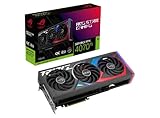
- Top Pick: ASUS ROG Strix NVIDIA GeForce RTX 4070 Ti OC Edition Gaming Graphics Card (PCIe 4.0, 12GB GDDR6X, HDMI 2.1a, DisplayPort 1.4a), 3 Year Warranty
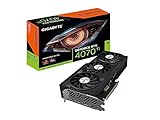
- Best Value: Gigabyte GeForce RTX 4070 Ti WINDFORCE OC 12G Graphics Card, 3X WINDFORCE Fans, 12GB 192-bit GDDR6X, GV-N407TWF3OC-12GD Video Card
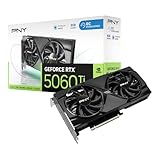
- Premium Choice: PNY NVIDIA GeForce RTX™ 5060 Ti 8GB OC Dual-Fan Graphics Card | 8GB G7, 128-bit, Boost Speed: 2692 MHz, SFF-Ready, PCIe® 5.0, HDMI®/DP 2.1, 2-Slot, NVIDIA Blackwell Architecture, DLSS 4.5
The RTX 4070 Ti is the much faster card, roughly 40-50% ahead of the newer RTX 5060 Ti 8GB in most published benchmarks, with the gap widening at 1440p. It is the better pick for anyone who can find one at a reasonable used price. The RTX 5060 Ti 8GB only makes sense as a new-card budget option for 1080p gaming, where its $379 launch price, lower power draw and DLSS Multi Frame Generation support matter more than raw speed.
Despite the higher model number and newer Blackwell architecture, the RTX 5060 Ti 8GB is a step down from the RTX 4070 Ti. The 4070 Ti launched at $799 as an upper-mid-range Ada card. The 5060 Ti 8GB is NVIDIA’s entry-to-mid-range offering from the RTX 50 series, so the two sit in different performance classes.
As an Amazon Associate we earn from qualifying purchases at no extra cost to you.

Key Specifications
| Specification | RTX 4070 Ti | RTX 5060 Ti 8GB |
|---|---|---|
| Architecture | Ada Lovelace | Blackwell 2.0 |
| Release date | 3 January 2023 | 16 April 2025 |
| Launch price (MSRP) | $799 | $379 |
| CUDA cores | 7680 | 4608 |
| Boost clock | 2610 MHz | 2572 MHz |
| Process | 4 nm | 5 nm |
| TDP | 285 W | 180 W |
| Memory | 12 GB GDDR6X | 8 GB GDDR7 |
| Memory bus | 192-bit | 128-bit |
| Bandwidth | 504.2 GB/s | 448.0 GB/s |
| L2 cache | 48 MB | 32 MB |
| Interface | PCIe 4.0 x16 | PCIe 5.0 x8 |
| Power connector | 1x 16-pin | 1x 8-pin |
| Length / width | 285 mm, 2-slot | 241 mm, 2-slot |
| Outputs | 1x HDMI 2.1, 3x DisplayPort 1.4a | 1x HDMI 2.1b, 3x DisplayPort 2.1b |
The core counts tell most of the story. The 4070 Ti has 67% more CUDA cores at a similar clock speed, plus more L2 cache and 4 GB more memory. The 5060 Ti’s fast GDDR7 nearly closes the bandwidth gap despite its narrower 128-bit bus, but bandwidth cannot make up for a much smaller GPU.
Raster Performance
Most benchmark aggregates put the RTX 4070 Ti about 40-50% ahead of the RTX 5060 Ti on average across large game suites. At 1440p and 4K, some datasets show the gap growing well past that, because the 8 GB card runs out of memory in demanding titles. TechPowerUp’s review of the 5060 Ti 8 GB described performance dropping in VRAM-heavy games, while many titles still run fine at 1080p with ray tracing disabled.
Approximate expectations at high settings in modern AAA games:
- 1080p: the 5060 Ti 8GB often delivers 60-90 FPS, and the 4070 Ti frequently runs well above 100 FPS where the CPU allows it.
- 1440p: the 4070 Ti typically holds 80-110 FPS, while the 5060 Ti 8GB often needs reduced texture settings or upscaling to stay above 60 FPS.
- 4K: realistic only on the 4070 Ti, usually with DLSS Quality enabled.
All of these ranges vary with game version, settings, CPU and driver.
Ray Tracing and the 8 GB Problem
Ray tracing makes the gap larger. RT effects need more GPU throughput and more VRAM, because acceleration structures and higher-quality assets take up memory. The 4070 Ti handles ray tracing at 1440p with DLSS Quality in most games. On the 5060 Ti 8GB, enabling RT at high texture settings often pushes memory use past 8 GB, which causes stuttering, texture pop-in or sharp frame-rate drops. To use RT on the 5060 Ti 8GB, plan on medium textures and 1080p.
DLSS 4 and Multi Frame Generation
The RTX 5060 Ti’s main feature advantage is DLSS 4 Multi Frame Generation, which can generate up to three extra frames for each rendered frame in supported games. The RTX 4070 Ti supports DLSS Frame Generation in 2x mode and the same DLSS 4 transformer upscaling model, but not the multi-frame modes.
The limits of frame generation matter here:
- It increases displayed smoothness, not responsiveness. Input latency follows the base frame rate.
- It works best when the base frame rate is already around 50-60 FPS.
- Generated frames still need VRAM, so an 8 GB card that is already memory-limited gets less out of it.
In a well-optimized game at 1080p, Multi Frame Generation can make the 5060 Ti 8GB look very smooth on a high-refresh monitor. It does not turn the card into a 4070 Ti class GPU.
VRAM by Resolution
| Resolution | Typical VRAM need (high settings) | RTX 4070 Ti (12 GB) | RTX 5060 Ti 8GB |
|---|---|---|---|
| 1080p | 6-9 GB | Comfortable | Usually OK, tight in newest titles |
| 1440p | 8-11 GB | Adequate | Often over budget |
| 1440p + ray tracing | 10-12 GB | Workable | Expect reduced textures |
| 4K | 11-14 GB | Tight in some games | Not recommended |
Power, PSU and PCIe Lanes
The RTX 5060 Ti 8GB is the easier card to build around. It has a 180 W TDP and a standard 8-pin connector, and at 241 mm it fits most cases. The 4070 Ti draws 285 W through a 16-pin connector and many partner models are longer.
PSU sizing as GPU TDP + CPU + about 150 W of headroom, with a 105 W mainstream CPU:
- RTX 4070 Ti: 285 + 105 + 150 = 540 W, so a quality 650-750 W unit.
- RTX 5060 Ti 8GB: 180 + 105 + 150 = 435 W, so a good 550 W unit is enough.
One detail matters for older builds. The 5060 Ti uses a PCIe 5.0 x8 interface. On a PCIe 3.0 motherboard, that becomes PCIe 3.0 x8, a narrow link. When an 8 GB card runs out of VRAM and has to stream data over the bus, the slower link makes the slowdown worse. The 4070 Ti’s x16 interface is much less sensitive to this.
Cost Per Performance at Launch Prices
Taking the 5060 Ti 8GB as 100 and the 4070 Ti at about 145 (the middle of the 40-50% range):
- RTX 4070 Ti: $799 / 145 = about $5.5 per performance point.
- RTX 5060 Ti 8GB: $379 / 100 = about $3.8 per performance point.
At MSRP the 5060 Ti 8GB wins on value. The 4070 Ti is now previous-generation and mostly sold used, usually for about $500-$600 used depending on model and condition. At that price its cost per frame comes much closer to the 5060 Ti, and it delivers far more absolute performance.
Pick the RTX 4070 Ti If…
- You play at 1440p or want to try 4K with DLSS.
- You want ray tracing at reasonable settings.
- You can buy a used card at a fair price and are comfortable without a full warranty.
- Your PSU has a 16-pin connector or you are fine using an adapter.
Pick the RTX 5060 Ti 8GB If…
- You play mostly at 1080p, especially esports and older titles.
- You want a new card with a full warranty under $400.
- Your system has a modest 550 W PSU and only 8-pin connectors.
- Your games support DLSS 4 Multi Frame Generation and you have a high-refresh display.
A note on the in-between option: if you are buying new and the 8 GB limit worries you, the RTX 5060 Ti 16GB uses the same GPU with twice the memory and avoids most of the VRAM problems described above. It still does not reach 4070 Ti performance.
Final Take
The RTX 5060 Ti 8GB is newer, cheaper and more efficient, but it is clearly the slower card, and its 8 GB buffer is a real limitation for 1440p and ray tracing. The RTX 4070 Ti remains a far stronger 1440p GPU. Buying it used at a fair price gives much better performance per dollar than its old MSRP suggests. Choose the 5060 Ti 8GB only for a 1080p-focused build where a new-card warranty and low power draw come first.
Frequently Asked Questions
Is the RTX 5060 Ti 8GB faster than the RTX 4070 Ti?
No. Most benchmark data puts the RTX 4070 Ti roughly 40-50% ahead on average, and the gap grows at 1440p and in VRAM-heavy games. The 5060 Ti 8GB is a newer but lower-tier card. Multi Frame Generation can raise its displayed frame rate, but it does not close the gap in actual rendering performance.
Is 8 GB of VRAM still enough in 2026?
For 1080p gaming at medium-to-high settings, 8 GB still works in most titles. In recent AAA games at 1440p, or with ray tracing at high textures, 8 GB often runs out and causes stuttering or blurry textures. Buyers who plan to keep a card for several years are better served by 12 GB or more.
Does the RTX 4070 Ti support DLSS 4?
Yes, partly. The RTX 4070 Ti supports the DLSS 4 transformer upscaling model, Ray Reconstruction and DLSS Frame Generation in 2x mode. Multi Frame Generation, which inserts up to three generated frames, is exclusive to RTX 50 series cards such as the 5060 Ti.
Will the RTX 5060 Ti work on a PCIe 3.0 motherboard?
Yes, but it runs as PCIe 3.0 x8 because the card has only eight lanes. In most games that fit in VRAM the performance loss is small. When the 8 GB buffer overflows, the slower link makes slowdowns noticeably worse, so it is better paired with PCIe 4.0 or newer platforms.
What power supply do I need for the RTX 4070 Ti?
A quality 650-750 W power supply covers the 285 W RTX 4070 Ti with a mainstream gaming CPU. The card uses a 16-pin connector. ATX 3.x power supplies provide it natively, and older units can use the adapter that comes with the card.