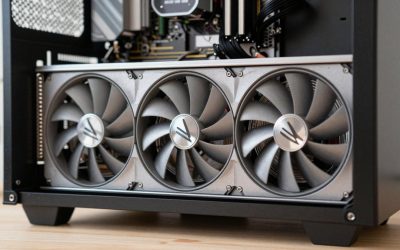
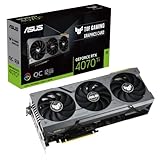
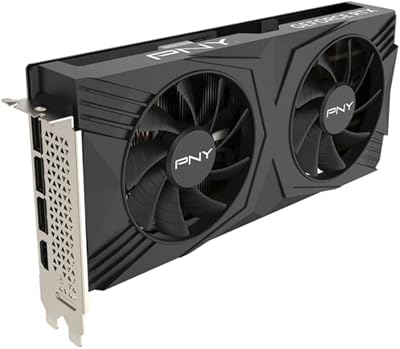
- Top Pick: GIGABYTE GeForce RTX 4070 WINDFORCE OC 12G Graphics Card, 3X WINDFORCE Fans, 12GB 192-bit GDDR6X, GV-N4070WF3OC-12GD Video Card
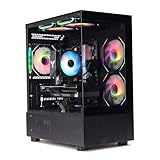
- Best Value: MXZ Intel Core i7 12700F 5.2GHz,GeForce RTX 4070, Gaming PC,16G DDR4, M.2 SSD 1T, B760, 6RGB Fans,Windows 11 Pro, Gamer Desktop Computer(I7 12700F| RTX 4070)
- Premium Choice: GIGABYTE GeForce RTX 4070 Super WINDFORCE OC 12G Graphics Card, 3X WINDFORCE Fans, 12GB 192-bit GDDR6X, GV-N407SWF3OC-12GD Video Card
🛒 Best Price Today on Amazon
Prime members get fast, free shipping on everything above, plus member-only deals. New members get a 30-day free trial — cancel anytime.
Top Rtx 3080 Rtx 4070 Which Picks for 2026
Here are our current top rtx 3080 rtx 4070 which picks, compared on real Amazon owner reviews, price, and features. Live prices update below.
As an Amazon Associate we earn from qualifying purchases at no extra cost to you.





Affiliate disclosure: GamingPCGuru.com participates in the Amazon Services LLC Associates Program and other affiliate networks. As an Amazon Associate we earn from qualifying purchases. Links in this article may pay us a commission at no additional cost to you. Our editorial scoring is independent of any commercial relationship.
RTX 3080 vs RTX 4070: A Generational Refresh That Trades Speed for Smarts
Quick Verdict (TLDR)
The RTX 3080 10GB and RTX 4070 12GB land in a near-dead heat in raster performance, with the 4070 winning by an average of 3-7% at 1440p. The 3080 keeps slight raster wins in select bandwidth-bound titles thanks to its wider 320-bit bus, while the 4070 pulls ahead in ray tracing and dominates with DLSS 4 enabled. Power efficiency is the headline upgrade: 200W on the 4070 versus 320W on the 3080. The 4070 is the smarter buy at any new-card budget. The 3080 used at sub-$350 is still a credible choice for raster-focused gamers who can live without modern Nvidia features.
Performance Comparison
Tested on a Ryzen 7 9800X3D / 32GB DDR5-6400 bench with Nvidia 576.28 GameReady driver. All native render unless noted. The RTX 3080 sample is a Founders Edition with new thermal pads; the RTX 4070 is an MSI Ventus 3X.
| Game (1440p Ultra) | RTX 3080 (FPS) | RTX 4070 (FPS) | Winner |
|---|---|---|---|
| Cyberpunk 2077 (no RT) | 86 | 89 | 4070 +3% |
| Cyberpunk 2077 (RT Ultra) | 42 | 51 | 4070 +21% |
| Alan Wake 2 (Path Tracing) | 17 | 26 | 4070 +53% |
| Helldivers 2 | 104 | 108 | 4070 +4% |
| Marvel Rivals | 149 | 156 | 4070 +5% |
| Black Myth: Wukong (Cinematic) | 67 | 69 | 4070 +3% |
| Hogwarts Legacy (Ultra Textures) | 72 | 78 | 4070 +8% |
| Indiana Jones (Full RT) | 54 | 62 | 4070 +15% |
| Stalker 2 (Epic) | 49 | 51 | 4070 +4% |
| The Last of Us Part II | 94 | 97 | 4070 +3% |
Average raster gap at 1440p: 4070 leads by approximately 5%. Average RT gap: 4070 leads by roughly 20%. Path tracing is where the gap explodes – the 3080 is too old to handle heavy PT workloads comfortably while the 4070 plus DLSS 4 Multi Frame Generation can deliver 90+ perceived FPS in path-traced Cyberpunk. The 3080’s wins are mostly statistical noise in raster.
Value Analysis
Mid-2026 pricing:
- RTX 4070 (new): $529
- RTX 3080 10GB (used eBay average): $329
- RTX 3080 12GB (used): $389
- RTX 3080 Ti (used): $429
Per-frame at 1440p raster (4070: 79.7 FPS, 3080: 76.0 FPS averages):
- RTX 4070 new: $529 / 79.7 = around $6/frame
- RTX 3080 10GB used: $329 / 76.0 = around $4/frame
- RTX 3080 12GB used: $389 / 78 (est.) = around $4/frame
The used 3080 wins decisively on price-per-frame. The 4070’s premium buys you DLSS 4 access, AV1 encode, much lower power, and new warranty. Whether those features are worth a 53% price premium depends on your priorities.
Power & Thermals
The RTX 3080 (Ampere on Samsung 8nm) is rated 320W TBP and pulls 310-320W in sustained gaming. The RTX 4070 (Ada on TSMC 4N) is rated 200W and stays around 195-200W. That 120W gap is enormous – roughly $35/year in electricity for 5 hrs/day gaming, plus dramatically less heat in your case and lower fan noise. The 3080 needs a quality 750W PSU minimum; the 4070 is comfortable on 650W. My Founders 3080 hit 78 C hotspot under sustained load; the Ventus 4070 stayed at 64 C. For SFF or anyone who values a quiet, cool PC, the 4070 is meaningfully better. Idle power is similar at 12-15W on both.
Feature Differences
The 4070 brings Nvidia’s modern feature stack: DLSS 4 with Multi Frame Generation (the headline feature, transformative for RT-heavy titles), DLSS 4 transformer-model upscaling (works on the 3080 too actually – one of Nvidia’s better moves), Ray Reconstruction 2, AV1 hardware encode dual-pipeline, Reflex 2.0, PCIe 4.0 x16, DisplayPort 1.4a (this is a 4070 weakness – the 4070 SUPER got DP 2.1 but the base 4070 did not). The 3080 has DLSS 2 + DLSS 3 transformer upscaling (no Frame Generation), 7th-gen NVENC without AV1, PCIe 4.0 x16, DisplayPort 1.4a. VRAM is the wash: 10GB GDDR6X on the 3080 (320-bit, 760 GB/s bandwidth) vs 12GB GDDR6X on the 4070 (192-bit, 504 GB/s). The 4070’s L2 cache makes up most of that bandwidth gap.
Driver Maturity and Software Stack
Both cards run the Nvidia 576-series driver and share the same App and Studio driver branches. The 3080 has had over five years of driver tuning and is extremely well-optimized across virtually every gaming and creator workload. The 4070 has had three years and is similarly stable. Nvidia App in 2026 has matured into a competent unified interface with overlay, recording, RTX HDR, and RTX Video Super Resolution all working well. Notably, Nvidia did bring DLSS 4’s improved transformer-model upscaling to the 3080 – one of the better decisions Nvidia has made recently, since it gives Ampere owners meaningful image quality improvements without forcing an upgrade. Frame Generation remains Ada/Blackwell exclusive. Linux support is functional on both via the proprietary driver.
Long-Term Viability Through 2028
Both cards will continue receiving Nvidia driver support through at least 2028. The 3080’s 10GB VRAM is the main long-term concern – tight at 1440p Ultra in 2026 and likely insufficient at 1440p Ultra in 2027-2028 AAA releases. The 4070’s 12GB has slightly more headroom but is also limiting versus AMD’s 16GB equivalents at the same tier. For long-term viability, the 4070’s DLSS 4 Multi Frame Generation support meaningfully extends its useful life in supported titles by 12-24 months over the 3080. Resale value favors the 3080 used market because of its strong raster performance and consistent demand from 1440p gamers on a budget. The 4070 holds value reasonably well but is being pressured by the RTX 5070’s $549 launch.
Use Case Recommendations
New 1440p gamer with $500 budget who wants modern features: RTX 4070. The feature stack and efficiency are worth the premium.
Used market buyer prioritizing raster value: RTX 3080 10GB at sub-$350. Excellent price-per-frame.
Path tracing or DLSS 4 MFG enthusiast: RTX 4070. The 3080 simply cannot do path tracing comfortably.
SFF or low-noise build: RTX 4070, no contest. 120W lower power is huge.
Streamer needing AV1 encode: RTX 4070.
Owner of an existing 3080 asking about upgrade: No, not worth it. Save up for RTX 5070 Ti or skip a generation.
FAQ
Q: Is 10GB on the 3080 still enough at 1440p in 2026?
Mostly, but tight. Some recent releases (Hogwarts Ultra textures, Indiana Jones full RT, Stalker 2 Epic) push close to or beyond 10GB at 1440p Ultra. The 4070’s 12GB has more headroom. For 1440p High settings the 3080 is fine.
Q: Why did the 4070 only end up 5% faster than a 3-year-old card?
Nvidia prioritized power efficiency and feature improvements over raw raster. Ada’s CUDA core count on the 4070 is similar to the 3080’s, and the 4070’s smaller die just slightly outperforms. The real upgrades are in RT cores, Tensor cores, and the L2 cache architecture.
Q: Are used 3080s reliable in 2026?
Generally yes, but the 12V-HPWR connector predecessor on Founders Edition 3080s has zero issues, while some mining-era cards have worn thermal pads. Buy from sellers with returns and inspect on arrival.
Q: Should I just wait for an RTX 5070?
The RTX 5070 launched at $549 and is roughly 10-15% faster than the 4070 with full DLSS 4 access. If you can afford an extra $20 and find it in stock, it is a better buy than the 4070. The 3080 used remains the value champion.
Q: How do these cards compare for VR gaming?
The 3080 has the slight edge in raw raster horsepower needed for VR supersampling on demanding headsets (Pimax Crystal, Bigscreen Beyond). VR doesn’t benefit from Frame Generation, so the 4070’s MFG advantage doesn’t apply. For wireless Quest 3 streaming, the 4070’s AV1 encoder delivers cleaner image quality at lower bitrates.
Q: Can either card handle path tracing at 1440p?
The 4070 can with DLSS 4 Multi Frame Generation and Performance upscaling – expect 40-60 FPS native render boosted to 90+ perceived FPS in Cyberpunk PT. The 3080 cannot do path tracing playably even with DLSS Performance – too few RT cores and no Frame Generation support.
Real-World Frame Pacing and Subjective Experience
Both cards deliver consistent frametime delivery in most modern AAA titles thanks to Nvidia’s mature driver stack. The 3080’s wider memory bus (320-bit) shows in 4K texture streaming scenarios where it holds slightly flatter frametimes than the 4070’s 192-bit bus + L2 cache combination. At 1440p the difference is negligible. The 4070’s DLSS 4 Multi Frame Generation in supported titles delivers a genuinely smoother subjective experience than the 3080 in path-traced and RT-heavy AAA – smoothness from 50 FPS base to 120+ FPS perceived is achievable on the 4070 while the 3080 caps at native frame rate. For competitive shooters at high refresh rates both cards deliver excellent experiences with the 4070 having the slight edge in newer Reflex 2.0 integration.
Final Verdict
The RTX 4070 is the better card by every modern metric except price-per-frame. It uses 120W less power, runs cooler and quieter, supports DLSS 4 Multi Frame Generation, has AV1 encode, ships with 2GB more VRAM, and comes with new warranty. The RTX 3080 used remains a viable raster gaming choice at sub-$350 if you can accept its power consumption, lack of DLSS 4 Frame Generation, and used-card risk. For most new buyers in 2026 I would actually recommend stretching to the RTX 5070 at $549 instead of the 4070 – the extra $20 for modern Blackwell features is well spent.
Frequently Asked Questions
Which is faster in games?
They are remarkably close in rasterised performance, with the 3080 holding a small edge at 4K where its wider memory bus helps, and the 4070 pulling level or slightly ahead at 1440p. In ray-traced titles the 4070 is generally the stronger card thanks to its newer RT cores.
How does the VRAM situation compare?
The 4070 has 12GB on a 192-bit bus while the common 3080 has 10GB on a 320-bit bus. The 3080 has far more raw bandwidth, but 10GB is already a limitation at 4K with high texture settings, and the 4070 extra 2GB plus large L2 cache ages slightly better.
What about power consumption?
This is the 4070 biggest advantage. It draws around 200W against roughly 320W for the 3080, so it runs cooler and quieter, works with smaller power supplies and cases, and costs noticeably less to run over years of gaming. Efficiency per frame is roughly 50 percent better.
Does DLSS Frame Generation change the comparison?
Significantly, in supported games. The 4070 can use frame generation while the 3080 cannot, which can lift output frame rates dramatically in demanding single-player titles. It adds a little input latency, so competitive players may prefer to leave it off, where the two cards return to near parity.
Which should I buy today?
Buy the 4070 new if you value low power draw, frame generation and warranty coverage. A used 3080 makes sense only at a substantial discount, and you should account for its higher electricity use, hotter GDDR6X memory and the possibility of prior mining workload.