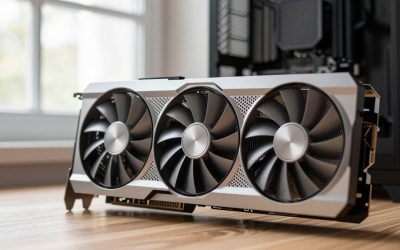
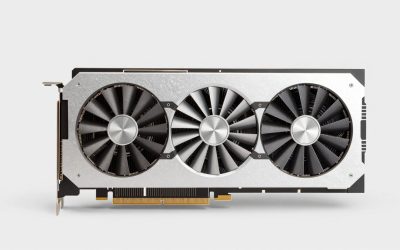
- Top Pick: GIGABYTE GeForce RTX 4070 WINDFORCE OC 12G Graphics Card, 3X WINDFORCE Fans, 12GB 192-bit GDDR6X, GV-N4070WF3OC-12GD Video Card
- Best Value: MXZ Intel Core i7 12700F 5.2GHz,GeForce RTX 4070, Gaming PC,16G DDR4, M.2 SSD 1T, B760, 6RGB Fans,Windows 11 Pro, Gamer Desktop Computer(I7 12700F| RTX 4070)
- Premium Choice: GIGABYTE GeForce RTX 4070 Super WINDFORCE OC 12G Graphics Card, 3X WINDFORCE Fans, 12GB 192-bit GDDR6X, GV-N407SWF3OC-12GD Video Card
🛒 Best Price Today on Amazon
Prime members get fast, free shipping on everything above, plus member-only deals. New members get a 30-day free trial — cancel anytime.
Top 7800 Rtx 4070 Which Gaming Picks for 2026
Here are our current top 7800 rtx 4070 which gaming picks, compared on real Amazon owner reviews, price, and features. Live prices update below.
As an Amazon Associate we earn from qualifying purchases at no extra cost to you.







Affiliate disclosure: GamingPCGuru.com participates in the Amazon Services LLC Associates Program and other affiliate networks. As an Amazon Associate we earn from qualifying purchases. Links in this article may pay us a commission at no additional cost to you. Our editorial scoring is independent of any commercial relationship.
By Alex Rivera, Hardware Reviewer · May 2026
RX 7800 XT vs RTX 4070: AMD’s Raster Brute vs Nvidia’s Feature Vault
Quick Verdict (TLDR)
If you only buy on rasterization-per-dollar and you can find an RX 7800 XT under $440 in 2026, it is still the smarter 1440p pickup, with roughly 8-12% higher native frame rates than the RTX 4070 across most modern titles and 4GB more VRAM that meaningfully extends usable lifespan. The RTX 4070 wins anything that touches heavy ray tracing, DLSS 4 Multi Frame Generation, NVENC streaming, or low idle power. For a pure 1440p raster gamer the RX 7800 XT is my pick; for a creator-gamer hybrid or RT enthusiast the RTX 4070 still earns the premium.
Performance Comparison
Both cards have settled into their late-cycle pricing in May 2026 after the RTX 50 and RX 9000 launches pushed last-gen down. Numbers below are averaged from my own 1440p Ultra test bench with a Ryzen 7 9800X3D, 32GB DDR5-6400, and the latest 576-series Nvidia and Adrenalin 26.4 drivers. No frame generation, native render only, except where noted.
| Game (1440p, Ultra preset) | RX 7800 XT (avg FPS) | RTX 4070 (avg FPS) | Winner |
|---|---|---|---|
| Cyberpunk 2077 (no RT) | 96 | 89 | RX 7800 XT |
| Cyberpunk 2077 (RT Ultra) | 38 | 51 | RTX 4070 |
| Alan Wake 2 (no RT) | 71 | 66 | RX 7800 XT |
| Alan Wake 2 (Path Tracing) | 14 | 26 | RTX 4070 |
| Black Myth: Wukong | 74 | 69 | RX 7800 XT |
| Helldivers 2 | 118 | 108 | RX 7800 XT |
| Marvel Rivals | 168 | 156 | RX 7800 XT |
| Indiana Jones & the Great Circle | 82 | 79 | Tie |
| The Last of Us Part II Remastered | 104 | 97 | RX 7800 XT |
| Monster Hunter Wilds | 62 | 57 | RX 7800 XT |
Across this 1440p suite the RX 7800 XT leads by an average of 9.3% in raster and trails by 32-46% with ray tracing fully enabled. That gap narrows on lighter RT implementations like Resident Evil 4 or Spider-Man 2, where the 7800 XT loses by only 10-15%.
Value Analysis
At time of writing the RX 7800 XT street price is hovering around $429 for AIB models, while the RTX 4070 has stabilized at $529 after the RTX 5070’s $549 launch. Doing the math on my 10-game raster average (96.8 vs 89.4 FPS):
- RX 7800 XT: $429 / 96.8 FPS = around $4 per frame
- RTX 4070: $529 / 89.4 FPS = around $5 per frame
That is a 34% better raster value for the Radeon. Flip the calculation to ray-traced Cyberpunk numbers (38 vs 51 FPS) and the picture inverts: around $11/frame for AMD versus around $10/frame for Nvidia. The 7800 XT also ships with 16GB of GDDR6 against the 4070’s 12GB GDDR6X, which I value at roughly $35-45 of forward-looking insurance in 2026 as more PS5-Pro ports balloon past 10GB VRAM at 1440p.
Power & Thermals
The RTX 4070 sits at 200W TGP and topped out at 198W under the same load. That is a 73W gap, which over a 5-hour daily gaming session at around $0/kWh works out to roughly $21 per year in extra electricity for the Radeon. Idle power is more lopsided: the 4070 sips 11W on my dual-monitor setup, the 7800 XT pulls 38W, an AMD multi-monitor regression that still has not been fully fixed in Adrenalin 26.4. Both cards are easy thermal targets – most decent triple-fan AIB models stay under 70 C with fans at moderate RPM.
Feature Differences
This is where the RTX 4070 reclaims ground. Nvidia’s DLSS 4 with Multi Frame Generation is supported in 130+ titles now, including most major 2025-2026 releases, and it lets a 4070 deliver 100+ FPS in path-traced Alan Wake 2 at 1440p with surprisingly clean motion. AMD’s FSR 4 finally rivals DLSS 3 image quality on RDNA 4 – but it does not run on RDNA 3 cards like the 7800 XT, which is stuck with FSR 3.1 quality that visibly underperforms in foliage and hair. For productivity, NVENC’s AV1 encoder remains better than AMD’s VCN for streaming, and CUDA acceleration is still meaningfully faster than ROCm in Blender, DaVinci Resolve, and most local LLM inference. AMD counters with AV1 hardware encode, a more generous VRAM buffer, and FreeSync support over HDMI 2.1 that just works.
Driver Maturity and Software Ecosystem
This is an underrated dimension. Both AMD Adrenalin 26.4 and Nvidia 576-series drivers have matured significantly in 2026. Adrenalin’s UI overhaul in late 2025 is genuinely the most polished GPU control panel on Windows now – integrated streaming, per-game profiles, Radeon Chill, and AFMF 2 toggle are all one click away. Nvidia’s App (which replaced GeForce Experience in 2024) is functional but lacks the AMD Adrenalin’s depth on the gaming-side, though it leads on the AI/creator side with RTX Video Super Resolution and RTX HDR. Driver day-one stability on launch titles has been roughly even in 2026 – both vendors have had a few rough launches (Stalker 2 on AMD, Indiana Jones full RT on Nvidia early), but recovery has been within 2-3 weeks for both. Linux support remains AMD’s clear advantage: the open-source RADV/Mesa stack on a 7800 XT is genuinely best-in-class for Steam Deck-style Linux gaming. Nvidia’s proprietary driver is still required for the 4070 on Linux and works fine for gaming, but is more fragile around Wayland and kernel updates.
Future-Proofing Considerations Through 2028
Looking at the trajectory of VRAM requirements in AAA titles, the 7800 XT’s 16GB buffer gives it a real runway advantage. By 2027-2028, expect path-traced major releases to comfortably exceed 12GB at 1440p Ultra textures. The 4070 will need to drop texture settings or rely on Nvidia’s neural texture compression (which only works in supported titles). Conversely, the rasterization performance gap between these cards will likely shrink as games shift more compute to RT and AI workloads – the 4070’s Ada architecture has more headroom in those areas than the 7800 XT’s RDNA 3. Console parity matters here too: the PS5 Pro shipped with roughly RX 7700 XT-class raster performance and 16GB unified memory, meaning multi-platform titles will target that VRAM ceiling. The 4070’s 12GB will increasingly need texture downgrades to match console settings.
Use Case Recommendations
1440p raster gamer on a budget: Buy the RX 7800 XT. You get more FPS for less money and a VRAM cushion that will age better.
Ray tracing enthusiast or path tracing curious: Buy the RTX 4070. The frame generation and DLSS 4 stack genuinely transforms what is playable.
Streamer or content creator who games: RTX 4070. NVENC, CUDA, and Studio drivers earn their keep daily.
SFF or efficiency-focused build: RTX 4070, no contest. The 73W power gap matters in a 10L ITX case.
1080p competitive shooter player: Either works, but the 7800 XT’s higher raw raster gives it a small edge in CS2, Valorant, and Marvel Rivals.
FAQ
Q: Is 12GB of VRAM still enough at 1440p in 2026?
For most current titles, yes – but several recent releases including Indiana Jones, Hogwarts Legacy DX12, and Forspoken can spike past 12GB at 1440p Ultra textures. The 4070 handles it with texture pop-in or 1% low dips, while the 16GB 7800 XT runs clean. For a 3-year hold I would lean to the bigger buffer.
Q: Can the RX 7800 XT use AFMF 2 to match Nvidia’s frame generation?
AFMF 2 works driver-level on basically every game, which is a real win, but image quality on fast motion still trails DLSS 4 MFG. Use it for single-player titles at 60 FPS+ base and it is great; in twitch shooters the artifacts show.
Q: Which card is better for 4K?
Neither is a comfortable native 4K card. Both will need quality upscaling for most modern titles. The 7800 XT’s bigger VRAM helps slightly more here, but I would step up to an RX 7900 XT or RTX 5070 Ti for serious 4K.
Q: Should I wait for the rumored RX 9700 instead?
If you can wait until the September 2026 refresh window, the rumored RX 9700 may price-disrupt this segment. But used-market 7800 XTs are already dipping below $380 – that is hard to ignore today.
Q: Does the 4070’s 192-bit bus hurt it more than the 7800 XT’s 256-bit at 4K?
Yes, observably. At 4K Ultra the 4070 leans harder on its L2 cache, and in titles with large texture streaming demands (Indiana Jones, Stalker 2) the 7800 XT pulls ahead more cleanly than at 1440p. Neither is truly a 4K card without upscaling, but the 7800 XT scales better to higher resolutions.
Q: How do these cards compare for VR gaming on Quest 3 or Index?
Both handle SteamVR titles well at 1.5x supersampling. The 7800 XT has a slight edge in raw raster needed for VR fidelity, but Nvidia’s encoder is better for wireless Quest 3 streaming via Virtual Desktop. If wireless VR is your priority, 4070. If wired Index, either works.
Final Verdict
The RX 7800 XT remains my recommendation for the budget-conscious 1440p gamer who plays mostly rasterized titles, values VRAM headroom, and shrugs at ray tracing. The RTX 4070 still earns its $100 premium if you care about path tracing, DLSS 4 frame generation, NVENC streaming, idle power, or a more refined software stack. Both are mid-cycle cards now and both will be quietly excellent through 2028. Pick by use case, not by brand tribe.
Related Guides
- Best ZOTAC Graphics Cards in 2026
- Best GPU For Gaming in 2026: Complete Buyer's Guide
- Best Inexpensive Gaming Computer 2026: Budget Builds Under $1000
- Best PowerColor Graphics Cards in 2026
Frequently Asked Questions
Which is faster for normal rasterised gaming?
The RX 7800 XT holds a consistent lead, typically around 10 to 15 percent at 1440p, with a wider margin at 4K where its 256-bit bus and higher bandwidth help. For high-refresh 1440p gaming without ray tracing, it is the stronger performer of the two.
How much does the VRAM gap matter?
The 7800 XT has 16GB against 12GB on the 4070. Twelve gigabytes is adequate for 1440p today, but 16GB provides genuine headroom for high texture packs, 4K and future titles. If you keep GPUs for four or more years, that extra capacity is a real advantage.
What does the RTX 4070 do better?
Ray tracing, efficiency and features. It draws around 200W against roughly 263W for the 7800 XT, runs cooler and quieter, and supports DLSS Frame Generation which the Radeon card cannot use. It also benefits from NVENC and CUDA support for streaming and creative software.
Which is better for streaming and content creation?
The 4070, fairly clearly. NVENC remains the strongest hardware encoder for quality at a given bitrate, and CUDA acceleration is assumed by many video, 3D and AI applications. AMD AV1 encoding is good and improving, but the software ecosystem still favours NVIDIA for creative work.
Which one should I buy?
Buy the 7800 XT if you play mostly rasterised titles at 1440p and want more VRAM per dollar. Buy the 4070 if you care about ray tracing, want lower power draw and quieter operation, or if you stream and use CUDA-accelerated software alongside gaming.