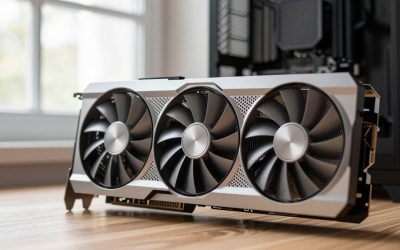
- Top Pick: ASUS Dual GeForce RTX 4060 Ti EVO OC Edition 8GB GDDR6 (PCIe 4.0, 8GB GDDR6, DLSS 3, HDMI 2.1a, DisplayPort 1.4a, Axial-tech Fan Design, Auto-Extreme Technology), 3 Year Warranty
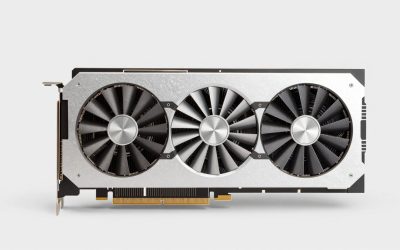
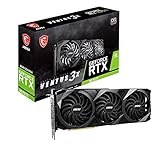
- Best Value: MSI Gaming GeForce RTX 3070 Ti 8GB GDRR6X Ventus 3X – Computer Graphics Card 256-Bit HDMI/DP Nvlink, Tri-Frozr 2 Ampere Architecture OC, NVIDIA GPU Video Card (Renewed)
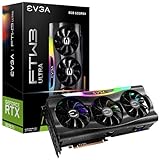
- Premium Choice: EVGA GeForce RTX 3070 Ti FTW3 Ultra Gaming, 8GB GDDR6X, 19000MHz Memory, 1860MHz GPU, 3 Fans, ARGB LED, Metal Backplate, PCIe 4.0, DisplayPort, Desktop Compatible
🛒 Best Price Today on Amazon
Prime members get fast, free shipping on everything above, plus member-only deals. New members get a 30-day free trial — cancel anytime.
Top Rtx 3070 Rtx 4060 Which Picks for 2026
Here are our current top rtx 3070 rtx 4060 which picks, compared on real Amazon owner reviews, price, and features. Live prices update below.
As an Amazon Associate we earn from qualifying purchases at no extra cost to you.





Affiliate disclosure: GamingPCGuru.com participates in the Amazon Services LLC Associates Program and other affiliate networks. As an Amazon Associate we earn from qualifying purchases. Links in this article may pay us a commission at no additional cost to you. Our editorial scoring is independent of any commercial relationship.
By Alex Rivera, Hardware Reviewer · May 2026
RTX 3070 vs RTX 4060 Ti: A Three-Year-Old Card That Refuses to Lose
Quick Verdict (TLDR)
This is a frustrating comparison that exposes Nvidia’s tier-shuffling in the RTX 40 generation. The RTX 3070 8GB from 2020 trades blows with the RTX 4060 Ti 8GB in raster, with the 4060 Ti winning by a slim 3-7% margin at 1080p and the 3070 actually edging ahead at 1440p in some titles where the 4060 Ti’s narrower memory bus chokes. Both cards have the same 8GB VRAM limitation that hurts both at 1440p Ultra in 2026. The 4060 Ti wins on power efficiency, DLSS 4 support, and brand-new warranty; the 3070 used at $239 is the better value. The 4060 Ti 16GB at $429 is overpriced for what it delivers.
Performance Comparison
Tested on a Ryzen 7 7700X / 32GB DDR5-6000. Nvidia 576.28. All native render unless noted. The RTX 3070 is an EVGA XC3, the RTX 4060 Ti 8GB is an Asus Dual.
| Game | Resolution / Preset | RTX 3070 (FPS) | RTX 4060 Ti 8GB (FPS) | Winner |
|---|---|---|---|---|
| Cyberpunk 2077 | 1080p Ultra | 91 | 96 | 4060 Ti +5% |
| Cyberpunk 2077 | 1440p High | 62 | 61 | Tie |
| Cyberpunk 2077 (RT Med) | 1080p | 52 | 56 | 4060 Ti +8% |
| Helldivers 2 | 1440p High | 78 | 77 | Tie |
| Marvel Rivals | 1440p High | 119 | 117 | 3070 +2% |
| Hogwarts Legacy | 1440p Ultra Textures | 54 | 48 | 3070 +13% (VRAM) |
| Black Myth: Wukong | 1440p Med | 48 | 46 | 3070 +4% |
| Counter-Strike 2 | 1080p Very High | 248 | 262 | 4060 Ti +6% |
| Indiana Jones (RT High) | 1080p | 41 | 47 | 4060 Ti +15% |
| Stalker 2 (High) | 1440p | 46 | 44 | 3070 +5% |
Average raster gap at 1080p: 4060 Ti leads by about 5%. At 1440p, the bandwidth-starved 4060 Ti slips to roughly even or losing by a couple percent in VRAM-pressured titles. With ray tracing the 4060 Ti pulls ahead by 8-15% thanks to Ada’s improved RT cores. This is essentially a wash on pure performance – the 4060 Ti’s marketing pitch as a 3070 successor is mostly accurate, which is the problem since the 3070 came out in late 2020.
Value Analysis
Mid-2026 pricing:
- RTX 4060 Ti 8GB (new): $379
- RTX 4060 Ti 16GB (new): $429
- RTX 3070 8GB (used eBay average): $239
- RTX 3070 Ti 8GB (used): $279
Per-frame at 1080p raster (4060 Ti: 82.4 FPS, 3070: 81.5 FPS averages):
- RTX 4060 Ti 8GB: $379 / 82.4 = around $4/frame
- RTX 3070 used: $239 / 81.5 = around $2/frame
- RTX 4060 Ti 16GB: $429 / 82.4 = around $5/frame
The used 3070 obliterates the 4060 Ti on raster price-per-frame. Even allowing for warranty and DLSS 4 access, the 4060 Ti is hard to justify at $379. The 16GB version makes more sense conceptually but is overpriced at $429 – for that money the RX 7800 XT or used RTX 4070 are better picks.
Power & Thermals
The RTX 3070 is rated 220W TBP and consistently pulls 215-225W under load. The RTX 4060 Ti is rated 160W and stays under 158W. That 60W gap is real – $18/year in electricity, plus meaningfully less heat in your case. The 4060 Ti runs noticeably cooler too: my Asus Dual sample peaked at 65 C hotspot vs the EVGA 3070’s 72 C. For SFF, low-PSU, or quiet builds the 4060 Ti is significantly more practical. Both are stable cards with no widespread reliability concerns. Idle power is similar at 12-15W on both.
Feature Differences
The 4060 Ti’s feature stack is the real upgrade story. DLSS 4 with Multi Frame Generation is supported – on the 3070 you get DLSS 2 quality but no Frame Generation at all (Ampere doesn’t have the required hardware). Ray Reconstruction works on both but is faster on the 4060 Ti. AV1 hardware encode is exclusive to the 4060 Ti. The 4060 Ti’s NVENC is 8th-gen vs the 3070’s 7th-gen, with better quality at low bitrates. PCIe 4.0 x8 on the 4060 Ti vs 4.0 x16 on the 3070 – mostly identical in practice but the 3070 won’t lose performance in PCIe 3.0 systems where the 4060 Ti has been observed to lose 5-10% on x8 PCIe 3.0 setups.
Driver Maturity and Software Stack
Both cards run the Nvidia 576-series driver and benefit from Nvidia’s mature gaming and Studio driver branches. The 3070 has had over five years of driver tuning and is extremely well-optimized across virtually every workload. The 4060 Ti has had three years and is similarly stable. Nvidia App in 2026 has matured into a competent unified interface with overlay, recording, RTX HDR, and RTX Video Super Resolution all working well. The 4060 Ti’s modern feature exclusives (DLSS 4 Multi Frame Generation, AV1 encode) are the real software story here. Linux support via the proprietary driver works on both but Wayland integration remains less polished than AMD’s open-source stack.
Long-Term Viability and Resale Considerations
Both cards will continue receiving Nvidia driver support through at least 2028. The 3070’s 8GB VRAM ceiling will increasingly limit it in 1080p Ultra and 1440p Ultra in newer releases – the same ceiling that hurts the 4060 Ti. Neither has a meaningful VRAM advantage over the other. For long-term viability, the 4060 Ti’s DLSS 4 Multi Frame Generation support extends its useful life in supported AAA titles by 12-18 months over the 3070. Resale value favors the 3070 in the used market because of its still-respectable raster performance; the 4060 Ti depreciates faster due to its mid-range positioning and the perceived value mismatch at retail prices. The 4060 Ti 16GB holds value better than the 8GB version because of creator and AI hobbyist demand.
Use Case Recommendations
1080p / light 1440p gamer with $250 budget who is OK with used: RTX 3070. Better price-per-frame, no warranty.
New build, warranty + DLSS 4 access required: RTX 4060 Ti 8GB. Modern features for a premium.
SFF or efficiency-focused build: RTX 4060 Ti. 60W lower draw is real.
1440p gamer wanting more VRAM headroom: Skip both. The RX 7700 XT 12GB or RX 7800 XT 16GB are better picks.
Streamer prioritizing AV1 encode: RTX 4060 Ti.
Used 3070 Ti available: The 3070 Ti at $279 used is 8-12% faster than the 3070 and a better deal than either of the above.
FAQ
Q: Why is a 2020 card competitive with a 2023 card?
The RTX 4060 Ti was Nvidia’s most criticized RTX 40 SKU because it replaced a 256-bit bus and 220W chip (3070) with a 128-bit bus and 160W chip (4060 Ti). Ada’s architectural efficiency gains barely covered the silicon downgrade, leaving the 4060 Ti as a sidegrade rather than an upgrade.
Q: Should I worry about used 3070 mining damage?
Five years post-launch, most used 3070s have been through one or two owners. Stick to listings with photos showing original packaging, ask about thermal pad condition, and prefer sellers with eBay returns. The card itself is durable – VRAM thermals are the main long-term concern.
Q: Is the 4060 Ti 16GB worth the extra $50?
For pure gaming, mostly no – the bandwidth bottleneck remains the limiting factor. The 16GB version makes sense only for specific creator workloads like local AI inference or large texture authoring.
Q: Will DLSS 4 ever come to Ampere (3070)?
Frame Generation requires hardware that Ampere lacks. Nvidia has been clear this is permanent. Improved DLSS 4 upscaling quality (transformer model) does come to all RTX cards including the 3070.
Q: How do these cards compare for streaming and content creation?
The 4060 Ti wins on encoder quality (8th-gen NVENC with AV1 vs 7th-gen on the 3070 without AV1) and lower power draw during sustained encoding. For pure gaming streaming at 1080p60 H.264 both are essentially identical in quality. For 1440p streaming or AV1 to YouTube/Twitch, the 4060 Ti has the meaningful advantage.
Q: What about VR performance on a Quest 3 or Index?
The 3070 has the edge in raw raster horsepower needed for VR supersampling, which doesn’t benefit from frame generation. For wireless Quest 3 streaming via Virtual Desktop both work, but the 4060 Ti’s newer NVENC AV1 encoder delivers cleaner image quality at lower bitrates.
Real-World Frame Pacing and VRAM Pressure
Both cards share the 8GB VRAM ceiling that increasingly hurts both at 1440p Ultra and even 1080p Ultra textures in newer titles. In Hogwarts Legacy at 1440p Ultra Textures, both cards show periodic frametime spikes as the buffer saturates – the 3070’s wider memory bus partially masks this with smoother recovery, while the 4060 Ti’s narrow 128-bit bus exposes the bottleneck more clearly. For 1080p High settings both cards deliver consistent frame pacing. The 4060 Ti’s DLSS 4 Multi Frame Generation in supported titles meaningfully improves the subjective experience even in titles where raster averages are nearly identical between the two cards. For competitive esports the 4060 Ti has the slight edge in average FPS but frame pacing is functionally identical.
Final Verdict
The RTX 3070 used remains the better value purchase if you don’t need DLSS 4 Multi Frame Generation or new warranty. The RTX 4060 Ti is a fine card but lives in the awkward position of being a $379 sidegrade to a $239 used card. Neither is the smart pick today – the RX 7700 XT at $359 or Intel Arc B770 at $379 offer significantly better raster performance and more VRAM. Buy the 4060 Ti only if you specifically need a low-power, new-warranty Nvidia card and your alternative is a 4060 8GB.
Frequently Asked Questions
Which is faster in raw performance?
The RTX 3070 is generally a few percent faster in rasterised games, especially at 1440p where its 256-bit memory bus provides significantly more bandwidth. The 4060 Ti closes the gap at 1080p thanks to its much larger L2 cache but falls behind as resolution and texture load increase.
What is the VRAM situation on each?
The 3070 has 8GB on a 256-bit bus. The 4060 Ti comes in 8GB and 16GB versions, both on a narrow 128-bit bus. The 16GB variant is the more future-proof choice for high texture settings and ray tracing, though its bandwidth limitation means it does not automatically outperform the 3070.
How much more efficient is the 4060 Ti?
Considerably. It draws around 160W against roughly 220W for the 3070, so it runs cooler, fits smaller cases, and works with modest power supplies. Many models are compact dual-fan designs, which makes it a much better candidate for a small form factor build.
Does frame generation tip the balance?
In supported titles, yes. DLSS Frame Generation is exclusive to the 40 series, so the 4060 Ti can produce far higher output frame rates in demanding single-player games. The 3070 is limited to DLSS super resolution only, which still helps but does not multiply frame rates the same way.
Which is the better value purchase?
A used 3070 at a low price is good value for 1080p and light 1440p, provided you accept the 8GB ceiling. Buying new, the 16GB 4060 Ti is the safer long-term pick because of its memory capacity, efficiency, AV1 encoding and frame generation support.