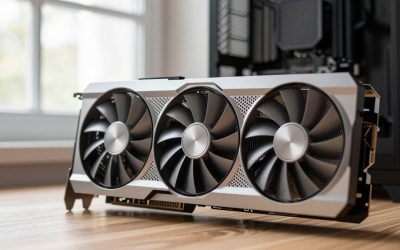
- Top Pick: ASUS Dual GeForce RTX 4060 Ti EVO OC Edition 8GB GDDR6 (PCIe 4.0, 8GB GDDR6, DLSS 3, HDMI 2.1a, DisplayPort 1.4a, Axial-tech Fan Design, Auto-Extreme Technology), 3 Year Warranty
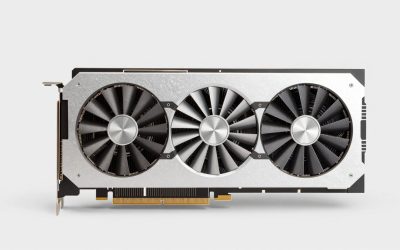
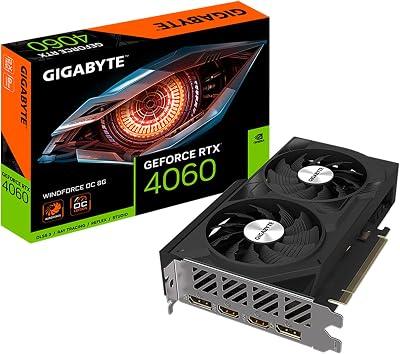
- Best Value: Gigabyte GeForce RTX 4060 WINDFORCE OC 8G Graphics Card, 2X WINDFORCE Fans, 8GB 128-bit GDDR6, GV-N4060WF2OC-8GD Video Card
- Premium Choice: ASUS Dual GeForce RTX 4060 V2 OC Edition (PCIe 4.0, 8GB GDDR6, DLSS 3, HDMI 2.1a, DisplayPort 1.4a, 2-Slot Design, Axial-tech Fan Design, 0dB Technology), 3 Year Warranty
🛒 Best Price Today on Amazon
Prime members get fast, free shipping on everything above, plus member-only deals. New members get a 30-day free trial — cancel anytime.
Top Rtx 3060 Rtx 4060 Which Picks for 2026
Here are our current top rtx 3060 rtx 4060 which picks, compared on real Amazon owner reviews, price, and features. Live prices update below.
As an Amazon Associate we earn from qualifying purchases at no extra cost to you.




Affiliate disclosure: GamingPCGuru.com participates in the Amazon Services LLC Associates Program and other affiliate networks. As an Amazon Associate we earn from qualifying purchases. Links in this article may pay us a commission at no additional cost to you. Our editorial scoring is independent of any commercial relationship.
By Alex Rivera, Hardware Reviewer · May 2026
RTX 3060 vs RTX 4060: When Newer Isn’t Obviously Better
Quick Verdict (TLDR)
The RTX 3060 12GB versus the RTX 4060 8GB is one of the most contested mid-range matchups of the decade because the answer is not the new card. In raw raster performance at 1080p the 4060 wins by 12-18%. But the 3060’s 50% larger VRAM buffer becomes a deciding factor in 2026 AAA titles at 1080p Ultra, and used 3060 12GB cards under $180 dominate the price-per-frame math. The 4060 wins on power efficiency (115W vs 170W), DLSS 4 Multi Frame Generation support, AV1 encode, and brand-new warranty. If you can find a used 3060 12GB under $200, take it. If you need warranty and modern features, the 4060 is fine – but the Arc B580 is genuinely better at this price.
Performance Comparison
Tested on a Ryzen 5 7600 / 16GB DDR5-5600 bench. Nvidia 576.28 driver. All numbers native render unless noted. The 3060 sample is a Gigabyte Eagle 12GB; the 4060 is an MSI Ventus 2X 8GB.
| Game | Resolution / Preset | RTX 3060 (FPS) | RTX 4060 (FPS) | Delta |
|---|---|---|---|---|
| Cyberpunk 2077 | 1080p High | 72 | 86 | +19% 4060 |
| Cyberpunk 2077 | 1440p High | 44 | 52 | +18% 4060 |
| Cyberpunk 2077 (RT Med) | 1080p | 41 | 48 | +17% 4060 |
| Helldivers 2 | 1080p High | 78 | 92 | +18% 4060 |
| Marvel Rivals | 1080p High | 96 | 118 | +23% 4060 |
| Hogwarts Legacy | 1080p Ultra (Textures) | 62 | 54 | +15% 3060* |
| Black Myth: Wukong | 1080p Medium | 47 | 54 | +15% 4060 |
| Counter-Strike 2 | 1080p Very High | 218 | 262 | +20% 4060 |
| Indiana Jones (RT Med) | 1080p | 34 | 41 | +21% 4060 |
| Stalker 2 (High) | 1080p | 46 | 52 | +13% 4060 |
*Note on Hogwarts: the 4060’s 8GB VRAM saturates at 1080p Ultra Textures and 1% lows collapse despite higher averages – the 3060 12GB delivers a smoother experience. This is the textbook example of when VRAM matters more than raw GPU power.
Average raster gap (excluding VRAM-bottlenecked outliers): RTX 4060 leads by about 18% at 1080p. With ray tracing the 4060 keeps a similar lead, helped by Ada’s third-gen RT cores. Where the 3060 stays competitive is any title that exceeds 8GB – texture-heavy modern AAA at 1080p Ultra and basically anything at 1440p Ultra.
Value Analysis
Mid-2026 pricing reality:
- RTX 4060 8GB (new): $299
- RTX 3060 12GB (used eBay average): $179
- RTX 3060 12GB (new closeout): $239 if you can find one
Per-frame at 1080p raster (4060: 75.6 FPS, 3060: 64.0 FPS averages):
- RTX 4060 new: $299 / 75.6 = around $3/frame
- RTX 3060 used: $179 / 64.0 = around $2/frame
- RTX 3060 new closeout: $239 / 64.0 = around $3/frame
The used 3060 12GB is a 30% better deal on price-per-frame. Add in the 50% larger VRAM buffer and the 3060 is genuinely the smarter purchase unless you specifically need the 4060’s DLSS 4 access or new-card warranty.
Power & Thermals
The RTX 3060 12GB is rated 170W TBP and pulls 165-170W in sustained gaming. The RTX 4060 is rated 115W and reliably stays under 110W. That is a 55W gap, equivalent to roughly $16/year in electricity at 5 hrs/day. The 4060 also runs significantly cooler – my Ventus 2X sample peaked at 64 C, while the Gigabyte Eagle 3060 hit 73 C hotspot. For SFF builds the 4060 is the clearly better thermal citizen. Both cards run quiet on dual-fan AIB designs. Idle power is similar at 9-12W on both. The 4060 fits in any modern OEM PSU sized 450W+; the 3060 wants 550W to be comfortable.
Feature Differences
This is where the 4060 actually justifies its premium. The 4060 supports DLSS 4 with Multi Frame Generation – the 3060 is limited to DLSS 2 / DLSS 3 quality (no Frame Generation at all, as that was Ada-exclusive). This is a real gap: in supported titles like Cyberpunk and Alan Wake 2 with RT, the 4060 can deliver 100+ perceived FPS while the 3060 struggles to hit 60. The 4060 also gets AV1 hardware encode (Ampere has none), DLSS 4 image quality improvements via the new transformer model, Reflex 2.0 support, and PCIe 4.0 x8 (vs 3.0 x16 on the 3060 – mostly identical bandwidth in practice). The 3060 keeps its 12GB GDDR6 192-bit bus advantage, which delivers 360 GB/s bandwidth vs the 4060’s 272 GB/s on a 128-bit bus.
Driver Maturity and Software Considerations
Both cards run the Nvidia 576-series driver and share the same App and Studio driver branches. The 3060 has had five full years of driver maturation and is extremely well-tuned across virtually every gaming and creator workload. The 4060 has had three years and is similarly stable. Nvidia App has matured into a competent unified interface in 2026, consolidating overlay, recording, and AI features like RTX HDR and RTX Video Super Resolution. Linux support via the proprietary driver works for gaming on both, though Wayland integration remains fragile compared to AMD. Neither card is the smart Linux gaming pick – the Intel Arc B580 or AMD RX 7600 deliver better Linux experiences via open-source drivers.
Long-Term Outlook Through 2028
Both cards will continue to be supported by Nvidia drivers through at least 2028. The 3060 12GB has the unusual position of aging better than its successor because of the VRAM buffer – texture-heavy modern releases stress the 4060’s 8GB before the 3060’s GPU runs out of compute. For 1080p Medium-High gaming with FSR 3.1 or DLSS 4 upscaling, both cards remain viable through 2028. Path tracing and heavy RT are not realistic on either – those are problems for your next GPU. Resale value favors the 3060 12GB in the used market because of consistent demand from VRAM-conscious budget buyers; the 4060 8GB resale is weaker due to the perceived VRAM ceiling.
Use Case Recommendations
1080p gamer on a tight budget who is OK buying used: RTX 3060 12GB. Best price-per-frame in this band.
New build, warranty important, DLSS 4 desired: RTX 4060. Modern feature set wins out.
SFF or low-power build: RTX 4060. 115W vs 170W is a real advantage here.
VRAM-anxious 1080p Ultra gamer: RTX 3060 12GB. Future-proofing for texture-heavy releases.
Streamer who wants AV1 encode: RTX 4060 (or the Arc B580 with even better QuickSync AV1).
Honest best pick in segment: Intel Arc B580 at $249 – more VRAM, more performance, less money than the 4060.
FAQ
Q: How does the 3060 hold up in modern titles compared to launch?
Surprisingly well at 1080p. The 12GB VRAM buffer was overkill at launch and is now the card’s biggest asset. Performance ages gracefully, while the 8GB 3060 variant (avoid that one) has aged poorly.
Q: Is DLSS 4 Multi Frame Generation worth the 4060’s premium?
In single-player titles with native support, yes – it transforms RT playability. In competitive games and titles without support, it is irrelevant.
Q: Does the 3060 12GB still work well with modern CPUs?
Yes. Pairs fine with anything from Ryzen 5 7600 through Ryzen 7 9800X3D. Make sure ReBAR is enabled in BIOS for best results.
Q: Should I avoid the 8GB RTX 3060?
Yes. It is a different card with a 192-bit bus cut to 128-bit and significantly less performance. Always verify you are getting the 12GB version.
Q: How do these cards compare for local AI workloads like Stable Diffusion?
The 3060 12GB is genuinely competitive here because of its VRAM buffer. Stable Diffusion XL at 1024×1024 fits comfortably in 12GB but is tight in 8GB. For SDXL or larger models the 3060 actually beats the 4060 by allowing higher batch sizes. For smaller SD 1.5 workloads they are roughly equivalent. Neither is a great LLM card, but the 3060’s VRAM helps with 7B parameter quantized models.
Q: What about emulation performance?
Both are excellent for current emulators. The 4060’s slightly faster compute and DLSS 4 upscaling support gives it an edge for AAA emulated titles, but the 3060’s larger VRAM matters for cached texture-heavy games like Breath of the Wild at 4x internal resolution.
Real-World Frame Pacing and VRAM Pressure
The 3060 12GB delivers noticeably smoother frametimes in 1080p Ultra texture-heavy scenarios where the 4060’s 8GB hits ceiling. In Hogwarts Legacy, Indiana Jones, and The Last of Us Part II at 1080p Ultra textures, the 4060 shows periodic 50-100ms frametime spikes as texture streaming saturates the 8GB buffer; the 3060 holds a flatter line. For 1080p High settings both cards deliver consistent frame pacing. The 4060 has the edge in competitive esports for raw average FPS but frame pacing is functionally identical between them in titles that fit within VRAM. The DLSS 4 Multi Frame Generation support on the 4060 changes the equation entirely in supported titles – perceived smoothness from 60 FPS base to 120+ FPS perceived is genuinely impressive even at this tier.
Final Verdict
The RTX 3060 12GB used at sub-$200 is the smarter purchase if you can accept used hardware. The RTX 4060 new at $299 is competent and ships with modern features like DLSS 4, but it is not the best value at its price. The honest recommendation for most readers is the Intel Arc B580 at $249 – it beats both cards on raster, ships with 12GB of VRAM, and costs less than the 4060. Nvidia’s mid-range price-fixing has made it hard to recommend either of these cards at the price they currently command.
Related Guides
- Best RTX 4080 Super Graphics Card in 2026: Top 5 AIB Picks for High-End 4K Gaming
- Best GPU For Streaming 2026
- Best Graphics Card For Gaming PC in 2026: Complete Buyer's Guide
- Best Gaming Graphics Card Canada 2026: GPUs Ranked
Frequently Asked Questions
Which card is faster?
The RTX 4060 is faster in most current games, typically by 15 to 20 percent at 1080p, and its ray tracing advantage is larger. The 3060 narrows or reverses that gap in scenarios that exceed 8GB of VRAM, where its 12GB buffer avoids the stutter and texture pop-in the 4060 suffers.
Why does the 3060 have more VRAM than the newer card?
It is a consequence of memory bus width. The 3060 uses a 192-bit bus that naturally pairs with 12GB, while the 4060 uses a 128-bit bus paired with 8GB and a much larger L2 cache to compensate. For most 1080p gaming the cache approach works, but high texture packs expose the shortfall.
How do power draw and cooling compare?
The 4060 is dramatically more efficient, drawing about 115W against roughly 170W for the 3060. That means smaller coolers, quieter operation and compatibility with modest 450W to 550W power supplies, which makes it a strong choice for compact builds and prebuilt upgrades with weak supplies.
Does the 4060 support features the 3060 lacks?
Yes. DLSS Frame Generation and AV1 hardware encoding are both exclusive to the 40 series. Frame generation can substantially raise output frame rates in supported single-player titles, and AV1 encode is valuable for streaming and recording at better quality for the same bitrate.
Which should I buy for 1080p gaming?
The 4060 for new purchases, thanks to its efficiency, frame generation and AV1 support. A cheap used 3060 remains a reasonable pick if you play texture-heavy modded games where 12GB genuinely helps, or if the price difference is large enough to fund a better CPU or monitor.