

- Top Pick: GIGABYTE AMD Radeon RX 6800 XT Gaming OC 16G Graphics Card, 16GB of GDDR6 Memory, Powered by AMD RDNA 2, HDMI 2.1, WINDFORCE 3X Cooling System, GV-R68XTGAMING OC-16GD (Renewed)
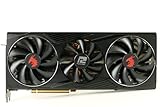
- Best Value: PowerColor AMD Radeon RX 6800 XT Gaming Graphics Card with 16GB GDDR6, Raytracing, PCIe 4.0, HDMI 2.1, AMD Infinity Cache (Renewed)
- Premium Choice: ASUS TUF Gaming Radeon RX 7900 GRE OC Edition 16GB GDDR6 Graphics Card (PCIe 4.0, HDMI 2.1, DisplayPort 2.1), 3 Year Warranty
Moving from an RX 6800 XT to an RX 7900 GRE is not a worthwhile upgrade for most owners: reviews place the GRE only about 5-15% ahead, with the same 16 GB of VRAM and no new upscaling generation, so 6800 XT owners should hold out for a bigger jump such as an RX 9070 XT. If you are buying from scratch and both cards cost about the same, the RX 7900 GRE is the slightly faster, more efficient and more modern choice.
As an Amazon Associate we earn from qualifying purchases at no extra cost to you.



What the Upgrade Actually Buys
The RX 6800 XT launched in October 2020 at $649 and became one of RDNA 2’s most popular high-end cards. The RX 7900 GRE arrived in July 2023 at $549, a cut-down RDNA 3 Navi 31 chip positioned below the 7900 XT. The GRE is newer and launched cheaper, but in performance class the two sit close together. GamersNexus noted that at 4K the GRE delivered roughly the same overall experience as the RX 6800 XT and RTX 3080, which sums up the upgrade question well.
Specification Comparison
| Spec | RX 6800 XT | RX 7900 GRE |
|---|---|---|
| Architecture | RDNA 2.0 | RDNA 3.0 |
| Release date | 28 October 2020 | 27 July 2023 |
| Launch MSRP | $649 | $549 |
| Stream processors | 4608 | 5120 |
| Boost clock | 2250 MHz | 2245 MHz |
| Process | 7 nm | 5 nm |
| TDP | 300 W | 260 W |
| Memory | 16 GB GDDR6 | 16 GB GDDR6 |
| Bus width | 256-bit | 256-bit |
| Bandwidth | 512.0 GB/s | 576.0 GB/s |
| Cache | 4 MB L2 + 128 MB L3 | 6 MB L2 + 64 MB L3 |
| Interface | PCIe 4.0 x16 | PCIe 4.0 x16 |
| Power connectors | 2x 8-pin | 2x 8-pin |
| Length / width | 267 mm, 2-slot | 276 mm, 2-slot |
| Outputs | 1x HDMI, 2x DisplayPort, 1x USB-C | 1x HDMI 2.1a, 2x DP 2.1, 1x USB-C |
The GRE gains 11% more stream processors and 12.5% more bandwidth but halves the Infinity Cache. Clock speeds are essentially identical. That combination explains why the performance gain is modest: RDNA 3’s architectural improvements are real, but the hardware uplift is small.
How Much Faster Is the RX 7900 GRE?
Across published reviews, the RX 7900 GRE lands roughly 5-15% ahead of the RX 6800 XT at 1440p, with the gap varying by game. Notebookcheck’s aggregated results show around 14% in titles like The Witcher 3, and some newer games such as Avatar: Frontiers of Pandora show gaps in the mid-20s. At 4K, GamersNexus’s data shows the two nearly level, as the GRE’s stock memory bandwidth limits it. At 1080p, CPU limits shrink the difference further.
In approximate frame-rate terms that vary with settings, CPU and patch, a game running at 80 fps at 1440p high on the RX 6800 XT might reach roughly 85-92 fps on the RX 7900 GRE. That is a difference most players would struggle to notice without a frame counter.
Ray Tracing Gains
RDNA 3’s improved ray accelerators help the GRE more with RT enabled, where its lead tends to grow beyond the raster average. However, neither card is strong at ray tracing compared with NVIDIA’s RTX 40 and 50 cards or AMD’s RX 9070 series, so heavy RT still requires FSR and compromises on both.
Upscaling and Frame Generation
Both cards support FSR 3.1 upscaling and frame generation in supported games and AMD Fluid Motion Frames 2 at the driver level. Neither officially supports FSR 4, which is tied to RX 9000 hardware. The upgrade therefore does not change your upscaling options at all, and that is one of the strongest reasons to skip it.
VRAM and Longevity
Both cards carry 16 GB of GDDR6 on a 256-bit bus. That is comfortable for 1440p and generally adequate for 4K in 2026 games, so the 6800 XT is not VRAM-limited in a way the GRE would fix. On the driver side, AMD’s new-game optimization priority has shifted toward RDNA 3 and RDNA 4, which gives the GRE a modest longevity edge over the RDNA 2-based 6800 XT.
Power Savings and PSU
The GRE’s one clear practical win is efficiency. It is rated at 260 W versus 300 W for the RX 6800 XT, delivering slightly more performance for about 40 W less. Using GPU TDP + CPU + about 150 W headroom with a 125 W CPU:
- RX 6800 XT: 300 + 125 + 150 = 575 W, so a quality 650-750 W PSU.
- RX 7900 GRE: 260 + 125 + 150 = 535 W, so a quality 650 W PSU.
Both use two 8-pin connectors, so no cabling changes are needed. The GRE reference card is 276 mm versus 267 mm for the 6800 XT, both two slots; if your case fits a 6800 XT, a GRE of similar design will almost certainly fit. Partner cards vary, so check exact dimensions.
The power saving is modest in money terms. At 40 W less over 20 hours of gaming per week, that is about 0.8 kWh weekly, or roughly 42 kWh per year, which at typical electricity rates amounts to a few dollars to around ten dollars annually.
The Upgrade Math
Assume an RX 6800 XT sells for about $300-$380 used and an RX 7900 GRE costs about $380-$450 used.
- Net cost at the midpoints: $415 – $340 = about $75.
- Performance gain: roughly 10% at the midpoint of the 5-15% range.
- Cost per percentage point gained: about $7.50.
That is poor value for an upgrade that changes neither VRAM nor upscaling features, and it carries the hassle and risk of selling and buying used hardware. A move to an RX 9070 XT or an RTX 5070 Ti-class card costs more but delivers a much larger performance jump plus FSR 4 or DLSS 4 support, making each dollar go much further.
Upgrade or Stay? Decision Table
| Your situation | Recommendation |
|---|---|
| 6800 XT owner at 1440p, happy with frame rates | Keep the 6800 XT |
| 6800 XT owner wanting a big performance jump | Skip the GRE; target RX 9070 XT or RTX 5070 Ti class |
| 6800 XT owner wanting better ray tracing | Skip the GRE; RDNA 4 or RTX 50 offers far more |
| New buyer, both cards similar price | RX 7900 GRE |
| New buyer, 6800 XT noticeably cheaper | RX 6800 XT |
| Wants lower power, AV1 encoding, DP 2.1 | RX 7900 GRE |
Used-Market Notes
The RX 6800 XT is usually $300-$380 used and remains a strong 1440p card. Check fan condition, hotspot temperature and mining history. The RX 7900 GRE had a short global retail window, so supply varies and partner cooler quality differs between models. With either card, ask for proof of purchase and a short stress test.
Where the GRE Does Pull Ahead
There are a few cases where the upgrade looks better. Players who stream or record benefit from the GRE’s AV1 hardware encoder, which the RX 6800 XT lacks. Owners of 4K high-refresh monitors gain DisplayPort 2.1 output, which supports higher refresh rates with less reliance on compression. Enthusiasts willing to tune can also raise the GRE’s memory clock, since AMD later allowed more memory overclocking headroom; reviews showed this recovered part of the bandwidth gap and widened the lead over the 6800 XT somewhat. These are niche benefits, though, and none of them changes the core gaming verdict for most players.
Verdict
The RX 7900 GRE is a better card than the RX 6800 XT, but only by a small margin: roughly 5-15% more performance, 40 W less power and some modern extras like AV1 and DisplayPort 2.1. With identical VRAM and the same FSR generation, it is a sidegrade for existing 6800 XT owners. Save the upgrade budget for a card that offers a meaningful leap.
Frequently Asked Questions
How much faster is the RX 7900 GRE than the RX 6800 XT?
Reviews generally put it about 5-15% faster at 1440p, with occasional larger gaps in newer games. At 4K the two are close, as the GRE’s stock memory bandwidth limits it.
Is upgrading from an RX 6800 XT to an RX 7900 GRE worth it?
For most owners, no. The gain is modest, VRAM stays at 16 GB, and neither card supports FSR 4. A larger jump, such as an RX 9070 XT, offers much better value per dollar spent.
Do I need a new PSU to go from a 6800 XT to a 7900 GRE?
No. The GRE is rated at 260 W compared with 300 W for the 6800 XT, and both use two 8-pin connectors. Any PSU that runs the 6800 XT will handle the GRE.
Which card is better for ray tracing?
The RX 7900 GRE is somewhat better thanks to RDNA 3’s improved ray accelerators. Both remain behind NVIDIA RTX cards and AMD’s RX 9070 series in heavy ray tracing.
Is 16 GB of VRAM still enough?
Yes, 16 GB handles 1440p comfortably and 4K in nearly all current games. VRAM capacity is not a reason to choose one of these cards over the other.
Ready to decide? Our #1 pick for 2026 is the Architecture.
Live price & availability on Amazon.












