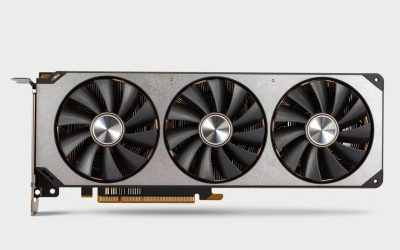
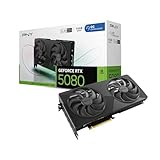
- Top Pick: PNY NVIDIA GeForce RTX™ 5080 Epic-X™ ARGB OC Triple Fan, Graphics Card (16GB GDDR7, 256-bit, Boost Speed: 2775 MHz, PCIe® 5.0, HDMI®/DP 2.1, 2.99-Slot, NVIDIA Blackwell Architecture, DLSS 4)
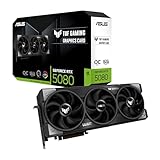
- Best Value: ASUS TUF Gaming GeForce RTX™ 5080 16GB GDDR7 OC Edition Graphics Card
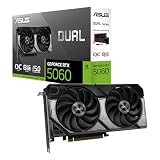
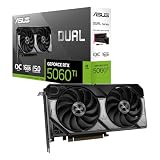
- Premium Choice: ASUS Dual NVIDIA GeForce RTX 5060 8GB GDDR7 OC Edition (PCIe 5.0, 8GB GDDR7, DLSS 4, HDMI 2.1b, DisplayPort 2.1b, 2.5-Slot Design, Axial-tech Fan Design, 0dB Technology), 3 Year Warranty
NVIDIA’s RTX 50-series graphics cards, built on the Blackwell architecture, brought a generational leap in performance, GDDR7 memory, and the game-changing DLSS 4 with multi-frame generation. Whether you are building a budget 1080p rig or a no-compromise 4K powerhouse, there is a Blackwell card for you.
This review surveys the RTX 50-series lineup from the entry RTX 5060 up to the enthusiast RTX 5080, comparing what each tier delivers and which board partner designs make the most sense for different builds.
As an Amazon Associate we earn from qualifying purchases at no extra cost to you.




🎮 Get More From Your Setup — Free
Prime Gaming gives you free PC games every month, in-game loot, and a free Twitch channel sub — plus fast free shipping on all the gear above. New members get a 30-day free trial.
Watch: Rtx 50 Series Graphics Cards: Review & Buyer’s Guide — Video Review
Design & Build
The 50-series spans a huge range of form factors. At the top, the PNY RTX 5080 Epic-X ARGB and ASUS TUF Gaming RTX 5080 use large triple-fan coolers, while PNY’s 5080 Slim Dual-Fan proves the flagship can fit SFF-ready builds. In the mid-range, the ASUS SFF-Ready Prime RTX 5060 Ti and ASUS Dual RTX 5060 offer compact 2.5-slot designs with Axial-tech fans, and the GIGABYTE RTX 5060 WINDFORCE OC keeps things affordable. All feature PCIe 5.0 and HDMI/DisplayPort 2.1 outputs.
Performance
Performance scales cleanly across the stack. The RTX 5080 is a 4K monster, handling demanding titles at high frame rates with DLSS 4 boosting things further, and its 16GB of GDDR7 keeps textures flowing. The RTX 5060 Ti 16GB is a superb 1440p card with generous memory, while the RTX 5060 8GB targets high-refresh 1080p gaming at a friendly price. DLSS 4 with multi-frame generation is the unifying feature, dramatically lifting frame rates across the entire lineup in supported games.
Pros & Cons
- Strong generational gains across every performance tier.
- DLSS 4 multi-frame generation boosts frame rates dramatically.
- Fast GDDR7 memory on all models.
- Wide range from budget 1080p to enthusiast 4K.
- 8GB on the base 5060 limits high-texture headroom.
- Flagship pricing climbs steeply at the top of the stack.
Alternatives to Consider
For 4K gaming, the ASUS TUF or PNY RTX 5080 models are the enthusiast picks, with the PNY 5080 Slim fitting compact cases. Sweet-spot 1440p builders should choose the ASUS SFF-Ready RTX 5060 Ti 16GB for its extra memory, while budget gamers targeting 1080p will find great value in the ASUS Dual RTX 5060 or GIGABYTE RTX 5060 WINDFORCE OC. Match the tier to your target resolution and the whole stack delivers.
Frequently Asked Questions
Which RTX 50-series card should I buy?
Choose based on resolution: the RTX 5080 for 4K, the RTX 5060 Ti 16GB for 1440p, and the RTX 5060 for high-refresh 1080p gaming on a budget.
What is DLSS 4?
DLSS 4 is NVIDIA’s latest AI upscaling with multi-frame generation, which inserts additional frames to dramatically increase frame rates in supported games across the 50-series.
Is 8GB of VRAM enough on the RTX 5060?
For 1080p gaming, 8GB is generally sufficient today, but for higher textures or 1440p, the 16GB RTX 5060 Ti offers more future-proof headroom.
Do 50-series cards need PCIe 5.0?
They use PCIe 5.0 but remain backward compatible with PCIe 4.0 slots, so an older board will still run them with negligible real-world performance loss.
Verdict
The RTX 50-series offers a compelling card for every builder, unified by fast GDDR7 memory and transformative DLSS 4. The RTX 5080 is our pick for 4K enthusiasts, the RTX 5060 Ti 16GB is the 1440p sweet spot, and the RTX 5060 is the budget 1080p champion. Decide on your target resolution first, then choose the board design that fits your case, and Blackwell rewards you handsomely.