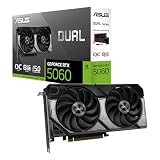
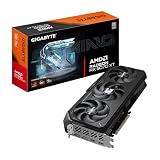
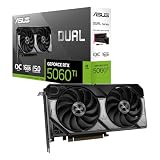
Nvidia’s Blackwell lineup has settled into a clear hierarchy, and for most enthusiasts building or upgrading in 2026 the decision at the upper end comes down to two cards: the GeForce RTX 5080 and the GeForce RTX 5070 Ti. They share the same 16GB of GDDR7 memory, the same 256-bit bus, and the same DLSS 4 feature set including Multi Frame Generation, which makes the gap between them narrower than the naming suggests. It also makes the choice genuinely difficult.
The short version is that the RTX 5080 is a native 4K card, while the RTX 5070 Ti is a 1440p powerhouse that stretches comfortably to 4K with upscaling. That distinction matters more than it used to. Path-traced lighting is now standard in flagship releases, ray tracing is enabled by default in more engines, and 240Hz 4K OLED panels reward every additional frame. Below you’ll find the most popular RTX 5080 models currently available, followed by a full breakdown of how the two tiers actually compare.
As an Amazon Associate we earn from qualifying purchases at no extra cost to you.


⚡ Save on Your Next PC — Amazon Prime
Prime members get fast free shipping on the systems above, plus early access to Prime Day & Black Friday PC deals. New members get a 30-day free trial.
Watch: RTX 5080 vs 5070 Ti: Worth It in 2026? — Video Review
Quick Verdict
Choose the RTX 5080 if you game at 4K, own a high-refresh 4K display, or run demanding creative workloads such as Blender, DaVinci Resolve, or local AI inference, where the extra shader throughput and bandwidth pay for themselves. Choose the RTX 5070 Ti if you play at 1440p or 3440×1440, want the strongest performance-per-dollar in the upper tier, or need to keep total system power and PSU requirements down. Both cards handle every current title at high settings; the 5080 simply removes the compromises at the top resolution.
Key Differences
- Shader hardware: The RTX 5080 uses a substantially wider GPU with roughly 20% more CUDA cores, RT cores, and Tensor cores than the RTX 5070 Ti, and it clocks higher out of the box on most partner models.
- Memory bandwidth: Both carry 16GB of GDDR7 on a 256-bit bus, but the 5080 runs faster memory modules for meaningfully higher effective bandwidth. Capacity is identical, so VRAM limits are not a differentiator between them.
- 4K performance gap: Expect roughly 15-20% higher frame rates from the 5080 at 4K, shrinking to around 10-15% at 1440p where CPU limits start to compress the difference.
- Power and PSU: The 5080 draws around 360W and Nvidia recommends an 850W supply; the 5070 Ti sits near 300W and is happy on a quality 750W unit. Both use the 12V-2×6 connector.
- Cooler size: RTX 5080 designs run larger. The ROG Astral RTX 5080 is a 3.8-slot, four-fan card, while the 5070 Ti is commonly available in slimmer two- and three-slot builds that fit mainstream cases more easily.
- Value: The 5070 Ti is the better raw frames-per-dollar buy. The 5080 charges a real premium for the last stretch of performance, which is typical of every generation’s second-from-top tier.
GeForce RTX 5080: Maximum 4K Headroom
The RTX 5080 is the card to buy when you want to stop thinking about settings menus. At 4K with ray tracing enabled and DLSS 4 in Quality mode, it consistently clears high frame rates in the most demanding releases, and Multi Frame Generation pushes it well past what a 4K 144Hz panel can display in supported titles. It is also the more capable productivity GPU, with noticeably faster render and encode times than the 5070 Ti.
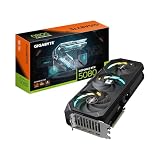
Board partner choice matters here because thermals dictate sustained clocks. The ASUS ROG Astral RTX 5080 sits at the top with its vapor chamber and four-fan layout, while the ASUS TUF Gaming RTX 5080 OC and GIGABYTE RTX 5080 Gaming OC deliver near-identical performance in more conventional three-fan packages. The MSI RTX 5080 Ventus 3X OC White is the pick for light-themed builds, the PNY RTX 5080 Epic-X RGB OC leans into lighting, and the GIGABYTE RTX 5080 WINDFORCE OC SFF is the one to check if you are working with a compact chassis and tight clearance.
GeForce RTX 5070 Ti: The Value Sweet Spot
The RTX 5070 Ti is arguably the smartest buy of the generation for most gamers. It carries the same 16GB frame buffer as the 5080, which means it never runs into texture or ray tracing memory ceilings that older 12GB cards struggle with, and it supports the identical DLSS 4 and Reflex 2 feature stack. At 1440p it is effectively overkill for anything short of a 360Hz esports setup.
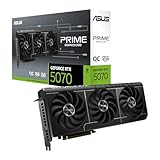
Its other advantage is system-level cost. Lower power draw means a smaller PSU, less case airflow engineering, and quieter operation under load. If you already own a 750W supply or a mid-tower with modest clearance, the 5070 Ti slots in without a broader upgrade. The tradeoff is honest: at native 4K with path tracing you will lean on upscaling and frame generation more heavily than a 5080 owner would