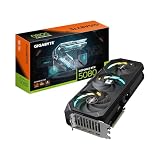
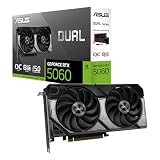
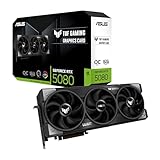
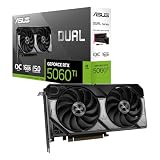
- Top Pick: GIGABYTE Radeon RX 9070 XT Gaming OC 16G Graphics Card, PCIe 5.0, 16GB GDDR6, GV-R9070XTGAMING OC-16GD Video Card
- Best Value: ASRock Radeon RX 9070 XT Challenger 16GB OC Graphics Card – AMD RDNA 4 Architecture, 2970 MHz Boost Clock, GDDR6, PCIe 5.0, DisplayPort 2.1a, HDMI 2.1b, Triple Fan Cooling 800W
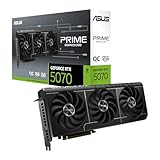
- Premium Choice: ASUS Prime AMD Radeon RX 9070 XT 16GB GDDR6 OC Edition Graphics Card, AMD (PCIe 5.0, HDMI/DP 2.1, 2.5-Slot Design, Axial-tech Fans, Ball Bearings, Dual BIOS, GPU Guard), 3 Year Warranty
Two years into the RDNA 4 and Blackwell era, the mid-range GPU fight has settled into a genuinely close contest. AMD’s Radeon RX 9070 XT and NVIDIA’s GeForce RTX 5070 target the same buyer — the 1440p high-refresh gamer who occasionally flirts with 4K — but they get there by very different routes. One leans on raw shader throughput and a generous 16GB frame buffer; the other leans on a mature software stack, GDDR7 bandwidth, and the deepest feature set in consumer graphics.
In 2026 that choice matters more than it did at launch. Game installs have ballooned, texture streaming budgets at 1440p Ultra routinely brush past 12GB, and upscaling is no longer optional — it’s the default rendering path for most new releases. Below we break down where each card actually wins, which board partner designs are worth your money, and how to match the right GPU to the way you actually play.
As an Amazon Associate we earn from qualifying purchases at no extra cost to you.


⚡ Save on Your Next PC — Amazon Prime
Prime members get fast free shipping on the systems above, plus early access to Prime Day & Black Friday PC deals. New members get a 30-day free trial.
Watch: RX 9070 XT vs RTX 5070: 2026 Comparison — Video Review
Quick Verdict
The RX 9070 XT is the better pure gaming buy for most people: it delivers noticeably higher rasterized performance at 1440p and 4K, ships with 16GB of VRAM, and has aged well as FSR 4 adoption widened. The RTX 5070 is the smarter pick if you rely on DLSS 4 Multi Frame Generation, do heavy ray tracing, stream with NVENC, or run CUDA-accelerated creative and AI workloads — its 12GB frame buffer is the main compromise.
Key Differences
- Memory: 16GB of GDDR6 on a 256-bit bus for the 9070 XT versus 12GB of faster GDDR7 on a 192-bit bus for the 5070. AMD wins on capacity and total bandwidth; NVIDIA wins on per-pin speed and compression efficiency.
- Rasterized performance: The 9070 XT typically sits roughly 15–25% ahead in traditional rendering at 1440p, and the gap tends to widen at 4K where memory capacity starts to bite.
- Ray tracing: RDNA 4 closed most of the historical deficit, but NVIDIA still edges ahead in path-traced titles and heavily RT-weighted engines.
- Upscaling and frame generation: DLSS 4 with Multi Frame Generation remains the broader, more polished ecosystem. FSR 4 is genuinely competitive on image quality now, though per-title support still trails.
- Power and thermals: The 5070 draws around 250W and runs cool in compact cases. The 9070 XT sits near 300W+, so case airflow and PSU headroom matter more.
- Non-gaming work: CUDA, OptiX, and NVENC give the RTX 5070 a clear advantage in rendering, video editing, and local AI tooling.
Radeon RX 9070 XT: Raw Performance and Headroom
The 9070 XT is the card to buy if frames per dollar is your primary metric. Sixty-four RDNA 4 compute units, PCIe 5.0, and a full 16GB frame buffer mean it handles 1440p Ultra with ray tracing enabled without the texture-pop and stutter that increasingly affects 12GB cards in 2026’s biggest releases. It’s also a legitimate 4K card with FSR 4 Quality enabled, which is not something you could reliably say about this price tier two generations ago.
Board partner choice matters here because the card runs warm. The Sapphire Nitro+ RX 9070 XT is the premium pick — the quietest cooler and the best sustained clocks. The GIGABYTE RX 9070 XT Gaming OC 16G and its white-shrouded Gaming OC ICE sibling offer near-identical thermals with a 2.7-slot cooler and reinforced backplate. The ASUS Prime RX 9070 XT OC is the one to grab for tighter builds thanks to its 2.5-slot design and dual BIOS, while the ASRock Challenger 16GB OC and XFX Swift Triple Fan are the value plays that keep the price close to AMD’s baseline.
GeForce RTX 5070: Features, Efficiency, and Software
NVIDIA’s argument has never been peak raster — it’s everything wrapped around it. DLSS 4 remains the best-looking upscaler in the widest range of games, and Multi Frame Generation can turn a 60fps baseline into a genuinely smooth high-refresh experience on a 144Hz or 240Hz panel. Reflex 2, a rock-solid driver record, and NVENC encoding make the 5070 the easier recommendation for streamers and anyone who treats their GPU as a work tool after hours.
The efficiency story is real too. At roughly 250W the 5070 fits comfortably in small-form-factor builds and pairs happily with a 650W PSU. The catch is the 12GB frame buffer. It’s fine today at 1440p in most titles, but it’s the specification most likely to force a settings compromise before the card’s compute power actually runs out.
Which Should You Buy?
- For 1440p high-refresh gaming: pick the RX 9070 XT — more raw frames and more VRAM headroom.
- For 4K or ultrawide: pick the RX 9070 XT, ideally the Sapphire Nitro+ or GIGABYTE Gaming OC for sustained clocks.
- For path tracing and heavy RT: pick the RTX 5070.
- For streaming, video editing, or local AI: pick the RTX 5070 for NVENC and CUDA.
- For SFF builds or a modest PSU: pick the RTX 5070, or the compact ASUS Prime 9070 XT if you want AMD.
Frequently Asked Questions
Is 12GB of VRAM still enough in 2026?
For 1440p it’s workable, but you’ll increasingly need to drop texture quality one notch in new AAA titles. At 4K, 16GB is the safer buy.
How close is FSR 4 to DLSS 4 now?
Image quality is close enough that most players won’t notice in motion. DLSS still leads on game coverage and multi-frame generation.
What power supply do I need for the RX 9070 XT?
Plan for a quality 750W unit. The RTX 5070 is comfortable on 650W.
Which RX 9070 XT model is best?
Sapphire Nitro+ for acoustics, GIGABYTE Gaming OC for balance, ASRock Challenger or XFX Swift for value.
Final Verdict
Buy the RX 9070 XT if you want the most gaming performance and VRAM for the money; buy the RTX 5070 if NVIDIA’s software stack, ray tracing lead, or lower power draw fits your build and workflow better.