- Top Pick: Definitive Guide to New Gaydon Era Aston Martin: A Buyer's and Enthusiast's Guide to: Vantage V8, V8 S, V12 – Coupe & Roadster. DB9 – DBS – Virage Coupe & Volante, New Vanquish, Rapide/S and DB11
- Best Value: The Definitive Jazz Collection (Definitive Collections), 2nd Edition – Piano Vocal Guitar Songbook | 88 Jazz Standards | Medium to Medium-Difficult | Vocal Melody Lyrics Chords and Piano Accompaniment
- Premium Choice: The Definitive Blues Collection
- Quick Answer: What to Buy Right Now
- The Five Criteria That Actually Matter
- The Buying Checklist
- Spec Primer: What the Numbers Actually Mean
- Common Mistakes Buyers Make
- Top-Rated Picks
- Related Guides
- Related Guides
- Frequently Asked Questions
- Three Scenarios, Three Lighting Plans
- When to Upgrade Your Lighting
- Final Take
- Related Articles
- Related Guides
How to Choose RGB Lighting for Your Build — The Definitive Buyer’s Guide
This guide may contain affiliate links. We may earn a small commission on purchases made through these links at no extra cost to you. Our recommendations are based on product research and independent analysis.
As an Amazon Associate we earn from qualifying purchases at no extra cost to you. Product prices and availability are accurate as of the date shown and are subject to change.


By Alex Rivera, Senior PC Hardware Editor · Updated May 2026
Twelve years of building, benchmarking, and breaking gaming systems. Reviews informed by real-world long-term use and current 2026 hardware testing.
🛒 Best Price Today on Amazon
Prime members get fast, free shipping on everything above, plus member-only deals. New members get a 30-day free trial — cancel anytime.
Quick Answer: What to Buy Right Now
Pick a single ecosystem (Corsair iCUE, ASUS Aura, Razer Chroma, or open NZXT CAM) and stick to it. Use addressable RGB (ARGB) headers on a modern motherboard, run a hub or controller to consolidate fans and strips, and budget 15-20% of your total build cost for lighting if visual impact matters to you.
The Five Criteria That Actually Matter
Most buying guides for RGB lighting for a gaming PC list ten or twelve specs to consider. In practice, the difference between a satisfying purchase and a regretted one usually comes down to five decisions. The rest are details you can adjust later or simply do not notice.
1. Ecosystem compatibility
Mixing brands almost always leads to two software apps fighting for the same controller. Choose iCUE, Aura, Chroma, or Mystic Light first, then buy components that natively support it. Cross-brand sync through OpenRGB works but requires technical patience.
2. ARGB vs plain RGB
Addressable RGB (5V, 3-pin) lets each LED display a different colour, enabling waves, rainbows, and reactive effects. Standard 12V 4-pin RGB only shifts the whole strip in unison. For builds in 2026 there is essentially no reason to buy plain RGB anymore.
3. Controller and hub strategy
A good controller (Corsair Commander Core XT, Lian Li L-Connect 3, NZXT RGB & Fan Controller) cleans up wiring, expands beyond your motherboard’s 2-3 ARGB headers, and lets you daisy-chain fans cleanly. Do not skip this if you have more than four lit components.
4. Diffusion and placement
Bright point-source LEDs look cheap. Strips with frosted diffusers, fans with infinity mirror designs, and indirect lighting placed under the GPU or behind the motherboard tray photograph far better than raw exposed LEDs.
5. Software stability
iCUE is heavy but reliable; Aura is light but buggy on AM5 some weeks; Chroma syncs well with peripherals; OpenRGB is free but requires manual profiles. Read recent reviews of the current software version, not the hardware alone.
The Buying Checklist
Print this, save it, or screenshot it on your phone. Walk through it before you commit to a purchase – every one of these is a real mistake we have seen people make and regret.
- Pick one ecosystem before you buy anything else
- Confirm your motherboard has at least one 5V 3-pin ARGB header
- Choose a fan brand whose hub matches that ecosystem
- Add at least one diffused light strip behind the motherboard tray
- Buy a magnetic GPU support bracket with a light bar for under-GPU glow
- Plan cable routing so no LED wires are visible through the side panel
- Set a single base scene plus one reactive scene, not 12 profiles
- Test thermals before and after – more fans is not always cooler
Spec Primer: What the Numbers Actually Mean
ARGB headers are 5V, three pins, with one pin physically missing or keyed. A standard motherboard has two; high-end boards have three or four. Each header typically supports up to 240 LEDs in a daisy chain, but practical limits before flicker are around 120. Fan hubs that take PWM and ARGB on a single Y-cable (Lian Li Uni Fan, Corsair iCUE Link) reduce 16 cables to one but lock you into that brand’s fans permanently. RGB strips draw roughly 0.3W per LED at full white, so a 60-LED strip pulls about 18W from the header – well within spec, but adding four such strips to one header is not.
Common Mistakes Buyers Make
These are the patterns we see most often in support forums, return reviews, and our own past mistakes. Avoiding them is more valuable than chasing the top of the spec sheet.
- Buying fans from three brands and then discovering no software syncs them properly
- Plugging an ARGB 5V cable into a 12V RGB header and instantly killing the strip
- Cheaping out on the controller and running out of ports two days after the build is done
- Setting every component to rainbow wave – the build looks chaotic in photos and worse in person
- Forgetting that bright RGB inside the case bleeds onto the monitor and washes out HDR content
Top-Rated Picks

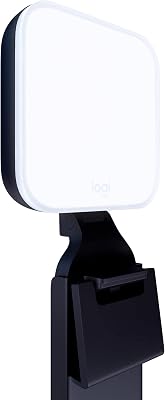


| Product | Brand | Rating | Reviews | Price |
|---|---|---|---|---|
| Elgato Key Light – Professional 2800 lumens Studio Li… | Elgato | ★ 4.5 | 4.2k | $154.99 |
| Logitech for Creators Litra Glow Premium LED Streamin… | — | ★ 4.5 | 3.3k | $59.99 |
| 2 Packs Video Conference Lights for Zoom Meeting, Lit… | LitONES | ★ 4.6 | 693 | $76.61 |
| Logitech Litra Beam Premium LED Streaming Key Light w… | — | ★ 4.4 | 388 | $89.99 |
| NEEWER 25W 12.9" Streaming Key Light with Desk Stand/… | Neewer | ★ 4.7 | 175 | $80.99 |
Related Guides
- Best B650 Motherboard 2026
- Samsung 990 Pro vs WD Black SN850X: 2026 Builder Verdict
- Best Gaming Power Supply 2026
- Best GPU for Elden Ring in 2026 — 4K 120Hz, Ray Tracing, Frame Generation
- Best Power Supply Unit for Gaming PC in 2026: Top PSU Picks for Every Build
Frequently Asked Questions
Does RGB lighting affect performance?
Effectively no. RGB controllers draw a few watts and software overhead is under one percent CPU on a modern machine. The one exception is poorly written daemons that poll constantly – iCUE has been guilty of this on older versions, but the 2025 rewrite resolved most of the spikes.
Can I sync RGB across different brands?
Officially no for most ecosystems. Unofficially, OpenRGB supports a long list of controllers and provides one unified interface, but you lose vendor effects and have to rebuild profiles after firmware updates. Pick one brand if you want stress-free syncing.
Do I need a separate ARGB controller?
If you have more than two ARGB devices, yes. A controller gives you eight or more headers, dedicated power from a SATA or Molex connector, and software control independent of motherboard limitations – which matters because some boards downclock ARGB output when CPU temps rise.
Will RGB lighting damage my components?
Only if wired wrong. Plugging a 5V ARGB plug into a 12V header burns out the LEDs immediately. Otherwise the heat output is negligible and modern controllers have over-current protection. Always check pin count and voltage labels before connecting.
Three Scenarios, Three Lighting Plans
The Minimalist Showcase (Under 100 USD)
Two diffused ARGB strips behind the motherboard tray and inside the front panel, plus three fans with built-in ARGB. Run a single colour scene that shifts subtly with the season. The point is accent, not spectacle. Photographs cleanly and never distracts from the content on the monitor. This is the right plan if the PC sits in a home office where you also work.
The Display Build (250-400 USD)
Full ecosystem from one brand: six fans, a top radiator with light strip, an addressable distro block if liquid-cooled, two case strips, and a GPU support bracket with light bar. Add a controller hub to keep the cable run clean. This level of lighting starts to make sense in dedicated gaming rooms or for content creators who film their build.
The Hardcore Modder (500+ USD)
Custom-cut acrylic light panels with individually addressable LED matrices behind them, custom shrouds covering the PSU and drives, infinity mirror panels, and reactive lighting that mirrors in-game events through plugins. This tier requires real time investment and modding skill – budget months, not weekends.
When to Upgrade Your Lighting
RGB hardware does not wear out the way fans or pumps do – LEDs degrade slowly over 30,000-50,000 hours of use, which is roughly five years of constant operation. The actual triggers for upgrading are: switching ecosystems (usually because you bought a new motherboard from a different brand), upgrading to a build that exposes more of the interior through tempered glass, or wanting addressable effects when your existing strips are plain RGB. There is rarely a technical reason to replace working lighting – it is almost always an aesthetic or compatibility decision.
Final Take
Lighting is the most personal part of a PC build, but the buying decision is mechanical: pick an ecosystem, buy a hub, choose diffused fixtures, and resist the urge to add a new brand mid-project. Done right, RGB takes a competent build and makes it photographable. Done wrong, it adds 200 dollars and a permanent software headache.
Ready to decide? Our #1 pick for 2026 is the Elgato Key Light – Professional 2800 lumens Studio Li….
Live price & availability on Amazon.