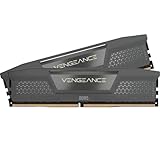
- Top Pick: CORSAIR Vengeance RGB DDR5 RAM 32GB (2x16GB) Up to 6000MHz CL36-44-44-96 1.35V Intel XMP 3.0 Desktop Computer Memory – White (CMH32GX5M2E6000C36W)
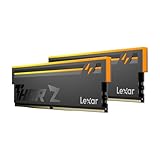
- Best Value: Lexar Thor Z RGB DDR5 RAM 32GB Kit (2x16GB) 6000MHz CL38 DRAM 288-Pin UDIMM
- Premium Choice: Crucial 32GB DDR5 RAM Kit (2x16GB), 5600MHz (or 5200MHz or 4800MHz) Laptop Memory 262-Pin SODIMM, Compatible with Intel Core and AMD Ryzen 7000, Black – CT2K16G56C46S5
If you’re building or upgrading a gaming PC in 2026, memory is one of the few remaining places where the “old” standard still tempts people. DDR4 has been around since 2014, it’s mature, and there are still plenty of Z690, B550 and X570 boards in the wild running it happily. DDR5 launched in late 2021, spent a couple of awkward years being expensive and only marginally faster, and has since become the default for every modern platform — AMD’s AM5 socket and Intel’s current LGA1851 boards don’t accept DDR4 at all.
So the real question isn’t “which memory type is technically better” — that answer has been settled for a while. It’s whether your motherboard and CPU choice locks you into one, and if you have a genuine choice, whether the extra spend is worth it. Below we break down the practical differences in gaming frame rates, capacity headroom, pricing trends and upgrade longevity, and point you toward the specific kits worth buying today.
As an Amazon Associate we earn from qualifying purchases at no extra cost to you.



⚡ Save on Your Next PC — Amazon Prime
Prime members get fast free shipping on the systems above, plus early access to Prime Day & Black Friday PC deals. New members get a 30-day free trial.
Watch: DDR5 vs DDR4 RAM: Does It Matter in 2026? — Video Review
Quick Verdict
DDR5 is the correct choice for virtually every new build in 2026 — a 32GB 6000MHz kit like the CORSAIR Vengeance DDR5 32GB (6000MHz) or the TEAMGROUP T-Force Vulcan DDR5 6000 CL38 is the sweet spot for both Ryzen and Intel, and prices have finally normalized. DDR4 only makes sense if you already own a DDR4 motherboard and CPU and simply want more capacity cheaply; buying into a fresh DDR4 platform now means starting on a dead-end socket with dwindling module supply.
Key Differences
- Bandwidth: DDR5-6000 delivers roughly 48GB/s per module versus around 25.6GB/s for typical DDR4-3200, and DDR5 splits each DIMM into two independent 32-bit sub-channels for far better parallelism.
- Latency: DDR4-3200 CL16 lands near 10ns; DDR5-6000 CL30 is around the same in real time despite the scarier CAS numbers. Raw latency is a wash — DDR5 wins on throughput.
- Capacity: DDR5 supports up to 64GB per module, making 96GB and 128GB kits practical. DDR4 realistically caps at 32GB per stick on consumer boards.
- Voltage and power: DDR5 runs at 1.1V standard (1.35V for XMP kits) versus 1.2V for DDR4, and moves voltage regulation onto the module itself via an onboard PMIC.
- Error correction: Every DDR5 module includes on-die ECC to catch bit errors internally — not the same as true system ECC, but it improves stability at high densities.
- Platform support: AM5, LGA1851 and everything coming next are DDR5-only. DDR4 is confined to AM4, LGA1200 and dual-format LGA1700 boards.
DDR5: The Default Choice for New Builds
The gaming argument for DDR5 has strengthened considerably since launch. Where early DDR5-4800 kits often lost to tuned DDR4-3600, today’s 6000MHz kits deliver a consistent uplift in CPU-bound scenarios — simulation-heavy titles, large open worlds, competitive shooters at 1080p with a high-refresh monitor, and anything streaming while playing. On AM5 specifically, DDR5-6000 with a CL30-CL38 timing set is the accepted sweet spot because it keeps the memory controller and Infinity Fabric running in a 1:1 ratio.
For most gamers a 32GB (2x16GB) kit is the target. The CORSAIR Vengeance RGB DDR5 32GB 6000MHz CL36 kit is the premium pick if you want tight timings plus addressable lighting, and the white variant suits modern light-themed builds. The Lexar Thor Z RGB DDR5 6000 CL38 undercuts it while offering the same speed grade, and the TEAMGROUP T-Force Vulcan DDR5 6000 CL38 is the low-profile, no-RGB option that clears bulky air coolers. Intel users chasing higher clocks can look at the CORSAIR Vengeance DDR5 32GB rated up to 6400MHz. Laptop and mini-PC upgraders need SODIMMs instead — the Crucial 32GB DDR5 SODIMM kit at 5600MHz is the safe, broadly compatible choice for Ryzen 7000-series and Intel Core mobile machines.
DDR4: Still Fine, But Only If You Already Own It
There’s nothing wrong with DDR4 in isolation. A Ryzen 5 5600X or Core i5-12400F paired with 32GB of DDR4-3600 CL16 still runs every current game well, and at 1440p or 4K with a mid-range GPU you’d struggle to feel the difference in a blind test. If you have a working AM4 or LGA1200 machine and want to jump from 16GB to 32GB, that’s a cheap, sensible upgrade that buys you real headroom in modern titles.
The problem is direction of travel. Major DRAM manufacturers have wound down DDR4 production in favour of DDR5 and server-grade HBM, which has pushed DDR4 pricing up rather than down — the usual end-of-life discount never arrived. Buying a new DDR4 motherboard and CPU today means committing to a platform with no future upgrade path, on memory that is getting harder to source. Spend that money on DDR5 instead and your RAM carries forward to your next two CPUs.
Which Should You Buy?
- For a new gaming build: pick DDR5 — a 32GB 6000MHz kit such as the CORSAIR Vengeance DDR5 6000 or T-Force Vulcan DDR5 6000 CL38.
- For AMD AM5 owners: pick DDR5-6000 with CL36 or tighter; the Vengeance RGB DDR5 6000 CL36 hits the 1:1 Infinity Fabric sweet spot.
- For Intel high-refresh gaming: pick the CORSAIR Vengeance DDR5 up to 6400MHz for the extra bandwidth Intel’s controller handles well.
- For a laptop or SFF mini-PC: pick SODIMMs — the Crucial 32GB DDR5 5600MHz kit is the compatibility-first option.
- For an existing DDR4 rig: stay on DDR4 and add capacity; save the platform upgrade for a full rebuild.
Frequently Asked Questions
Can I put DDR5 in a DDR4 motherboard?
No. The modules are keyed differently and electrically incompatible. A motherboard supports one standard only, even on LGA1700 where both DDR4 and DDR5 board variants exist.
Is 32GB enough for gaming in 2026?
Yes, comfortably. 16GB is now the bare minimum and shows strain in heavily modded or open-world games; 32GB is the mainstream target, and 64GB is only worth it for content creation, VMs or large local AI models.
Do higher CAS latencies make DDR5 slower?
Not in practice. Latency in nanoseconds is what matters, and DDR5-6000 CL30 matches DDR4-3200 CL16 while moving roughly twice the data. Don’t judge a kit by its CL number alone.
Do I need to enable XMP or EXPO?
Yes — kits default to JEDEC speeds (usually 4800MHz) until you enable the profile in BIOS. Skipping this step leaves a meaningful chunk of your paid-for performance on the table.
Final Verdict
DDR5 has won on every axis that matters — bandwidth, capacity ceiling, power efficiency and platform longevity — and a 32GB 6000MHz kit is now the sensible default for any 2026 gaming build. The CORSAIR Vengeance DDR5 6000 range is the safest all-round buy, with the T-Force Vulcan and Lexar Thor Z RGB offering strong value at the same speed grade. Stick with DDR4 only if you already own the platform; otherwise, build on DDR5 and don’t look back.