🛒 Best Price Today on Amazon
Prime members get fast, free shipping on everything above, plus member-only deals. New members get a 30-day free trial — cancel anytime.
Top Choose Nvme Ssd Gaming Definitive Picks for 2026
Here are our current top choose nvme ssd gaming definitive picks, compared on real Amazon owner reviews, price, and features. Live prices update below.


Affiliate disclosure: GamingPCGuru is reader-supported. When you buy through links on our site, we may earn an affiliate commission at no extra cost to you. This does not influence our independent reviews.
By Alex Rivera, Hardware Reviewer · May 2026
How to Choose an NVMe SSD for Gaming: PCIe 5.0 Is Mostly a Trap
Quick Answer (TLDR)
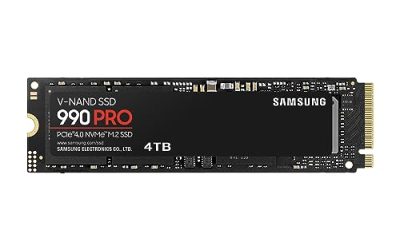
For gaming in 2026, buy a quality PCIe 4.0 NVMe SSD with DRAM cache, 2TB capacity minimum, from Samsung, WD Black, Crucial, Kingston Fury, or Corsair. The Samsung 990 Pro and WD Black SN850X at $144–$179 for 2TB are the proven sweet spots. PCIe 5.0 drives (Crucial T705, Samsung 9100 Pro) are wildly overkill for gaming — they cost twice as much for performance gains that don’t materialize in actual game loading. DRAM-less and QLC drives are false economy in 2026; the price gap to a quality TLC drive with DRAM is small enough that the durability and performance compromise isn’t worth it. Avoid 1TB drives unless you have very few games — modern AAA titles routinely consume 100–200GB each.
The Five Criteria That Matter
1. Real-world game loading performance is bottlenecked above PCIe 4.0. Above the PCIe 4.0 bandwidth ceiling, game loading is CPU and GPU decompression-limited, not storage-limited. The difference between a Samsung 990 Pro (PCIe 4.0, $159 for 2TB) and a Samsung 9100 Pro (PCIe 5.0, $369 for 2TB) in actual Cyberpunk 2077 cold-boot load times is 0.1 seconds. Unless you have a specific creator workload that saturates bandwidth, PCIe 4.0 is the smarter purchase.
2. DRAM cache makes drives faster and more consistent under sustained load. DRAM-less drives use Host Memory Buffer (HMB) — borrowing system RAM as cache. This works fine for casual use but creates inconsistent performance under sustained writes. For gaming primary drives, always choose drives with onboard DRAM cache. Samsung 990 Pro, WD Black SN850X, Crucial P5 Plus all have DRAM. Crucial P3 Plus, WD SN770, Samsung 980 (non-Pro) are DRAM-less.
3. Capacity must exceed your library. Modern AAA games are 100–200GB each. Microsoft Flight Sim 2024 with photogrammetry assets is 300GB+. Call of Duty: Black Ops 6 + Warzone is 240GB. A 1TB drive holds maybe 5–7 modern games before you’re shuffling installs. 2TB is the practical floor in 2026; 4TB is the comfortable choice for serious gamers.
4. TLC NAND, not QLC. Quad-level cell (QLC) NAND is cheaper but has much worse sustained write performance (often dropping to 50–100 MB/s once SLC cache fills) and far lower endurance. Triple-level cell (TLC) NAND is the standard for gaming-tier drives. Modern Samsung V-NAND, Micron 232-layer TLC, and Kioxia BiCS6 are all excellent TLC options. Avoid QLC drives like the Crucial P3 series for primary gaming use.
5. Endurance rating (TBW) matters less than you think. A 2TB gaming drive rated for 1,200 TBW will outlast typical gaming use by 4–5x. Modern controllers manage wear leveling effectively, and you’d need to write 200GB daily for 16 years to exhaust the rating. Endurance only becomes a real concern for write-heavy professional workloads (video editing scratch disks, database use).
Buying Checklist
- Identify your motherboard’s M.2 slot specifications (Gen 4 vs Gen 5, lane configuration)
- Calculate capacity needs based on your game library size + 50% headroom
- Choose TLC NAND with DRAM cache (avoid QLC and DRAM-less for primary drive)
- Pick PCIe 4.0 for gaming sweet spot; PCIe 5.0 only if you have creator workloads
- Verify motherboard heatsink coverage or budget for SSD heatsink
- Check NVMe form factor (2280 standard; some compact builds need 2230)
- Confirm 5-year warranty (industry standard for gaming-tier drives)
- Check DirectStorage certification if you play DirectStorage-enabled titles
- Verify firmware is current via manufacturer software
- Buy from authorized retailers — counterfeit Samsung and WD drives have appeared in grey markets
Spec Primer: What the Numbers Actually Mean
Sequential read/write speeds. Maximum sustained bandwidth in MB/s for large file transfers. PCIe 4.0 drives top out around 7,000–7,500 MB/s read, 6,500–7,000 MB/s write. PCIe 5.0 drives hit 14,500–14,800 MB/s read. Real-world game asset streaming uses 3,500–5,000 MB/s scattered reads — well below either drive’s peak.
Random 4K IOPS. Operations per second for tiny 4K block reads/writes. More relevant to OS responsiveness and game asset streaming than sequential numbers. Quality drives deliver 1.2–1.8 million IOPS at QD32 (deep queue depth).
SLC cache. A portion of the TLC NAND operates in single-level cell mode for faster writes. Cache size varies by drive capacity — typically 200–500GB on 2TB drives. Once exhausted, sustained writes drop to native TLC speed (1,500–2,500 MB/s on quality drives).
TBW (Total Bytes Written). Manufacturer-rated write endurance over the drive’s warranty period. 2TB drives are typically rated 1,200–1,400 TBW. Real-world gaming use writes 30–50GB daily; you’d need 65+ years to hit the rating at that pace.
Form factor. M.2 2280 is the standard 22mm x 80mm size for desktop builds. 2230 is the compact size for Steam Deck and some ITX builds. Most modern motherboards support 2280 only on primary M.2 slots; check spec sheets for compact slot compatibility.
Common Buyer Mistakes
Buying PCIe 5.0 expecting game loading improvements. The performance delta in actual gaming is sub-perceptible. PCIe 5.0 makes sense for content creators with bandwidth-saturating workloads, not for gaming primary drives.
Choosing DRAM-less drives to save $20. The performance drop under sustained writes is significant. Page-file thrashing, game install operations, and OS update installations all suffer noticeably. The DRAM premium is worth paying.
Buying QLC drives for gaming. QLC writes drop to 50–100 MB/s once SLC cache fills. Modern game installs (40–100GB) routinely exceed cache, causing miserable install experiences. Stick with TLC.
Skipping the heatsink. Both PCIe 4.0 and 5.0 drives thermal throttle under sustained load without cooling. Use the motherboard heatsink (any decent X870/B850/Z890 board includes one) or buy a drive with included heatsink.
Running drives at 90%+ capacity. NVMe SSDs slow dramatically when over 90% full because the controller has less spare NAND for wear leveling and SLC caching. Keep 15–20% free for optimal performance.
FAQ
Should I use my old SATA SSD as a secondary drive? Yes. SATA SSDs are slower than NVMe but still vastly better than HDD for game loading. Use SATA for less-played games, media storage, and OS backup. Keep your most-played AAA titles on the NVMe drive.
Is DirectStorage worth designing my purchase around? Currently no — DirectStorage 1.3 game support remains limited (Forspoken, Ratchet and Clank, a handful of others). Both quality PCIe 4.0 and PCIe 5.0 drives handle DirectStorage cleanly. The bigger DirectStorage 2.0 push expected with Windows 12 may shift this, but waiting on speculation isn’t wise.
What about 8TB drives? Available now (WD Black SN850X 8TB is $619, Samsung doesn’t compete) but expensive per gigabyte. For large game libraries, 2x4TB drives are usually more cost-effective than 1x8TB and provide separation-based data safety.
Can I use a PCIe 5.0 drive in a PCIe 4.0 slot? Yes — PCIe is backward compatible. The drive will run at PCIe 4.0 speeds. But you’re paying PCIe 5.0 prices for PCIe 4.0 performance, which is wasted money.
Brand Reliability Comparison
Samsung remains the gold standard for SSD reliability in 2026. Their Pascal in-house controller, V-NAND production, and Magician software ecosystem deliver consistent performance and long-term reliability. The 990 Pro is the most-recommended PCIe 4.0 drive for a reason.
WD Black has earned a strong second place. The SN850X uses Sandisk-derived BiCS6 NAND with a quality in-house controller. Pricing is consistently $15–$25 below Samsung at equivalent capacities. WD Dashboard software is functional but less polished than Samsung Magician.
Crucial (Micron) delivers excellent value plays. The T705 PCIe 5.0 drive is the value pick at the high end. Their MX-series SATA SSDs remain industry-standard for budget builds. Storage Executive software is functional but basic.
Kingston Fury, Corsair MP, and Sabrent Rocket lines use Phison controllers and quality NAND, delivering solid performance but with less software ecosystem investment. All three are reliable budget-to-mainstream choices.
Optimization Tips for Gaming Drives
Enable Write Cache in Windows Device Manager for performance. Don’t disable indexing on a gaming drive — modern Windows indexing is lightweight and helps file searches. Keep at least 15–20% free space for SLC cache and wear leveling headroom. Run TRIM weekly (Windows does this automatically). Avoid defragmenting NVMe SSDs (Windows knows not to defrag SSDs by default). Use the manufacturer’s software to check firmware updates quarterly.
Final Take
The SSD purchase in 2026 should be a Samsung 990 Pro 2TB or WD Black SN850X 2TB at $144–$179 for the gaming primary drive. Pay the slight premium over budget-tier drives for the DRAM cache and TLC NAND. Skip PCIe 5.0 unless you’re a content creator with workloads that genuinely saturate bandwidth. Skip QLC drives entirely. Buy 2TB minimum, 4TB if you have a serious AAA library. The performance delta between a $160 quality drive and a $400 flagship drive is invisible in your actual gameplay experience — but the difference between a quality drive and a budget QLC drive is felt every time you install a game or open a large file. Spend wisely in the right tier and forget about your storage for the next 5–7 years.
Frequently Asked Questions
Does a PCIe 5.0 SSD load games faster than PCIe 4.0?
Barely. Game loading is dominated by random reads, decompression and engine work rather than sequential bandwidth, so real-world differences between a good Gen4 drive and a Gen5 drive are usually under a second. Gen5 drives also run hotter and need substantial heatsinks, so Gen4 remains the sensible gaming choice.
How much capacity do I need?
1TB is the practical minimum since single AAA installs now run 100 to 200GB, and 2TB is the comfortable target. Keep at least 10 to 15 percent of the drive free, because NVMe SSDs slow noticeably when their SLC write cache has no spare blocks to work with.
Does DRAM cache matter?
It matters for sustained writes and for drives that stay heavily full, where DRAM-less designs relying on host memory buffer slow down markedly. For pure game loading the difference is small, but a DRAM-equipped drive behaves far more consistently as your boot and working drive.
Do I need a heatsink?
For Gen4 drives, the motherboard M.2 heatsink is enough. Gen5 controllers genuinely require active or large passive cooling and will throttle without it. Also check that installing a tall aftermarket heatsink does not conflict with your graphics card, which frequently overhangs the primary M.2 slot.
Is DirectStorage a reason to upgrade?
Only partially. DirectStorage moves asset decompression onto the GPU and shortens load times in supporting titles, but the benefit comes mostly from moving off a hard drive or SATA SSD to any NVMe drive. Going from a good Gen4 to Gen5 adds very little on top of that.