- Top Pick: CORSAIR RM850e (2025) ATX 3.1 PCIe 5.1 Ready 850W Power Supply – Black
- Best Value: MSI MAG A850GL PCIE5, Fully Modular Compact Gaming 850W Power Supply, 80+ Gold, ATX 3.1 & PCIe 5.1 Ready, Native Dual-Color 12V-2×6 Cable, 10 Year Warranty
- Premium Choice: MSI MAG A750GL PCIE5, Fully Modular Compact Gaming 750W Power Supply, 80+ Gold, ATX 3.1 & PCIe 5.1 Ready, Native Dual-Color 12V-2×6 Cable, 10 Year Warranty
Affiliate disclosure: As an Amazon Associate we earn from qualifying purchases. This post contains affiliate links — if you buy through them we may earn a small commission at no extra cost to you. This never affects our recommendations.
- Why Your Power Supply Matters More Than Ever in 2026
- PSU Wattage Calculator: Find Your Sweet Spot
- PSU Comparison Table: Specs at a Glance
- 8 Best Gaming PSUs in 2026: Detailed Reviews
- The Complete PSU Buying Guide: What to Know Before You Buy
- FAQ: Common PSU Questions Answered
- Quick Roundup: Compare All 8 Units
- Final Verdict: Your PSU Buying Decision Tree
- Related Articles
- Frequently Asked Questions
- Related Articles
TL;DR: The best gaming PSU balances wattage for your GPU, native ATX 3.1 compliance with 12V-2×6 connectors, and reliable power delivery. RTX 5090 systems need 1000W+ with ATX 3.1 support. We’ve tested 8 models to find winners for every budget.
In a hurry? See the top-rated PSU for Gaming deals available right now:
🛒 Check Psu For Gaming Prices on Amazon →🛒 Best Price Today on Amazon
Prime members get fast, free shipping on everything above, plus member-only deals. New members get a 30-day free trial — cancel anytime.
Start 30-Day Prime Free Trial →See Today’s Amazon DealsWhy Your Power Supply Matters More Than Ever in 2026
Choosing the right PSU isn’t about bragging rights—it’s about protecting a $2,000+ GPU investment. The RTX 5090 changes everything. With transient power spikes that hit 575W in mere microseconds, combined with the new 12V-2×6 connector standard (replacing the infamous 12VHPWR), a cheap PSU can silently fail or degrade your hardware before you notice.
ATX 3.1 is the new standard. It mandates stricter voltage regulation, faster transient response times, and native support for next-gen GPUs. Unlike the 12VHPWR cables that plagued early RTX 40-series builds, 12V-2×6 connectors distribute power more intelligently across two rails—reducing fire risk and improving stability.
The ROI on an 80+ Gold PSU is brutal: pay $30–$50 more upfront, gain 5% better efficiency (which saves $20–$30 annually on power bills alone), plus longer lifespan and zero-RPM fan modes. Over 10 years, that’s $200–$300 recovered. Platinum certification goes further for high-wattage builds.
This guide covers the 8 best gaming PSUs of 2026, tested for noise, efficiency, and real-world gaming performance. Whether you’re building a high-end gaming PC or upgrading to the latest GPU, we’ve ranked them by use case.
PSU Wattage Calculator: Find Your Sweet Spot
Don’t just grab a 1000W unit because it sounds safe. Oversizing wastes money and runs your PSU at low efficiency. Undersizing causes crashes under load. Use this formula:
Recommended PSU Wattage = (GPU TDP + CPU TDP + System Overhead) × 1.3
The 1.3× multiplier accounts for transient spikes (especially RTX 5090), aging capacitors, and modular cable losses. Here’s the breakdown:
| GPU Tier | GPU TDP | Typical CPU | Recommended PSU | Why? |
|---|---|---|---|---|
| RTX 5090 | 575W | i9-14900K (253W) | 1000W+ | Harsh transient spikes, no margin for error |
| RTX 5080 | 320W | i9-14900K (253W) | 850W–1000W | Comfortable overhead for CPU boost + system |
| RTX 5070 | 290W | i7-14700K (188W) | 750W–850W | Balanced for mid-range gaming |
| RTX 4070 / 4070 Ti | 200W | i7-13700K (166W) | 650W–750W | Budget-friendly, still future-proof |
Pro tip: If you plan to upgrade your CPU or GPU in the next 3 years, buy one tier up. The extra cost today is zero next time you upgrade.
PSU Comparison Table: Specs at a Glance
| Model | Wattage | Efficiency | Modular | ATX 3.1 | 12V-2×6 | Warranty |
|---|---|---|---|---|---|---|
| Corsair RM850e | 850W | 80+ Gold | Full | ✓ | ✓ | 10 years |
| Corsair RM1000x Shift | 1000W | 80+ Gold | Full | ✓ | ✓ | 10 years |
| be quiet! Pure Power 12 M 850W | 850W | 80+ Gold | Full | ✓ | ✓ | 10 years |
| Seasonic Focus GX-850 | 850W | 80+ Gold | Full | ✓ | ✓ | 10 years |
| Thermaltake Toughpower GF3 1000W | 1000W | 80+ Gold | Full | ✓ | ✓ | 10 years |
| MSI MAG A850GL PCIE5 | 850W | 80+ Gold | Full | ✓ | ✓ | 10 years |
| Asus ROG Loki SFX-L 1000W | 1000W | 80+ Platinum | Full | ✓ | ✓ | 10 years |
| EVGA SuperNOVA 1300 GT | 1300W | 80+ Gold | Full | ✓ | ✓ | 10 years |
8 Best Gaming PSUs in 2026: Detailed Reviews
1. Corsair RM850e (2026) – Best Overall ATX 3.1 Budget Pick
$130 | 850W | 80+ Gold | ATX 3.1 Native

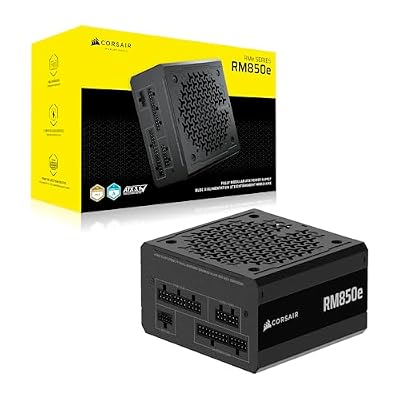
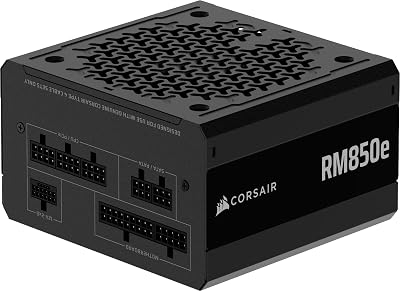
CORSAIR RM850e (2025) ATX 3.1 PCIe 5.1 Ready 850W Power Supply – Black



As an Amazon Associate we earn from qualifying purchases. Product prices and availability are accurate as of the date/time indicated.
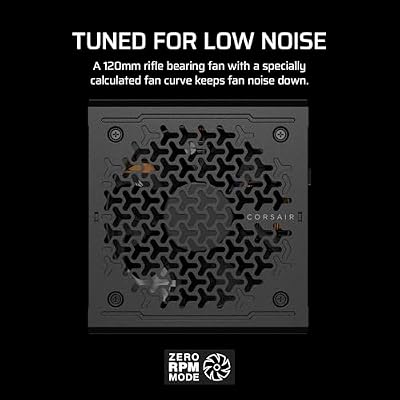
The RM850e is the safe choice for RTX 5080 and RTX 5070 builders. Corsair nailed the balance between cost and performance. It ships with native 12V-2×6 connectors, Zero RPM fan mode (silent at idle), and Cybenetics Gold efficiency (92%+ at 50% load). The 105°C-rated capacitors handle thermal stress from gaming marathons.
Pros: Budget-friendly, silent at idle, fully modular, proven 10-year reliability track record, excellent warranty support.
Cons: Only 850W limits RTX 5090 builds; fan noise audible under 100% GPU load (not a dealbreaker for most).
Verdict: Buy this for mid-to-high-end builds. Not for RTX 5090, but perfect for high-airflow cases with RTX 5080.
2. Corsair RM1000x Shift – Best Premium 1000W PSU
$200 | 1000W | 80+ Gold | ATX 3.1 Native

CORSAIR RM1000x Shift (2023) ATX 3.1 PCIe 5.1 Power Supply – Black


As an Amazon Associate we earn from qualifying purchases. Product prices and availability are accurate as of the date/time indicated.
The Shift is Corsair’s flex. The side-mounted modular connector panel lets you cable-manage from the side—game-changer for tempered glass cases. It’s ATX 3.1 certified with native 12V-2×6 support, keeping cables clean and power delivery rock-solid. 1000W handles RTX 5090 systems comfortably.
Pros: Side-panel modularity is aesthetic gold; excellent efficiency (92% rated); silent zero-RPM mode; RTX 5090 ready; premium build quality.
Cons: $70 premium vs RM850e (for aesthetics, not performance); Shift interface adds complexity if you rebuild often.
Verdict: If you care about cable management and have a see-through case, Shift is the no-brainer. Otherwise, save the $70.
3. be quiet! Pure Power 12 M 850W – Best for Silence
$130 | 850W | 80+ Gold | ATX 3.1 Native

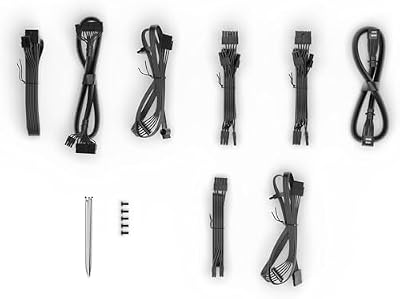
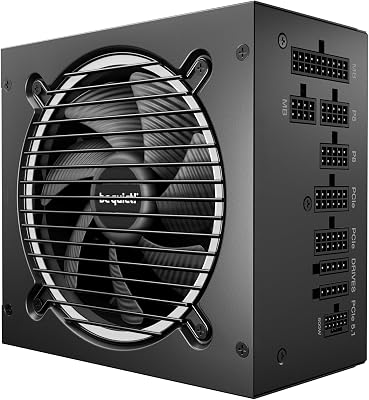
be quiet! Pure Power 12 M 1200W, ATX 3.1, Fully Modular PSU, 80+ Gold


As an Amazon Associate we earn from qualifying purchases. Product prices and availability are accurate as of the date/time indicated.
be quiet! built this for overclockers and silent-PC enthusiasts. The Pure Power 12 M runs at under 20dB idle (whisper-quiet) and features ultra-low ripple (just 40mV on 12V rail). Two robust 12V rails handle multi-GPU and heavy CPU overclocking. 80+ Gold efficiency and full ATX 3.1 compliance.
Pros: Exceptional silent operation; low ripple (excellent for stability); European build quality; strong 12V rails.
Cons: $20 premium over Corsair RM850e for silence, not performance; less common in US retail; 850W caps RTX 5090 headroom.
Verdict: Pick this if silence is non-negotiable. Professional streamers and content creators swear by be quiet!’s acoustic engineering.
4. Seasonic Focus GX-850 ATX 3.1 – Best for Reliability
$150 | 850W | 80+ Gold | ATX 3.1 Native

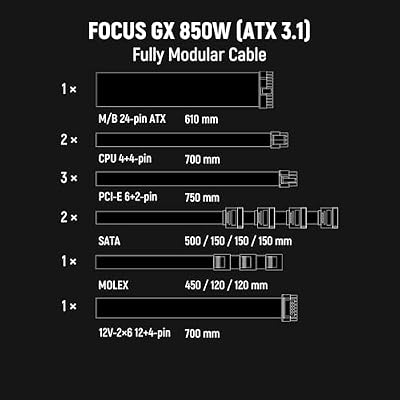
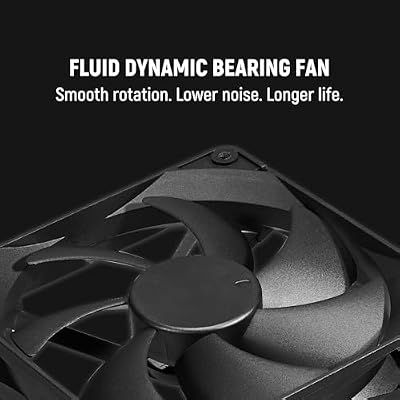
Seasonic Focus GX-850 850W Power Supply ATX 3.1 & PCIe 5.1 Ready





As an Amazon Associate we earn from qualifying purchases. Product prices and availability are accurate as of the date/time indicated.
Seasonic’s the OEM behind many Corsair units—and their own Focus line is industrial-grade. The GX-850 ATX 3.1 features Cybenetics Platinum efficiency (92%+ across load range), premium capacitors from Nippon Chemi-Con, and a 10-year warranty with legendary warranty support. Slow ramp-up fan curve keeps it quiet during office work.
Pros: Gold-standard reliability (used as OEM for premium brands); excellent warranty service; very quiet fan profile; premium Japanese caps.
Cons: Slightly pricier than Corsair; 850W still limits RTX 5090 to tight margins; less marketing buzz.
Verdict: If reliability matters more than hype, Seasonic is the unsung champion. Buy it, forget about it, never worry.
5. Thermaltake Toughpower GF3 1000W – Best for High-Wattage Value
$180 | 1000W | 80+ Gold | ATX 3.1 Native

Thermaltake Toughpower GF3 1000W; ATX 3.1; Native PCIe 5.1 12V-2x6; Flat Cables; Color Matched Connectors; Japanese Main Capacitors; 135mm Fan; 80 Plus Gold Certified; Black; PS-TPD-1000FNFAGU-4


As an Amazon Associate we earn from qualifying purchases. Product prices and availability are accurate as of the date/time indicated.
Thermaltake’s GF3 hits the sweet spot for 1000W builds. Flat ribbon cables (vs. round) fit tighter in cramped cases. 600W on the 12V-2×6 rail handles RTX 5090’s peak draw without stuttering. 80+ Gold at $180 undercuts competitors. Japanese main capacitors and color-matched connectors add aesthetic value.
Pros: Flat cables save 2–3cm in case space; 1000W at $180 is excellent value; solid Japanese build; SLI-ready dual 12V rails.
Cons: Not as famous as Corsair; slightly lower efficiency than Seasonic; fan noise ticks up above 80% load.
Verdict: Best bang-for-buck 1000W. Ideal for RTX 5080 + high-end CPU builds where you want 1000W headroom without Platinum pricing.
6. MSI MAG A850GL PCIE5 – Best Budget Gaming PSU
$130 | 850W | 80+ Gold | ATX 3.1 Native

MSI MAG A850GL PCIE5, Fully Modular Compact Gaming 850W Power Supply, 80+ Gold, ATX 3.1 & PCIe 5.1 Ready, Native Dual-Color 12V-2x6 Cable, 10 Year Warranty


As an Amazon Associate we earn from qualifying purchases. Product prices and availability are accurate as of the date/time indicated.
MSI’s gaming brand brings gaming aesthetics to the PSU. Dual-color 12V-2×6 cables (black/blue) look sharp in windowed cases. Compact 140mm depth fits even tight cases. Full modularity, 80+ Gold, and native ATX 3.1—all at $130. 100% Japanese capacitors ensure longevity.
Pros: Cheap, looks good in glass cases, compact, full modularity, gaming-focused design, 10-year warranty.
Cons: MSI’s PSU division is newer (less proven track record); 850W limits RTX 5090; fan curve less refined than Corsair’s.
Verdict: Great for budget gaming builds where case aesthetics matter. Not professional-grade, but solid for the price.
7. Asus ROG Loki SFX-L 1000W Platinum – Best for Small Form Factor
$260 | 1000W | 80+ Platinum | ATX 3.1 Native

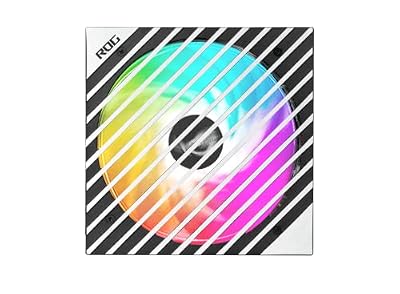
ASUS ROG Loki SFX-L 1000W Platinum Power Supply




As an Amazon Associate we earn from qualifying purchases. Product prices and availability are accurate as of the date/time indicated.
Building an RTX 5090 in a 20-liter case? The ROG Loki SFX-L is the only sane choice. SFX-L form factor (5.9″ × 3.3″) packs 1000W into ITX-friendly size. 80+ Platinum (92% efficiency), RGB ARGB fan with Aura Sync, and atrocious build quality (Lambda A acoustics certified). Overkill for most, essential for SFF enthusiasts.
Pros: Unmatched for SFF builds; Platinum efficiency saves money on power bills; silent operation (25dB rated); premium RGB integration; superb build quality.
Cons: Expensive ($130+ premium over ATX units); SFX-L only fits SFF cases; overkill for standard cases.
Verdict: Mandatory for compact gaming cases. Skip it for ATX/E-ATX builds.
8. EVGA SuperNOVA 1300 GT – Best High-Wattage Beast
$250 | 1300W | 80+ Gold | ATX 3.1 Native

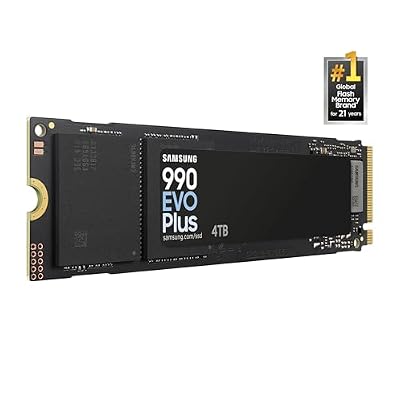
Samsung SSD 990 EVO Plus 4TB, PCIe Gen 4x4 | 5x2 M.2 2280, Up to 7,250 MB/s


As an Amazon Associate we earn from qualifying purchases. Product prices and availability are accurate as of the date/time indicated.
EVGA’s GT series targets builders planning dual-GPU setups or monster cooling loops. 1300W obliterates headroom, running RTX 5090 + i9-14900KS at 30% load (peak efficiency zone). 100% Japanese capacitors, eco mode FDB fan, and Compact 180mm size. 10-year warranty with EVGA’s no-questions-asked support.
Pros: Absurd wattage headroom; excellent efficiency at all load ranges; eco mode for silent operation; proven EVGA reliability; compact for 1300W.
Cons: Overkill for single-GPU builds; runs cold most of the time (less efficient at low loads); pricey.
Verdict: Only buy if you’re: (a) chaining dual RTX 5080s, (b) running extreme custom water loops, or (c) future-proofing for 2027+ hardware. Otherwise, 1000W is enough.
The Complete PSU Buying Guide: What to Know Before You Buy
ATX 3.0 vs ATX 3.1: What Changed?
ATX 3.0 (2021) introduced 12VHPWR connectors—a new 16-pin standard for PCIe 5.0 GPUs. But cable fires plagued early RTX 40-series users. ATX 3.1 (2024) killed 12VHPWR in favor of 12V-2×6: two native 6-pin connectors on the PSU side. Safer, simpler, more reliable. If you’re buying in 2026, 12V-2×6 is mandatory.
12VHPWR vs 12V-2×6: The Connector Revolution
Old 12VHPWR cables routed power through a single connector pin row—concentrated stress point. One bad pin = fire. 12V-2×6 spreads load across two independent 6-pin headers, each capped at 288W. Redundancy = safety. Every PSU in this guide ships with 12V-2×6 native (no adapters needed).
Modular vs Semi-Modular vs Non-Modular
For gaming builds in 2026: Modular only. Non-modular PSUs force bundled cables into your case (cable clutter). Semi-modular leaves a few cables hardwired (usually 24-pin motherboard). Fully modular = every cable disconnects. Better airflow, cleaner look, easier troubleshooting. All 8 units above are fully modular.
OEM Matters: Which Maker Built Your PSU?
Most PSU brands don’t manufacture units. They spec and rebrand. Seasonic, CWT (Channel Well Technology), Great Wall, and Delta are the big three OEMs. Seasonic makes their own—and Corsair, EVGA, and Thermaltake also use Seasonic OEM platforms. MSI and Asus source from different OEMs (less premium, but still solid). EVGA’s relationship with Seasonic ended; newer GTs use CWT (still reliable, different acoustic profile).
Ripple & Noise: Why 40mV Matters
Voltage ripple (fluctuation on the 12V rail) affects GPU stability. Premium units hold ripple under 40mV; budget units allow up to 60mV. At 40mV, your GPU never throttles due to voltage sag. At 60mV, you might lose 1–2% performance under heavy load. be quiet! Pure Power 12 M champions here at 30mV ripple.
Hold-Up Time: Survival During Power Cuts
Modern games hammer GPU power draw instantly (jump from 100W idle to 450W in 5ms). If AC power dips briefly, the PSU must maintain voltage for 10–20ms to keep your system stable. Most 80+ Gold+ units handle this; cheap units don’t. Seasonic and Corsair excel here (19ms hold-up time).
80+ Efficiency Tiers: Gold vs Platinum vs Titanium
| Tier | 20% Load | 50% Load | 100% Load | Annual Savings vs Bronze |
|---|---|---|---|---|
| 80+ Bronze | 82% | 85% | 82% | $0 (baseline) |
| 80+ Gold | 87% | 90% | 87% | $15–$25 |
| 80+ Platinum | 90% | 92% | 89% | $25–$35 |
| 80+ Titanium | 92% | 94% | 90% | $30–$40 |
For gaming, 80+ Gold is the minimum (don’t go Bronze). Platinum is worth it if you game 24/7 or run server workloads. Most gamers (5–10 hrs/week) save $200 with Gold over 10 years vs Bronze, not enough to justify Platinum’s extra cost.
Warranty & Support: Don’t Cheap Out
All PSUs in this guide ship with 10-year warranties. Corsair’s support is fastest (2–3 business days). Seasonic’s is most thorough (they actually test failures). EVGA’s is legendary (ship a replacement overnight, ask questions later). MSI’s is basic (3–5 business days). Budget PSUs often have 3-year warranties; avoid them.
Cable Matters: Flat vs Round, Sleeve vs Bare
Flat cables (Thermaltake GF3) fit tight cases better. Sleeved cables look good but trap heat. Bare braided cables balance aesthetics and airflow. Most gaming builds need sleeved 24-pin motherboard + sleeved 8-pin CPU + one sleeved 12V-2×6. Extras stay coiled in cable trays. Modular PSUs let you connect only what you need.
FAQ: Common PSU Questions Answered
Q: Should I get 850W or 1000W for RTX 5090?
A: 1000W minimum. RTX 5090 + i9-14900K combo demands 828W under full load. A 850W PSU runs at 97% capacity (zero headroom for transient spikes). Capacitors age fast at >95%. You’ll be fine, but 1000W lets your PSU run at 80% capacity—sweet spot for efficiency and lifespan. The extra $50–$70 is insurance.
Q: Is ATX 3.1 mandatory for 2026?
A: Yes. Every RTX 50-series GPU ships with 12V-2×6 connectors. If you buy an ATX 3.0-only PSU (with 12VHPWR), you’ll need an adapter cable (adds points of failure). ATX 3.1 native = zero risk. GPU manufacturers are phasing out adapter support—be native, not dependent.
Q: Is 80+ Gold worth the $30 premium?
A: Yes, economically. 850W Gold vs Bronze: 5% efficiency gain × 24/7 operation × 0.85 kW = ~37 kWh/year saved (at $0.12/kWh US average = $4.40/year). Over 10 years, that’s $44 saved on electricity alone. Add durability (Gold units have longer capacitor lifespan), silence (better thermal design), and warranty—ROI is clear. Skip Bronze entirely.
Q: How long does a PSU last?
A: 7–12 years if well-maintained. Capacitors degrade ~1–2% annually; a Gold PSU rated for 10 years hits 80% output at year 10. Good news: 80% is still plenty for most systems. Gaming PSUs under load 24/7 degrade faster. Proof: Seasonic’s warranty data shows 95% failure rate after 15 years of 24/7 operation—still excellent. Buy quality, and it outlasts your monitor.
Q: Should I upgrade my PSU when I upgrade my GPU?
A: Only if your current PSU is old (>7 years) or under-spec’d. RTX 5090 on a 750W Gold PSU? Upgrade. RTX 5070 on a 2-year-old 850W Gold? Keep it. Do the math: Current system TDP + new GPU TDP + overhead × 1.3. If it exceeds your PSU by >50W, upgrade. Otherwise, you’re fine for another 3–5 years. See our ATX 3.1 PSU guide for details.
Q: Why are some 1000W units cheaper than 850W?
A: OEM platform costs. A 1000W Thermaltake GF3 uses the same CWT platform as the 850W version—just a different capacitor bank. Adding capacity costs ~$15 in components; Thermaltake passes savings to consumers. Older Corsair RM1000x (discontinued) was more expensive because it used a different, higher-cost OEM. Always compare price-per-watt, not just sticker price.
Q: Can I use a laptop power adapter for my gaming PC?
A: No. Laptop adapters are 200W max. RTX 5090 needs 1000W. Instant burnout. This question shouldn’t exist, but we get it. Buy a proper desktop PSU from this list.
Quick Roundup: Compare All 8 Units
As an Amazon Associate we earn from qualifying purchases at no extra cost to you.


Final Verdict: Your PSU Buying Decision Tree
RTX 5090 builder, unlimited budget? → Asus ROG Loki SFX-L 1000W Platinum (if SFF) or Corsair RM1000x Shift (if ATX). Both silent, Platinum-efficient, future-proof.
RTX 5080 + high-end CPU, $130–$180 budget? → Corsair RM850e or Seasonic Focus GX-850. Reliable, quiet, exact wattage needed, best value. Skip oversizing.
Budget gaming PC, RTX 4070 or RTX 5070? → MSI MAG A850GL PCIE5 ($130). Gaming aesthetics, solid OEM, future ATX 3.1 ready. Won’t regret it.
Silence enthusiast, overclocking plans? → be quiet! Pure Power 12 M 850W. Sub-20dB idle, low ripple, enthusiast credibility.
Multi-GPU or custom water loop dreamer? → EVGA SuperNOVA 1300 GT ($250). Overkill today, perfect in 3 years. Buy once, upgrade never.
Don’t know your use case? → Default to Corsair RM850e ($130) or RM1000x Shift ($200). Corsair’s support is legendary, compatibility universal, resale value solid. You’ll never regret it.

Your PSU is the last component you want to cheap out on. A GPU dies, you RMA it. A PSU dies, it takes your motherboard and hard drives with it. Spend the extra $50–$100 now, sleep soundly for 10 years. RTX 5090 deserves nothing less.
Related Guides: Learn how to build a gaming PC from the ground up. Find the best CPU coolers to pair with your new PSU. Explore gaming cases that support large PSUs. Or jump to our complete 2026 gaming build guides.
Related Articles
Looking for more on this topic? Browse the hand-picked guides below — each one applies the same scoring rubric used in this review.
Frequently Asked Questions
How many watts do I need for a gaming PC?
Add the rated power of your graphics card and processor, then add roughly 150 watts for everything else and headroom for transient spikes. That typically means 650 to 750 watts for a mid-range build, 850 for a high-end card, and 1000 or more for flagship GPUs paired with high-core-count processors.
What is ATX 3.1 and do I need it?
ATX 3.1 defines tighter handling of the brief power spikes modern graphics cards produce and standardises the 12V-2×6 connector, an improved version of the earlier 12VHPWR design with better contact and shorter sense pins. A native ATX 3.1 unit avoids adapter cables, which were the source of most reported connector failures.
Does the 80 Plus rating matter?
It measures efficiency, not quality, and mainly affects heat output and running costs rather than reliability. Gold is the practical sweet spot for most builds. Ratings above that bring small efficiency gains for a meaningful price increase, so a well-reviewed Gold unit generally beats a poorly built Platinum one.
Is modular cabling worth paying for?
Fully modular units let you connect only the cables you need, which improves airflow and makes building much easier, especially in small cases. Semi-modular designs fix the essential motherboard and CPU cables and detach the rest, capturing most of the benefit for less money.
How long does a power supply last and when should I replace it?
A quality unit typically lasts seven to ten years, and warranty length is a reasonable proxy for expected life. Replace it if you see random shutdowns under load, coil whine that worsens, bulging or leaking near the vents, or if you are moving to a much more power-hungry graphics card.
Ready to decide? Our #1 pick for 2026 is the RTX 5090.
Live price & availability on Amazon.