Affiliate disclosure: As an Amazon Associate we earn from qualifying purchases. This post contains affiliate links — if you buy through them we may earn a small commission at no extra cost to you. This never affects our recommendations.
Quick Answer
The AMD Ryzen 5 7600X is the best budget gaming CPU in 2026, and the Intel Core i7-14700K is the best all-around pick for gaming plus content creation. If you game exclusively at 1080p with a high-refresh monitor, either chip will exceed 144 fps in virtually every current title.
Your CPU is the brain of your gaming PC — but it affects gaming performance differently than most people expect. Modern games are overwhelmingly GPU-limited, meaning your graphics card matters more for frame rates at 1440p and 4K. Where your CPU matters most is at 1080p with a fast GPU, in CPU-bound strategy and simulation games, and in tasks beyond gaming like streaming, video editing, and content creation.
We’ve evaluated the top gaming CPUs of 2026 across multiple price points, factoring in real-world gaming benchmarks, platform costs, power consumption, and overall value.
In a hurry? See the top-rated CPUs for Gaming deals available right now:
🛒 Check Cpus For Gaming Prices on Amazon →🛒 Best Price Today on Amazon
Prime members get fast, free shipping on everything above, plus member-only deals. New members get a 30-day free trial — cancel anytime.
Start 30-Day Prime Free Trial →See Today’s Amazon DealsTop Picks at a Glance
| CPU | Cores/Threads | Base/Boost | Best For |
|---|---|---|---|
| AMD Ryzen 5 7600X | 6C / 12T | 4.7 / 5.3 GHz | Budget 1080p/1440p gaming |
| Intel Core i5-14600K | 14C / 20T | 3.5 / 5.3 GHz | Value gaming + light workloads |
| Intel Core i7-14700K | 20C / 28T | 3.4 / 5.6 GHz | Gaming + heavy multitasking |
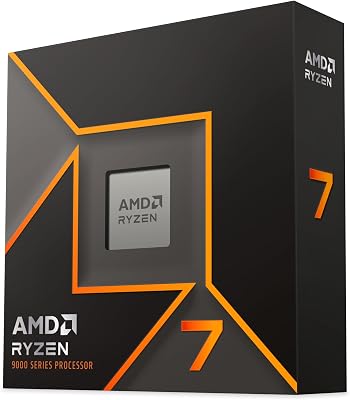
| AMD Ryzen 7 7700X | 8C / 16T | 4.5 / 5.4 GHz | Balanced gaming + creation |
| AMD Ryzen 9 7900X | 12C / 24T | 4.7 / 5.6 GHz | Streaming + gaming powerhouse |
As an Amazon Associate we earn from qualifying purchases at no extra cost to you.




AMD Ryzen 5 7600X — Best Budget Gaming CPU
- Six cores and 12 threads at up to 5.3 GHz boost clock deliver exceptional 1080p and 1440p gaming performance that rivals CPUs twice its price
- AM5 platform future-proofs your build — AMD has committed AM5 support through at least 2027, meaning CPU upgrades won’t require a new motherboard
- Exceptional single-core performance makes it one of the fastest gaming chips available at its price point — most games use 6 or fewer cores effectively
- DDR5 support on AM5 brings bandwidth improvements that benefit fast-paced competitive titles at high refresh rates
- Runs hot without a premium cooler — budget at least $40–$60 for a capable aftermarket air cooler or a 240mm AIO
Intel Core i5-14600K — Best Value Gaming CPU
- Hybrid architecture with 6 performance cores and 8 efficiency cores (14 total) handles gaming on P-cores while background tasks run on E-cores
- 5.3 GHz boost clock matches the Ryzen 5 7600X in single-threaded gaming benchmarks while adding more total cores for multitasking
- LGA1700 platform is mature and affordable — B660 and B760 boards cost significantly less than comparable AM5 boards
- Unlocked multiplier allows overclocking on Z790 motherboards for additional performance headroom
- Excellent streaming performance for its price tier — the E-cores handle OBS encoding without stealing gaming headroom from the P-cores
Intel Core i7-14700K — Best All-Around Gaming CPU
- 20 cores (8P + 12E) and 28 threads make it the most capable CPU on this list for combined gaming and productivity workloads
- 5.6 GHz max boost clock delivers top-tier gaming frame rates — leads most benchmarks at 1080p with a fast GPU
- Handles demanding streaming setups, video editing, and 3D rendering without throttling gaming performance
- High power draw (125W TDP, up to 253W under sustained load) demands a quality 240mm or 360mm AIO cooler
- Best choice if you game and create content, stream professionally, or run CPU-intensive simulations alongside gaming
AMD Ryzen 7 7700X — Best Balanced AMD Pick
- Eight cores and 16 threads at 5.4 GHz boost hit the sweet spot between gaming performance and multithreaded workload capability
- Notably better than the 7600X in content creation, video encoding, and simulation — gaming performance delta is minimal in real-world scenarios
- AM5 platform compatibility means the same future upgrade path as the 7600X with more cores for non-gaming tasks today
- Lower power consumption than the Intel i7-14700K with competitive gaming benchmarks — runs cooler and quieter in a mid-tower build
- Strong value in 2026 as AM5 motherboard prices have come down significantly since platform launch
AMD Ryzen 9 7900X — Best High-End Gaming & Streaming CPU
- Twelve cores and 24 threads deliver effortless simultaneous gaming and content creation — stream at 1080p60 without any perceptible impact on in-game frame rates
- 5.6 GHz max boost matches the Intel i7-14700K in single-core gaming benchmarks while offering more cores for multithreaded tasks
- AMD’s efficient 5nm process keeps power draw competitive with Intel despite the higher core count
- Ideal for game developers, YouTubers, and streamers who need their machine to handle production workloads without compromising gaming performance
- AM5 platform longevity means this CPU will remain relevant through multiple GPU upgrade cycles
Buying Guide: How to Choose the Best Gaming CPU
How Much Does Your CPU Actually Matter for Gaming?
At 4K, almost nothing — your GPU is doing virtually all the work. At 1440p, the CPU matters more as GPU workloads decrease. At 1080p on a 144Hz+ monitor, CPU choice has a real impact on average and minimum frame rates, particularly in CPU-bound games like Civilization, Microsoft Flight Simulator, and open-world titles with large NPC counts. For competitive 1080p gaming, spend on a faster CPU. For 4K gaming, put more budget into your GPU.
Platform Cost — Don’t Forget the Motherboard
Intel’s LGA1700 platform (for 12th, 13th, and 14th gen CPUs) has very affordable motherboard options. A solid B760 board for the i5-14600K costs $130–$160. AMD’s AM5 platform costs more at entry level — expect $160–$200 for a quality B650 board. However, AM5 offers longer upgrade longevity. The total platform cost (CPU + motherboard + DDR5 RAM) should factor into your budget calculations alongside the CPU price alone.
Do You Need to Overclock?
In 2026, overclocking delivers diminishing returns for gaming. Modern CPUs boost aggressively out of the box, and manual overclocking adds heat and instability for marginal fps gains. The bigger win is enabling AMD’s Expo or Intel’s XMP memory profile — this ensures your DDR5 RAM runs at its rated speed (typically 5600–6000 MHz) rather than default JEDEC speeds, which meaningfully improves minimum frame rates in latency-sensitive titles.
Core Count for Gaming — How Many Do You Actually Need?
Six cores remains sufficient for pure gaming in 2026 — very few game engines scale past 6 cores with meaningful performance gains. The argument for 8+ cores is mixed-use: streaming while gaming, video editing between sessions, or running applications in the background. If your PC is exclusively a gaming machine, the Ryzen 5 7600X or i5-14600K will match more expensive CPUs in every game benchmark. Buy extra cores for what you do beyond gaming.

FAQ
Is AMD or Intel better for gaming in 2026?
Both are excellent. AMD’s Ryzen 7000 series and Intel’s 14th gen trade blows within a few percentage points in most gaming benchmarks. Intel tends to lead in raw single-threaded performance at the top end; AMD offers better platform longevity and power efficiency. The choice often comes down to total platform cost (motherboard + RAM) rather than the CPU itself. See our full AMD vs Intel comparison for the detailed breakdown.
How much RAM do I need for gaming in 2026?
16GB is the current minimum for a smooth gaming experience — some modern titles approach or exceed 12GB VRAM allocation plus system RAM usage simultaneously. 32GB is the recommended standard for gaming plus streaming or any content creation. DDR5 RAM speeds of 5600 MHz or faster pair well with both AM5 and LGA1700 platforms for optimal gaming performance.
Do I need a K-series Intel CPU for gaming?
Not necessarily. K-series Intel CPUs are unlocked for overclocking and require a Z-series motherboard (which costs more). If you don’t plan to overclock, a non-K CPU (like the i5-14600 without the K) paired with a B760 motherboard saves money with minimal gaming performance difference. The 14600K is worth it primarily if you want overclocking headroom or plan to use a Z790 board for other features.

Will a better CPU increase my FPS?
It depends on your GPU and resolution. If your GPU is already the bottleneck (as it is for most gamers at 1440p and 4K), upgrading your CPU won’t meaningfully increase fps. If you’re gaming at 1080p with a powerful GPU and experiencing CPU-bound frame rate limitations, a faster CPU will help. The simplest test: if your GPU usage is consistently at 95–100% while gaming, your CPU is not the bottleneck.
How long will these CPUs remain viable for gaming?
Both the Intel 14th gen and AMD Ryzen 7000 chips will handle gaming well through at least 2028–2029 based on current game engine trends. Game engines scale conservatively with core count, and single-core clock speeds matter more than core count for most titles. The AM5 platform’s extended support roadmap gives AMD CPUs a slight edge for users who want to upgrade their processor without replacing their entire platform.
Final Verdict
For budget-focused gamers, the AMD Ryzen 5 7600X is unbeatable — exceptional gaming performance, AM5 platform longevity, and a price that leaves more budget for your GPU where it matters most. For the best all-around gaming PC build in 2026, the Intel Core i7-14700K leads in combined gaming and productivity performance. Streamers and content creators who also game heavily should strongly consider the AMD Ryzen 9 7900X — its core count handles professional workloads without touching your gaming headroom.
Related Articles
Looking for more on this topic? Browse the hand-picked guides below — each one applies the same scoring rubric used in this review.
Frequently Asked Questions
How many cores do I need for gaming?
Six fast cores remain the practical minimum in 2026, and eight is the comfortable target because several modern engines spread work across more threads and background applications such as Discord and a browser consume cycles. Beyond twelve cores you see almost no gaming benefit; clock speed, cache and memory latency matter far more.
Does the CPU matter if I play at 4K?
Less than at lower resolutions, because the GPU becomes the limiting factor, but it still determines your 1 percent lows and frame time consistency. CPU-heavy genres such as strategy, simulation and open-world games remain processor bound even at 4K. A mid-range modern chip is sufficient; you do not need the most expensive option.
Why do reviewers focus on 1 percent lows?
Average frame rate hides stutter. The 1 percent low figure represents the worst frames and correlates much better with how smooth a game actually feels. CPUs with large caches and fast memory access typically post much better 1 percent lows even when their average frame rate looks similar to a competing chip.
Does RAM speed affect gaming performance?
Yes, particularly on platforms without large caches. Moving from base JEDEC speeds to a tuned DDR5 kit at 6000MT/s CL30 can gain 5 to 15 percent in CPU-bound games. Crucially, you must enable EXPO or XMP in BIOS, since memory defaults to slow base speeds and many users never turn the profile on.
What cooler do I need?
Mid-range chips run well on a good $40 dual-tower air cooler. High-end parts that draw over 200 watts benefit from a 240 or 360mm AIO to avoid clock throttling in long sessions. Check socket compatibility and RAM clearance, and remember that a quieter cooler often matters more day to day than a few degrees.