- Top Pick: Does AI Need a GPU or a CPU?: The Machine You Need Flips Completely Depending on How You Use AI. A Gaming PC Isn't Always the Answer. (AI Series Book 12)
- Best Value: PC Hardware Buyer's Guide: Choosing the Perfect Components
- Premium Choice: Custom Gaming PC Construction for Beginners: Learn How to Choose the Right Hardware, Assemble them Safely, and Configure It for Maximum Performance (techflow library Book 2)
🛒 Best Price Today on Amazon
Prime members get fast, free shipping on everything above, plus member-only deals. New members get a 30-day free trial — cancel anytime.
Top Choose Cpu Complete Picks for 2026
Here are our current top choose cpu complete picks, compared on real Amazon owner reviews, price, and features. Live prices update below.
As an Amazon Associate we earn from qualifying purchases at no extra cost to you.






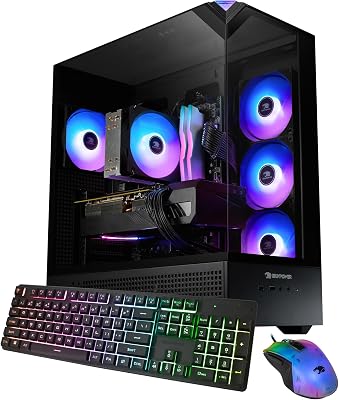

How to Choose a CPU: Complete Buying Guide (2026)
The Central Processing Unit (CPU), often called the “brain” of your computer, is arguably the single most important component in determining your gaming PC’s performance. It handles all the calculations, instructions, and processes that bring your games to life, from rendering complex graphics and physics to managing artificial intelligence and network traffic. A powerful CPU ensures smooth frame rates, reduces loading times, and allows for more demanding multitasking, transforming a frustratingly laggy experience into an immersive and fluid one. Investing time in understanding your CPU needs is not just about buying a component; it’s about unlocking the full potential of your gaming rig and ensuring it can handle the titles you love, both now and in the future.
This comprehensive guide is designed to demystify the world of CPUs for gamers. We’ll break down the essential concepts, explain the key specifications that truly matter, and help you navigate the often-confusing landscape of processors. Whether you’re building your first gaming PC or looking to upgrade your current setup, by the end of this guide, you’ll have the knowledge to make an informed decision that aligns with your gaming goals and budget, ensuring you get the best possible performance for your investment.
Types of CPUs
The CPU market is primarily dominated by two major manufacturers, each with their own distinct architectures and product lines. Understanding these core differences is the first step in narrowing down your options.
Consumer-Grade CPUs (Mainstream)
These are the CPUs you’ll find in the vast majority of gaming PCs. They offer a balance of performance, features, and price, catering to a wide range of users. They are designed for general-purpose computing, including gaming, content creation, and everyday tasks. For most gamers, this category will house the perfect processor.
Enthusiast/High-End Desktop (HEDT) CPUs
These processors are designed for users who require extreme performance and may engage in very demanding tasks beyond typical gaming, such as professional video editing, 3D rendering, or complex simulations. They often feature a significantly higher core and thread count, more memory support, and greater PCIe lanes, but come at a premium price point. While incredibly powerful, they are often overkill for pure gaming and may require more specialized motherboards and cooling solutions.
Integrated Graphics (iGPU) vs. Discrete Graphics (dGPU)
While not a “type” of CPU in the same vein as the above, it’s crucial to understand this distinction. Many mainstream CPUs come with integrated graphics processors (iGPUs) built directly into the chip. These are suitable for basic computing tasks and very light gaming, but they are not powerful enough for modern, demanding PC games. For any serious gaming PC, you will need to pair your CPU with a discrete graphics card (dGPU), which is a separate, dedicated component responsible for rendering visuals. The presence or absence of an iGPU on a CPU often influences its price, with CPUs lacking iGPUs typically being slightly cheaper and often geared towards users who already have or plan to purchase a dGPU.
Key Features to Look For
When evaluating CPUs, several technical specifications will significantly impact their performance. Focus on these key metrics to make the best choice for your gaming needs.
Core Count
Cores are the fundamental processing units within a CPU. More cores generally mean the CPU can handle more tasks simultaneously, leading to better multitasking and improved performance in games that are designed to utilize multiple cores.
Thread Count (Hyper-Threading/Simultaneous Multi-Threading)
Threads are virtual cores that allow a single physical core to handle multiple tasks by switching between them rapidly. Technologies like Intel’s Hyper-Threading and AMD’s Simultaneous Multi-Threading (SMT) can significantly boost performance in multi-threaded applications, including many modern games.
Clock Speed (GHz)
Clock speed, measured in Gigahertz (GHz), indicates how many cycles a CPU can execute per second. Higher clock speeds generally translate to faster processing for individual tasks, which is crucial for games that rely heavily on single-core performance.
Boost Clock Speed
This is the maximum clock speed a CPU can reach under demanding workloads, often for short periods, thanks to its power and thermal headroom. A higher boost clock can provide a noticeable performance uplift in games that push the CPU.
Cache Memory (L1, L2, L3)
Cache is a small, very fast memory located on the CPU itself. It stores frequently accessed data, allowing the CPU to retrieve it much faster than from RAM. Larger and faster cache sizes (especially L3 cache) can improve gaming performance by reducing latency.
TDP (Thermal Design Power)
TDP is an indicator of the maximum amount of heat a CPU is expected to generate under typical workloads, influencing the cooling solution required. While not a direct performance metric, a higher TDP often suggests a more powerful, power-hungry CPU that will necessitate a more robust cooler.
Socket Type
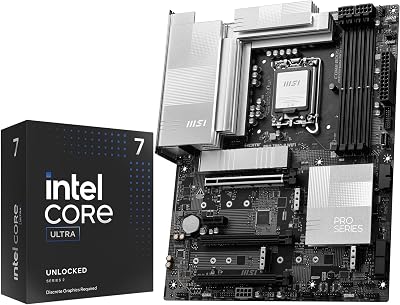
The socket type is the physical interface on the motherboard that the CPU plugs into. CPUs and motherboards must have matching socket types to be compatible. Different CPU generations and manufacturers use different socket designs.
PCIe Lanes
PCIe (Peripheral Component Interconnect Express) lanes are the communication pathways between the CPU and other components, most notably the graphics card. More PCIe lanes and a newer PCIe generation (e.g., PCIe 4.0, PCIe 5.0) can offer higher bandwidth for your graphics card and other peripherals, potentially improving performance in certain scenarios.
How Much Should You Spend?
The price of a CPU can vary dramatically, and understanding what you get at different price points is key to making a smart purchase. We can generally categorize CPUs into three tiers for gamers:
Budget-Friendly (Under $200
At this price point, you’ll find CPUs that are excellent for entry-level gaming, esports titles, and general productivity. They typically offer 4 to 6 cores and sufficient clock speeds for many popular games. These processors are ideal for those building a PC on a tight budget or for secondary systems. They may struggle with the most demanding AAA titles at high settings or with future-proofing for the latest demanding games.
Mid-Range ( $250
This is the sweet spot for most gamers. Mid-range CPUs typically offer 6 to 8 cores with higher clock speeds and improved boost frequencies. They provide a fantastic balance of performance for a wide variety of games, from esports to demanding AAA titles, especially when paired with a capable graphics card. You’ll also see better multitasking capabilities and a more comfortable experience with future game releases.
Premium/High-End (Above $400)
For the enthusiast gamer or content creator who demands the absolute best, this tier offers CPUs with 8+ cores, very high clock speeds, and advanced features. These processors excel at the most demanding games, high-resolution gaming, and heavy multitasking like streaming and video editing simultaneously. They offer the highest level of performance and the best future-proofing, but the performance gains over the mid-range often diminish relative to the increased cost for pure gaming.
Common Mistakes to Avoid
Even with research, it’s easy to make missteps when buying a CPU. Be aware of these common pitfalls:
- Ignoring Motherboard Compatibility: Buying a CPU without confirming it’s compatible with your chosen motherboard’s socket and chipset can render your entire build useless. Always check the specifications for both components.
- Overspending on Cores for Pure Gaming: While more cores are beneficial, for most gamers, focusing solely on the highest core count without considering clock speed and architecture can lead to diminishing returns and a less powerful gaming experience than a CPU with fewer but faster cores.
- Underestimating Cooling Needs: Powerful CPUs generate heat. Failing to account for adequate cooling (a good aftermarket cooler or a robust stock cooler) can lead to thermal throttling, reducing performance and potentially shortening the CPU’s lifespan.
- Forgetting About Future-Proofing (to a Degree): While you can’t predict the future perfectly, choosing a CPU that’s a generation or two behind or has a very low core count might mean you need to upgrade sooner than you’d like as games become more demanding.
- Buying Based Solely on Price: The cheapest option is rarely the best. Similarly, the most expensive isn’t always necessary. Finding the right balance for your specific needs and budget is crucial.
Frequently Asked Questions
Q: Do I need the absolute fastest CPU for gaming?
A: For most gamers, no. While a faster CPU is always better, the performance gains diminish significantly after a certain point, especially when paired with a mid-range graphics card. A balanced system where the CPU and GPU are well-matched is more important than having the absolute fastest CPU on the market.
Q: What is the difference between Intel and AMD CPUs?
A: Both Intel and AMD offer excellent CPUs. Historically, Intel has often led in single-core performance and efficiency, while AMD has excelled in multi-core performance and value. However, the landscape is constantly shifting with each new generation, and both brands offer competitive options across all price points. It’s more important to compare specific models and their performance in gaming benchmarks rather than making a broad generalization.
Q: How much RAM do I need, and does it affect CPU choice?
A: RAM (Random Access Memory) works in conjunction with your CPU. While the CPU handles calculations, RAM stores the data and instructions that the CPU needs to access quickly. For modern gaming, 16GB is generally the minimum recommended, with 32GB becoming increasingly beneficial for demanding titles and multitasking. The amount of RAM doesn’t directly dictate your CPU choice, but ensure your motherboard supports the RAM speed and capacity you plan to use, as this can indirectly impact overall system responsiveness.
Q: Should I prioritize clock speed or core count for gaming?
A: For gaming, clock speed often has a more direct and significant impact on performance than core count alone, especially in older or less optimized games. However, modern games are increasingly designed to utilize multiple cores. The ideal scenario is a CPU with a good balance of both: a sufficient number of cores (6-8 is usually plenty for most gamers) and high clock speeds. If forced to choose between a CPU with 4 very fast cores and one with 8 slower cores for pure gaming, the 4 fast cores might edge out in some titles, but the 8 cores will offer better multitasking and future-proofing.
Q: What is a CPU cooler, and do I need one?
A: A CPU cooler is a device designed to dissipate the heat generated by the CPU, preventing it from overheating. Most CPUs come with a stock cooler, which is adequate for basic operation. However, for gaming, especially with mid-range to high-end CPUs, an aftermarket cooler (air cooler or AIO liquid cooler) is highly recommended. It will allow your CPU to run at its optimal speeds for longer periods, reduce noise, and extend the lifespan of the component.
Final Thoughts
Choosing the right CPU is a foundational step in building a powerful and enjoyable gaming PC. By understanding the core concepts, key specifications, and your own gaming needs, you can navigate the market with confidence. Remember to balance your budget, consider your primary use cases, and always ensure compatibility between your CPU and motherboard. With the knowledge gained from this guide, you’re well-equipped to select a processor that will serve as the reliable brain for countless hours of gaming adventures.
Recommended Cpu Guides
- Best Motherboard For Gaming Desktop 2026
- Best Microcenter Gaming Desktop 2026
- Best Micro Center Gaming Desktop 2026
- Best Gaming Desktop Intel Core I5 2026
- Best High End Gaming Desktop Pc 2026