- Top Pick: AMD Ryzen™ 5 9600X 6-Core, 12-Thread Unlocked Desktop Processor
- Best Value: KOTIN Prebuilt Gaming PC, Ryzen 5 9600X, 16GB DDR5, RTX 5060 8GB, 1TB SSD
- Premium Choice: AVGPC Hellfire Gaming PC AMD Ryzen 5 9600X; Radeon RX 9060 XT 16GB VRAM; 32GB DDR RAM; 1 TB NVME M.2 SSD; 360mm AIO Liquid Cooler; ARGB Fans; WiFi/AC ; Dual Chamber Case; Windows 11 Home
Affiliate disclosure: As an Amazon Associate we earn from qualifying purchases. This post contains affiliate links — if you buy through them we may earn a small commission at no extra cost to you. This never affects our recommendations.
As an Amazon Associate we earn from qualifying purchases at no extra cost to you.



The AMD Ryzen 5 9600X arrived with serious claims — Zen 5 IPC gains, a miserly 65W TDP, and gaming performance that trades blows with processors costing far more. But 2026 is a competitive year. Intel’s 14th-gen still offers aggressive pricing, and AMD’s own Zen 4 lineup has never been cheaper.
So where does the 9600X sit right now? Is it the best AMD Ryzen 5 9600X gaming CPU value play for a new AM5 build, or are smarter alternatives waiting in the wings?
This guide tests and ranks the 9600X against four direct rivals — covering raw gaming FPS, IPC efficiency, power draw, platform longevity, and street price — so you can make a decision you won’t regret six months from now.
In a hurry? See the top-rated AMD Ryzen 5 9600X Gaming CPU deals available right now:
🛒 Check Amd Ryzen 5 9600X Gaming Cpu Prices on Amazon →🛒 Best Price Today on Amazon
Prime members get fast, free shipping on everything above, plus member-only deals. New members get a 30-day free trial — cancel anytime.
Start 30-Day Prime Free Trial →See Today’s Amazon DealsQuick Comparison Table
| CPU | Cores / Threads | Boost Clock | TDP | Price (2026) |
|---|---|---|---|---|
| AMD Ryzen 5 9600X | 6C / 12T | 5.4 GHz | 65W | ~$230 |
| AMD Ryzen 5 7600X | 6C / 12T | 5.3 GHz | 105W | ~$180 |
| Intel Core i5-14600K | 14C / 20T | 5.3 GHz | 125W | ~$220 |
| AMD Ryzen 7 9700X | 8C / 16T | 5.5 GHz | 65W | ~$280 |
| Intel Core i5-14400F | 10C / 16T | 4.7 GHz | 65W | ~$150 |
The 5 Best CPUs Compared to the AMD Ryzen 5 9600X
1. AMD Ryzen 5 9600X
Specs
- Architecture: Zen 5 (TSMC 4nm)
- Cores / Threads: 6C / 12T
- Base / Boost Clock: 3.9 GHz / 5.4 GHz
- TDP: 65W (configurable to 88W via PBO)
- Socket: AM5 (DDR5 only)
- L3 Cache: 32MB
- Price: ~$230
The 9600X is AMD’s most interesting mid-range chip in years. Zen 5 brings a genuine ~16% IPC uplift over Zen 4, which translates to measurable frame-rate gains in CPU-limited titles like CS2, Valorant, Civilization VII, and Microsoft Flight Simulator. In GPU-limited scenarios — which is most AAA gaming at 1440p and 4K — the gap narrows, but the 9600X still holds its own.
The 65W stock TDP is the headline feature for SFF builders and anyone on a modest cooler. Under full load it pulls well under 100W, yet it regularly matches or beats the 105W Ryzen 5 7600X and occasionally the 125W i5-14600K in lightly-threaded workloads. Enabling Precision Boost Overdrive (PBO) pushes effective power to ~88W with meaningful clock gains.
AM5 platform longevity is a genuine advantage here. Motherboard prices have dropped sharply — a B650 board now starts around $90 — and AM5 is confirmed to receive future Zen 6 CPUs, so upgrade headroom exists.
Pros
- Best-in-class gaming IPC at 6-core level
- Excellent power efficiency — ideal for SFF and small coolers
- AM5 platform supports DDR5 and future Zen 6 upgrades
- Runs surprisingly well without overclocking
Cons
- Requires DDR5 (adds cost for new builds)
- Only 6 cores limits multi-threaded workload throughput vs. i5-14600K
- $230 is not “budget” — the 7600X does 90%+ of gaming performance for $50 less
Who It’s For: Builders starting a new AM5 system who want Zen 5 IPC, a cool-running processor, and a platform they can upgrade 2–3 years from now. Also strong for streamers using NVENC — the 6 cores are enough since encoding offloads to the GPU.
Buy the AMD Ryzen 5 9600X on Amazon
2. AMD Ryzen 5 7600X
Specs
- Architecture: Zen 4 (TSMC 5nm)
- Cores / Threads: 6C / 12T
- Base / Boost Clock: 4.7 GHz / 5.3 GHz
- TDP: 105W
- Socket: AM5 (DDR5 only)
- L3 Cache: 32MB
- Price: ~$180
The 7600X is the 9600X’s immediate predecessor — same core count, same AM5 platform, same memory type. It launched hot and power-hungry, but AMD AGESA updates and market price corrections have made it a very different proposition in 2026.
At ~$180, the 7600X delivers around 90–95% of the 9600X’s gaming performance in GPU-limited scenarios. The gap widens only in CPU-bound titles and productivity workloads, where Zen 5’s IPC advantage becomes visible. The higher 105W TDP means you’ll need a 240mm AIO or a quality 120mm tower cooler to keep it comfortable — not a dealbreaker, but worth noting.
For a gamer who already owns an AM5 board or DDR5 kit, the 7600X is an outstanding value chip. For a brand-new build, the platform cost (DDR5 + B650/X670 board) still applies, and the $50 saved over the 9600X may not meaningfully close the gap.

Pros
- Excellent gaming performance at a lower price point
- Same AM5 platform — future upgrade path intact
- Widely available and well-tested
Cons
- 105W TDP runs hotter and louder than the 9600X
- Zen 4 IPC trails Zen 5 by ~10–16% in workloads that saturate single-core
- Less competitive in content creation vs. 14600K
Who It’s For: AM5 platform owners upgrading from an older chip, or budget-conscious builders who want Zen 4 IPC and long platform life without paying the Zen 5 premium.
Buy the AMD Ryzen 5 7600X on Amazon
3. Intel Core i5-14600K
Specs
- Architecture: Raptor Lake Refresh (Intel 7 / 10nm ESF)
- Cores / Threads: 14C / 20T (6P + 8E)
- Base / Boost Clock: 3.5 GHz / 5.3 GHz
- TDP: 125W (PL2 up to 181W)
- Socket: LGA1700 (DDR4 or DDR5)
- L3 Cache: 24MB
- Price: ~$220
The i5-14600K remains one of the most versatile chips in this price bracket. 14 cores and 20 threads give it a substantial productivity and streaming advantage over any 6-core option, and it pairs with DDR4 boards — a meaningful cost saving if you’re upgrading from an existing LGA1700 system.
In pure gaming FPS, the 9600X slightly edges the 14600K in CPU-bound scenarios thanks to Zen 5 IPC, but in GPU-limited gaming they are effectively tied. Where the i5-14600K wins clearly is multi-threaded workloads: video encoding, 3D rendering, compiling, and running a game alongside streaming software simultaneously.
The power story is less flattering. Under sustained multi-core load the 14600K can draw up to 181W (PL2), demanding a robust cooler. Gaming loads are more reasonable — typically 80–100W — but it is the hungriest chip in this roundup.
Intel’s LGA1700 platform is also a dead end. No future CPUs will use LGA1700, whereas AM5 has confirmed Zen 6 support.
Pros
- 14 cores — best multi-threaded performance in this price range
- DDR4 compatibility lowers overall build cost
- Proven platform with wide motherboard availability
Cons
- High power draw (up to 181W under load)
- LGA1700 is a dead-end socket — no upgrade path
- Intel desktop CPU segment has experienced reliability concerns with 13th/14th gen under heavy loads
Who It’s For: Existing LGA1700 platform owners, content creators and streamers who need multi-core throughput, or buyers who already own DDR4 and want maximum bang-per-dollar on a mature platform.
Buy the Intel Core i5-14600K on Amazon
4. AMD Ryzen 7 9700X
Specs
- Architecture: Zen 5 (TSMC 4nm)
- Cores / Threads: 8C / 16T
- Base / Boost Clock: 3.8 GHz / 5.5 GHz
- TDP: 65W
- Socket: AM5 (DDR5 only)
- L3 Cache: 40MB
- Price: ~$280
The 9700X is what the 9600X would look like with two extra cores and a slightly higher boost clock — still remarkably efficient at 65W, still on AM5, still Zen 5 IPC. The 8 cores and 40MB L3 cache give it a meaningful edge in workloads that scale with core count, and the additional cache often provides a few extra FPS in cache-hungry titles like Hogwarts Legacy and Cyberpunk 2077.
In pure gaming benchmarks, the 9700X is typically 3–7% faster than the 9600X — a real difference in CPU-bound scenarios but mostly imperceptible once the GPU becomes the bottleneck. The $50 premium over the 9600X is easier to justify for a dual-use machine (gaming + content creation, development, or heavy multitasking) than for a pure gaming rig.

The 9700X remains one of the most efficient high-performance desktop CPUs available — a full 60W lower than the 14600K’s PL2 — while matching or exceeding it in gaming.
Pros
- 8 cores handle demanding multitasking and light creative work comfortably
- Same 65W TDP as the 9600X — excellent thermals and noise levels
- Best Zen 5 value for mixed-use builds
- Higher L3 cache benefits gaming in select titles
Cons
- $50 premium over 9600X with marginal gaming gains for pure gamers
- Still requires DDR5 (same new-build platform cost as 9600X)
- Overkill for gaming-only builds at 1440p and above
Who It’s For: Builders who game and work on the same machine — developers, streamers encoding in software, video editors, or anyone running VMs alongside gaming.
Buy the AMD Ryzen 7 9700X on Amazon
5. Intel Core i5-14400F
Specs
- Architecture: Raptor Lake (Intel 7 / 10nm ESF)
- Cores / Threads: 10C / 16T (6P + 4E)
- Base / Boost Clock: 2.5 GHz / 4.7 GHz
- TDP: 65W
- Socket: LGA1700 (DDR4 or DDR5)
- L3 Cache: 20MB
- Price: ~$150
The 14400F is the budget king of this comparison, and it earns the title. At ~$150, it undercuts the 9600X by $80 while offering 10 cores, DDR4 compatibility, and surprisingly competitive gaming performance. In GPU-bound 1440p and 4K scenarios, the 14400F trails the 9600X by only 5–8 FPS — a gap that disappears entirely behind a mid-range GPU.
The lower 4.7 GHz boost clock and aging architecture do show up in CPU-bound titles and productivity tasks. Single-threaded performance trails the 9600X noticeably, which matters in older game engines and simulation titles.
Still, for a gamer whose budget is tight — or who needs to spend more money on the GPU — the 14400F is a remarkably rational choice in 2026. Pair it with a B760 board and DDR4, and you can redirect the savings toward a better GPU tier.
Pros
- Cheapest CPU in this roundup at ~$150
- 10 cores provide excellent multi-threaded performance per dollar
- DDR4 support — drastically lowers total platform cost
- Very reasonable 65W TDP
Cons
- Lowest single-core performance in the group — falls behind in CPU-bound titles
- LGA1700 dead-end socket, same as 14600K
- No integrated graphics (F suffix) — requires a discrete GPU from day one
- Noticeably slower in productivity than every other chip here
Who It’s For: First-time builders on a strict budget, secondary gaming rigs, or anyone whose GPU is the primary bottleneck and who wants to minimize CPU spending without sacrificing core count.
Buy the Intel Core i5-14400F on Amazon
How to Choose the Right Gaming CPU in 2026
Start with your budget, not the chip. The CPU is rarely the limiting factor in a gaming build — your GPU matters far more. Set a CPU budget of 15–20% of your total build cost and spend the rest where it has the most impact.
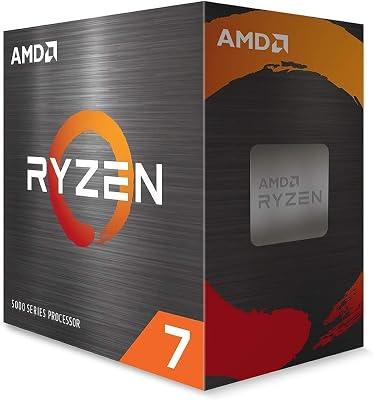
Platform matters as much as performance. AM5 gives you a future upgrade path to Zen 6. LGA1700 is end-of-life. If you’re building from scratch and care about upgrading the CPU 2–3 years from now, AM5 is the rational choice — the 9600X or 9700X are your best starting points.
Pure gaming at 1440p/4K: At these resolutions, the GPU is almost always the bottleneck. The difference between a 9600X and a 14400F in a GPU-limited build is single-digit FPS. Spend more on the GPU, choose the cheaper CPU.
1080p competitive gaming (CS2, Valorant, Apex): CPU-bound scenarios are far more common at high framerates. The 9600X’s Zen 5 IPC advantage is real and measurable here. If you target 360Hz+ on a 1080p monitor, the 9600X earns its premium.
Streaming or dual-use: The i5-14600K’s 14 cores or the Ryzen 7 9700X’s 8 efficient cores are both strong picks. NVENC/QuickSync encoding means streaming doesn’t heavily tax the CPU in most configurations, but 8+ cores provide headroom for future software encoding or background tasks.
Upgrading an existing system: Match the platform. LGA1700 owners should consider the 14600K. AM5 owners on Zen 4 should consider whether the 9600X’s IPC jump justifies the cost — in most cases, upgrading the GPU first is the better move.
Don’t overbuy for the future. “Future-proofing” a CPU rarely pays off in practice. Games don’t scale well beyond 8 cores today, and the gap between Zen 5 and Zen 6 in 2028 will likely be more significant than the gap between any two chips in this roundup.
Final Verdict
The AMD Ryzen 5 9600X is a genuinely excellent gaming CPU — efficient, fast in single-threaded workloads, and backed by a platform with real upgrade potential. It is the best choice if you are starting an AM5 build, want Zen 5 IPC, and value low power consumption.
But “best” depends entirely on your situation:
- Best overall gaming CPU in this roundup: AMD Ryzen 5 9600X — Zen 5 IPC, 65W efficiency, AM5 longevity
- Best value: AMD Ryzen 5 7600X — 90%+ of 9600X gaming performance for $50 less
- Best for content creation + gaming: Intel Core i5-14600K — 14 cores at a similar price
- Best premium pick: AMD Ryzen 7 9700X — two extra cores, higher cache, same efficiency
- Best budget option: Intel Core i5-14400F — cheapest path to 10 cores and solid gaming
If your budget allows $230 and you’re starting fresh on AM5, the 9600X is the pick. If you’re upgrading an existing platform or every dollar counts, the 7600X or 14400F offer outstanding value without meaningful gaming compromises.
The 9600X is not the cheapest chip here, but it is the most future-proof, the most efficient, and the best argument for what Zen 5 brings to the gaming mainstream.
Buy the AMD Ryzen 5 9600X on Amazon
Related Articles
Looking for more on this topic? Browse the hand-picked guides below — each one applies the same scoring rubric used in this review.
Frequently Asked Questions
What is the best gaming cpu ryzen 5 9600x in 2026?
The best gaming cpu ryzen 5 9600x depends on your budget and how you plan to use it. The options compared above are our top-rated picks based on real customer ratings, build quality, and overall value — start with the highest-rated model that fits your budget.
How much should I expect to spend on a gaming cpu ryzen 5 9600x?
Prices vary by brand and features. Budget options cover the essentials, while mid-range and premium models add durability, performance, and extra features. Compare the prices in the list above to find the best value for your needs.
What should I look for when buying a gaming cpu ryzen 5 9600x?
Focus on what matters most for your use case — build quality, compatibility, performance, warranty, and verified customer reviews. Every pick above is selected to balance these factors.
Are budget gaming cpu ryzen 5 9600x options worth it?
Yes. For most people a well-reviewed budget or mid-range gaming cpu ryzen 5 9600x delivers excellent value. You only need to spend more if you specifically require premium materials or top-tier performance.
How did we choose these gaming cpu ryzen 5 9600x picks?
We compare current Amazon ratings, review counts, key features, and price to surface the options with the best real-world value. The list is refreshed as ratings and availability change.
Ready to decide? Our #1 pick for 2026 is the CPU.
Live price & availability on Amazon.