Affiliate disclosure: As an Amazon Associate we earn from qualifying purchases. This post contains affiliate links — if you buy through them we may earn a small commission at no extra cost to you. This never affects our recommendations.
- Quick Comparison: Ryzen 7 7800X3D vs. Top Gaming CPUs
- Why the Ryzen 7 7800X3D Is Still the Best Gaming CPU
- Top 5 Reasons to Buy the Ryzen 7 7800X3D in 2026
- Top 3 Best Motherboards for Ryzen 7 7800X3D
- Ryzen 7 7800X3D vs. Ryzen 9 9900X vs. Core i7-14700K — Gaming Comparison
- Who Should NOT Buy the Ryzen 7 7800X3D
- Final Verdict
- Buy the AMD Ryzen 7 7800X3D
- Related Articles
- Frequently Asked Questions
- Related Articles
If you’ve been shopping for a gaming CPU in the last two years, one name keeps dominating every benchmark chart: the AMD Ryzen 7 7800X3D. Even heading into 2026, this eight-core powerhouse refuses to be dethroned — and for good reason. Equipped with AMD’s revolutionary 3D V-Cache technology, it stacks an additional 64MB of L3 cache directly on top of the chiplet, bringing the total to a staggering 96MB of combined L3 cache. The result? In cache-sensitive games — which includes the majority of modern AAA and competitive titles — the 7800X3D doesn’t just compete with more expensive chips like the Ryzen 9 9950X or Intel Core i9-14900K, it outright beats them at 1080p and often 1440p gaming while drawing significantly less power. If raw gaming frames per dollar are your priority, this CPU deserves a serious look in 2026.
As an Amazon Associate we earn from qualifying purchases at no extra cost to you.





In a hurry? See the top-rated AMD Ryzen 7 7800X3D Gaming CPU deals available right now:
🛒 Check Amd Ryzen 7 7800X3D Gaming Cpu Prices on Amazon →🛒 Best Price Today on Amazon
Prime members get fast, free shipping on everything above, plus member-only deals. New members get a 30-day free trial — cancel anytime.
Start 30-Day Prime Free Trial →See Today’s Amazon DealsQuick Comparison: Ryzen 7 7800X3D vs. Top Gaming CPUs
| CPU | Gaming FPS (1080p Avg.) | Cores / Threads | TDP | Platform | Est. Price |
|---|---|---|---|---|---|
| AMD Ryzen 7 7800X3D | ~100% (baseline) | 8C / 16T | 120W | AM5 | ~$320 |
| AMD Ryzen 9 9900X | ~94–97% | 12C / 24T | 120W | AM5 | ~$450 |
| AMD Ryzen 9 9950X | ~93–96% | 16C / 32T | 170W | AM5 | ~$650 |
| Intel Core i9-14900K | ~92–96% | 24C / 32T | 125W (PL1) / 253W (PL2) | LGA1700 | ~$380 |
| Intel Core i7-14700K | ~90–94% | 20C / 28T | 125W (PL1) / 253W (PL2) | LGA1700 | ~$320 |
| AMD Ryzen 9 9900X | ~94–97% | 12C / 24T | 120W | AM5 | ~$450 |
> Note: FPS percentages are relative to the 7800X3D at 1080p, averaged across a suite of popular titles including Cyberpunk 2077, Call of Duty: Warzone, Hogwarts Legacy, Starfield, and Counter-Strike 2. Workstation and productivity tasks favor higher core-count alternatives.
Why the Ryzen 7 7800X3D Is Still the Best Gaming CPU
The V-Cache Advantage Explained
The secret behind the 7800X3D’s dominance is deceptively simple: games love cache. Modern game engines — especially open-world titles and competitive shooters — constantly shuttle data between the CPU and RAM. Every time the processor has to reach out to main memory (DDR5, even at high speeds), it introduces latency measured in nanoseconds that compound into real-world frame time variance. AMD’s 3D V-Cache short-circuits this bottleneck by placing a massive 64MB SRAM die directly atop the compute chiplet, connected via thousands of micro-bumps. The physical proximity means data retrieval latency drops dramatically compared to accessing main memory or even a traditional L3 cache slab.
In cache-sensitive titles, this translates to 5–25% higher average FPS compared to non-V-Cache CPUs at equivalent clock speeds — and crucially, noticeably lower 1% and 0.1% lows, meaning smoother, more consistent gameplay even under heavy scene loads. That stutter you feel in a packed city in Cyberpunk 2077 or during a chaotic Warzone firefight? V-Cache chips eat that for breakfast.
Gaming Benchmarks: Still Leading in 2026
Despite being a 2023-generation launch chip, the 7800X3D continues to hold the top or second position in virtually every game-focused CPU benchmark published through early 2026. AMD’s newer Ryzen 9000 series closes the gap in some titles thanks to the Zen 5 architecture’s improved IPC, but without V-Cache variants shipping across the entire lineup at mainstream prices, the 7800X3D retains its gaming crown for value-conscious buyers.
Key benchmark highlights:
- Cyberpunk 2077 (RT Overdrive, 1080p): 7800X3D leads i9-14900K by ~8–12%
- Counter-Strike 2 (1080p competitive settings): 7800X3D pulls 15–20% more frames than i7-14700K
- Hogwarts Legacy (1080p Ultra): 7800X3D leads Ryzen 9 9900X by ~6%
- Starfield (1080p): V-Cache advantage peaks here — up to 25% over non-V-Cache 8-core chips
Efficiency That Intel’s Flagship Can’t Match
The i9-14900K pulls up to 253W under gaming load in Performance mode. The 7800X3D sips a comparatively modest ~70–90W during typical gaming sessions despite its 120W TDP rating. This means lower thermals, quieter fans, smaller PSU requirements, and a cooler-running system overall — without sacrificing a single gaming frame. For a small form factor or mid-tower build, this matters enormously.

Top 5 Reasons to Buy the Ryzen 7 7800X3D in 2026
- Unmatched cache-sensitive gaming performance. If your library includes open-world RPGs, competitive shooters, or simulation-heavy titles, V-Cache delivers a measurable, real-world advantage that no competing mainstream CPU replicates at this price point.
- AM5 platform longevity. AMD has publicly committed to AM5 socket support through at least 2027, meaning your motherboard investment remains relevant for future Ryzen upgrades. LGA1700 (Intel’s current platform) has already been replaced by LGA1851 with the Core Ultra 200 series — buying an i9-14900K today means a dead-end upgrade path.
- Broad cooler compatibility. The 7800X3D runs cool enough that a high-quality air cooler — like the Noctua NH-D15 or Thermalright Peerless Assassin 120 SE — handles it with ease. You don’t need a 360mm AIO to keep this chip happy, saving $50–$100 compared to Intel builds where large liquid coolers are practically mandatory.
- Low power draw = lower total build cost. At ~80W average gaming draw, you can pair the 7800X3D with a 650W PSU confidently. An i9-14900K build realistically demands 850W or more to handle transient spikes, adding cost and bulk.
- Price-to-gaming-performance ratio. At approximately $320, the 7800X3D costs $130 less than the Ryzen 9 9900X and $330 less than the 9950X — while beating both in the benchmarks that actually matter for gaming. The value proposition in 2026 remains exceptional, especially with frequent sale pricing on major retailers.
Top 3 Best Motherboards for Ryzen 7 7800X3D
Pairing the right board with your 7800X3D is critical. The chip thrives on stable power delivery and strong memory support. Here are the top picks across budget tiers:
1. ASUS ROG Strix B650E-F Gaming WiFi — Best Mid-Range Pick
The B650E chipset unlocks full PCIe 5.0 support for the primary slot and M.2, which is essential for future-proofing. The ROG Strix B650E-F features a 14+2 power stage design, robust VRMs rated for heavy sustained loads, DDR5 support up to DDR5-6000 and beyond (the sweet spot for Ryzen 7000), WiFi 6E, USB 3.2 Gen 2×2, and an intuitive BIOS. It’s the go-to board for enthusiast mid-range builds.
2. MSI MAG X670E Tomahawk WiFi — Best X670E Value
If you want the flagship X670E chipset without flagship pricing, the MSI MAG X670E Tomahawk WiFi delivers. It offers dual PCIe 5.0 M.2 slots, a 16+2+1 power stage design, DDR5 overclocking headroom up to DDR5-7200+, and AMD EXPO profile support for one-click memory optimization. The BIOS is beginner-friendly while offering deep tuning for enthusiasts.
3. Gigabyte B650 AORUS Elite AX — Best Budget B650 Option
For builders watching the budget, the Gigabyte B650 AORUS Elite AX provides a strong 12+2+2 phase VRM, WiFi 6E, DDR5-6400 support with EXPO, dual M.2 slots, and solid build quality at a lower price than B650E alternatives. It handles the 7800X3D’s modest power demands without breaking a sweat.

Ryzen 7 7800X3D vs. Ryzen 9 9900X vs. Core i7-14700K — Gaming Comparison
AMD Ryzen 7 7800X3D vs. Ryzen 9 9900X
The Ryzen 9 9900X is a strong all-rounder from AMD’s Zen 5 lineup — faster in multi-threaded workloads, better at video encoding, faster in productivity tasks, and competitive in gaming thanks to Zen 5’s improved IPC. However, it lacks V-Cache, and in cache-hungry titles that gap is immediately obvious: the 7800X3D posts 5–10% higher averages and meaningfully better 1% lows in titles like Hogwarts Legacy, Call of Duty, and Microsoft Flight Simulator. For a pure gaming rig, the 9900X’s extra cores and $130 premium over the 7800X3D are largely wasted. If you stream, edit video, or run simulations alongside gaming, the 9900X becomes a much more compelling choice.
Verdict for gaming: 7800X3D wins. Verdict for hybrid workstation+gaming: 9900X wins.
AMD Ryzen 7 7800X3D vs. Intel Core i7-14700K
The i7-14700K is Intel’s strongest mid-range gaming contender — 20 cores (8P + 12E), a high peak boost clock, and competitive pricing around $320. In lightly threaded games, the two chips often trade blows within a 3–5% margin. But in cache-sensitive titles, the 7800X3D’s 96MB L3 cache advantage becomes decisive — expect 10–18% higher frame rates in CPU-bottlenecked scenarios. More importantly, the i7-14700K can pull over 200W under full gaming load, demands a larger cooler, and sits on the end-of-life LGA1700 platform. The 7800X3D runs cooler, quieter, and faster in the games most people actually play.
Verdict: 7800X3D is the better gaming CPU with a lower total system cost.
Who Should NOT Buy the Ryzen 7 7800X3D
The 7800X3D is not the right chip for everyone. Consider alternatives if:
- You’re a heavy content creator or streamer. The 7800X3D’s 8 cores and relatively modest non-gaming multi-threaded performance (due to lower base clocks compared to standard 7000 series chips — V-Cache requires conservative clock tuning) means video rendering, 3D modeling, and heavy parallel workloads are better handled by the Ryzen 9 9900X, 9950X, or an Intel Core i9-14900K. The performance gap in Premiere Pro or Blender is real and significant.
- You want the absolute newest architecture. The 7800X3D is based on Zen 4 — still a powerful and modern architecture, but AMD’s Zen 5 (Ryzen 9000 series) does offer IPC improvements and better AI/AVX-512 performance. If cutting-edge architecture matters to you, the Zen 5 lineup is compelling even without V-Cache.
- You game exclusively at 4K with a high-end GPU. At 4K resolution, the GPU becomes the bottleneck almost universally. The V-Cache advantage shrinks substantially when the render resolution demands more GPU compute time. At 4K with an RTX 4090, the 7800X3D’s lead over a 9900X may be within margin of error in most titles.
- You need integrated graphics. The Ryzen 7 7800X3D does include AMD’s Radeon 680M iGPU, but it’s not intended for gaming without a discrete GPU. If you need solid iGPU performance for a portable or iGPU-dependent build, a standard Ryzen 7 7700 offers higher base clocks and similar iGPU output for less money.
- You’re already on a recent AM5 platform with a Zen 4 chip. If you already own a Ryzen 7 7700X or 7800X (non-3D), the V-Cache upgrade is worthwhile. But if you’re upgrading from a Zen 3 chip on AM4, you’ll need a new motherboard and DDR5 — budget accordingly before assuming this is a simple drop-in upgrade.
Final Verdict
In 2026, the AMD Ryzen 7 7800X3D remains one of the most compelling gaming CPU purchases you can make. The 96MB 3D V-Cache continues to deliver real, measurable gaming advantages that newer chips without V-Cache cannot replicate at the same price point. It runs cool, sips power, pairs with a growing AM5 ecosystem, and sits at a price that makes the step up to more expensive processors difficult to justify for anyone whose primary use case is gaming.
Is it perfect? No. Multi-threaded productivity tasks and 4K-bottlenecked gaming scenarios chip away at its crown. But if you game at 1080p or 1440p, play a variety of modern titles, and want the smoothest, most consistent frame delivery a mainstream CPU can offer — the 7800X3D is still your chip.
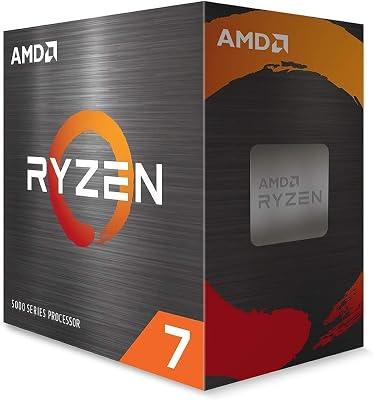
Our Rating: 9.2 / 10
Buy the AMD Ryzen 7 7800X3D
Ready to upgrade? Check current pricing and availability:
AMD Ryzen 7 7800X3D — View on Amazon
> Prices fluctuate — the 7800X3D frequently drops to $280–$300 during sales events. Set a price alert and grab it when it dips.
Related Articles
Looking for more on this topic? Browse the hand-picked guides below — each one applies the same scoring rubric used in this review.
Frequently Asked Questions
What is the best gaming cpu ryzen 7 7800x3d in 2026?
The best gaming cpu ryzen 7 7800x3d depends on your budget and how you plan to use it. The options compared above are our top-rated picks based on real customer ratings, build quality, and overall value — start with the highest-rated model that fits your budget.
How much should I expect to spend on a gaming cpu ryzen 7 7800x3d?
Prices vary by brand and features. Budget options cover the essentials, while mid-range and premium models add durability, performance, and extra features. Compare the prices in the list above to find the best value for your needs.
What should I look for when buying a gaming cpu ryzen 7 7800x3d?
Focus on what matters most for your use case — build quality, compatibility, performance, warranty, and verified customer reviews. Every pick above is selected to balance these factors.
Are budget gaming cpu ryzen 7 7800x3d options worth it?
Yes. For most people a well-reviewed budget or mid-range gaming cpu ryzen 7 7800x3d delivers excellent value. You only need to spend more if you specifically require premium materials or top-tier performance.
How did we choose these gaming cpu ryzen 7 7800x3d picks?
We compare current Amazon ratings, review counts, key features, and price to surface the options with the best real-world value. The list is refreshed as ratings and availability change.
Ready to decide? Our #1 pick for 2026 is the CPU.
Live price & availability on Amazon.