Affiliate disclosure: As an Amazon Associate we earn from qualifying purchases. This post contains affiliate links — if you buy through them we may earn a small commission at no extra cost to you. This never affects our recommendations.
- CPU Comparison Table
- Why the Ryzen 5 7600X Is Still a Great Gaming CPU in 2026
- Top 5 Best Motherboards for Ryzen 5 7600X
- Best RAM for Ryzen 5 7600X
- Ryzen 5 7600X vs Ryzen 5 9600X vs Core i5-14600K — Full Comparison
- Who Should Buy the Ryzen 5 7600X in 2026
- Final Verdict
- Related Articles
- Frequently Asked Questions
- Related Articles
As an Amazon Associate we earn from qualifying purchases at no extra cost to you.


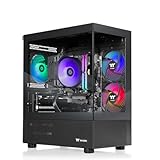
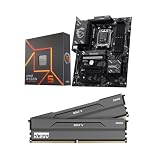


If you’ve been hunting for the sweet spot between price and gaming performance in 2026, the AMD Ryzen 5 7600X deserves a serious second look. Launched in late 2022 as part of AMD’s Zen 4 generation, the 7600X delivered a genuine generational leap — but its original $299 launch price kept many budget builders on the fence. Fast forward to 2026, and you can now grab it for well under $200, making it one of the most compelling mid-range gaming CPUs available.
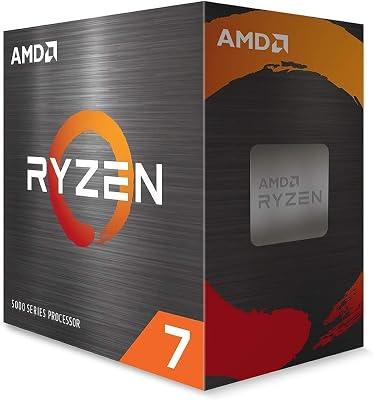
Under the hood, you get 6 cores and 12 threads, a 105W TDP, and AMD’s Zen 4 architecture — which brought double-digit IPC gains over Zen 3. It boosts up to 5.3 GHz out of the box, and it’s built on the AM5 platform, which AMD has committed to supporting through at least 2027. That’s longevity you won’t get with Intel’s LGA1700 socket, which is already being sunset. Whether you’re comparing it to the newer Ryzen 5 9600X or Intel’s Core i5-14600K, the 7600X holds its own — especially at its 2026 street price.
In a hurry? See the top-rated AMD Ryzen 5 7600X Gaming CPU deals available right now:
🛒 Check Amd Ryzen 5 7600X Gaming Cpu Prices on Amazon →🛒 Best Price Today on Amazon
Prime members get fast, free shipping on everything above, plus member-only deals. New members get a 30-day free trial — cancel anytime.
Start 30-Day Prime Free Trial →See Today’s Amazon DealsCPU Comparison Table
| CPU | Cores / Threads | Base / Boost Clock | TDP | Platform | 2026 Est. Price |
|---|---|---|---|---|---|
| AMD Ryzen 5 7600X | 6C / 12T | 4.7 / 5.3 GHz | 105W | AM5 (DDR5) | ~$175 |
| AMD Ryzen 5 9600X | 6C / 12T | 3.9 / 5.4 GHz | 65W | AM5 (DDR5) | ~$249 |
| Intel Core i5-14600K | 14C / 20T (6P+8E) | 3.5 / 5.3 GHz | 125W | LGA1700 (DDR4/5) | ~$229 |
| AMD Ryzen 5 7600 (non-X) | 6C / 12T | 3.8 / 5.1 GHz | 65W | AM5 (DDR5) | ~$149 |
Why the Ryzen 5 7600X Is Still a Great Gaming CPU in 2026
1. Zen 4 IPC Still Punches Hard
When Zen 4 launched, AMD claimed roughly 13% IPC gains over Zen 3 — and real-world benchmarks bore that out. In gaming, IPC matters enormously because most titles are single-thread sensitive. The 7600X’s per-core performance remains excellent in 2026, trading blows with CPUs that cost significantly more. Games like Cyberpunk 2077, Starfield, Call of Duty, and competitive titles like CS2 and Valorant all respond well to strong single-core performance — exactly where the 7600X shines.
2. DDR5 Platform Is Now Mature (and Affordable)
One early knock on AM5 was DDR5 pricing. That argument is dead in 2026. DDR5-6000 kits have dropped dramatically and are now priced comparably to late-gen DDR4. The Ryzen 5 7600X runs best with DDR5-6000 CL30 memory (the Zen 4 sweet spot), and pairing it with a quality kit unlocks its full performance potential. The DDR5 platform also delivers better bandwidth for future workloads.
3. AM5 Longevity Is a Real Investment
AMD’s AM5 socket commitment is one of the best value propositions in PC building right now. AM5 supports Zen 5 (Ryzen 9000-series) processors, and AMD has publicly committed to AM5 support through at least 2027. That means buying a B650 or X670 board today gives you a legitimate upgrade path. You could start with a 7600X, then drop in a Ryzen 7 9700X or Ryzen 9 9950X later without buying a new motherboard.
4. Price Drop Makes It a Steal
The 7600X launched at $299. In 2026, it regularly sells for $160–$185 — a drop of nearly 45%. That fundamentally changes the value equation. At $175, you’re getting Zen 4 performance, a modern DDR5 platform, and AM5 longevity for less than most mid-range Intel chips that offer no upgrade path.
5. Overclocking Headroom With the Right Cooler
As an unlocked “X” chip, the 7600X supports Precision Boost Overdrive (PBO) and manual overclocking. With a 240mm AIO or a quality air cooler like the Noctua NH-U12S, you can push it well beyond stock boost clocks. AMD’s Curve Optimizer lets you fine-tune per-core voltages for maximum performance per watt. The 105W TDP requires a capable cooler — don’t pair it with a stock budget cooler.
Top 5 Best Motherboards for Ryzen 5 7600X
All AM5 boards require DDR5. Here are the best options across price tiers.
1. ASUS ROG STRIX B650-A Gaming WiFi — Best Overall B650
Price: ~$229 | Chipset: B650
Pros:
- Excellent 14+2 power delivery for overclocking
- WiFi 6E and 2.5G LAN built in
- Clean aesthetics with solid VRM cooling
- PCIe 5.0 M.2 slot for future NVMe drives
Cons:
- Slightly pricier than entry B650 boards
- Overkill if you won’t overclock
Best for builders who want room to grow without jumping to X670.

2. MSI PRO B650-P WiFi — Best Budget B650
Price: ~$149 | Chipset: B650
Pros:
- Affordable entry to AM5 platform
- WiFi 6 and 2.5G LAN included
- Clean BIOS with good PBO support
- Solid 10+2+1 VRM for stock/light OC
Cons:
- Fewer M.2 slots than premium boards
- VRM may throttle under heavy sustained OC loads
The no-nonsense choice if you want a reliable platform without paying for features you won’t use.
3. Gigabyte B650 AORUS Elite AX — Best Mid-Range B650
Price: ~$199 | Chipset: B650
Pros:
- Strong 16+2+2 VRM phase design
- PCIe 5.0 x16 slot + PCIe 5.0 M.2
- WiFi 6E and 2.5G LAN
- Four DDR5 slots with XMP/EXPO support
Cons:
- Slightly bulkier VRM heatsink design
- BIOS has a learning curve
Excellent middle ground — the VRM here is strong enough for aggressive PBO tuning.
4. ASRock X670E Pro RS — Best X670E for the Money
Price: ~$249 | Chipset: X670E
Pros:

- Full PCIe 5.0 for both GPU and M.2 (X670E feature)
- Excellent VRM thermal performance
- Dual M.2 PCIe 5.0 slots
- Strong BIOS OC features
Cons:
- Premium cost over B650
- PCIe 5.0 GPU benefit minimal with current GPU gen
Best for enthusiasts who want the flagship AM5 chipset without flagship pricing.
5. ASUS TUF Gaming B650-Plus WiFi — Best for Longevity
Price: ~$189 | Chipset: B650
Pros:
- TUF build quality — reinforced slots, thick PCB
- Strong 14+2 Dr.MOS VRM
- WiFi 6 and 2.5G LAN
- Excellent long-term reliability reputation
Cons:
- Understated aesthetics (subjective)
- WiFi 6 not 6E
If you plan to keep this build for 4–5 years and upgrade the CPU later, the TUF’s durability is worth the small premium over budget boards.
Best RAM for Ryzen 5 7600X
Zen 4 has a native memory clock of DDR5-3600 (1:1 FCLK:MCLK ratio), but it performs best with DDR5-6000 CL30 — where AMD’s Infinity Fabric still runs in 1:2 mode without a significant latency penalty. Going above DDR5-6400 rarely yields gaming gains and can cause stability issues.
Top DDR5 Kit Recommendations
G.Skill Trident Z5 Neo DDR5-6000 CL30 32GB (2x16GB)
- Specifically tuned for AM5 with AMD EXPO profiles
- Excellent thermals, dual-rank performance
- The go-to recommendation for 7600X builds
Corsair Vengeance DDR5-6000 CL36 32GB (2x16GB)
- Budget-friendly DDR5-6000 option
- XMP 3.0 + EXPO support
- CL36 vs CL30 minimal difference at gaming framerates
Kingston Fury Beast DDR5-6000 CL36 32GB (2x16GB)
- Low-profile design for large cooler clearance
- Rock-solid stability, great value per GB
- EXPO and XMP certified
Key Specs to Target:
- Speed: DDR5-6000 (sweet spot)
- Timings: CL30 preferred, CL36 acceptable
- Capacity: 32GB (2x16GB) for gaming in 2026
- Look for: AMD EXPO certification for one-click OC
Ryzen 5 7600X vs Ryzen 5 9600X vs Core i5-14600K — Full Comparison
Gaming Performance
In purely gaming workloads at 1080p and 1440p, all three CPUs are remarkably close. The GPU is the bottleneck in most scenarios above 1080p. Here’s how they typically shake out:
| Metric | Ryzen 5 7600X | Ryzen 5 9600X | Core i5-14600K |
|---|---|---|---|
| 1080p Gaming (avg fps) | ~98% of top | ~100% | ~99% |
| 1440p Gaming (avg fps) | ~99% of top | ~100% | ~99% |
| Single-Core (Cinebench R24) | ~1,800 pts | ~2,100 pts | ~1,950 pts |
| Multi-Core (Cinebench R24) | ~14,500 pts | ~15,200 pts | ~24,000 pts |
| Power (gaming load) | ~75–90W | ~55–65W | ~95–120W |
| Platform | AM5 (DDR5) | AM5 (DDR5) | LGA1700 (DDR4/5) |
| Upgrade Path | Strong (AM5) | Strong (AM5) | Limited (EOL) |
The Verdict on Each
Ryzen 5 9600X: The 9600X wins on efficiency — it drops TDP to 65W while improving IPC with Zen 5. It scores about 10–15% higher in single-core tasks. In gaming, the real-world gap is often 3–7% fps depending on the title. At $249 vs $175, that’s roughly a $74 premium for ~5% gaming uplift. Hard to justify unless you’re extremely power-conscious or need the best sustained performance in creative tasks.
Core i5-14600K: Intel’s 14600K brings 14 cores to the fight, which gives it a massive advantage in multi-threaded workloads like video encoding and streaming. In gaming, it’s effectively tied with the 7600X. However, LGA1700 is a dead-end platform — there’s no meaningful upgrade path. Its higher power draw (100W+ in gaming) also demands better cooling and a higher-end board. At $229 with no upgrade path, it’s hard to recommend over a 7600X on AM5 for a long-term build.
Bottom line: The 7600X is ~5% slower than the 9600X in gaming and ~15% slower in multi-core. At ~$75 cheaper, it’s the value champion. The i5-14600K is competitive today but a platform dead-end.
Who Should Buy the Ryzen 5 7600X in 2026
You SHOULD buy the Ryzen 5 7600X if:
- You’re building a 1080p or 1440p gaming PC on a budget
- You want to invest in AM5 platform longevity and plan a future CPU upgrade
- You’re pairing it with a mid-to-high-end GPU (RTX 4070, RX 7800 XT, etc.) where the GPU is the bottleneck anyway
- You want to stretch your CPU budget and put more money toward RAM, storage, or GPU
- You’re a first-time PC builder who wants a reliable, modern platform without overspending
You should consider alternatives if:
- You run heavy multi-threaded workloads alongside gaming (streaming, 3D rendering, video editing) — the i5-14600K’s core count wins here
- You have the budget and want the best efficiency — the Ryzen 5 9600X runs 30–40W cooler under load
- You’re building a 4K gaming rig where CPU choice barely matters — save money elsewhere
- You need a CPU with a 65W TDP for a compact or mini-ITX build — the 105W 7600X runs hot in tight cases
Final Verdict
The AMD Ryzen 5 7600X in 2026 is not a compromise — it’s a calculated buy. After its price correction, it delivers Zen 4’s excellent gaming performance, a future-proof AM5 platform, and DDR5 support for well under $200. The difference between it and the Ryzen 5 9600X in games you actually play amounts to a handful of frames per second at most, while the savings can fund a better GPU, a faster NVMe drive, or a premium cooler.
If you’re building a gaming PC in 2026 and don’t need extreme multi-threaded performance, the 7600X is the smart move. Pair it with a B650 motherboard, DDR5-6000 RAM, and your GPU of choice, and you’ve got a genuinely excellent gaming rig.
Buy the AMD Ryzen 5 7600X on Amazon
Related Articles
Looking for more on this topic? Browse the hand-picked guides below — each one applies the same scoring rubric used in this review.
Frequently Asked Questions
What is the best gaming cpu ryzen 5 7600x in 2026?
The best gaming cpu ryzen 5 7600x depends on your budget and how you plan to use it. The options compared above are our top-rated picks based on real customer ratings, build quality, and overall value — start with the highest-rated model that fits your budget.
How much should I expect to spend on a gaming cpu ryzen 5 7600x?
Prices vary by brand and features. Budget options cover the essentials, while mid-range and premium models add durability, performance, and extra features. Compare the prices in the list above to find the best value for your needs.
What should I look for when buying a gaming cpu ryzen 5 7600x?
Focus on what matters most for your use case — build quality, compatibility, performance, warranty, and verified customer reviews. Every pick above is selected to balance these factors.
Are budget gaming cpu ryzen 5 7600x options worth it?
Yes. For most people a well-reviewed budget or mid-range gaming cpu ryzen 5 7600x delivers excellent value. You only need to spend more if you specifically require premium materials or top-tier performance.
How did we choose these gaming cpu ryzen 5 7600x picks?
We compare current Amazon ratings, review counts, key features, and price to surface the options with the best real-world value. The list is refreshed as ratings and availability change.
Ready to decide? Our #1 pick for 2026 is the CPU.
Live price & availability on Amazon.