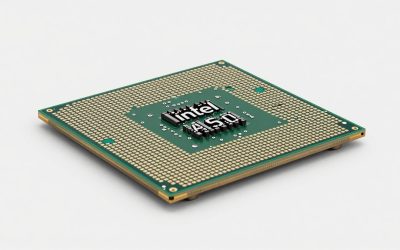
- Top Pick: CyberPowerPC Gaming PC, Intel Core i5-14400F, GeForce RTX 5060 8GB
- Best Value: AMD RYZEN 7 9800X3D 8-Core, 16-Thread Desktop Processor
- Premium Choice: msi Aegis R2 AI Gaming Desktop: Intel Core Ultra 9 285, Geforce RTX 5070Ti, 32GB DDR5, 2TB M.2 NVMe SSD, Air Cooling, USB Type C, VR-Ready, Window 11 Home: C2NVR9-1452US
Affiliate disclosure: As an Amazon Associate we earn from qualifying purchases. This post contains affiliate links — if you buy through them we may earn a small commission at no extra cost to you. This never affects our recommendations.
Quick Answer
In 2026, Intel wins in raw single-threaded gaming performance at the top end, while AMD wins on platform longevity, power efficiency, and overall value. For most gamers, the difference in gaming fps is under 5% — platform cost and future upgrade path matter more than the chip brand itself.
The AMD vs Intel debate has been one of the most contentious in PC gaming for decades. In 2026, the two companies are closer than ever in gaming benchmark performance, making the traditional answers obsolete. The real differences now live in platform costs, power consumption, upgrade paths, and mixed-use performance — not raw gaming fps.
This guide gives you the honest breakdown: where each brand wins, where they’re even, and which to buy based on your specific gaming setup and budget.
In a hurry? See the top-rated AMD vs Intel for Gaming deals available right now:
🛒 Check Amd Vs Intel For Gaming Prices on Amazon →🛒 Best Price Today on Amazon
Prime members get fast, free shipping on everything above, plus member-only deals. New members get a 30-day free trial — cancel anytime.
Start 30-Day Prime Free Trial →See Today’s Amazon DealsPerformance Head-to-Head
1080p Gaming — Intel’s Advantage
At 1080p with a fast GPU (RTX 4070 Ti Super or above), Intel 14th gen chips tend to pull ahead by 3–8% in average frame rates across popular titles like Cyberpunk 2077, Call of Duty, and Hogwarts Legacy. The Core i7-14700K and i9-14900K post the highest 1080p benchmark numbers available from any mainstream consumer CPU. This matters most for competitive esports gamers targeting 240+ fps at 1080p on high-refresh monitors.
1440p Gaming — Essentially Even
At 1440p, the GPU becomes more of the bottleneck and the CPU performance gap narrows to 1–3% in most titles — well within margin of error and undetectable in actual play. Both AMD Ryzen 7000 and Intel 14th gen deliver excellent, smooth performance at 1440p on modern GPUs. At this resolution, platform cost and features matter more than the chip brand.
4K Gaming — GPU Bound, CPU Irrelevant
At 4K, your CPU brand is essentially irrelevant for gaming performance. The GPU is fully saturated and any modern 6-core CPU (including last-generation chips) will produce the same results as a flagship i9 or Ryzen 9. If you game exclusively at 4K, buy the cheapest CPU that meets your multitasking needs and put the money into your GPU.
Multithreaded Workloads — AMD Ryzen 9 Wins
In video rendering, 3D modeling, large compilation tasks, and heavily multi-threaded workloads, AMD’s Ryzen 9 7900X and 7950X outperform Intel’s i7-14700K in tasks that scale across many cores. Intel’s i9-14900K is competitive but runs significantly hotter and consumes more power to match the Ryzen 9. For pure content creation alongside gaming, AMD offers better efficiency per dollar at the high end.
Platform Cost Comparison
| Platform | Socket | Entry Board Cost | RAM Standard | Upgrade Path |
|---|---|---|---|---|
| Intel 13th/14th Gen | LGA1700 | $130–$160 (B760) | DDR4 or DDR5 | Limited (discontinued) |
| AMD Ryzen 7000 | AM5 | $160–$200 (B650) | DDR5 only | Strong (through 2027+) |
Intel’s LGA1700 platform is cheaper to enter — B760 motherboards are widely available under $150 and DDR4 memory (if you choose a DDR4-compatible board) costs less than DDR5. The catch: Intel has moved to the new LGA1851 socket for Arrow Lake, meaning 13th/14th gen is a dead-end platform. You can’t upgrade to a future Intel generation without a new motherboard.
AMD’s AM5 platform costs slightly more to enter but AMD has committed to AM5 support through at least 2027, including next-generation Ryzen chips. If you plan to upgrade your CPU in 2–3 years, buying AM5 now means keeping your motherboard and RAM when you swap to a faster Ryzen chip.
Power Consumption
This is one of AMD’s clearest wins in 2026. AMD’s Ryzen 7000 series is built on TSMC’s 5nm process and consumes significantly less power than Intel’s 14th gen under sustained load. The i9-14900K can draw over 250W at peak load; the Ryzen 9 7900X stays under 170W at comparable performance levels. Less power means less heat, smaller coolers, quieter builds, and lower electricity costs over time. For small form factor builds or systems in hot environments, AMD’s power efficiency is a real practical advantage.
Overclocking
Intel historically had an overclocking advantage, but the gap has narrowed. Both platforms support memory overclocking via XMP (Intel) and Expo (AMD) — enabling this in BIOS is the highest-impact tuning step for gaming and should be done regardless of brand. Manual CPU overclocking on Intel requires a K-series chip and Z-series board. AMD Ryzen CPUs allow frequency adjustments on most AM5 boards. In practice, 2026 CPUs boost so aggressively out of the box that manual overclocking delivers marginal gains at the cost of increased heat and instability — it’s no longer the must-do optimization it once was.
Which Should You Buy? Our Recommendations by Budget
As an Amazon Associate we earn from qualifying purchases at no extra cost to you.




Under $200 — AMD Ryzen 5 7600X or Intel Core i5-14600K
Both chips are outstanding for gaming at this price. The Ryzen 5 7600X wins on platform longevity — AM5 will accept future Ryzen upgrades. The i5-14600K wins on total core count (14 vs 6) and slightly lower platform entry cost. Pure gamers: go Ryzen for the upgrade path. Mixed-use with streaming: the 14600K’s extra cores handle OBS more comfortably.
$200–$300 — AMD Ryzen 7 7700X
At this range, the Ryzen 7 7700X offers the best balance. Eight cores at 5.4 GHz handles gaming and content creation equally well. Intel’s competing chips at this tier don’t offer a meaningful gaming advantage to justify switching platforms. Strong pick for gamers who also edit video or stream regularly.
$300–$400 — Intel Core i7-14700K
If you need maximum gaming fps at 1080p and also run demanding workloads, the i7-14700K‘s 20 cores and 5.6 GHz boost make it the most versatile high-performance chip at this price. It consistently tops 1080p gaming benchmarks while handling streaming and rendering without breaking a sweat. Note the high power draw — budget for a quality AIO cooler.
$400+ — AMD Ryzen 9 7900X
For streamers, 3D artists, and game developers who game at the same performance level, the Ryzen 9 7900X‘s 12 cores and power-efficient 5nm architecture is the better long-term investment. Intel’s i9-14900K competes on benchmark scores but runs much hotter and consumes substantially more power for equivalent or lesser performance in many workloads.
FAQ
Does AMD or Intel run cooler?
AMD Ryzen 7000 series runs cooler under sustained load due to the more efficient 5nm manufacturing process. Intel 14th gen chips, especially K-series, generate significant heat under full load and require robust cooling. For a quieter, cooler system — especially in a smaller case — AMD has a clear advantage in thermal efficiency.
Is Intel 14th gen worth buying in 2026 given it’s on a dead platform?
Yes, if your use case fits within the 13th/14th gen performance envelope and you don’t plan to upgrade the CPU for 4+ years. A 14th gen chip will remain capable for gaming through 2029 or beyond. The dead-end platform only becomes a problem if you want to upgrade your CPU in 2–3 years without replacing your motherboard — in that case, AM5 is the smarter buy.
Does AMD or Intel have better motherboard options?
Intel’s LGA1700 platform has a wider range of affordable motherboard options, especially at the B760 tier. AMD’s B650 boards have improved in price and variety since AM5 launched, but still start slightly higher. At the mid-range ($160–$220), both platforms have excellent options with similar feature sets. Intel has an edge at entry-level price points.
Which brand is better for a gaming PC that also streams?
AMD Ryzen wins for streaming-while-gaming builds. The combination of strong multi-core performance, efficient power consumption, and AM5’s upgrade path makes Ryzen 7000 chips the more practical choice for streamers. The Ryzen 7 7700X handles 1080p60 streaming via software encoding alongside gaming without any perceptible impact on frame rates. If you have a dedicated capture card or use GPU encoding (NVENC on Nvidia), the CPU choice matters less for streaming quality.
Will AMD or Intel dominate gaming in the next 2–3 years?
Intel is transitioning to the new LGA1851 socket with Arrow Lake and Panther Lake architectures. Early Arrow Lake benchmarks show competitive performance with improved efficiency. AMD’s next-generation AM5 chips (Ryzen 8000/9000 series) continue the AM5 upgrade path. Both roadmaps look competitive through 2027. Buying a current-gen chip from either brand and upgrading in 2–3 years when prices drop and game engine optimization improves is a sound strategy regardless of which brand you choose today.
Final Verdict
The honest answer to AMD vs Intel in 2026: both are excellent, and the 5% gaming fps difference rarely matters. Make your decision based on these practical factors: Choose Intel i5-14600K or i7-14700K if you want maximum 1080p gaming fps, lower platform cost, or the most cores-per-dollar for streaming. Choose AMD Ryzen 5 7600X, 7700X, or 9 7900X if you value platform longevity, power efficiency, and a cleaner upgrade path. Both roadmaps are healthy — you can’t make a bad choice from the chips on this list.
Related Articles
Looking for more on this topic? Browse the hand-picked guides below — each one applies the same scoring rubric used in this review.
Frequently Asked Questions
Which brand is genuinely faster for gaming right now?
AMD chips with 3D V-Cache lead most gaming benchmarks because the extra stacked L3 cache dramatically reduces memory latency in game workloads, especially in simulators and open-world titles. Intel remains highly competitive in raw clock speed and often wins in productivity and mixed workloads. At 1440p and above the practical gap narrows considerably.
What is 3D V-Cache and does every game benefit?
3D V-Cache stacks additional L3 cache vertically on the CPU die, giving 96MB or more. Games that repeatedly access large data sets, such as strategy titles, flight simulators and MMOs, can gain 20 to 40 percent. Simpler or GPU-bound games gain little. It is a targeted advantage, not a universal one.
Which platform has the better upgrade path?
AMD has committed to AM5 into 2027 and beyond, so a board bought today will likely accept two more CPU generations. Intel changes sockets more frequently, meaning an upgrade often requires a new motherboard too. If you plan to keep the board and swap the CPU in three years, AMD is the safer bet.
How do power draw and cooling compare?
AMD gaming chips typically draw 65 to 120 watts under game load and run efficiently, while high-end Intel parts can pull well over 200 watts in all-core workloads and need substantial cooling. In gaming specifically the gap is smaller. Either way, budget for a good air tower or 240mm AIO on any high-tier chip.
What if I also stream, edit video or compile code?
Look at core counts and platform features rather than gaming benchmarks. Intel high-core-count chips with strong quick-sync encoding excel at video work, while AMD offers strong multithreaded throughput and better efficiency. Decide which workload dominates your day; for a purely gaming machine, choose whichever gives the best frames per dollar at your resolution.
Ready to decide? Our #1 pick for 2026 is the Intel 13th/14th Gen.
Live price & availability on Amazon.