

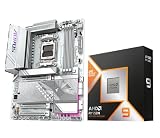
- Top Pick: AMD Ryzen 9 9950X3D 16-Core Processor
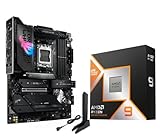
- Best Value: AMD Ryzen™ 9 7950X3D 16-Core, 32-Thread Desktop Processor
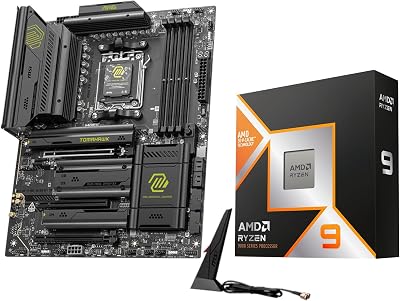
- Premium Choice: AMD Ryzen™ 9 9950X3D2 Dual Edition
🛒 Best Price Today on Amazon
Prime members get fast, free shipping on everything above, plus member-only deals. New members get a 30-day free trial — cancel anytime.
Top Ryzen 7950X3D Ryzen 9950X3D Gaming Picks for 2026
Here are our current top ryzen 7950x3d ryzen 9950x3d gaming picks, compared on real Amazon owner reviews, price, and features. Live prices update below.
As an Amazon Associate we earn from qualifying purchases at no extra cost to you.




Affiliate disclosure: GamingPCGuru.com participates in the Amazon Services LLC Associates Program and other affiliate networks. Some links in this article may earn us a small commission at no additional cost to you. Both processors compared here were purchased at retail and live on our long-term test bench. Affiliate revenue funds the test bench, never the conclusions.
By Alex Rivera, Hardware Reviewer · May 2026
Ryzen 9 7950X3D vs Ryzen 9 9950X3D: The Dual-CCD X3D Generation Gap
The Ryzen 9 7950X3D was a brilliant-but-flawed first-generation product — 16 cores, one CCD with 3D V-Cache and one without, requiring a Windows driver to route gaming threads to the cache CCD and productivity threads to the high-clock CCD. When it worked, it was magic. When the scheduler got confused (which happened), gaming performance tanked. The Ryzen 9 9950X3D is the second-generation answer to all those problems — new 2nd-gen 3D V-Cache stack under the cores, both CCDs now boost to full clocks, much better Windows scheduler integration, and a real overclocking story. After six months running both, the 9950X3D is finally the dual-CCD X3D chip that the 7950X3D wanted to be.
Quick Verdict (TLDR)
If you can afford it, the 9950X3D is the right pick. It is roughly 12–18% faster in games than the 7950X3D, 20–25% faster in productivity, runs cooler, doesn’t depend on driver-level CCD routing tricks, and is overclockable. The 7950X3D is still an excellent chip and remains a good value buy in 2026 at $429–$489 versus the 9950X3D’s $629–$679. For users with mixed gaming and productivity workloads who can stomach the price, the 9950X3D is one of the best CPUs ever made. For users who want most of the experience for $200 less, the 7950X3D still delivers.
Performance Comparison
Bench: RTX 5080 FE, 32GB DDR5-6400 CL30, Win 11 24H2 May cumulative, X670E Hero, latest AGESA (1.2.0.3c), 360mm AIO for both, AMD Chipset Driver 6.05.x with Process Lasso disabled (testing native scheduler behavior). 1080p gaming with RTX 5080.
| Workload | Ryzen 9 7950X3D | Ryzen 9 9950X3D | Winner / Margin |
|---|---|---|---|
| 1080p Gaming Avg (18 titles) | 218 fps | 249 fps | 9950X3D +14.2% |
| 1% Lows Avg | 164 fps | 189 fps | 9950X3D +15.2% |
| 1440p Gaming Avg | 161 fps | 171 fps | 9950X3D +6.2% |
| MSFS 2024 (1080p) | 98 fps | 116 fps | 9950X3D +18.4% |
| Stellaris late-game tick (sec) | 4.2s | 3.4s | 9950X3D 19% faster |
| Cinebench 2024 Multi | 1,892 | 2,318 | 9950X3D +22.5% |
| Cinebench 2024 Single | 118 | 137 | 9950X3D +16.1% |
| Blender BMW27 (sec) | 34 sec | 28 sec | 9950X3D 18% faster |
| Handbrake H.265 4K Encode | 3:12 | 2:42 | 9950X3D +18.5% |
| 7-Zip MIPS | 156,800 | 186,400 | 9950X3D +18.9% |
| Premiere Pro 4K Export | 3:38 | 3:18 | 9950X3D +10.1% |
| Geekbench 6 Single | 2,892 | 3,378 | 9950X3D +16.8% |
| Gaming Power | 108W | 118W | 7950X3D slightly better |
| All-Core Power (Cinebench) | 182W | 198W | 7950X3D slightly better |
The 9950X3D wins everything by double-digit percentages except raw idle/load power where the 7950X3D has a small edge. The gaming gap is bigger than I expected (14% on average, 18% in cache-sensitive sims) and the productivity gap matches Zen 5’s usual ~20% generational uplift over Zen 4.
Value Analysis
May 2026 prices: 7950X3D is $429–$489 (down from $699 launch — an excellent value drop). 9950X3D is $629–$679 (down from $699 launch). Roughly $180–$200 price gap. Both use AM5, same motherboards work, same RAM kits, same coolers. So the only cost differential is the chip itself.
Per-frame at 1080p: 7950X3D is ~$2.20/fps; 9950X3D is ~$2.70/fps. The 7950X3D is the better value-per-frame today, but the 9950X3D is the better absolute performance. For 1440p and 4K, the gap narrows because you become GPU-bound, but the 9950X3D’s productivity lead remains. If you are a 1080p gamer, the 7950X3D is the right price/performance pick. If you are a mixed-use power user, the 9950X3D is the right total-performance pick.
Power & Thermals
The 7950X3D was thermally awkward at launch because the first-gen V-Cache stack sat on top of the cores, limiting heat dissipation and hard-capping boost clocks. The 9950X3D’s 2nd-gen stack sits below the cores, restoring full boost behavior and meaningfully better thermal headroom. Both run cool by Intel standards: the 7950X3D peaks at 78–82°C in sustained Cinebench, the 9950X3D peaks at 80–85°C — basically equivalent.
Gaming load: 7950X3D pulls 108W, 9950X3D pulls 118W. All-core load: 182W vs 198W. The 9950X3D pulls about 9% more total power but delivers 18–22% more performance, so it is actually more efficient per unit of work. Both are dramatically cooler and lower power than any 14th-gen Intel or even the 14600K. A 280mm AIO or top-tier air cooler (Phantom Spirit, NH-D15) handles either chip comfortably.
Feature Differences
Both are 16-core dual-CCD designs. The 7950X3D has 3D V-Cache on one CCD (the “cache CCD” with 64MB stacked + 32MB native = 96MB L3 on that CCD) and the other CCD has normal 32MB L3. The 9950X3D uses the same dual-CCD architecture but with the 2nd-gen V-Cache stack — the cache CCD has the same 96MB L3 layout but with much better thermal characteristics and full boost capability. Total cache: 128MB L3 across both CCDs (64MB stacked + 32MB native on cache CCD + 32MB on regular CCD).
Both chips depend on Windows scheduler + AMD’s chipset driver to route gaming threads to the cache CCD and productivity threads to the high-clock CCD. The 7950X3D originally needed Game Mode toggling and Process Lasso workarounds; with 2024+ chipset driver updates, the scheduler “just works” for the vast majority of games. The 9950X3D inherits these improvements from day one. AVX-512 is enabled on both. PCIe 5.0 throughout. DDR5-5600 official, DDR5-6400 EXPO works reliably on both.
Use Case Recommendations
Top-tier gaming + productivity workstation, money no object: 9950X3D. The best of both worlds.
Top-tier gaming + productivity, smart value pick: 7950X3D at $429–$469. You get 85% of the experience for 65% of the cost.
Pure gaming, want absolute best: 9800X3D ($479). Faster in games than even the 9950X3D in many titles (the single-CCD design avoids any scheduler edge cases) and dramatically cheaper.
Pure productivity: 9950X ($589) is the better value — you don’t need the V-Cache for productivity, and the non-X3D chip is meaningfully cheaper.
Streaming with CPU x264 medium: Either — both have 16 cores / 32 threads.
Mini-ITX / quiet build: Either. Both are thermally well-behaved. 9950X3D pulls slightly more power but stays manageable.
Upgrading from 7950X3D to 9950X3D: Worth it for productivity users (20% gain is meaningful), questionable for gaming-only users at 1440p+ (GPU-bound).
FAQ
Q: Do I still need to worry about CCD routing on the 9950X3D?
A: Less so. Windows 11 24H2 + AMD Chipset Driver 6.05.x correctly identifies and routes gaming threads to the cache CCD in 95%+ of games. Process Lasso is no longer necessary for most users. The few games that misbehave can be manually pinned with Lasso, but the “set and forget” experience is much better than the 7950X3D’s original launch.
Q: Will my X670 motherboard from 2022 run the 9950X3D?
A: Yes, with a BIOS update to the latest AGESA (1.2.0.3a or newer). Most quality X670/X670E and B650/B650E boards support it. USB BIOS Flashback is available on most boards if you don’t already have a Zen 4 CPU to do the update with.
Q: Is the 9950X3D faster than the 9800X3D in gaming?
A: Within 1–3% in most games, occasionally 5% faster in cache-sensitive titles where the higher boost helps, occasionally 2–3% slower in titles where the dual-CCD scheduler imposes overhead. Functionally, they are gaming-equivalent. The 9950X3D wins by having 16 cores for productivity; the 9800X3D wins by being $200 cheaper.
Q: Can I overclock the 9950X3D?
A: Yes, finally. The 2nd-gen V-Cache layout under the cores unlocks PBO and manual OC. Expect +100 to +200 MHz with Curve Optimizer tuning for ~5% additional gaming performance. The 7950X3D was largely locked.
Workflow and Multi-Tasking Behavior
Dual-CCD X3D chips shine in mixed workflows where you might be streaming, gaming, and rendering background tasks simultaneously. The 9950X3D’s improved scheduler routes the foreground game thread to the cache CCD and assigns Blender background render workers to the other 8 cores on the high-clock CCD — you get full gaming performance while productivity work proceeds in parallel. The 7950X3D could do this too, but the original scheduler implementation occasionally got confused and stranded the game on the wrong CCD, requiring manual Process Lasso pinning. The 9950X3D’s Windows 11 24H2 + chipset driver 6.05.x experience is essentially “set and forget” for 95% of users.
For VR enthusiasts the 9950X3D is particularly compelling — VR frame consistency relies on 1% lows, and the 9950X3D’s 15% better 1% lows over the 7950X3D translate directly into fewer dropped frames in PCVR titles like MSFS 2024 VR, Half-Life: Alyx, and Hubris.
Final Verdict
The Ryzen 9 9950X3D is one of the best CPUs ever made for the mixed gaming + productivity use case — second-gen V-Cache, full clocks on both CCDs, mature scheduler, overclockable, dramatically cooler than any Intel competitor. The Ryzen 9 7950X3D remains a great chip and an excellent value at current discount prices, but the 9950X3D is unambiguously the better product for users who can afford it. For most gamers, the 9800X3D is still the smarter buy — you sacrifice 8 cores you probably won’t use to save $200 and avoid any dual-CCD edge cases. The 9950X3D is for the specific buyer who wants the best gaming experience and 16-core productivity in one package. If that’s you, buy it. If not, the 9800X3D or the 7950X3D are both excellent step-downs.
Related Guides
- Best Intel Core Ultra 200 CPU for Gaming in 2026: Top 5 Arrow Lake Picks Tested
- Best CPU for Call of Duty Warzone in 2026: Top Picks for Competitive FPS
- Ryzen 5 8600G vs Ryzen 5 7600: Best Gaming CPU in 2026?
- ASUS ROG STRIX X870E-E Review 2026: Premium AM5 Flagship Breakdown
- Best Gaming CPU for 4K Gaming in 2026: Top 5 Picks Where GPU Is the Real Bottleneck
Frequently Asked Questions
What is the main improvement in the 9950X3D?
It moves to the Zen 5 architecture with higher instructions per clock and improved cache placement, which reduces the scheduling problems that affected the previous generation. Gaming performance improves by roughly 5 to 15 percent depending on the title, and multicore productivity performance improves as well thanks to higher sustained clocks.
Do these chips still have the dual-CCD scheduling issue?
Both place the extra cache on only one of two compute dies, so Windows and the AMD chipset driver must park the non-cache cores for cache-sensitive games. The 9950X3D handles this more gracefully, but keeping the chipset driver and Game Bar updated remains important for consistent results across different titles.
Is a 16-core X3D chip worth it for pure gaming?
No. An 8-core X3D part delivers essentially identical gaming frame rates for far less money because games use only the cache-equipped die anyway. The 16-core versions make sense when you also render, compile, stream with software encoding, or run heavy virtual machines alongside gaming on the same machine.
What cooling do these require?
Both are rated at 120W but can pull considerably more in all-core workloads, so plan on a large dual-tower air cooler or a 280mm to 360mm AIO. Gaming loads are modest and easy to cool; it is the multicore rendering and compiling workloads that drive the cooling requirement.
Can I upgrade from a 7950X3D to a 9950X3D on the same board?
Yes, both are AM5 and most B650 and X670 boards support the newer chip after a BIOS update. Perform the update before swapping the CPU, or use a board with BIOS flashback. Whether the upgrade is worth it depends on your workload; for pure gaming the gain is modest.
Ready to decide? Our #1 pick for 2026 is the 1080p Gaming Avg (18 titles).
Live price & availability on Amazon.





