- Top Pick: OKAMUS Pre-Built PC, i5 CPU Up to 3.6GHz, Integrated Graphics Only, 256 GB M.2, 8 GB RAM Cheap Budget Gaming PC, RGB Fans x 3, Win 11 Home,WiFi 6 + BT 5.3, 400W PSU (i5+No GPU+8GB+256GB)
- Best Value: iBUYPOWER Element SE Gaming PC Desktop Computer AMD Ryzen 5 8400F CPU, NVIDIA GeForce RTX 3050 6GB GPU, 16GB DDR5 RAM, 1TB NVMe SSD, Windows 11 Home, Gamer Keyboard and Mouse – ESA5N3501
- Premium Choice: WIWB Gaming PC Desktop Computer – Ryzen 5 4500, Radeon RX 6500XT 4GB
Affiliate disclosure: As an Amazon Associate we earn from qualifying purchases. This post contains affiliate links — if you buy through them we may earn a small commission at no extra cost to you. This never affects our recommendations.
As an Amazon Associate we earn from qualifying purchases at no extra cost to you.




In a hurry? See the top-rated Budget Gaming CPU deals available right now:
🛒 Check Budget Gaming Cpu Prices on Amazon →🛒 Best Price Today on Amazon
Prime members get fast, free shipping on everything above, plus member-only deals. New members get a 30-day free trial — cancel anytime.
Start 30-Day Prime Free Trial →See Today’s Amazon DealsQuick Picks
| CPU | Platform | Cores/Threads | Best For |
|---|---|---|---|
| AMD Ryzen 5 7600 | AM5 | 6C/12T | Best overall budget gaming CPU |
| Intel Core i5-14400F | LGA1700 | 10C/16T | Best all-rounder, multi-taskers |
| AMD Ryzen 5 5600X | AM4 | 6C/12T | Cheapest platform build |
| Intel Core i5-13400F | LGA1700 | 10C/16T | Best value Intel pick |
| AMD Ryzen 7 5700X | AM4 | 8C/16T | Best AM4 upgrade chip |
If you’re short on time: the AMD Ryzen 5 7600 wins. It delivers the best gaming performance per dollar among true budget chips in 2026, pairs with a modern AM5 platform, and holds up at both 1080p and 1440p without bottlenecking a mid-range GPU. But there are solid reasons to consider the others — and platform cost changes the math significantly.
AM4 vs AM5 vs LGA1700: Platform Cost Matters for Budget Builds
Before you pick a CPU, you need to pick a platform. At the budget tier, the motherboard and RAM often cost as much as the CPU itself — so the total platform cost defines the real price of your build.
AM5 (AMD Ryzen 7000 series — Ryzen 5 7600)
AM5 is AMD’s current-gen socket. It supports DDR5 only, which used to be a cost liability but has come down significantly in 2026. A B650 board runs $100–$130, and a DDR5 16GB kit (5600 MT/s) is around $55–$70. Total platform overhead (board + RAM): roughly $155–$200. The upside is longevity — AMD has committed to AM5 through at least 2027, meaning future CPU upgrades stay on the same board. If you’re building fresh and plan to upgrade the CPU later, AM5 is the smarter long-term platform.
AM4 (AMD Ryzen 5000 series — 5600X, 5700X)
AM4 is AMD’s previous-gen socket, still extremely cost-effective. You can find a solid B550 board for $80–$100 and DDR4 16GB kits for $35–$45. Platform overhead: $115–$145. The catch is longevity — AM4 is a dead-end platform in 2026. There are no new CPUs coming to it. If you plan to upgrade past a 5700X, you’d need a new motherboard anyway. Best for tight budgets or when you already own AM4 parts.
LGA1700 (Intel 12th/13th/14th Gen — i5-14400F, i5-13400F)
Intel’s LGA1700 platform is in a similar position to AM4: current-gen boards exist (B660, B760), but Intel’s next-gen Panther Lake moves to a new socket. B760 boards run $100–$120, and DDR4 kits are as cheap as AM4. DDR5 is supported but optional on LGA1700. Platform overhead: $135–$165. The i5-14400F and i5-13400F are essentially the same chip (minor tuning differences), and both offer 10 cores (6 P-cores + 4 E-cores) — a tangible advantage for streaming, content creation, and background workloads alongside gaming.
Bottom line on platforms: if your budget is extremely tight, AM4 wins on total build cost. If you want future-proofing, AM5 is the better investment. LGA1700 sits in the middle — competitive pricing with a larger core count advantage for mixed workloads.
Gaming Performance: What Separates Budget CPUs in Real Gameplay
At the budget CPU tier, raw gaming performance differences are smaller than marketing suggests. Modern 6-core CPUs with strong IPC (instructions per clock) will handle virtually any game at 1080p and 1440p without bottlenecking a GPU like the RTX 4060 or RX 7600.
IPC matters more than core count for gaming. Most games still rely heavily on single-threaded performance, and the Zen 4 architecture (Ryzen 7000) has a meaningful IPC lead over Zen 3 (Ryzen 5000). Intel’s hybrid architecture in the 13th/14th Gen chips is competitive in IPC on P-cores and pulls ahead significantly in lightly-threaded burst tasks.
Where more cores help: streaming while gaming, Discord+OBS in background, game compilation (modding), and creative workloads alongside gaming sessions. The i5-14400F’s 10-core count is a real-world advantage here, not just a spec sheet number.
Memory speed sensitivity: Ryzen chips are notably sensitive to RAM speed and latency. Running a Ryzen 5 7600 on slow DDR5-4800 instead of DDR5-5600+ can cost 5–8% gaming performance. Buy fast-rated RAM kits when pairing with AMD.
GPU bottleneck at 1440p: at 1440p with a high-end GPU, any of these chips can become a minor bottleneck in CPU-limited games. The Ryzen 5 7600 handles this best due to higher clock speeds and Zen 4 IPC. The older Ryzen 5 5600X starts showing its age in the most demanding titles when paired with an RTX 4070 or above.
Top 5 Budget Gaming CPU Picks
1. AMD Ryzen 5 7600 — Best Overall Budget Gaming CPU
Specs: 6 cores / 12 threads | 3.8 GHz base / 5.1 GHz boost | 65W TDP | AM5 | DDR5 | Zen 4 architecture
The Ryzen 5 7600 is the best budget gaming CPU in 2026. Zen 4’s IPC improvements over Zen 3 are substantial enough to keep this chip competitive with Intel’s higher-core offerings in gaming. At 1080p, it saturates most GPUs up to the RTX 4070 without issue. At 1440p, it maintains strong frame times and low 1% lows. The 5.1 GHz boost clock is exceptional for a $170 chip.
Pros:

- Best gaming IPC in the budget segment
- AM5 platform longevity — future upgrade path exists
- 65W TDP runs cool with a $30 cooler
- Beats last-gen Ryzen 5 chips by 10–15% in CPU-limited games
Cons:
- AM5 platform costs ~$30–$50 more to build vs AM4
- DDR5 is mandatory — no DDR4 option
- 6 cores is the limit; heavier multi-taskers may feel the constraint
Platform notes: Pair with a B650 board ($100–$130) and DDR5-5600 16GB ($60–$70). Total platform build cost runs $330–$370 for CPU + board + RAM.
Who it’s for: Anyone building a gaming PC from scratch in 2026 who wants the best gaming performance per dollar with a future-proof platform.
2. Intel Core i5-14400F — Best All-Rounder Under $200
Specs: 10 cores / 16 threads (6P + 4E) | 2.5 GHz base / 4.7 GHz boost | 65W TDP | LGA1700 | DDR4/DDR5 | Raptor Lake Refresh
The i5-14400F is Intel’s strongest answer in the budget tier. Ten cores make it the best multi-tasking chip in this roundup — if you stream, run OBS, use Discord with multiple apps open, or edit video between gaming sessions, the 4 extra E-cores handle background load efficiently without robbing P-cores of resources.
Gaming performance sits just below the Ryzen 5 7600 in CPU-limited scenarios, but the difference is small enough (3–6%) that it disappears entirely at 1440p where the GPU becomes the bottleneck.
Pros:
- 10 cores handle streaming and multi-tasking significantly better
- DDR4 support keeps platform costs low
- Widely available, strong ecosystem of B760 boards
- Excellent value at ~$150
Cons:
- LGA1700 is end-of-life — no future CPU upgrades on this socket
- Gaming IPC slightly behind Zen 4 in CPU-sensitive titles
- Runs warmer than the Ryzen 5 7600 under sustained multi-core load
Platform notes: Pair with a B760 board ($100–$120) and DDR4 16GB kit ($35–$45). Platform build cost: $285–$315 — notably cheaper than AM5.
Who it’s for: Gamers who also stream, content create, or run heavy background workloads alongside gaming. Best choice for multi-use PC builds.
3. AMD Ryzen 5 5600X — Cheapest Platform Build
Specs: 6 cores / 12 threads | 3.7 GHz base / 4.6 GHz boost | 65W TDP | AM4 | DDR4 | Zen 3 architecture
The Ryzen 5 5600X was the undisputed best budget gaming CPU for two years, and in 2026 it still holds up remarkably well. Zen 3’s IPC remains competitive in most titles, and the chip’s low price (often $100–$110 in 2026) combined with cheap AM4 board and DDR4 RAM makes it the lowest total build cost on this list.
At 1080p, it handles mid-range GPUs like the RX 7600 and RTX 4060 without issue. At 1440p, the GPU becomes the bottleneck long before the CPU in most games. Where it shows age is in demanding CPU-bound titles (modern open worlds, simulation games) where Zen 4’s IPC pull is measurable.
Pros:

- Lowest total platform build cost (~$260–$290 CPU + board + RAM)
- Excellent gaming performance still at 1080p and 1440p
- Mature platform with incredible B550 board selection
- Great choice if upgrading from an older AM4 chip (B550 already owned)
Cons:
- AM4 is a dead-end platform — no future CPU upgrade path
- 10–15% behind Ryzen 5 7600 in CPU-limited scenarios
- Not the right pick for fresh builds targeting longevity
Platform notes: Pair with a B550 board ($80–$100) and DDR4 16GB kit ($35–$45). This is the tightest build budget possible for a capable gaming PC.
Who it’s for: Budget-constrained builders who need the cheapest capable gaming PC, or AM4 owners upgrading from a Ryzen 3 or early Ryzen 5 chip.
4. Intel Core i5-13400F — Best Value Intel Pick
Specs: 10 cores / 16 threads (6P + 4E) | 2.5 GHz base / 4.6 GHz boost | 65W TDP | LGA1700 | DDR4/DDR5 | Raptor Lake
The i5-13400F is effectively the same chip as the i5-14400F with nearly identical performance — the 14th Gen refresh added minor clock speed adjustments that don’t produce meaningful real-world differences. In 2026, you’ll often find the i5-13400F priced $10–$20 cheaper than its successor, making it exceptional value if available at $120 or below.
Gaming frame rates and multi-tasking capabilities are essentially identical to the i5-14400F. If the price gap between 13400F and 14400F is more than $15, buy the 13400F without hesitation.
Pros:
- Virtually same performance as i5-14400F at lower price
- 10-core advantage over AMD 6-core options for mixed workloads
- DDR4 support for budget-friendly builds
- Strong B760 board compatibility
Cons:
- LGA1700 dead-end platform
- Slightly lower boost clocks vs 14400F (rarely matters in practice)
- Availability can be patchy as stock thins in 2026
Platform notes: Identical to i5-14400F — B760 + DDR4. Platform cost: $270–$300.
Who it’s for: Anyone who wants the i5-14400F build but finds the 13400F at a meaningfully lower price. Treat them as the same chip.
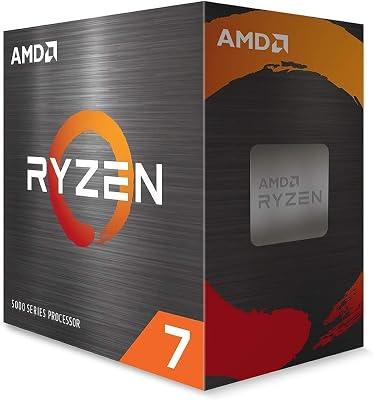
5. AMD Ryzen 7 5700X — Best AM4 8-Core Option
Specs: 8 cores / 16 threads | 3.4 GHz base / 4.6 GHz boost | 65W TDP | AM4 | DDR4 | Zen 3 architecture
The Ryzen 7 5700X is the sleeper pick on this list. Eight Zen 3 cores for often under $140 is exceptional value, and it bridges the gap between pure gaming focus and heavier workloads better than the 5600X. The extra two cores over the 5600X provide headroom for streaming, 3D rendering, and game-adjacent workloads without stepping up to a more expensive platform.
In gaming, the 5700X matches or slightly edges the 5600X — the extra cores rarely provide gaming benefits, but they never hurt. Where it wins is productivity and longevity: if you run any creative workloads or plan to squeeze years out of an AM4 build, the 5700X is the better cap to that platform.
Pros:
- 8 cores provide better multi-tasking than 6-core AM4 options
- Often priced under $140 — outstanding value
- Excellent choice for upgrading from a Ryzen 5 or Ryzen 7 3000-series
- Competitive gaming performance with the 5600X
Cons:
- AM4 dead-end platform — no upgrade path beyond this chip
- Gaming performance essentially identical to 5600X (extra cores don’t help in games)
- Zen 3 IPC still trails Zen 4 in CPU-limited titles
Platform notes: Same as 5600X — B550 + DDR4. Platform cost: $270–$300 depending on board choice.
Who it’s for: AM4 owners upgrading to the platform’s best affordable chip, or budget builders who need more than 6 cores without stepping to a new platform.
Full Comparison Table
| CPU | Cores/Threads | Boost Clock | TDP | Platform | DDR | Gaming Score* | Multi-Core | Best For |
|---|---|---|---|---|---|---|---|---|
| Ryzen 5 7600 | 6C/12T | 5.1 GHz | 65W | AM5 | DDR5 | ★★★★★ | ★★★☆☆ | Pure gaming |
| Core i5-14400F | 10C/16T | 4.7 GHz | 65W | LGA1700 | DDR4/5 | ★★★★☆ | ★★★★☆ | Gaming + streaming |
| Ryzen 5 5600X | 6C/12T | 4.6 GHz | 65W | AM4 | DDR4 | ★★★★☆ | ★★★☆☆ | Budget builds |
| Core i5-13400F | 10C/16T | 4.6 GHz | 65W | LGA1700 | DDR4/5 | ★★★★☆ | ★★★★☆ | Value Intel build |
| Ryzen 7 5700X | 8C/16T | 4.6 GHz | 65W | AM4 | DDR4 | ★★★★☆ | ★★★★☆ | AM4 upgrade cap |
*Gaming score based on aggregate 1080p/1440p performance in CPU-sensitive titles including CS2, Cyberpunk 2077, Hogwarts Legacy, Microsoft Flight Simulator, and Starfield.
What to Look For When Buying a Budget Gaming CPU
Core Count: 6 Is Enough for Gaming, 8–10 Helps Everything Else
Six cores is the minimum for a smooth gaming experience in 2026. Most games are optimized for 6–8 threads, and going above 10 cores provides diminishing returns for pure gaming. Where extra cores matter: streaming, OBS encoding, video editing, 3D rendering, and running multiple apps simultaneously. If gaming is literally all you do, 6 fast cores beat 10 slower cores. If your PC doubles as a work or creative machine, prioritize core count.
IPC: Architecture Matters More Than Clock Speed Headlines
A CPU running at 5.1 GHz on Zen 4 will outperform a 5.0 GHz Zen 3 chip in gaming due to architectural improvements. Don’t shop by clock speed alone. In 2026’s budget segment, the IPC ranking is roughly: Zen 4 (Ryzen 7000) ≥ Raptor Lake P-cores (Intel 13th/14th Gen) > Zen 3 (Ryzen 5000). The gap is meaningful in CPU-sensitive games (5–15%) but nearly disappears when you move up to 1440p with a modern GPU.
Platform Cost: The CPU Is Only Part of Your Budget
A $110 CPU that requires a $150 motherboard costs more than a $170 CPU on a $100 board. Always calculate total platform cost: CPU + motherboard + RAM. AM4 is the cheapest platform overall. AM5 costs more upfront but offers upgrade longevity. LGA1700 sits in the middle. If you already own a compatible motherboard, your calculation changes entirely.
Upgrade Path: Where Will You Be in 2–3 Years?
AM5 is the only platform with a confirmed upgrade path in 2026 — you can drop a future Ryzen 8000 or 9000 chip into the same board. AM4 and LGA1700 are both effectively end-of-life. If you’re building a PC you plan to upgrade incrementally, AM5 is worth the extra $30–$50 platform cost now. If you plan to rebuild entirely in 3 years, any platform is fine.
Cooler Included?
The Ryzen 5 7600 includes AMD’s Wraith Stealth cooler — it works, but a $25 aftermarket air cooler will deliver noticeably better thermals and boost clock sustainability. The i5-14400F and i5-13400F do NOT include a cooler (F-suffix = no integrated graphics, no cooler). Budget an extra $25–$35 for cooling if you go Intel.
Verdict
The AMD Ryzen 5 7600 is the best budget gaming CPU in 2026. Its Zen 4 IPC advantage over last-gen AMD chips and competitive standing against Intel’s 10-core offerings in gaming workloads makes it the most efficient chip for pure gaming performance per dollar. The AM5 platform costs a bit more upfront, but it’s the only option here with a real upgrade path.
The Intel Core i5-14400F (or its twin, the i5-13400F) is the right choice if you stream or multi-task heavily. Ten cores provide real-world advantages in workloads beyond gaming, and the DDR4 LGA1700 platform is affordable to build.
For the tightest possible budget, the Ryzen 5 5600X on AM4 delivers a capable gaming PC for less total spend than any AM5 or LGA1700 build — and it’s still a genuinely good CPU in 2026.
Our pick for most builders: AMD Ryzen 5 7600. Build on AM5, grab a B650 board, install DDR5-5600, and you have a gaming PC that will handle everything you throw at it today and support CPU upgrades for years to come.
Frequently Asked Questions
What can a sub-$200 gaming CPU do?
A modern budget CPU handles 1080p and 1440p gaming smoothly, running esports titles at high frame rates and AAA games well. It pairs nicely with a mid-range GPU for great value.
Will a budget CPU bottleneck my GPU?
Paired with a mid-range GPU at 1440p, a good budget CPU performs well. Bottlenecking mainly appears with a high-end GPU at low resolutions, so for balanced builds it is a non-issue.
AMD or Intel for a budget gaming CPU?
Both offer strong value picks. AMD Ryzen 5 chips and Intel Core i5 trade blows, so check current prices and the cost of a compatible motherboard before deciding.
How many cores do I need in a budget gaming CPU?
Six cores is the comfortable target for modern gaming, balancing price and performance. It handles current titles and background tasks without the cost of an 8-core chip.
Related Articles
Looking for more on this topic? Browse the hand-picked guides below — each one applies the same scoring rubric used in this review.
Ready to decide? Our #1 pick for 2026 is the CPU.
Live price & availability on Amazon.