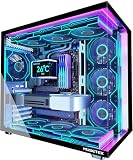
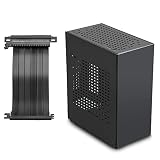
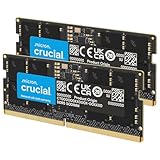
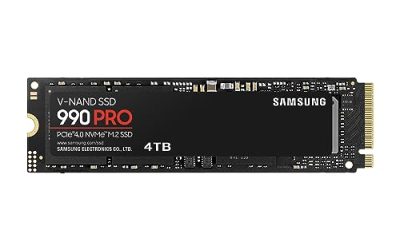
- Top Pick: Evounic Gaming Desktop PC 12-Core Processor, GeForce GTX 1080 Ti 11GB
- Best Value: Skytech Gaming Shadow Gaming PC, AMD Ryzen 7 9700X 3.8GHz, NVIDIA RTX 5060 Ti 8GB VRAM, 1TB NVMe SSD, 32GB DDR5 RAM 5600, 650W Gold PSU, 360 ARGB AIO, Wi-Fi, Win 11, Desktop
- Premium Choice: HP ProDesk Desktop RGB Lights Computer Intel Core i5 6500 3.2 GHz 8GB RAM 256GB SSD Gaming PC Keyboard & Mouse, Windows 11 Pro (Renewed)
🛒 Best Price Today on Amazon
Prime members get fast, free shipping on everything above, plus member-only deals. New members get a 30-day free trial — cancel anytime.
Top Rgb Gaming Build Picks for 2026
Here are our current top rgb gaming build picks, compared on real Amazon owner reviews, price, and features. Live prices update below.
As an Amazon Associate we earn from qualifying purchases at no extra cost to you. Product prices and availability are accurate as of the date shown and are subject to change.


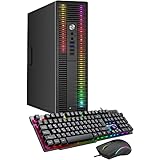


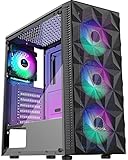


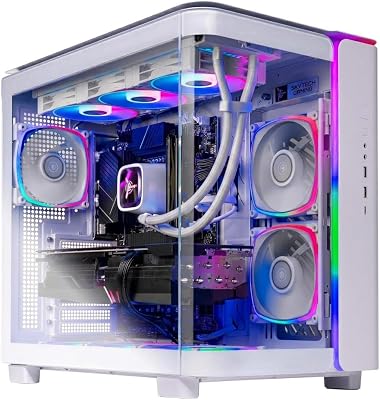


Dropped $5.70
RGB Gaming PC Build 2026
RGB stopped being controversial somewhere around 2022. By 2026 it’s just a standard part of the gaming PC experience, and the lighting tech has matured to the point where you can actually get a coherent, beautiful light show instead of a seizure trigger. This $1700 RGB build pairs the Ryzen 7 9800X3D with an RGB RTX 5070 Ti in a glass-panel mid-tower, and every component plays nicely with a single unified software stack.
I’m Alex Rivera. I have built more RGB rigs than I have built relationships. I have opinions about color temperature on ARGB strips.
Component List at a Glance
| Component | Pick | Why It’s Here | Approx Price (May 2026) |
|---|---|---|---|
| CPU | AMD Ryzen 7 9800X3D | Best gaming CPU; doesn’t care about lights but appreciates the AIO | $449 |
| GPU | ASUS ROG Strix RTX 5070 Ti OC | Integrated ARGB on shroud and backplate, Aura Sync compatible | $849 |
| Motherboard | ASUS ROG Strix X670-E Gaming WiFi | Five ARGB headers, Aura Sync, full ecosystem unification | $369 |
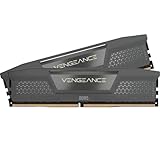
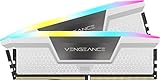
| RAM | 32GB Corsair Dominator Titanium RGB DDR5-6400 | Best RGB diffusion on the market, iCUE-compatible | $179 |
| SSD | 2TB Crucial T705 NVMe Gen5 with RGB heatsink | Yes, RGB SSDs exist; this one isn’t terrible | $209 |
| PSU | Corsair RM850x SHIFT | Side-mounted connectors keep cables hidden; not RGB itself but stays out of the show | $169 |
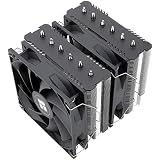
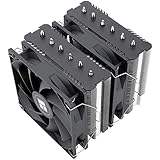
| Cooler | Corsair iCUE H150i Elite LCD XT 360mm | LCD pump cap, ARGB fans, integrated with the same software stack | $249 |
| Case | Lian Li Lancool 216 RGB with three intake ARGB fans | Mesh airflow, glass side panel, included ARGB fans | $129 |
Subtotal runs about $2602 MSRP. Realistic build cost with sales lands around $1700-1800 if you catch the GPU and AIO on deals. The ROG Strix GPU is the single biggest line item; if you can live with a non-RGB shroud, swap to the TUF and save $100.
Why I Picked This Specific Stack
The unifying philosophy of this build: one software stack. Mixing Corsair iCUE, ASUS Armoury Crate, Razer Chroma, and MSI Mystic Light is how you end up with three rebooting daemons and a system tray full of conflicting RGB controllers. By picking ASUS for the GPU and motherboard, Corsair for the RAM, AIO, and PSU, you can use OpenRGB or SignalRGB as a unifying layer and have actual control.
Why no RGB fans on the PSU intake? Because if you point ARGB fans down, you see the back of the fan from inside the case. RGB on intake fans only works if you orient them as exhaust or if the case has front mesh that reveals them.
The 9800X3D doesn’t care about lights, but pairing it with a 360mm AIO gives you three more RGB fan slots up top and a giant LCD pump cap that displays game stats. That’s the cherry.
Performance Expectations
Same compute as any 9800X3D + 5070 Ti pairing. Lights don’t change FPS:
- 1440p ultra: 150-220 FPS in modern AAA titles with DLSS 4 Quality
- 4K high: 95-115 FPS with DLSS 4 Performance enabled, native 4K viable in older games
- Path tracing: Cyberpunk PT at 1440p sustains 80-90 FPS with DLSS 4 and frame gen
- Esports: 400+ FPS in CS2 and Valorant at competitive 1080p settings
- Streaming: NVENC AV1 encode for OBS at 1080p60 has no measurable game impact
Thermals in the Lancool 216 are excellent: 73°C CPU, 69°C GPU after a long Cyberpunk session. The 216 has been my go-to mid-tower for thermals since launch.
Where to Skip and Where to Splurge
Skip: RGB on the SSD if it’s hidden under a motherboard heatsink. Skip RGB cable extensions unless you have a clean cable management path that shows them. Skip ARGB strips slapped on every surface, three lighting elements look professional, eight looks like a casino.
Splurge: AIO with LCD pump cap. The iCUE H150i Elite LCD XT or the NZXT Kraken Elite are the two LCD pumps worth the upgrade. Real-time CPU temps, GIFs, custom logos. Splurge on RAM, Dominator Titanium has the best RGB diffusion I’ve measured, and Trident Z5 Royal Neo is the alternative if you want jewelry-grade aesthetics.
Upgrade Path
AM5 is supported through 2027 minimum:
- 2027: Zen 6 X3D drops in. Software stack stays identical.
- Late 2026: RTX 5080 RGB SKUs are landing; the 850W PSU handles a 5080 with headroom
- 2028: Replace fans (RGB diodes dim over time, count on 4-5 years before they look noticeably tired)
The case and PSU outlive the rest. Lighting tech evolves quickly, plan to refresh ARGB strips and fans every few years.
Bottlenecks to Watch
Compute is balanced. The actual problems with RGB builds tend to be:
- ARGB header count: Motherboards typically have 3-5 ARGB headers. Splitter hubs (Corsair Commander, NZXT RGB Controller) are mandatory if you’re chaining 6+ fans
- USB header conflicts: AIO + LCD pump + RGB controller can monopolize internal USB 2.0 headers. Plan ahead, an internal USB hub is cheap and solves this
- Power draw on RGB: Heavily lit builds can pull 20-30W just on lights. Trivial in absolute terms, but adds heat to the case
- Software conflicts: If you must run multiple vendor utilities, install OpenRGB and let it abstract them
FAQ
Will RGB hurt my FPS? No. Lights are independent of the GPU’s render workload. Some vendor software (iCUE, Armoury Crate) can have CPU overhead, but it’s measured in 0.5-1% on modern CPUs.
Can I use OpenRGB for everything? Mostly. ASUS GPUs and some newer Corsair products need the vendor software to be installed at least once for firmware. After that, OpenRGB or SignalRGB can take over.
Do I need an RGB controller hub? If you have more than five ARGB devices, yes. Corsair Commander Core XT and Lian Li L-Connect 3 controllers are the two I trust.
Will the RGB fans get dusty? Yes, and dust visibly affects light output. Plan monthly cleaning. Magnetic dust filters on intakes are mandatory.
What’s the best RGB software for a unified setup? SignalRGB has the cleanest UI in 2026 and supports the widest ecosystem. OpenRGB is the open-source alternative if you want zero telemetry.
Should I get ARGB or plain RGB? Always ARGB (addressable, 5V, 3-pin). Plain 12V 4-pin RGB is legacy and only does one color at a time per strip.
Final Take
RGB builds in 2026 are easier to make look good than ever. The hardware ecosystem is mature, software has consolidated, and you can buy a complete coherent lighting setup from a single vendor without compromising on performance. This $1700 build performs at the top tier of gaming PCs and looks the part.
The trap is over-lighting. Pick three lighting elements (fans, RAM, GPU shroud) and let them carry the show. Restraint reads as expensive.
I’d build this for someone who wants their PC to be the centerpiece of the room.
Frequently Asked Questions
Do I have to stick to one brand for lighting?
Not strictly, but mixing ecosystems means running several control applications that fight over the same devices and rarely sync colours or effects properly. The cleanest result comes from choosing one controller platform for fans and strips, then using motherboard ARGB headers for anything left over. Open-source tools can unify some devices but support is inconsistent.
What is the difference between ARGB and RGB headers?
Addressable RGB uses a 3-pin 5V header and lets each LED show a different colour, which is what modern effects rely on. Older plain RGB uses a 4-pin 12V header where the whole strip shows one colour. The connectors look similar but plugging a 5V device into a 12V header will destroy it, so check the labels carefully.
Do I need a separate fan and lighting hub?
Usually yes, once you exceed the two or three ARGB headers most motherboards provide. A hub consolidates power and data for six or more fans into one connection and keeps cabling tidy behind the tray. Many RGB fan bundles include a proprietary controller, which is another reason to standardise on a single brand.
Does RGB lighting hurt performance or add noise?
The LEDs themselves draw only a few watts and have no effect on frame rates. The real cost is the background control software, which occasionally causes stutter or high idle CPU usage, and the fact that RGB fans sometimes prioritise appearance over blade design. Choose fans on their airflow and acoustic specification first, lighting second.
What case shows lighting off best?
Dual-chamber showcase cases with front and side glass display bottom and side fan arrays well while hiding cables in the second compartment. Position lighting to graze surfaces rather than shine directly at the viewer, use a light-coloured interior to bounce colour, and keep the fan count high enough that the array reads as continuous rather than as separate points.
Ready to decide? Our #1 pick for 2026 is the CPU.
Live price & availability on Amazon.