🛒 Best Price Today on Amazon
Prime members get fast, free shipping on everything above, plus member-only deals. New members get a 30-day free trial — cancel anytime.
Top Choose Gaming Components Budget Definitive Picks for 2026
Here are our current top choose gaming components budget definitive picks, compared on real Amazon owner reviews, price, and features. Live prices update below.


Affiliate disclosure: GamingPCGuru is reader-supported. When you buy through links on our site, we may earn an affiliate commission at no extra cost to you. This does not influence our independent reviews.
By Alex Rivera, Hardware Reviewer · May 2026
How to Choose Gaming PC Components on a Budget: Spend Smart, Not Equal
Quick Answer (TLDR)
Budget gaming PC component selection in 2026 is about ruthless prioritization, not uniform downgrades. Most budget guides recommend spending evenly across components — that’s wrong. The right approach: overspend on GPU and PSU (the components that determine performance and longevity), spend appropriately on CPU and RAM (the components with diminishing returns at budget tier), and minimize spending on motherboard, case, cooler, and storage (the components where budget options are objectively fine). Apply this to a $900-1100 budget and you get a real gaming PC. Apply it to a $700 budget and you get a usable gaming PC that you can upgrade. Apply naïve “balanced budget” thinking to either and you get a compromised build that needs rework within 18 months. The components where you can confidently buy budget: B650 motherboard ($120-140), Thermalright Peerless Assassin cooler ($35), Crucial P3 Plus NVMe ($65), and a $75 mesh case. The components where you must not skimp: PSU, RAM speed, GPU VRAM.
The Five Criteria That Matter
1. GPU spending dominates performance outcome. 40-50% of total budget should go to GPU at this tier. A $900 build with $400 GPU outperforms a $900 build with $500 CPU and $300 GPU in gaming, every time. Maximize GPU at budget tier, not “balanced” spending.
2. PSU quality cannot be compromised. The single most important component you cannot buy budget. A $40 PSU saves you money for 18 months, then takes out your $400 GPU when it fails. Quality 650W 80+ Gold from Corsair, Seasonic, EVGA, or Be Quiet is $85-110 — that’s the floor.
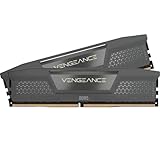
3. RAM speed matters more than capacity at budget. 32GB DDR5-6000 CL30 ($120) outperforms 64GB DDR5-4800 CL40 ($180) in gaming. Don’t oversize RAM capacity at the cost of speed. AM5 platform especially rewards 6000 MT/s sweet spot.
4. Motherboard features mostly don’t matter. Budget B650 motherboards run modern AM5 CPUs at full performance. The premium for B850 or X870 buys you USB 4.0, extra PCIe 5.0 lanes, and onboard Wi-Fi 7 — features mostly irrelevant to gaming. Save $50-100 here, apply to GPU.
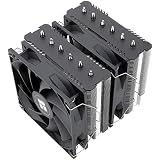
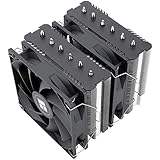
5. Cooling is solved cheaply. The $35 Thermalright Peerless Assassin 120 SE handles every modern AMD CPU short of the 9950X3D under sustained load. The $90 Noctua NH-D15 is marginally better but the price gap doesn’t justify the performance gap. Budget cooling is genuinely fine.
Buying Checklist
- Allocate 40-50% of total budget to GPU first
- Allocate 10-12% to quality PSU (never skimp here)
- Allocate 15-18% to CPU (Ryzen 5 7600 or 7700X are sweet spots)
- Allocate 10-12% to 32GB DDR5-6000 CL30 RAM
- Allocate 6-8% to motherboard (B650 is sufficient)
- Allocate 5-7% to 1TB PCIe 4.0 NVMe (Crucial P3 Plus, WD SN770)
- Allocate 5-7% to case (mesh-front mid-tower with 3 fans included)
- Allocate 3-5% to CPU cooler (Thermalright Peerless Assassin)
- Add $30-40 for Windows 11 OEM license
- Reserve $30-50 for misc (thermal paste, zip ties, cables if needed)
Spec Primer: What the Numbers Actually Mean
GPU price-to-performance tiers. RTX 5060 8GB ($299) — too little VRAM. RTX 5060 Ti 8GB ($379) — same issue. RTX 5060 Ti 16GB ($429) — budget sweet spot. RX 9060 XT 16GB ($399) — AMD’s budget winner. RTX 5070 ($549) — first tier with real ray tracing headroom. RTX 5070 Ti ($699) — overkill for sub-$1200 builds.
PSU tier reality. Tier A PSUs (Seasonic Focus GX, Corsair RM/HX, EVGA G7/P7, Be Quiet Pure Power 12 M, MSI MEG Ai): safe forever. Tier B: acceptable for budget. Tier C and below: avoid. Reference Cultists Network PSU tier list before purchase.
NVMe storage value. Crucial P3 Plus 1TB ($65) and WD SN770 1TB ($75) deliver 4000-5000 MB/s sequential read — indistinguishable from $150 premium NVMes in gaming. PCIe 4.0 budget NVMes are excellent values.
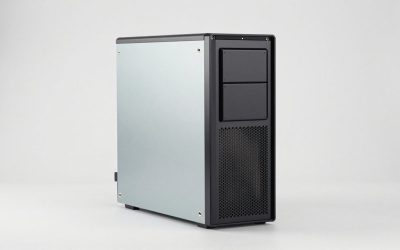
Case selection economics. $75-90 mesh-front mid-towers (Phanteks Eclipse G300A, Corsair 3000D, Montech AIR 903) include 3 fans and offer thermal performance within 2-3C of $150 cases. Premium cases are aesthetics-driven, not performance-driven.
RAM sweet spots. DDR5-6000 CL30 32GB (2x16GB): the gold standard for AM5. DDR5-6400 CL32: marginal gains. DDR5-7000+: diminishing returns and stability headaches. Don’t pay premium for high-spec RAM on budget builds.
Common Buyer Mistakes
Balanced budget delusion. Spending 20% on CPU, 20% on GPU, 15% on RAM, 15% on motherboard, etc., produces a worse gaming PC than skewed spending toward GPU. Embrace the imbalance — GPU dominates gaming performance.
Overspending on motherboard “for upgrade headroom.” A $250 X870 motherboard doesn’t make your CPU faster or more upgradeable than a $130 B650. Save $120 and put it toward GPU. Future Zen 6 chips will work on B650 with BIOS update.
Underspeccing PSU “because it works for now.” A 550W PSU runs your current RTX 5060 Ti fine. It can’t run a future RTX 5070 Ti upgrade in 2027. Buying 650W today saves PSU replacement in 18 months.
Buying 16GB RAM to save money. Modern games allocate 14-18GB at high settings. 16GB causes stutters and texture pop-in. Always 32GB for new gaming builds — the $40 savings isn’t worth daily frustration.
Buying premium air cooler when budget is fine. $35 Thermalright Peerless Assassin handles Ryzen 7 9700X3D under full load with 5-7C headroom. $90 Noctua NH-D15 gives you 3-5C more headroom. The price gap doesn’t justify the thermal gap for budget builds.
FAQ
Should I buy used components to stretch budget? Used CPU and RAM are generally safe. Used GPU is risky (mining-era cards with degraded VRAM). Used PSU is a hard no — degraded units damage other components. Used case and cooler are fine. Used motherboard requires careful inspection for damaged pins.
How does AMD vs Intel compare at budget? AMD AM5 dominates budget gaming in 2026 — better value CPUs, longer platform longevity, better X3D options for gaming. Intel LGA1851 only competes if specific deals make it cheaper, which is rare at budget tier.
Where can I find current pricing? PCPartPicker, Newegg, Microcenter, and Amazon track real-time pricing. Microcenter in particular offers CPU+motherboard bundles that save $50-100 versus separate purchases — worth driving to if accessible.
Should I wait for sales? Black Friday (late November), Prime Day (July), and back-to-school season (August-September) offer 5-15% discounts on most components. If you can wait 1-3 months for a sale, you’ll typically save $50-150 on a $1000 build.
The Budget Component Hierarchy
Spending priorities for a $900 budget gaming PC: $400 GPU (RTX 5060 Ti 16GB), $170 CPU (Ryzen 5 7600), $120 RAM (32GB DDR5-6000), $130 motherboard (B650), $90 PSU (650W Gold), $65 storage (1TB NVMe), $75 case (mesh mid-tower), $35 cooler (Peerless Assassin). Total $1,085 before Windows. Adjust by GPU tier to hit specific budget targets — drop to RTX 5060 Ti 8GB at $379 to reach $935 build, or upgrade to RTX 5070 at $549 to reach $1,255 premium-tier build. GPU is the swing variable.
Final Take
Budget gaming PC component selection rewards aggressive prioritization. Maximize GPU spending (40-50% of budget), refuse to compromise on PSU quality, and accept the boringness of budget motherboards, cases, and coolers — they’re objectively fine for gaming. Avoid the “balanced budget” trap that produces mediocre builds. The right $900 build has a $400 GPU and a $130 motherboard, not a $300 GPU and a $250 motherboard. Component pricing rewards informed buyers; component marketing rewards the opposite. Read PCPartPicker tier lists, ignore RGB premiums, and put every saved dollar into GPU performance.
Frequently Asked Questions
Where should most of a tight budget go?
The graphics card, at roughly 40 to 45 percent of the total, because it sets your frame rate at every resolution above 1080p. The CPU should be a current-generation 6 or 8 core part, and memory should be 16GB or 32GB in dual channel. Everything else is about not creating bottlenecks.
Which components are safe to buy used?
Cases, monitors, CPU coolers, and generally CPUs, since they rarely degrade. Graphics cards are reasonable if you can test them under load before the return window closes. Never buy a used power supply, and be cautious with used hard drives, where accumulated power-on hours are the primary failure predictor.
What should I never cheap out on?
The power supply. A poor unit can fail under transient load and damage the motherboard, GPU, and drives, turning a thirty dollar saving into a full rebuild. Buy a reputable 80 Plus Bronze or Gold unit with adequate wattage headroom and the correct native connectors for your card.
Is it better to buy everything at once or upgrade gradually?
Buy the platform parts, meaning case, power supply, motherboard, and CPU, with enough headroom to accept upgrades, then add memory, storage, and eventually a better GPU over time. Buying a slightly oversized PSU and a case with generous GPU clearance costs little now and saves a full rebuild later.
Do I need a dedicated sound card or high-end motherboard?
No. Onboard audio on any modern board is fine for headsets and speakers, and an entry B650 or B760 board delivers the same CPU and GPU performance as a premium one. Pay more for a board only if you need extra M.2 slots, better VRM cooling for a high-wattage chip, or faster networking.