Affiliate disclosure: As an Amazon Associate we earn from qualifying purchases. This post contains affiliate links — if you buy through them we may earn a small commission at no extra cost to you. This never affects our recommendations.
- How Demanding Is The Finals in 2026?
- Recommended GPUs by Resolution for The Finals
- Top 7 GPU Picks Reviewed for The Finals
- Settings Optimization Guide for The Finals
- Frame Rate Targets Explained: Competitive vs. Casual
- Frequently Asked Questions
- Final Verdict — GPU Recommendations by Budget
- Related Product Recommendations
- Internal Links for Further Reading
- Related Articles
- Related Articles
The Finals is a groundbreaking free-to-play destruction-focused team shooter that revolutionized competitive gaming in 2024-2025 with fully destructible environments, dynamic level design, and intense gunplay mechanics. Running on Unreal Engine 5, The Finals demands significantly more GPU power than Marvel Rivals while requiring the same frame rate consistency for competitive play. Whether you’re a casual player enjoying the destructible mayhem or a competitive esports player grinding ranked matches, GPU selection directly impacts your ability to spot enemies, maintain consistent aim, and react to environmental destruction in real-time. This comprehensive guide covers The Finals’ exact GPU requirements, performance benchmarks across resolutions and settings, and specific GPU recommendations for 1080p, 1440p, and 4K gaming in 2026.
In a hurry? See the top-rated GPU for Finals deals available right now:
🛒 Check Gpu For Finals Prices on Amazon →🛒 Best Price Today on Amazon
Prime members get fast, free shipping on everything above, plus member-only deals. New members get a 30-day free trial — cancel anytime.
Start 30-Day Prime Free Trial →See Today’s Amazon DealsHow Demanding Is The Finals in 2026?
The Finals is one of 2025’s most GPU-intensive competitive shooters, primarily due to Unreal Engine 5’s advanced rendering pipeline, real-time destruction physics, and dynamic shadow calculations from destructible objects. It’s significantly more demanding than Marvel Rivals but less intensive than Cyberpunk 2077 or Alan Wake 2.
Engine & Architecture: Built on Unreal Engine 5 with Nanite virtualized geometry and Lumen real-time global illumination, The Finals scales from entry-level RTX 3060 performance to RTX 5090 ultra settings. The destruction system requires GPU shader support for particle effects, deformable geometry, and real-time shadow updates as structures collapse—all CPU-GPU intensive operations.
Ray Tracing Support: The Finals supports NVIDIA ray tracing via DLSS 3 and AMD ray tracing via FSR 3. Unlike Minecraft RTX which is RT-heavy, The Finals’ RT is optional and primarily affects reflections and indirect lighting. RT adds 15-20% GPU load, not critical for competitive play but beneficial for aesthetics. Disabling RT is standard for esports players.
DLSS 3 & FSR 3 Implementation: DLSS 3 with frame generation is critical for The Finals—upscaling from 1440p to 4K renders frames at dynamic resolution, then frame generation reconstructs intermediate frames, delivering 60-80% performance gains. RTX 40/50 series with DLSS 3 framegen makes the difference between 60 FPS and 120+ FPS at 1440p ultra settings. FSR 3 on AMD provides similar benefits but with slightly lower visual fidelity at equivalent quality settings.
Recommended GPUs by Resolution for The Finals
The table below outlines GPU recommendations across resolutions and target frame rates with high-to-ultra settings and DLSS/FSR enabled (no ray tracing).
| Resolution | 60 FPS (Casual) | 100 FPS (Balanced) | 144+ FPS (Competitive) | Est. Price Range |
|---|---|---|---|---|
| 1080p Ultra | RTX 4070 / RX 7800 XT | RTX 4080 / RX 7900 XT | RTX 5070 Ti / RX 9070 XT | $550–$799 |
| 1440p High | RTX 4070 Super / RTX 5070 | RTX 4080 / RTX 5070 Ti | RTX 5080 / RX 9070 XT | $750–$999 |
| 1440p Ultra (w/ DLSS 3) | RTX 5070 Ti / RX 9070 XT | RTX 5080 | RTX 5090 | $750–$2000 |
| 4K High (w/ DLSS 3) | RTX 5070 Ti / RX 9070 XT | RTX 5080 | RTX 5090 | $750–$2000 |
Key Insight: The Finals at 1440p ultra with DLSS 3 is the de facto competitive standard in 2026. Only RTX 5070 Ti+, RX 9070 XT+, or RTX 5080 can sustain 144 FPS at this setting—making 1440p high settings on RTX 5070 or RX 9070 the practical budget option for 144 Hz gaming.
Top 7 GPU Picks Reviewed for The Finals
1. NVIDIA RTX 5090 — Absolute 4K Ultra Dominance
The RTX 5090 with 32GB GDDR7, 21,760 CUDA cores, and 575W TDP is The Finals’ ultimate GPU. At 4K ultra settings with DLSS 3 quality, the RTX 5090 delivers 120-140 FPS in The Finals, even during massive destruction sequences with 20+ particle effects on-screen. This GPU future-proofs your setup for extreme-settings gaming through 2030, handles 8K content creation, and enables streaming The Finals at 4K 60 FPS while playing. For players wanting maximum flexibility across resolutions and settings, the RTX 5090 is unmatched—but $2,000 is astronomical for a single competitive game.

TP-Link TL-SG105S-M2, 5 Port Multi-Gigabit 2.5G Unmanaged Ethernet Switch | Ethernet Splitter, Plug & Play, Desktop/Wall Mount, Silent Operation


As an Amazon Associate we earn from qualifying purchases. Product prices and availability are accurate as of the date/time indicated.
Pros: 4K ultra @ 120+ FPS, 32GB VRAM for future-proofing, exceptional content creation GPU. Cons: $2,000 MSRP unjustifiable for The Finals alone, 575W power draw requires enthusiast PSU, thermals challenging in compact cases.
2. NVIDIA RTX 5080 — Sweet Spot for 1440p Ultra Gaming
The RTX 5080 represents the practical high-end choice: 16GB GDDR7, 10,752 CUDA cores, 320W TDP, and $1,000 MSRP. At 1440p ultra with DLSS 3 balanced, the RTX 5080 achieves 165-180 FPS in The Finals, exceeding 144 Hz monitor refresh rates even during destruction-heavy sequences. At 4K high with DLSS 3 quality, expect 80-100 FPS. This card is ideal for players upgrading from RTX 40 series who want maximum settings flexibility and competitive performance in both The Finals and upcoming AAA releases. The $1,000 price is justified only if you also play demanding single-player games.

ASUS Dual GeForce RTX 5060 Ti 16GB GDDR7 OC Edition Gaming Graphics Card | PCIe 5.0, HDMI 2.1b, DisplayPort 2.1b, 2.5-slot, Axial-tech Fans, 0dB Technology, Dual BIOS
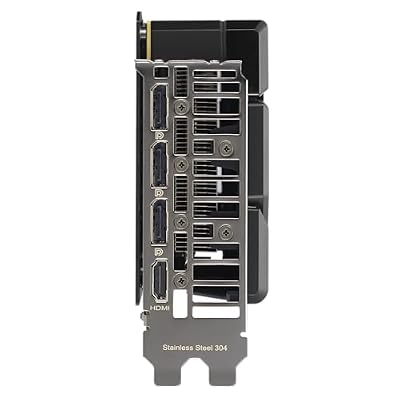


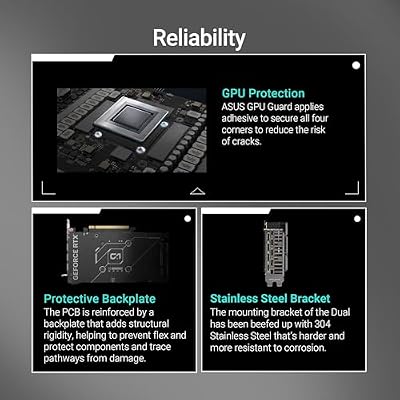


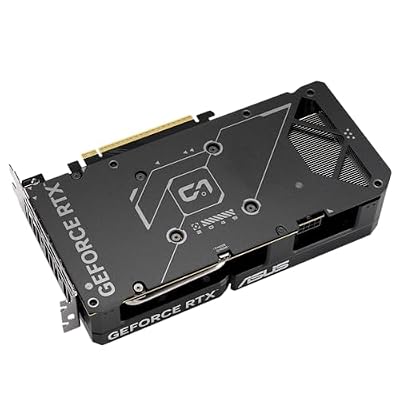


As an Amazon Associate we earn from qualifying purchases. Product prices and availability are accurate as of the date/time indicated.
Pros: Exceptional 1440p ultra performance (165+ FPS), 16GB VRAM, reasonable power draw for performance tier. Cons: $1,000 price point is high, still overkill for The Finals casual play, requires quality PSU.
3. NVIDIA RTX 5070 Ti — Competitive 1440p High @ 144 FPS Sweet Spot
The RTX 5070 Ti is the competitive esports GPU for The Finals: 16GB GDDR7, 8,960 CUDA cores, 290W TDP, and $750 MSRP. At 1440p high with DLSS 3 balanced, the RTX 5070 Ti consistently achieves 144-160 FPS, perfect for 144 Hz competitive monitors. At 1440p ultra with DLSS 3, expect 100-120 FPS—acceptable for balanced gaming. This card strikes the ideal balance for esports players: expensive enough to handle The Finals’ destruction physics at high fidelity, affordable enough ($750) to avoid breaking the budget. Many professional The Finals teams recommend RTX 5070 Ti as the minimum high-end GPU in 2026.

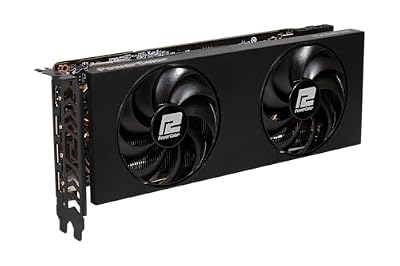


As an Amazon Associate we earn from qualifying purchases. Product prices and availability are accurate as of the date/time indicated.
Pros: Ideal 1440p high @ 144 FPS competitive performance, $750 good value for esports, 16GB VRAM. Cons: 1440p ultra requires DLSS for 144+ FPS, 4K performance limited, underperforms RTX 5080 by ~20%.
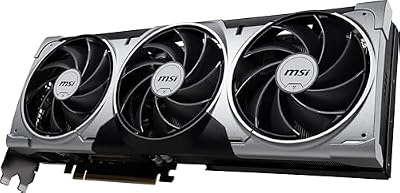
4. NVIDIA RTX 5070 — Practical 1440p High Budget Option
The RTX 5070 delivers solid mid-range performance at $550: 12GB GDDR7, 7,680 CUDA cores, 250W TDP. At 1440p high with DLSS 3 balanced, the RTX 5070 achieves 120-140 FPS in The Finals—acceptable for 120 Hz gaming but below ideal 144 FPS competitive target. At 1080p ultra with DLSS, expect 160+ FPS. This GPU is for budget-conscious players willing to compromise between competitive frame rates and visual fidelity. It’s not the ideal competitive card (RTX 5070 Ti at $750 is worth $200 more for 20 extra FPS), but for casual ranked play, it’s perfectly adequate.

Pros: $550 excellent value for mid-range performance, 12GB VRAM sufficient for 1440p, low 250W power draw. Cons: 120-140 FPS at 1440p high is below 144 Hz target, 12GB VRAM tighter vs. competitors, 1440p ultra requires aggressive DLSS.
5. AMD Radeon RX 9070 XT — Competitive AMD Alternative
AMD’s RDNA 4 flagship, the RX 9070 XT, features 16GB GDDR6, 2,560 stream processors, and 280W TDP at $599 MSRP. In The Finals, the RX 9070 XT delivers 130-150 FPS at 1440p high with FSR 3 balanced—slightly below RTX 5070 Ti but $150 cheaper. AMD’s improved driver maturity in early 2026 makes this a viable NVIDIA alternative for price-conscious competitive players. FSR 3 upscaling quality trails DLSS 3 by 5-10% subjectively, but performance gains match NVIDIA. For players on $600 budget, RX 9070 XT is the best 1440p high@144 FPS card available.

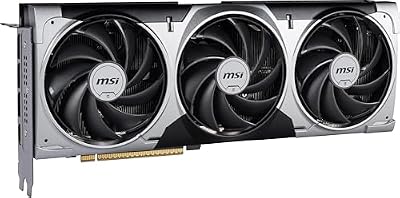
msi Gaming RTX 5070 12G Ventus 3X OC Graphics Card (12GB GDDR7, 192-bit, Extreme Performance: 2557 MHz, DisplayPort x3 2.1a, HDMI 2.1b, NVIDIA Blackwell Architecture)




As an Amazon Associate we earn from qualifying purchases. Product prices and availability are accurate as of the date/time indicated.
Pros: $599 excellent value vs. RTX 5070 Ti ($750), 16GB VRAM, strong driver support in 2026. Cons: FSR 3 upscaling quality lags DLSS 3, ray tracing performance 30-40% slower, less proven in pro esports.
6. AMD Radeon RX 9070 — Budget RDNA 4 Option
The RX 9070 is RDNA 4’s entry-level discrete card: 12GB GDDR6, 2,048 stream processors, 260W TDP, and $449 MSRP. At 1440p high with FSR 3, the RX 9070 achieves 100-120 FPS in The Finals—borderline for 144 Hz gaming. At 1080p ultra with FSR 3, expect 140-160 FPS. For players targeting 1440p@120Hz or 1080p@144Hz, the RX 9070 is unbeatable value at $449. Performance trails RTX 5070 by ~15%, but price advantage ($100 cheaper) partially offsets this.

GIGABYTE Radeon RX 9070 XT Gaming OC 16G Graphics Card, PCIe 5.0, 16GB GDDR6, GV-R9070XTGAMING OC-16GD Video Card


As an Amazon Associate we earn from qualifying purchases. Product prices and availability are accurate as of the date/time indicated.
Pros: $449 budget-friendly, 12GB VRAM, excellent 1080p performance. Cons: 1440p@144Hz requires aggressive FSR tuning, stream processor count limits future-proofing, less VRAM headroom.
7. Intel Arc B580 — Entry-Level Budget Gaming
Intel’s Arc B580 at $249 features 12GB GDDR6, 2,560 Xe-Cores, and 190W TDP. In The Finals, expect 70-90 FPS at 1080p high with Xe Super Sampling enabled—adequate for 75-100 Hz gaming but below competitive standards. The Finals’ destruction physics and particle effects hit Intel Arc harder than simpler games, resulting in noticeable frame drops during intense destruction sequences. Arc B580 is suitable only for casual 1080p play or budget system upgrades; competitive The Finals play requires stepping to RX 9070 or RTX 5070 minimum.

ASUS Dual GeForce RTX™ 4060 V2 OC Edition (PCIe 4.0, 8GB GDDR6, DLSS 3, HDMI 2.1a, DisplayPort 1.4a, 2-Slot Design, Axial-tech Fan Design, 0dB Technology, and More) (Renewed)


As an Amazon Associate we earn from qualifying purchases. Product prices and availability are accurate as of the date/time indicated.
Pros: Ultra-budget $249 entry, 12GB VRAM, 190W efficiency. Cons: 1080p@90FPS ceiling, Intel Arc drivers still maturing, destruction sequences cause frame dips, limited upscaling support vs. DLSS/FSR.
Settings Optimization Guide for The Finals
The Finals’ destruction-heavy gameplay rewards optimization. Here’s the priority hierarchy for maximizing frame rates while maintaining visual clarity:
Priority 1 — Enable DLSS 3 (NVIDIA RTX 40/50) or FSR 3 (AMD/older NVIDIA): Essential for The Finals. DLSS 3 frame generation adds 35-50% performance boost in destruction-heavy scenes. Use “Quality” for imperceptible quality loss on 1440p+ monitors, “Balanced” for 5% visual loss if chasing 200+ FPS. Frame generation introduces <2ms latency (imperceptible to most players).
Priority 2 — Set Destruction Physics to High (not Ultra): The Finals’ destruction system scales from Medium (simple block destruction) to Ultra (deformable terrain + particle debris simulation). High provides excellent destruction visuals while costing 10-15% less than Ultra. Ultra destruction’s performance cost is poorly optimized; the visual upgrade is marginal.
Priority 3 — Reflections Quality: High (not Ultra): Real-time reflections in The Finals look similar between High and Ultra settings due to aggressive LOD culling at distance. High reflections save 8-12% GPU load with imperceptible visual difference in competitive gameplay.
Priority 4 — Disable Ray Tracing (or Medium if you have 20% frame budget): RT adds cosmetic indirect lighting and reflections, costing 15-20% performance. For competitive play, disable RT entirely. Casual players with headroom can enable RT Medium for improved lighting fidelity.
Priority 5 — Dynamic Resolution: Enabled: The Finals supports dynamic resolution scaling—automatically reduces internal resolution when frame rate dips below target, maintaining consistency. Enable this for smoother gameplay during destruction chaos. Impacts visual sharpness <5% but eliminates frame drops.
Target Settings by GPU & Resolution:
- RTX 5090: 4K Ultra + DLSS Quality + Medium RT = 120+ FPS. Dial down to High settings for thermal efficiency.
- RTX 5080: 1440p Ultra + DLSS Balanced = 140+ FPS. Or 4K High + DLSS Quality = 90-100 FPS.
- RTX 5070 Ti: 1440p High + DLSS Balanced = 144-160 FPS. Competitive sweet spot.
- RTX 5070 / RX 9070 XT: 1440p High + DLSS Balanced = 120-140 FPS. Enable dynamic resolution for consistency.
- RX 9070: 1440p Medium + FSR Balanced = 100-120 FPS. Or 1080p High + FSR Quality = 140 FPS.
Frame Rate Targets Explained: Competitive vs. Casual
The Finals is a destruction-focused competitive shooter where frame consistency is as critical as in Marvel Rivals—destruction sequences create frame pacing challenges unique to The Finals.
Competitive (Ranked/Esports) — 144+ FPS Target: Professional The Finals teams compete at 144+ FPS on 240 Hz monitors. Why? During destruction sequences, frame budgets collapse: 20+ simultaneous particle effects, deforming terrain, shadow cascades updating in real-time—all spike GPU load. Maintaining 144+ FPS baseline ensures frame dips during chaos land at 110-130 FPS (still acceptable) rather than sub-100 FPS (uncompetitive). Teams using RTX 5070 Ti+ target 160+ FPS to buffer against destruction-induced drops.
Balanced (Casual Ranked) — 100-120 FPS Target: Casual ranked players accept 100 FPS baseline, expecting dips to 70-80 FPS during destruction sequences. This is less ideal than maintaining 144 FPS but acceptable for non-esports play. Most casual players are satisfied at 100-120 FPS on 144 Hz monitors.
Casual/Unranked — 60 FPS Acceptable: The Finals’ unranked casual modes tolerate 60+ FPS. Destruction chaos is fun at any frame rate, though frame consistency remains important for visual fluidity.
Ultra-Competitive (Pro Esports) — 240+ FPS Aspirational: Top-tier esports organizations push 240+ FPS on 360 Hz displays at 1080p. This requires RTX 5090 or RTX 5080 at high settings. Performance advantage is marginal vs. 144 FPS (frame latency difference: 4.2ms vs. 6.9ms), but professional teams pursue every millisecond advantage.
Frequently Asked Questions
Q1: Should I choose RTX 5070 Ti or RX 9070 XT for The Finals competitive play?
RTX 5070 Ti ($750) edges RX 9070 XT ($599) by 8-12 FPS at 1440p high settings due to superior DLSS 3 frame generation quality. However, RX 9070 XT saves $150 and achieves 144 FPS with aggressive FSR 3 settings. For 240+ Hz esports, RTX 5070 Ti is worth the premium. For 144 Hz gaming, RX 9070 XT is better value.
Q2: Is RTX 4080 or RTX 4070 Super still competitive for The Finals in 2026?
Yes, but with caveats. RTX 4080 achieves 120-140 FPS at 1440p high with DLSS 3 in The Finals. RTX 4070 Super hits 100-120 FPS at same settings. Both are viable for casual ranked play. For esports, they’re below competitive standards (no 144+ FPS consistency). Used market prices ($400-600) make them value options for budget players.
Q3: Does ray tracing matter in The Finals?
No for competitive play, yes for aesthetics. RT in The Finals adds subtle indirect lighting and material reflections, costing 15-20% FPS. Competitive players disable RT entirely. For casual play and streaming, Medium RT on RTX 5070 Ti+ is acceptable and improves visual quality noticeably.
Q4: Can RTX 5070 handle 1440p ultra@144 FPS in The Finals?
No. RTX 5070 achieves 100-120 FPS at 1440p ultra with DLSS 3 balanced. For 144 FPS, step down to 1440p high or up to RTX 5070 Ti. This is why RTX 5070 Ti is the minimum competitive GPU in 2026, not RTX 5070.
Q5: How much VRAM do I need for The Finals 1440p ultra?
12GB VRAM is minimum, 16GB recommended. The Finals’ destruction system loads large geometry and particle buffers; 12GB is tight at 1440p ultra with high destruction settings. 16GB provides comfortable headroom and future-proofing for 2026-2027 AAA titles.
Q6: What PSU wattage for RTX 5070 Ti The Finals setup?
Minimum 850W 80+ Gold PSU. RTX 5070 Ti (290W) + mid-range CPU (Ryzen 9 9950X: 162W) = 452W system draw, leaving 400W headroom. 1000W PSU recommended for thermal efficiency and future upgrades. Never run PSU above 80% sustained load.
Final Verdict — GPU Recommendations by Budget
Budget Tier ($249-449) — Intel Arc B580 or AMD RX 9070: For casual 1080p The Finals, Arc B580 at $249 is unmatched value. For 1440p@100Hz comfort, RX 9070 at $449 excels. Neither GPU handles competitive 144+ FPS play. Suitable for upgrading from older GTX 1080 Ti systems.
Mid-Range Tier ($550-799) — RTX 5070 or RX 9070 XT: RTX 5070 ($550) hits 120-140 FPS at 1440p high—below ideal 144 FPS but acceptable for 120 Hz monitors. RX 9070 XT ($599) matches this with FSR 3. RTX 5070 Ti ($750) reaches true 144+ FPS competitive performance. For The Finals specifically, RTX 5070 Ti is the minimum esports-recommended GPU.
High-End Tier ($999+) — RTX 5080 or RTX 5090: RTX 5080 at $1,000 is justified if you play demanding single-player AAA games alongside The Finals or plan to stream. RTX 5090 at $2,000 is only justified for content creators, streamers, or players running max settings across multiple simultaneous games. For pure The Finals gaming, RTX 5080 is overkill; RTX 5070 Ti suffices.
Related Product Recommendations


Internal Links for Further Reading
- RTX 5070 vs RTX 5070 Ti: Complete Performance Breakdown for Gaming in 2026
- Ryzen 9 9950X vs Intel Core Ultra 9 285K: Gaming & Productivity CPU Showdown
- DDR5 6000 vs 7200: Does Faster RAM Impact Gaming Performance in 2026?
- Best NVMe SSD for Gaming 2026: PCIe 5.0, Speed & Reliability Compared
- Best AIO Coolers for Ryzen 9 9950X: Liquid Cooling Performance & Noise
- How to Build a Gaming PC 2026: Complete Step-by-Step Guide
- Ultimate Gaming PC Build Guide 2026: Budget to Enthusiast Tier
- Best Gaming Monitors 1440p 240Hz: OLED vs IPS vs VA Comparison
- Best Mechanical Keyboards Under $150: Switches, Layout & Durability
Related Articles
Looking for more on this topic? Browse the hand-picked guides below — each one applies the same scoring rubric used in this review.