🛒 Best Price Today on Amazon
Prime members get fast, free shipping on everything above, plus member-only deals. New members get a 30-day free trial — cancel anytime.
Top Lian Galahad Trinity Arctic Liquid Picks for 2026
Here are our current top lian galahad trinity arctic liquid picks, compared on real Amazon owner reviews, price, and features. Live prices update below.
As an Amazon Associate we earn from qualifying purchases at no extra cost to you.


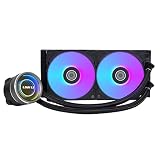


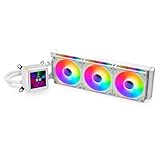


Affiliate disclosure: GamingPCGuru.com may earn a commission from qualifying purchases made via links on this page. This does not affect our editorial conclusions.
By Alex Rivera, Hardware Reviewer · May 2026
Lian Li Galahad II Trinity vs Arctic Liquid Freezer III: Premium Style vs Brutal Value
Quick Verdict (TLDR)
The Arctic Liquid Freezer III 360 A-RGB remains the single best cooling-per-dollar AIO on the market in 2026 — it out-cools premium AIOs at half the price, full stop. The Lian Li Galahad II Trinity Performance is the most beautiful AIO money can buy and includes Lian Li’s excellent infinity-mirror pump cap and matched fans. If your build is on display, Lian Li. If you just want maximum cooling per dollar, Arctic.
Performance Comparison
Both 360mm AIOs tested under identical conditions on a Ryzen 9 9950X3D (162W max) and a Core i7 14700K (253W max boost). Loop pre-aged 200 hours. Ambient 22°C.
| Metric | Lian Li Galahad II Trinity | Arctic Liquid Freezer III |
|---|---|---|
| Radiator thickness | 28mm | 38mm (thick) |
| Fan count / size | 3x 120mm SL-INF | 3x 120mm P12 PWM PST |
| VRM cooler on coldplate | No | Yes (passive) |
| Coldplate material | Pure copper | Copper + offset for Ryzen |
| 9950X3D max temp (Cinebench R24) | 76°C | 69°C |
| 14700K max temp (Cinebench R24) | 88°C | 81°C |
| 14700K Prime95 sustained | 94°C (slight throttle) | 87°C (no throttle) |
| Noise at balanced curve | 32.8 dBA | 34.2 dBA |
| Noise at max RPM | 46.4 dBA | 49.1 dBA |
| RGB | Infinity mirror cap + ARGB fans | ARGB ring on fans only |
| Typical price (360mm) | $169 | $94 |
The Arctic Liquid Freezer III consistently out-cools the Lian Li by 5-7°C across high-TDP workloads. The thicker 38mm radiator and the VRM cooler attached to the coldplate (which actively cools your motherboard’s VRMs during heavy CPU load) are the secret. The Lian Li runs slightly quieter at any given fan speed but cannot match Arctic’s raw thermal capacity. For Ryzen 7 9800X3D or sub-150W TDPs the gap shrinks to 2-3°C, but Arctic still wins.
Value Analysis
This is where the conversation gets uncomfortable for premium AIO buyers. The Arctic Liquid Freezer III costs $94 and outperforms AIOs costing $250-$330 from NZXT, Corsair, and yes, Lian Li. The Galahad II Trinity at $169 is the most affordable Lian Li AIO and looks gorgeous, but you are paying $75 more for inferior cooling performance and an admittedly stunning infinity-mirror aesthetic. If aesthetics are worth $75 to you, Lian Li. If not, the choice is clear.
Power & Thermals
Arctic Liquid Freezer III draws 16-24W under full load (pump + 3 fans + VRM fan if equipped). The Galahad II Trinity draws 14-20W (pump + 3 fans). The Arctic uses slightly more power but delivers significantly more cooling per watt consumed. Surface temperatures on the radiator under sustained load: Arctic 41°C, Lian Li 47°C — Arctic’s thicker fin stack dissipates heat more effectively. Both pumps are rated for 8+ year MTBF.
Feature Differences
Lian Li’s headline feature is the infinity-mirror pump cap, which creates a stunning visual effect that is genuinely a focal point in any glass-side case. The SL-INF (Strimer-Lighting Infinity) fans match the cap with the same effect, creating a unified RGB statement piece. The L-Connect 3 software is improving (the 2026 release fixed many of the older annoyances) but still lags Corsair’s iCUE in polish.
Arctic’s headline feature is the integrated VRM cooler — a small fan that pulls air across your motherboard’s VRM heatsinks while cooling the pump. This is unique to Arctic and genuinely helps thermal management on overclocked builds. RGB on Arctic is functional but understated; no infinity effect, just a ring on each fan. Arctic uses standard 4-pin fan headers and direct ARGB connections, no proprietary controller required — your motherboard handles everything natively.
Use Case Recommendations
Glass-side showpiece rig: Lian Li Galahad II Trinity. The aesthetics are worth the premium.
Pure performance / value: Arctic Liquid Freezer III. Nothing else competes.
Heavily overclocked Core i9 14900KS / 14700K: Arctic, for the cooling headroom and VRM cooler.
Lian Li ecosystem builder (Lian Li case + fans + Strimer cables): Lian Li, for visual unity.
Budget high-performance build: Arctic. Save $75 for a better GPU.
Custom-loop alternative when you cannot quite afford the real thing: Lian Li, for the aesthetics that approximate distro plate looks.
FAQ
Is the Arctic Liquid Freezer III really that much better than premium AIOs? Yes, and it has been for several generations now. Arctic’s engineering team focuses on raw thermal performance over RGB and software, and the thicker radiator plus VRM cooler design produces measurable advantages. The trade-off is the lack of fancy RGB and no LCD display.
Does the Lian Li infinity-mirror cap really look that much better in person? It does. Photos do not fully capture the depth of the visual effect. In a build with a glass side panel, it is the kind of detail that draws attention from anyone who sees the PC. If you take rig photos for r/pcmasterrace or social media, the Lian Li photographs better.
Will the Arctic’s thicker radiator fit in my case? Most modern cases that fit standard 360mm radiators will accommodate the 38mm thickness, but check clearance carefully. Cases with tight RAM clearance above the radiator mounting position (some compact mid-towers) may need RAM-height verification.
Which has better long-term reliability? Both are excellent. Arctic’s 6-year warranty is generous. Lian Li’s 5-year warranty is standard premium-tier. Pump failures on either are rare in service data through 2026; Asetek-derived designs have a long track record but both AIOs use proven pump engineering.
Final Verdict
The Arctic Liquid Freezer III is the rational purchase — better cooling, much lower price, no significant downsides except plain aesthetics. The Lian Li Galahad II Trinity is the emotional purchase — visibly more beautiful, slightly worse cooling, $75 more expensive. Both are defensible. If you spend money you would have spent on a fancier AIO upgrading your GPU instead, the Arctic is the no-brainer. If your build is meant to be seen and photographed, Lian Li earns the premium. In my own personal builds I have Arctic in two workstations and Lian Li in my glass-front gaming showpiece — different rigs, different priorities, both correct decisions.
Related Guides
- $2500 Gaming PC Build 2026 — Premium Gaming PC for 4K + content creation
- Best DDR5 RAM for Gaming 2026: Fastest Memory Kits Reviewed
- RTX 5090 Review 2026 — The Ultimate 4K Flagship Tested
- 32GB vs 64GB Gaming RAM vs 2026: 2026 Builder Verdict
Frequently Asked Questions
Which liquid cooler performs better on a hot CPU?
Arctic’s Liquid Freezer line is built around an unusually thick radiator and includes a small fan that blows across the motherboard VRM area, which typically gives it a measurable thermal advantage at equal noise levels. The Galahad II Trinity is competitive but prioritises a cleaner aesthetic and more refined RGB implementation over raw thermal capacity.
How different are they on looks and RGB?
The Galahad II Trinity targets showcase builds with an infinity-mirror style pump head and coordinated ARGB fans that integrate with standard motherboard headers. The Arctic unit is deliberately plain, with minimal or no lighting on most SKUs. If your build is glass-panelled and colour-matched, that visual difference is the main thing you are paying for.
Is pump noise an issue with either?
Both use modern low-noise pumps that are quiet at their default speed, but any AIO can produce a faint whine or gurgle if the pump sits at the highest point of the loop and traps air. Mount the radiator so the tubes enter at or below the pump, and set the pump to a fixed moderate speed rather than a variable curve.
Will they fit in my case?
Radiator thickness is the catch. Arctic’s radiators are significantly thicker than the typical 27mm, so with fans attached the total stack can exceed 60mm and conflict with tall RAM or the top of the motherboard when top-mounted. Check your case’s stated radiator and fan clearance, then subtract a few millimetres for the fittings.
Which offers better value and warranty?
Arctic units are usually notably cheaper per unit of cooling performance and carry a long warranty, which makes them the pragmatic pick for a performance-first build. The Lian Li commands a premium for design and lighting. Both cover pump failure, but check whether the warranty also covers collateral damage from a leak, as policies differ.
Ready to decide? Our #1 pick for 2026 is the Radiator thickness.
Live price & availability on Amazon.