🛒 Best Price Today on Amazon
Prime members get fast, free shipping on everything above, plus member-only deals. New members get a 30-day free trial — cancel anytime.
Top Lian O11 Dynamic Nzxt Flow Picks for 2026
Here are our current top lian o11 dynamic nzxt flow picks, compared on real Amazon owner reviews, price, and features. Live prices update below.
As an Amazon Associate we earn from qualifying purchases at no extra cost to you.


Affiliate disclosure: GamingPCGuru.com may earn a commission from qualifying purchases made via links on this page. This does not affect our editorial conclusions.
By Alex Rivera, Hardware Reviewer · May 2026
Lian Li O11 Dynamic vs NZXT H7 Flow: Showcase vs Airflow, The Eternal Case Debate
Quick Verdict (TLDR)
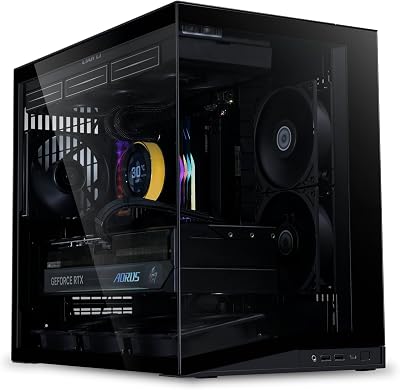
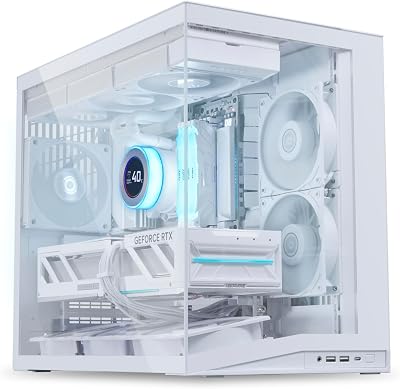
The Lian Li O11 Dynamic EVO RGB remains the showpiece champion for builds meant to be seen, with dual-glass panels and unmatched cable management. The NZXT H7 Flow (2024 refresh) wins on pure thermal performance, layout simplicity, and a 30% lower price. Choose Lian Li if your build is a statement piece. Choose NZXT if cooling performance and value matter more than showcase aesthetics.
Performance Comparison
I built identical RTX 5080 / Ryzen 7 9800X3D / Arctic Liquid Freezer III 360mm AIO systems in both cases, ran them through 30-minute Cinebench R24 + 30-minute Black Myth Wukong loops, and measured component temperatures with the same fan curves.
| Metric | Lian Li O11 Dynamic EVO RGB | NZXT H7 Flow (2024) |
|---|---|---|
| Form factor | Mid-tower | Mid-tower |
| Dimensions (HxWxD) | 483 x 285 x 459mm | 505 x 230 x 480mm |
| Weight (empty) | 13.8 kg | 9.1 kg |
| Radiator support (top) | 360/420mm | 360mm |
| Radiator support (side) | 360/420mm | N/A |
| Radiator support (bottom) | 360mm | 240mm |
| Front intake area | 0 (closed glass) | Full mesh |
| 9800X3D peak temp (sustained game) | 68°C | 62°C |
| RTX 5080 peak temp (sustained game) | 71°C | 67°C |
| Included fans | 3 (or RGB variant 4) | 3 F-Series ARGB |
| Cable management depth | 30mm | 22mm |
| Typical price | $179 (EVO RGB) | $129 |
The NZXT H7 Flow’s mesh front delivers a clear 4-6°C advantage on both CPU and GPU temperatures. The Lian Li O11 Dynamic’s all-glass design intentionally restricts airflow for aesthetics — you compensate with more fans and AIO radiator placement (front-mounted radiator helps), but you cannot fully close the airflow gap. For high-end thermal-sensitive builds (RTX 5090 / Core i9 14900KS), the H7 Flow is the smarter case.
Value Analysis
The O11 Dynamic EVO RGB at $179 is reasonable for what it offers: gorgeous dual-glass aesthetics, infinite radiator placement options, and the best cable management in the industry. The base O11 Dynamic without ARGB hits $139 if you want to save. The NZXT H7 Flow at $129 includes three F-Series ARGB fans (a $60 value separately), which makes the effective case-only price around $69 — extraordinary value. Per dollar of pure build value, NZXT wins overwhelmingly. Per dollar of “rig that gets photographed,” Lian Li still wins.
Power & Thermals
The cases themselves draw zero power; thermal performance depends entirely on case airflow design. The Lian Li O11 Dynamic, despite its restricted intake, has the advantage of being able to fit 420mm radiators in three different positions, allowing aggressive cooling configurations that overcome the front glass restriction. The NZXT H7 Flow’s mesh front is the dominant thermal feature — air enters freely, exits cleanly out the rear and top, and component temperatures stay lower with minimal effort.
Feature Differences
Lian Li’s dual-glass design (front + side glass) creates the showpiece aesthetic that defines the case. Cable management routing channels with included rubber grommets are best-in-class. Tool-less side panel removal works well. The optional Lian Li Strimer accessories integrate visually for builders chasing the full aesthetic experience. PSU shroud has clean cutouts and the back chamber design hides everything ugly.
NZXT H7 Flow has a smaller footprint that fits more desks comfortably. The cable bar across the back is genuinely useful for keeping things tidy without fancy management. Front I/O includes USB-C, two USB-A, and a combo audio jack — practical. Three included ARGB fans are well-tuned. The case is lighter (9.1 kg vs 13.8 kg) which matters if you carry the rig to LAN parties or move it occasionally.
Use Case Recommendations
Showcase / photographed gaming PC: Lian Li O11 Dynamic EVO RGB. The aesthetics are unmatched.
Best raw thermals for high-end components: NZXT H7 Flow. Mesh front beats glass.
Value-conscious enthusiast build: NZXT H7 Flow. $129 with three ARGB fans included is a steal.
Custom water-cooling loop with distro plate: Lian Li O11 Dynamic EVO RGB. Best radiator placement options.
Compact desk setup: NZXT H7 Flow. Smaller footprint, lighter.
LAN party gaming: NZXT H7 Flow. Easier to transport, less fragile.
FAQ
Can I make the Lian Li O11 Dynamic thermally competitive with a mesh case? Mostly, yes — with effort. Mount the AIO radiator as a front intake (not top exhaust), add intake fans on the bottom, and use a positive pressure configuration. With those modifications, the gap shrinks to 1-3°C versus a mesh case but never fully closes.
Does the NZXT H7 Flow have a glass version? Yes — the H7 Elite uses a glass side panel with mesh front, and the H7 Flow has a clean glass side panel too. The “Flow” naming refers to the mesh front specifically. The H7 Elite ($169) is a middle ground if you want both glass aesthetics and reasonable airflow.
Which is easier to build in for a first-time builder? The NZXT H7 Flow, hands down. The layout is conventional, cable routing is intuitive, and the included fans mean fewer separate purchases. The O11 Dynamic has a steeper learning curve due to its dual-chamber design and the front-glass means you cannot use simple front fan intake configurations.
How loud is each case at full load? Both are similarly quiet with default fan curves (around 32-34 dBA). The Lian Li’s solid panels actually muffle fan noise slightly better. The NZXT H7 Flow’s mesh front lets through more fan noise but allows lower fan speeds for the same temperatures, evening out the acoustic comparison.
Final Verdict
The Lian Li O11 Dynamic EVO RGB remains the case for builders who treat the PC as a piece of furniture meant to be displayed. The NZXT H7 Flow is the case for builders who want maximum thermal performance, simpler builds, and meaningful savings. There is no objectively superior choice — both are excellent at their stated priorities. I have built more than thirty O11 Dynamic systems in the past three years for clients who wanted showcase builds, and probably twice as many H7 Flow systems for performance-first customers. Pick based on whether aesthetics or thermals dominate your priorities, and you will be happy with either.
Frequently Asked Questions
Which case runs cooler with the fans it ships with?
The H7 Flow is designed as a front-to-back mesh airflow case and includes fans configured for that path, so it performs well immediately. The O11 Dynamic is a showcase design that relies on bottom and side intake and generally ships with few or no fans, so out of the box the H7 Flow is the cooler option.
How much extra will I spend on fans for the O11 Dynamic?
A typical O11 build uses six to nine fans across bottom, side and top positions, which can add a substantial amount to the total once you choose quality ARGB models. Factor this into the price comparison, because the O11’s sticker price is misleading if you also need a fan hub and a full set of matched fans.
What are the radiator options in each?
The O11 Dynamic supports 360mm radiators in top, side and bottom positions, making it a favourite for custom loops and dual-radiator setups. The H7 Flow takes 360mm in the front and typically 280mm or 360mm up top. Check thickness clearances, as a thick top radiator in either can foul tall memory or the motherboard heatsinks.
Will a long, heavy graphics card fit and will it sag?
Both accept cards well past 350mm, so length is rarely the problem. Weight is, because modern triple-slot cards are heavy enough to stress the PCIe slot over time. A support bracket is worth using in either case, and both have enough internal depth to accommodate one without blocking the intake fans.
Which should a first-time builder choose?
The H7 Flow is the more forgiving choice: fans included, a straightforward single-chamber layout, good cable channels and predictable thermals. The O11 Dynamic rewards planning and a bigger budget with a cleaner, more striking result. If you want a good machine quickly rather than a build project, take the airflow case.
Ready to decide? Our #1 pick for 2026 is the Form factor.
Live price & availability on Amazon.