- Top Pick: Intel Core Ultra 5 Desktop Processor 245KF – 14 cores (6 P-cores + 8 E-cores) up to 5.2 GHz
- Best Value: Intel® Core™ Ultra 5 Desktop Processor 225 10 cores (6 P-cores + 4 E-cores) up to 4.9 GHz
- Premium Choice: Intel® Core™ Ultra 5 Processor 250K Plus 18 cores (6 P-cores + 12 E-cores) up to 5.3 GHz
Affiliate disclosure: As an Amazon Associate we earn from qualifying purchases. This post contains affiliate links — if you buy through them we may earn a small commission at no extra cost to you. This never affects our recommendations.
Intel’s Core Ultra 5 245K brings Arrow Lake’s hybrid architecture to the budget segment with 14 cores (6P + 8E) at just $289, making it one of the most affordable modern processors available. While it can’t match the productivity capability of higher core count options, the 245K delivers solid gaming performance and reasonable multi-threaded capability for casual content creators. At 125W TDP with competitive gaming frame rates, the 245K is an excellent budget option for builders prioritizing value and gaming on a tight budget. It’s also a strong option for creators who want some CPU cores without flagship pricing.
In a hurry? See the top-rated Gaming Cpu deals available right now:
🛒 Check Gaming Cpu Prices on Amazon →🛒 Best Price Today on Amazon
Prime members get fast, free shipping on everything above, plus member-only deals. New members get a 30-day free trial — cancel anytime.
Start 30-Day Prime Free Trial →See Today’s Amazon DealsSpecifications & Architecture
| Specification | Value |
|---|---|
| Cores / Threads | 14 (6P + 8E) |
| P-Core Base Clock | 4.2 GHz |
| P-Core Boost Clock | 5.2 GHz |
| E-Core Base Clock | 2.8 GHz |
| E-Core Boost Clock | 4.4 GHz |
| L3 Cache | 24 MB |
| TDP | 125W (base) / 250W (max turbo) |
| Socket | LGA1851 |
| Architecture | Arrow Lake (Intel 7 / 3nm hybrid) |
| Supported Memory | DDR5-6400 native |
The Core Ultra 5 245K is the entry-level Arrow Lake processor with 14 cores combining 6 performance cores and 8 efficiency cores. The 5.2 GHz P-core boost provides decent single-threaded performance, while the 14-core configuration offers moderate multi-threading capability. The 24MB L3 cache is conservative but acceptable for the budget segment. At $289, it’s one of the most affordable modern CPUs available.
Gaming Performance
Gaming performance on the 245K is solid for a budget processor, delivering respectable 1440p gaming and excellent 1080p performance. It’s suitable for budget gaming systems paired with mid-range GPUs.
| Game Title | Resolution | Settings | FPS (245K) |
|---|---|---|---|
| Cyberpunk 2077 (2.3) | 1440p | Medium | 65-75 |
| Counter-Strike 2 | 1440p | High | 350+ |
| Baldur’s Gate 3 | 1080p | Medium + Ray Tracing | 80-90 |
| Helldivers 2 | 1440p | High | 150+ |
| Call of Duty: Warzone | 1440p | Medium | 115-130 |
The 245K delivers solid 1440p gaming at medium settings and excellent 1080p performance at high settings. For budget gamers pairing with RTX 5060 or 5070, the 245K provides competent gaming capability. It’s not designed for ultra-high-refresh competitive play or 4K gaming, but for 1440p 60-100 FPS or 1080p 144+ FPS gaming, it’s perfectly adequate.
Productivity Performance
The 245K’s 14 cores provide light multi-threaded capability, suitable for casual content creation but limiting for professional work.
| Workload | Metric | Performance |
|---|---|---|
| Cinebench R24 (Multi-Thread) | Points | 1,350+ |
| Cinebench R24 (Single-Thread) | Points | 145+ |
| Blender (CUDA) | Render Time | Moderate (limited cores) |
| Video Encoding (H.265) | FPS | 110-130 FPS @ 1080p |
| Code Compilation | Time | Moderate parallel performance |
The 245K is adequate for light content creation and casual video editing. Video encoding is slower than higher-tier options but acceptable for hobbyist streaming. Professional content creators should invest in higher core count options, but casual users will find adequate capability.
Power Consumption & Thermals
The 245K operates at 125W base TDP with peak turbo reaching 250W. The lower core count means more predictable thermals than higher-tier options.
Temperature Performance:
- Air Cooling (Budget Cooler): 65-73°C under full load
- AIO Liquid Cooling (240mm): 50-60°C under full load
- Idle Temperature: 32-38°C (ambient dependent)
The 245K runs cooler than higher core count Arrow Lake options, with peak sustained power around 180-200W. An 850W PSU is sufficient for reasonable GPU pairings. The thermal management is straightforward even with budget coolers.
Platform & Motherboard Compatibility
The 245K requires LGA1851 socket with available boards:
- Z890: Premium boards ($300-400+)
- H890: Mid-range boards ($200-300)
- B890: Budget boards ($150-250)
For the 245K’s budget positioning, B890 boards are the recommended pairing, offering solid features at reasonable cost. H890 boards provide more features if desired. The new motherboard expense is the main drawback of the LGA1851 platform for budget builders.
Pros & Cons
Pros:
- Ultra-affordable $289 price point
- Excellent value for budget gaming
- 14 cores offer light multi-threading capability
- Solid 1080p gaming and acceptable 1440p performance
- 125W TDP is manageable with budget cooling
- 5.2 GHz boost provides decent single-threaded response
Cons:
- Still requires new expensive LGA1851 motherboard
- Gaming performance behind AMD budget options
- Limited cores for serious productivity work
- Peak power reaches 250W (needs 850W+ PSU)
- Not ideal for streaming or content creation
- Cache is relatively small (24MB)
Who Should Buy This CPU?
Ideal For:
- Budget Gaming Builders: Tight budget for gaming system
- 1080p Gaming Focus: Users prioritizing 1080p performance
- Intel Platform Loyalists: Want Intel upgrade on new platform
- Light Creators: Casual content creators on budget
Not Recommended For:
- Content creators (not enough cores)
- Streamers (insufficient encoding capability)
- 1440p+ high-refresh gamers (needs stronger CPU)
- AMD budget enthusiasts (Ryzen 5 9600X is better value)
Alternatives to Consider
- Ryzen 5 9600X Review — Better budget AM5 option
- Intel Core Ultra 7 265K Review — More cores for $100 more
- Ryzen 7 9700X Review — 8-core Ryzen at similar price
- How to Build a Gaming PC 2026 — Building guide
- Ultimate Gaming PC Build Guide 2026 — System recommendations
- Best NVMe SSD for Gaming 2026 — Storage solutions
- DDR5 6000 vs 7200 — Is It Worth the Upgrade? — RAM selection
- Air vs AIO Cooling 2026 — Cooling comparison
- RTX 5060 Review 2026 — GPU pairing recommendation
- How to Overclock DDR5 RAM Safely — Performance tuning
FAQ
Is the 245K better than Ryzen 5 9600X?
The 9600X is faster at gaming and doesn’t require expensive new motherboard. The 245K has more cores (14 vs 6) but costs more overall with motherboard. Choose 9600X unless you specifically need more cores.
Should I get 245K or 9700X?
The 9700X is faster at both gaming and productivity, uses cheaper AM5 boards, and has lower TDP. The 245K is only cheaper CPU-wise ($289 vs $359) but more expensive overall with motherboard. Choose 9700X unless budget is absolutely critical.
Can the 245K handle gaming + streaming?
Not effectively. Only 6 P-cores means gaming suffers significantly during streaming. Need higher core count for simultaneous gaming and encoding.
What GPU should I pair with the 245K?
RTX 5060 or 5070 for balanced 1440p gaming. Avoid RTX 5080/5090 as the CPU will bottleneck them significantly.
Do I need a new motherboard for the 245K?
Yes, LGA1851 is required. Budget $150-250+ for a quality B890 board, adding significant cost.
Is the 245K future-proof?
It’s adequate for 1080p gaming through 2027-2028. For 1440p, it will struggle with future demanding games. Upgrade path is available within LGA1851.
Final Verdict
Score: 8.2/10
The Gaming Cpu is a competent budget gaming CPU at $289, but the mandatory new LGA1851 motherboard expense diminishes its value proposition. The Ryzen 5 9600X at the same price offers similar gaming performance without the motherboard upgrade requirement, making it the better budget choice for most builders. The 245K makes sense only for Intel-specific loyalists or those building on LGA1851 for other reasons. For budget-conscious builders, the AM5 platform remains the superior choice in 2026.

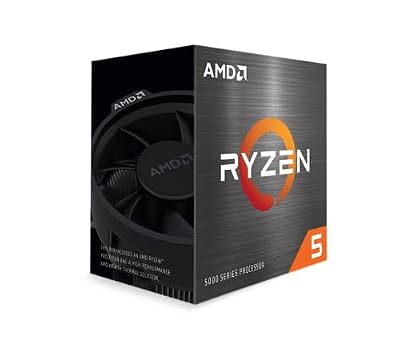
AMD Ryzen 5 5500 6-Core, 12-Thread Unlocked Desktop Processor with Wraith Stealth Cooler


As an Amazon Associate we earn from qualifying purchases. Product prices and availability are accurate as of the date/time indicated.
Compare Similar CPUs
As an Amazon Associate we earn from qualifying purchases at no extra cost to you.





Related Articles
Looking for more on this topic? Browse the hand-picked guides below — each one applies the same scoring rubric used in this review.
Frequently Asked Questions
Is the Core Ultra 5 245K good for gaming?
It is competent rather than class leading. It delivers solid frame rates that will not bottleneck a midrange graphics card at 1440p, but the 3D V-Cache Ryzen chips remain faster in most games. Its value depends heavily on the price of the whole platform including board and memory.
What is the total platform cost like?
It requires an LGA 1851 motherboard and DDR5 memory, so an upgrade from an older Intel system means replacing more than just the processor. When comparing against AMD options, always price the complete board plus memory plus CPU bundle rather than the chip alone.
How does it handle productivity work?
Well for its price tier. The mix of performance and efficiency cores gives it strong multithreaded throughput for video encoding, photo editing, and general multitasking, and the integrated media engine accelerates common encode and decode tasks that would otherwise occupy the main cores.
Does it need an expensive cooler?
No. Its power draw is moderate, so a decent mid-range tower air cooler keeps it in check under sustained load. There is no need for a large liquid cooling loop unless you plan to run continuous all-core workloads and want the lowest possible noise.
Does it have usable integrated graphics?
Yes, the integrated graphics are capable enough for desktop use, media playback, and light gaming, which is genuinely useful for troubleshooting or as a fallback while waiting on a graphics card. It is not a substitute for a discrete GPU in modern titles.