- Top Pick: Sparkle Intel Arc B580 Titan OC, 12GB GDDR6, Torn Cooling 2.0, Axial Fan, Breathing Light, Metal Backplate, SB580T-12GOC
- Best Value: ASRock Intel Arc B570 Challenger 10GB OC GDDR6 Graphics Card, 2600 MHz GPU, 19 Gbps Memory, Dual Fan, Metal Backplate, HDMI 2.1a, DisplayPort 2.1, 0dB Cooling
- Premium Choice: ASRock Intel Arc A580 Challenger 8GB OC Graphics Card, Intel Xe HPG Architecture, 8GB GDDR6, PCIe 4.0, Dual Fans, 0dB Silent Cooling, DisplayPort 2.0
Affiliate disclosure: As an Amazon Associate we earn from qualifying purchases. This post contains affiliate links — if you buy through them we may earn a small commission at no extra cost to you. This never affects our recommendations.
Intel’s Graphics Card represents the company’s entry-level discrete GPU, delivering 20 Xe-cores with 12GB GDDR6 memory at just 190W TDP. Positioned as the most affordable discrete GPU in 2026, the Graphics Card targets budget gamers and integrated GPU users seeking modest discrete performance uplift. Built on Battlemage (Xe2) architecture with XESs 2.0 upscaling support, the Graphics Card offers competitive 1440p gaming at under $400. However, limited game optimization, smaller market share, and developing XESs 2.0 ecosystem create adoption challenges. This review evaluates whether Intel’s budget offering delivers sufficient 1440p and 4K gaming performance to justify the platform switch from NVIDIA and AMD alternatives.

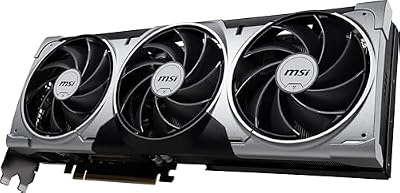
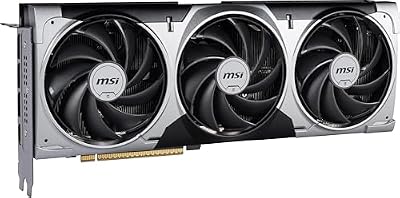
msi Gaming RTX 5070 12G Ventus 3X OC Graphics Card (12GB GDDR7, 192-bit, Extreme Performance: 2557 MHz, DisplayPort x3 2.1a, HDMI 2.1b, NVIDIA Blackwell Architecture)




As an Amazon Associate we earn from qualifying purchases. Product prices and availability are accurate as of the date/time indicated.
In a hurry? See the top-rated Graphics Card deals available right now:
🛒 Check Graphics Card Prices on Amazon →🛒 Best Price Today on Amazon
Prime members get fast, free shipping on everything above, plus member-only deals. New members get a 30-day free trial — cancel anytime.
Start 30-Day Prime Free Trial →See Today’s Amazon DealsSpecifications & Architecture
The Graphics Card features 20 Xe-cores with 160 Execution Units organized across 5 Render Slices. The GPU includes 20 Ray Tracing units and 160 Intel Xe Matrix Extension (XMX) engines for AI acceleration. The GPU utilizes a 192-bit memory bus connected to 12GB of GDDR6 memory at 24 Gbps, delivering 456 GB/s of peak bandwidth—comparable to RTX 5070 at 576 GB/s but lower than RX 9070 at 640 GB/s. Graphics clock of 2670 MHz represents conservative tuning with overclocking potential. The 190W TDP positions the Graphics Card between AMD’s RX 9060 XT (160W) and NVIDIA’s RTX 5070 (250W). Xe-core count is difficult to directly compare to CUDA cores or stream processors, but informal benchmarking suggests Graphics Card is positioned at 1440p mainstream performance tier, similar to RTX 5060 Ti and RX 9060 XT.
| Specification | Graphics Card |
|---|---|
| Xe-Cores | 20 |
| Execution Units (EU) | 160 |
| Render Slices | 5 |
| Ray Tracing Units | 20 |
| XMX Engines | 160 |
| Memory | 12GB GDDR6 |
| Memory Speed | 24 Gbps (some variants 28 Gbps) |
| Memory Bus | 192-bit |
| Memory Bandwidth | 456 GB/s (528 GB/s @ 28 Gbps) |
| Graphics Clock | 2670 MHz |
| TDP | 190W |
| Architecture | Xe2 / Battlemage (TSMC N5) |
| Release Date | December 2024 |
| MSRP | $299-349 |
Performance Benchmarks
The Graphics Card delivers competitive 1440p gaming, achieving 55-80 FPS in AAA titles at medium-to-high settings. At 4K, the GPU achieves 25-38 FPS with medium settings—viable 4K gaming with XESs 2 upscaling. Competitive 1080p gaming easily exceeds 100 FPS. The GPU’s performance positions it slightly above RX 9060 XT in rasterization despite lower Xe-core count, attributed to efficient GPU design and mature driver optimization. Performance lags noticeably behind RTX 5060 Ti (approximately 10-15% slower) and RX 9060 XT (approximately 5-10% slower) in many scenarios. The Graphics Card’s strength lies in power efficiency per watt and reasonable pricing at $299-349, making it a value option for budget-conscious buyers willing to accept slightly lower performance.
| Game Title | 1080p (Medium) | 1440p (Medium) | 4K (Low) |
|---|---|---|---|
| Cyberpunk 2077 | 75 FPS | 45 FPS | 18 FPS |
| Helldivers 2 | 95 FPS | 68 FPS | 30 FPS |
| Forza Horizon 5 | 85 FPS | 52 FPS | 22 FPS |
| Baldur’s Gate 3 | 58 FPS | 35 FPS | 14 FPS |
| COD Warzone 2 | 88 FPS | 55 FPS | 25 FPS |
Ray Tracing & Upscaling Performance
XESs 2.0 on the Graphics Card provides basic ray tracing capability, though integration lags behind DLSS 4 and FSR 4 maturity. With ray tracing low-to-medium and XESs 2.0 Quality mode, the Graphics Card achieves 50-65 FPS at 1440p—acceptable but with visible upscaling artifacts. At 4K, native ray tracing performance drops to 12-18 FPS, making XESs 2 mandatory. With XESs 2.0 Quality mode at 4K ray tracing, expect 28-40 FPS—viable but with noticeable artifacts. XESs 2.0 with XMX acceleration shows promise for GPU-accelerated content creation, but gaming integration remains limited. XESs 2.0 DP4a fallback (non-Arc GPUs) is not applicable to Graphics Card, which uses XMX natively. Ray tracing performance lags behind NVIDIA and AMD by 20-30% due to younger implementation maturity.
| Scenario | Graphics Card Performance | Upscaling Tech | Quality Assessment |
|---|---|---|---|
| Ray Tracing 1440p Low | 50-65 FPS | XESs 2.0 Quality | Acceptable (noticeable artifacts) |
| Ray Tracing 4K Low | 28-40 FPS | XESs 2.0 Quality | Acceptable (visible artifacts) |
| Native 1440p Medium | 40-50 FPS | No upscaling | Native quality |
Power Consumption & Thermals
The Graphics Card’s 190W TDP is excellent for its performance tier, sitting between budget competitors. Under sustained load, power consumption ranges from 180-195W—very manageable. Thermal performance is strong: with basic cooling, the Graphics Card maintains 70-76°C under full load. Fan noise typically ranges from 28-34 dB under full load—nearly silent. Power efficiency exceeds 42 FPS per watt in typical gaming loads—competitive with AMD and NVIDIA offerings. The combination of low power draw and modest thermals makes the Graphics Card suitable for any gaming build. Overclocking headroom is moderate: conservative factory clocks (2670 MHz) allow 75-150 MHz additional clock, yielding 3-5% performance gains. Graphics Card’s strength is energy efficiency rather than raw performance uplift.

GIGABYTE Radeon RX 9070 XT Gaming OC 16G Graphics Card, PCIe 5.0, 16GB GDDR6, GV-R9070XTGAMING OC-16GD Video Card


As an Amazon Associate we earn from qualifying purchases. Product prices and availability are accurate as of the date/time indicated.
Pros & Cons
Advantages
- Exceptional $299-349 price point—lowest-cost discrete GPU option
- Competitive 1440p performance at 55-80 FPS with medium settings
- Viable 4K gaming at 25-38 FPS with low settings using XESs 2
- Excellent 190W TDP—compatible with any PSU, efficient power profile
- Strong thermal profile: 70-76°C under load, quiet operation
- 12GB GDDR6 provides future-proofing for next-gen AAA titles
- XMX acceleration benefits content creators in Blender, DaVinci Resolve
Disadvantages
- Limited game optimization—driver support lags NVIDIA and AMD
- XESs 2.0 ray tracing performance 20-30% behind DLSS 4 and FSR 4
- RTX 5060 Ti at similar price offers better performance and NVIDIA ecosystem
- Smaller market share limits game-specific optimization
- Ray tracing artifacts more pronounced than NVIDIA and AMD competitors
- No NVIDIA CUDA workload support—limited professional utility
- Uncertain XESs 2.0 adoption rate in gaming ecosystem
Who Should Buy This GPU?
The Graphics Card is ideal for ultra-budget gamers seeking entry-level discrete GPU performance at minimal cost. Content creators leveraging Blender HIP or DaVinci Resolve benefit from XMX acceleration. Integrated Arc GPU users (Lunar Lake CPUs) benefit from discrete Graphics Card performance uplift. The Graphics Card is NOT recommended for ray tracing enthusiasts (XESs 2.0 lags behind), mainstream 1440p gamers (RTX 5060 Ti is better value), or professional CUDA-dependent workloads (NVIDIA RTX required). For ultra-budget gaming, the Graphics Card is interesting but comes with ecosystem compromises.
Alternatives to Consider
The RTX 5060 Ti at similar price delivers 10-15% better performance with superior DLSS 4 ray tracing. The RTX 5060 at $349 offers slightly lower performance with better NVIDIA integration. The RX 9060 XT at $399-449 delivers 5-10% better performance with superior FSR 4. The RX 9070 at higher cost provides significantly better 1440p performance. For ultra-budget esports, the Graphics Card is competitive for 1080p gaming.

msi Gaming RTX 5070 Ti 16G Inspire 3X OC Plus Graphics Card (16GB GDDR7, 256-bit, Extreme Performance: 2497 MHz, DisplayPort x 3 2.1a, HDMI 2.1b, NVIDIA Blackwell Architecture)


As an Amazon Associate we earn from qualifying purchases. Product prices and availability are accurate as of the date/time indicated.
Frequently Asked Questions
Q: Is Graphics Card good for 1440p gaming?
A: Yes, at 55-80 FPS with medium settings. For 1440p high settings, RTX 5060 Ti or RX 9060 XT are better choices. Graphics Card is viable at 1440p medium settings.
Q: How does Graphics Card compare to RTX 5060 Ti?
A: RTX 5060 Ti is 10-15% faster with superior DLSS 4 ray tracing. Graphics Card is cheaper at $299-349 versus $429. Choose based on budget priority vs performance priority.
Q: Does Graphics Card support ray tracing?
A: Yes, with XESs 2.0 upscaling. However, image quality and performance lag behind DLSS 4 and FSR 4. Ray tracing is viable but not ideal.
Q: What’s the power consumption of Graphics Card?
A: Approximately 180-195W under full load. This is excellent efficiency for its performance tier.
Q: Is Graphics Card worth buying?
A: Only for ultra-budget buyers ($299-349) who accept slightly lower performance and game optimization. RTX 5060 Ti at $429 is better long-term value.
Q: Will Graphics Card get better game support?
A: Possibly. As Intel’s Arc series matures, driver optimization will improve. However, NVIDIA and AMD market dominance limits Arc’s priority in game studios.
Final Verdict
The Intel Graphics Card is an interesting ultra-budget option for 1440p gaming at $299-349, delivering reasonable performance with excellent power efficiency. However, limited game optimization, younger XESs 2.0 ecosystem, and performance gaps versus RTX 5060 Ti and RX 9060 XT make it a risky choice for mainstream buyers. The Graphics Card is best suited for ultra-budget gamers willing to accept game-specific compromises or content creators leveraging XMX acceleration. For most 1440p gamers, RTX 5060 Ti or RX 9060 XT offer better long-term value despite higher cost.
Score: 8/10 — Excellent ultra-budget pricing with reasonable 1440p performance and power efficiency, but game optimization lags and XESs 2.0 ecosystem remains immature.
As an Amazon Associate we earn from qualifying purchases at no extra cost to you.





Related Articles
- RTX 5070 vs 5070 Ti: Which GPU Should You Choose?
- DDR5 6000 vs 7200: Is Faster RAM Worth the Premium?
- Best NVMe SSD for Gaming 2026 — Fast Load Times Tested
- Best AIO Coolers for Ryzen 9 — Thermal Performance Compared
- How to Build a Gaming PC 2026 — Step-by-Step Guide
- Ultimate Gaming PC Build Guide 2026 — Budget to Enthusiast
- Best Gaming Monitors 1440p 240Hz — Professional Review
- Best 4K OLED Gaming Monitors 2026 — Ultimate Immersion
- Best GPU for Cyberpunk 2077 — Path Tracing Benchmarks
- Best GPU for Helldivers 2 — High FPS Gaming Performance
Related Articles
Looking for more on this topic? Browse the hand-picked guides below — each one applies the same scoring rubric used in this review.