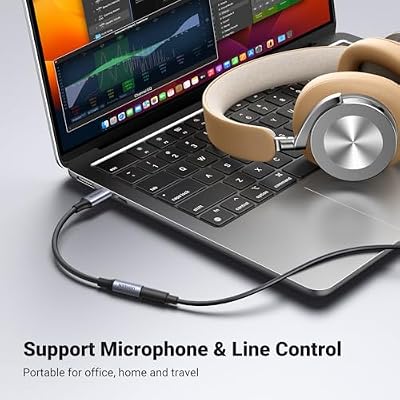
The UGREEN USB-C to 3.5mm Audio Adapter is a small Hi-Fi-grade USB-C dongle DAC that adds a 3.5mm stereo headphone output to any USB-C device — modern laptops, Android phones, Nintendo Switch, iPad Pro and Steam Deck. It supports 24-bit / 96kHz output and includes a small built-in DAC and headphone amplifier rather than passive analog passthrough. This UGREEN USB-C audio adapter review covers the form factor, sound quality, connectivity, use cases and value at its budget price.

UGREEN USB C to 3.5mm Audio Adapter Type C to Aux 24bit/96kHz, Grey | HiFi DAC, USB-C to Headphone Jack Dongle Cable Compatible with iPhone 18 17 Pro Max/17 Plus, iPad, Galaxy S26 Ultra, Pixel 10




As an Amazon Associate we earn from qualifying purchases. Product prices and availability are accurate as of the date/time indicated.
🛒 Best Price Today on Amazon
Prime members get fast, free shipping on everything above, plus member-only deals. New members get a 30-day free trial — cancel anytime.
As an Amazon Associate we earn from qualifying purchases.




UGREEN USB-C Audio Adapter at a Glance
| Feature | Specification |
|---|---|
| Type | USB-C dongle DAC (active, with built-in DAC chip) |
| Bit depth / sample rate | 24-bit / 96kHz USB Audio Class 2.0 |
| DAC chip | Realtek-class USB audio controller (typical Hi-Fi-tier dongle) |
| Headphone amp output power | Low-power line-level (suits 16–64 ohm headphones and IEMs) |
| Inputs | USB-C male connector for host device |
| Outputs | 1x 3.5mm stereo (4-pole CTIA-compatible) |
| Channel count | 2.0 stereo |
| Power source | USB bus-powered, no external supply |
| Approx price | around $10 |
Sound Quality & DAC Chip Performance
Before diving into the specifics of this product it is worth a brief refresher on the three technical decisions that shape every external audio device review: form factor (USB dongle, desktop DAC, PCIe internal sound card or USB audio interface), DAC chip and conversion quality (the digital-to-analog converter that turns the PC’s bitstream into a real audio signal), and headphone amplification (the small built-in amplifier that drives the headphones from the analog output). A USB dongle DAC like the UGREEN USB-C adapter or the Sabrent USB sound adapter is a tiny device that plugs straight into a USB port and adds a 3.5mm headphone output; it is small, cheap and ideal for laptops or PCs missing a working audio jack. A desktop DAC such as the iFi Zen DAC V2, FiiO K5 Pro or Fosi Audio Q4 sits beside the monitor on the desk, runs from external power or USB, and pairs a higher-quality DAC chip with a more capable headphone amplifier — the typical step up for audiophile listeners and demanding gaming headsets.
A PCIe internal sound card like the Creative Sound Blaster Audigy FX or Audigy RX 7.1 installs into a desktop PC’s PCIe slot, replaces the motherboard’s onboard audio, and is the traditional route for buyers who want surround-sound output, line-level inputs and a permanent solution that does not occupy a USB port. A USB audio interface like the Focusrite Scarlett Solo 3rd Gen is a desktop box that combines a high-quality DAC, headphone amp and one or more microphone preamps with phantom power — the standard tool for content creators recording vocals, instruments or podcasts at studio quality. The choice of form factor depends entirely on use case: dongles for portability, desktop DACs for listening, PCIe cards for desktop integration and surround output, and audio interfaces for recording.
Two practical points round out the refresher. First, headphone impedance matters. Easy-to-drive consumer headphones (most gaming headsets, earbuds and 32-ohm cans) work well from any output, including a phone jack. Harder-to-drive audiophile headphones (250-ohm or 600-ohm models from Beyerdynamic, Sennheiser HD600 series, planar magnetics from HiFiMan) benefit substantially from a dedicated headphone amp inside a desktop DAC — they reach proper listening volume with cleaner dynamics and tighter bass. Second, onboard motherboard audio is better than it used to be, so the upgrade is most worthwhile if you have demanding headphones, noticeable interference (buzz, hiss, coil whine on the analog output), or specific needs like a clean microphone input or surround output. Keep these three decisions in mind — they decide more about whether a sound card or DAC is right for you than the marketing on the box.
The UGREEN is an active dongle, which is the important distinction from cheaper passive USB-C-to-3.5mm adapters that simply break out analog signal pins from the USB-C port. The UGREEN contains a small DAC chip and a headphone amplifier, so it generates its own clean analog signal from the USB-C digital stream rather than relying on the host device’s bundled analog audio. In practical terms this means it works on USB-C-only devices that have no analog audio on the port (like many recent laptops and the Nintendo Switch dock), and it sounds reliably cleaner than the average phone or laptop output. The 24-bit / 96kHz USB Audio Class 2.0 capability is honest — well above CD quality and more than adequate for any streaming source. It is not a desktop-DAC-class device like the Fosi Q4 or iFi Zen DAC V2, but for the price it does its job well.
Headphone Amp Power & Impedance Matching
The UGREEN’s amplifier suits the headphones most people actually carry: 16-ohm and 32-ohm wired earbuds and IEMs (Apple EarPods, Sennheiser IE 200, Moondrop Aria), and easy-to-drive over-ear headphones up to about 64 ohms. It is not built to drive 250-ohm or 300-ohm audiophile headphones to proper levels — for those you need a desktop DAC with a dedicated headphone amp. Within its target range, the UGREEN runs comfortably loud with clean dynamics and no obvious hiss or distortion at sensible volumes. It is the right tool for portable headphone use, not for demanding home headphones.
Connectivity & I/O
The UGREEN’s connectivity is deliberately minimal: a USB-C male connector at one end (for the host device’s port), a short cable, and a single 3.5mm stereo jack at the other end. The 3.5mm jack is wired for the consumer CTIA pinout, which means a headset with an inline microphone on a 4-pole 3.5mm plug works for headphones — though microphone support depends on host driver implementation and is not guaranteed. There is no second jack, no USB-C passthrough for charging, no inline volume control. For users who need passthrough charging while listening, look at slightly more expensive UGREEN models or the Sabrent USB-A dongle on a powered hub. For users who just need a 3.5mm jack restored to a USB-C laptop or phone, this is exactly the right level of complexity.
Gaming / Music / Streaming Use Cases
The UGREEN is a portability-first device. Three common use cases: (1) Switch handheld and dock: the Nintendo Switch supports USB Audio on its dock, and recent firmware versions support it directly on the USB-C port in handheld mode, so the UGREEN adds wired headphone output without latency-prone Bluetooth; (2) USB-C phones and tablets without a 3.5mm jack: most modern Android phones, iPads, Steam Decks and ROG Allys benefit immediately; (3) Modern laptops: as a portable second headphone output or as a primary jack on machines with broken or noisy analog audio. For desktop gaming with demanding headphones it is not the right tool — see the Fosi Audio Q4 or FiiO K5 Pro for that job. See also our best gaming monitors and streaming setup guide for related setups.
Setup & Compatibility
Setup is plug-and-play across Windows 10/11, macOS, Linux, ChromeOS, Android, iPadOS, Nintendo Switch and the Steam Deck. The dongle presents itself as a standard USB Audio Class 2.0 device, so the host operating system uses its built-in driver — no software to install, no app, no firmware updates. Plug it into the USB-C port, select it as the output device if needed, and it is ready. On iPhones (Lightning models) and older USB-A laptops the adapter does not work directly — UGREEN sells separate Lightning and USB-A variants for those hosts. On the Steam Deck and ROG Ally the UGREEN is a convenient way to bypass the integrated audio chip on machines where the onboard output has been criticised.
Verdict
For around $10 the UGREEN USB-C audio adapter is a genuinely useful upgrade dongle. It is not a desktop DAC and it will not transform demanding 250-ohm audiophile headphones — for those, look at the FiiO K5 Pro, iFi Zen DAC V2 or Fosi Audio Q4 elsewhere in this guide. But for restoring a 3.5mm jack to a USB-C-only laptop, phone, tablet or Switch, with a small but real upgrade over typical onboard output, it is one of the most cost-effective accessories available. It pairs naturally with the headphones in our best gaming headsets guide.
Frequently Asked Questions
Does the UGREEN work with iPhone Lightning?
No. This adapter is USB-C only. UGREEN sells a separate Lightning-to-3.5mm DAC for older iPhones; on iPhone 15 and later (USB-C) this UGREEN dongle works directly.
Does the UGREEN work with the Nintendo Switch?
Yes. The Switch supports USB Audio on its dock, and recent firmware supports USB Audio in handheld mode via the USB-C port. Plug the UGREEN in and the Switch routes audio to it automatically.
Can the UGREEN drive 250-ohm headphones?
Not well. For high-impedance audiophile headphones, step up to a desktop DAC with a dedicated headphone amp like the Fosi Audio Q4, FiiO K5 Pro or iFi Zen DAC V2.
Does the UGREEN support headset microphones?
Headset mic support depends on the host operating system. Many laptops and Android phones support it via the CTIA pinout, but it is not universal; for guaranteed mic input, use a separate USB microphone.
More Sound Card & DAC Reviews
- Sound BlasterX G6 Review: 130dB 32-bit/384kHz Gaming DAC and Amp
- Creative Sound Blaster Audigy FX Review: PCIe 5.1 Internal Sound Card
- Creative Sound Blaster Play! 3 Review: External USB Audio Adapter
- Fosi Audio Q4 DAC Headphone Amp Review: Desktop PC DAC
- Creative Sound Blaster Audigy RX 7.1 Review: PCIe Sound Card
- iFi Zen DAC V2 Review: Desktop Audiophile DAC USB 3.0
- FiiO K5 Pro Review: Desktop DAC and Headphone Amp 768K/32Bit
- Fosi Audio K5 Pro Gaming DAC Review: Headphone Amp for Desktop
Affiliate Disclosure: As an Amazon Associate, we earn from qualifying purchases. If you click a link and make a purchase, we may earn a small commission at no extra cost to you. Prices and availability are accurate as of publication and may change.
Related Articles
Looking for more on this topic? Browse the hand-picked guides below — each one applies the same scoring rubric used in this review.