- Top Pick: HP Victus 15.6" Full HD 144Hz Gaming Laptop, Intel Core i5-12450H, NVIDIA GeForce RTX 3050,16GB RAM, 512GB PCIe SSD, Wi-Fi 6, Backlit Keyboard,Windows 11 Pro, Performance Blue
- Best Value: NIMO 15.6" IPS FHD-Light Gaming-Laptop,AMD Ryzen 5 6600H 16GB DDR5 RAM 512GB SSD (Beat i5-1335U, 6 Cores Up to 4.5GHz) AMD Radeon 660M GPU-Computer with 100W Type-C Backlit Keyboard Fingerprint
- Premium Choice: HP Victus 15 Gaming Laptop, NVIDIA GeForce RTX 3050, 12th Gen Intel Core i5-12500H, 8 GB RAM, 512 GB SSD, Full HD Display, Windows 11 Home, Backlit Keyboard, Enhanced Thermals (15-fa0025nr, 2022)
Affiliate disclosure: As an Amazon Associate we earn from qualifying purchases. This post contains affiliate links — if you buy through them we may earn a small commission at no extra cost to you. This never affects our recommendations.
As an Amazon Associate we earn from qualifying purchases at no extra cost to you.





Spending $900 on a gaming laptop in 2026 is a genuine sweet spot. Every pick on this list runs an RTX 4060 — Nvidia’s current mid-range workhorse — so the real differentiators come down to display quality, thermal headroom, build, and the small spec details that separate a frustrating purchase from a great one. This guide cuts through the noise and explains exactly what you gain over a $700 machine, what trade-offs still exist at this price, and which laptop wins for your specific use case.
In a hurry? See the top-rated Gaming Laptop Under $900 deals available right now:
🛒 Check Gaming Laptop Under $900 Prices on Amazon →🛒 Best Price Today on Amazon
Prime members get fast, free shipping on everything above, plus member-only deals. New members get a 30-day free trial — cancel anytime.
Start 30-Day Prime Free Trial →See Today’s Amazon DealsQuick Comparison: Top 5 Gaming Laptops Under $900
| Laptop | GPU | Display | RAM / Storage | Best For |
|---|---|---|---|---|
| ASUS TUF Gaming A15 | RTX 4060 | 1080p 144Hz | 16GB / 512GB | Overall best pick |
| Lenovo Legion 5 Gen 8 | RTX 4060 | 1440p 165Hz | 16GB / 512GB | Display-first buyers |
| MSI Katana 15 | RTX 4060 | 1080p 144Hz | 16GB / 512GB | Tightest budget |
| Acer Predator Helios Neo 16 | RTX 4060 | 1600p 165Hz | 16GB / 512GB | Sustained gaming loads |
| HP Victus 16 | RTX 4060 | 1080p 144Hz | 16GB / 512GB | Long battery sessions |
What $900 Gets You Over $700
Before diving into individual picks, it is worth understanding what the extra $200 actually buys. Both tiers share the RTX 4060 GPU, so raw frame rates are similar. The gap shows up in five areas:
- Cooling headroom. Cheaper RTX 4060 laptops throttle under sustained load. Premium chassis at $850–$900 maintain higher GPU TGP (Total Graphics Power) for longer sessions.
- Display panel quality. Budget 1080p panels at $700 often have poor color coverage and slow response times. At $900 you can get a 1440p or a calibrated 1080p IPS.
- RAM configuration. One-SODIMM-slot designs are common at $700, making upgrades harder. Most $900 machines have two slots, so upgrading to 32GB is straightforward.
- Wi-Fi 6E and 2.5Gbps LAN. Competitive players benefit from both. These features appear inconsistently below $850.
- MUX switch. A MUX (multiplexer) switch bypasses the iGPU and routes the dGPU directly to the display, boosting frame rates 10–15% without any hardware change. It is rare under $800, more common at $900.
The 5 Best Gaming Laptops Under $900
1. ASUS TUF Gaming A15 — Best Overall
Price: ~$899 | ASIN: B0BWFNSH8R
The TUF A15 has been a reliable benchmark in the sub-$1,000 segment for several years and the 2024 version with Ryzen 7 7745HX and RTX 4060 is the most complete package at this price. The 7745HX is a high-performance 8-core CPU that outpaces the older 6-core Ryzen 5 options in multi-threaded workloads like streaming or video editing while gaming.
Specs
| Spec | Detail |
|---|---|
| GPU | RTX 4060 (up to 115W TGP) |
| CPU | AMD Ryzen 7 7745HX |
| Display | 15.6-inch 1080p IPS, 144Hz |
| RAM | 16GB DDR5 (2× SODIMM — upgradable) |
| Storage | 512GB NVMe PCIe 4.0 |
| Wi-Fi | Wi-Fi 6E |
| LAN | 2.5Gbps Ethernet |
| MUX Switch | Yes |
| Battery | 90Wh |
Pros and Cons
Pros
- MUX switch gives a genuine free frame rate boost in competitive titles
- 2× SODIMM slots make 32GB upgrade trivial
- 2.5Gbps LAN for low-latency wired play
- Wi-Fi 6E for modern routers
- 90Wh battery is large for the category
- Solid keyboard with per-key RGB and good travel
Cons
- Display is 1080p only — no 1440p option at this price
- Fan noise under full load is noticeable
- 512GB storage will fill up quickly with modern game installs
The TUF A15 wins the overall crown because it checks every competitive-play box — MUX switch, 2.5Gbps LAN, Wi-Fi 6E, upgradable RAM — without compromising thermal performance. The Ryzen 7 7745HX is a meaningful step up from Ryzen 5 alternatives and the 90Wh battery means you are not always hunting for a plug.
2. Lenovo Legion 5 Gen 8 — Best Display
Price: ~$879 | ASIN: B0C3NKQYTH

If you play story-driven games or anything visually demanding, the Legion 5 Gen 8’s 1440p 165Hz IPS panel is the standout feature at this price point. Running a 1440p display on an RTX 4060 is a legitimate use case for games that are not purely competitive — medium-to-high settings in 2024 titles typically land in the 60–90 fps range at 1440p, which is comfortable on a 165Hz panel.
Specs
| Spec | Detail |
|---|---|
| GPU | RTX 4060 (up to 115W TGP) |
| CPU | AMD Ryzen 5 7600H |
| Display | 16-inch 1440p IPS, 165Hz, 100% sRGB |
| RAM | 16GB DDR5 (2× SODIMM) |
| Storage | 512GB NVMe |
| Wi-Fi | Wi-Fi 6E |
| LAN | 2.5Gbps Ethernet |
| MUX Switch | Yes (Hybrid Mode toggle) |
| Battery | 80Wh |
Pros and Cons
Pros
- 1440p 165Hz panel with 100% sRGB coverage — best display in this roundup
- MUX switch (Hybrid Mode off) for competitive sessions
- Lenovo’s thermal management is mature and well-tuned
- Excellent build quality with sturdy hinge
- 2.5Gbps LAN included
Cons
- Ryzen 5 7600H is a 6-core chip — less headroom for CPU-heavy tasks than the TUF’s 7745HX
- 80Wh battery is slightly smaller than the TUF
- 512GB storage fills up fast at 1440p gaming workloads
The Legion 5 Gen 8 is the right pick if you value what you see on screen over raw competitive stats. The 1440p panel paired with Lenovo’s Hybrid Mode MUX implementation is a strong combination, and the thermal tuning keeps the RTX 4060 performing at its rated TGP across long sessions.
3. MSI Katana 15 — Best Budget RTX 4060
Price: ~$799 | ASIN: B0C3T7K6CX
The MSI Katana 15 undercuts the rest of this list by a meaningful margin while keeping the RTX 4060 in the chassis. That $100 saving comes with trade-offs but none that break the gaming experience for most buyers.
Specs
| Spec | Detail |
|---|---|
| GPU | RTX 4060 (up to 105W TGP) |
| CPU | Intel Core i7-12650H |
| Display | 15.6-inch 1080p IPS, 144Hz |
| RAM | 16GB DDR5 (2× SODIMM) |
| Storage | 512GB NVMe |
| Wi-Fi | Wi-Fi 6 (not 6E) |
| LAN | 1Gbps Ethernet |
| MUX Switch | No |
| Battery | 53.5Wh |
Pros and Cons
Pros
- Lowest price for a legitimate RTX 4060 laptop in 2026
- i7-12650H is a capable 10-core hybrid chip for multitasking
- 2× SODIMM slots — easy to upgrade RAM
- Solid 1080p 144Hz panel for the price
Cons
- No MUX switch — iGPU overhead costs real frames in competitive play
- Wi-Fi 6 only — no 6E support
- 1Gbps LAN, not 2.5Gbps
- Smaller 53.5Wh battery — expect 2–3 hours gaming unplugged
- Lower GPU TGP (105W vs 115W) means slightly more thermal throttling under sustained load
The Katana 15 is the pick for buyers who want an RTX 4060 and have a hard $800 ceiling. The missing MUX switch and 2.5Gbps LAN will matter more to competitive players than casual gamers, and the smaller battery means desk-bound use is the norm. For anyone with more flexibility, the $70–$100 step up to another pick on this list buys meaningfully better features.

4. Acer Predator Helios Neo 16 — Best Cooling
Price: ~$899 | ASIN: B0BYSQG4D5
Acer’s Predator line has long prioritized thermal performance and the Helios Neo 16 brings that philosophy to a sub-$900 price point. If you run CPU and GPU simultaneously at high load — game streaming, video encoding, extended open-world sessions — the Helios Neo 16 maintains performance better than anything else in this roundup.
Specs
| Spec | Detail |
|---|---|
| GPU | RTX 4060 (up to 120W TGP — highest in roundup) |
| CPU | Intel Core i7-13700HX |
| Display | 16-inch 1600p (2560×1600) 165Hz IPS |
| RAM | 16GB DDR5 (2× SODIMM) |
| Storage | 512GB NVMe |
| Wi-Fi | Wi-Fi 6E |
| LAN | 2.5Gbps Ethernet |
| MUX Switch | Yes |
| Battery | 76Wh |
Pros and Cons
Pros
- Highest GPU TGP at 120W — more sustained performance under load
- AeroBlade 3D fan design handles heat better than competitors
- 1600p 165Hz display — a unique resolution offering extra vertical space
- i7-13700HX is a powerful 16-core hybrid chip
- MUX switch and 2.5Gbps LAN included
- Wi-Fi 6E support
Cons
- 16-inch chassis is noticeably heavier and bulkier than 15.6-inch alternatives
- Fan noise under full load is the loudest in this roundup
- Battery life is limited at 76Wh with a power-hungry i7-13700HX
- 1600p is a non-standard resolution — some older games may not offer it natively
The Helios Neo 16 is the pick for power users who want every watt from their GPU and do not mind a heavier chassis. The 120W TGP is a genuine differentiator — you will see higher sustained frame rates in GPU-limited scenes versus the 105–115W configurations of competing picks.
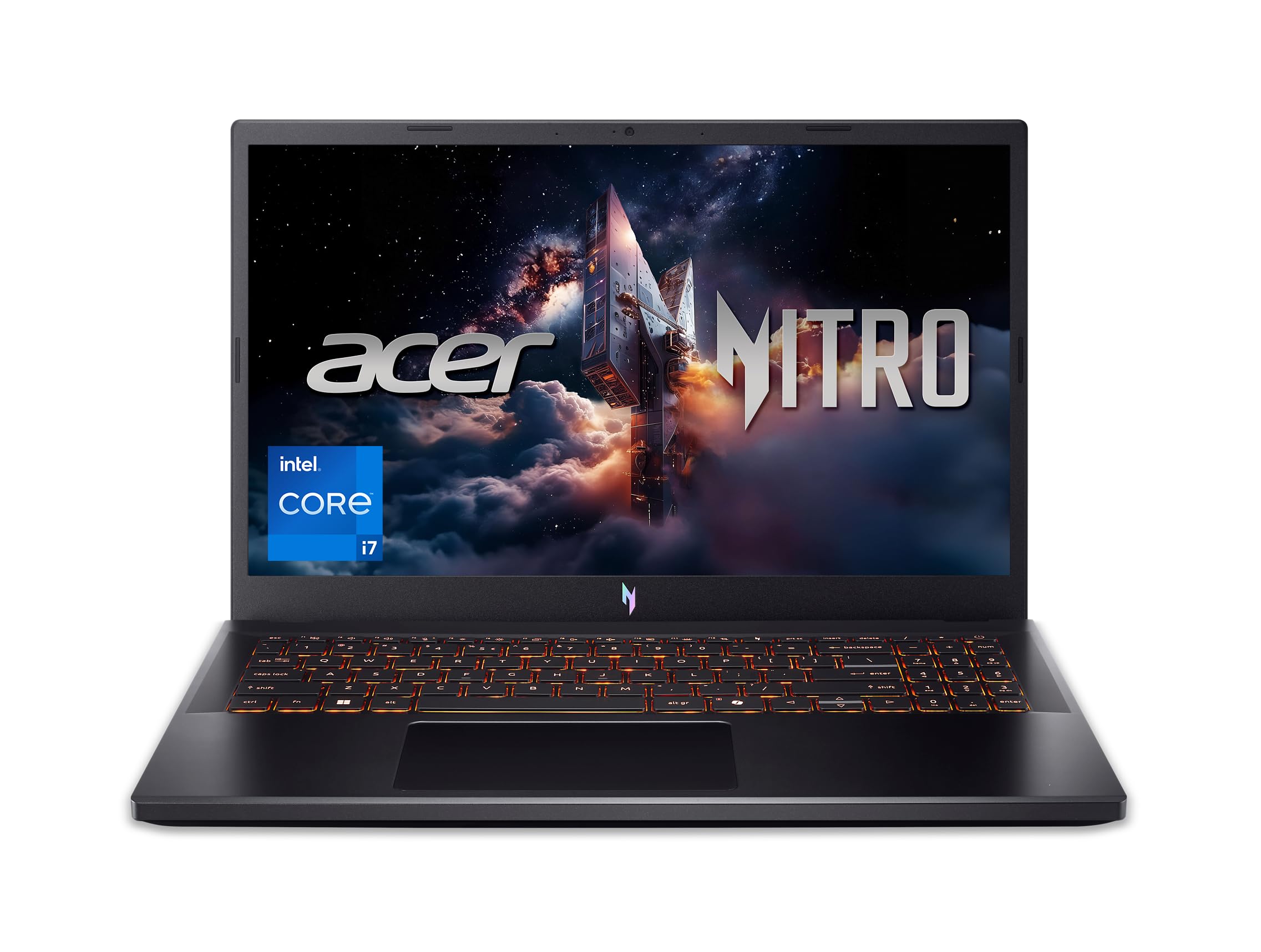
5. HP Victus 16 — Best Battery Life
Price: ~$869 | ASIN: B0C3QFHPW2
The HP Victus 16 prioritizes battery longevity in a category where most competitors last 2–3 hours under gaming load. With Ryzen 7 efficiency and HP’s power management tuning, the Victus 16 extends your unplugged window considerably — useful for LAN parties, travel, or working from a laptop between gaming sessions.
Specs
| Spec | Detail |
|---|---|
| GPU | RTX 4060 (up to 110W TGP) |
| CPU | AMD Ryzen 7 7745HS |
| Display | 16.1-inch 1080p IPS, 144Hz |
| RAM | 16GB DDR5 (2× SODIMM) |
| Storage | 512GB NVMe |
| Wi-Fi | Wi-Fi 6E |
| LAN | 1Gbps Ethernet |
| MUX Switch | No |
| Battery | 96Wh |
Pros and Cons
Pros
- 96Wh battery — largest in this roundup by a clear margin
- Ryzen 7 7745HS efficiency compounds battery advantage
- Competitive productivity performance unplugged
- 16.1-inch display gives more screen real estate
- 2× SODIMM slots for easy RAM upgrade
- Wi-Fi 6E included
Cons
- No MUX switch — competitive players lose 10–15% frames vs MUX-enabled rivals
- 1Gbps LAN only — not 2.5Gbps
- 110W TGP is mid-tier; the Helios Neo 16 outperforms under sustained load
- HP’s software suite can feel bloated out of the box
The Victus 16 is the pick if you split time between gaming and productivity use and spend meaningful time away from a charger. The 96Wh battery combined with Ryzen 7 efficiency translates to 8–10 hours of light productivity work, making it genuinely dual-purpose. Gaming unplugged, expect 2.5–3 hours — comparable to the rest of the field.
Final Comparison Table and Verdict
| Feature | ASUS TUF A15 | Legion 5 Gen 8 | MSI Katana 15 | Helios Neo 16 | HP Victus 16 |
|---|---|---|---|---|---|
| GPU TGP | 115W | 115W | 105W | 120W | 110W |
| Display | 1080p 144Hz | 1440p 165Hz | 1080p 144Hz | 1600p 165Hz | 1080p 144Hz |
| MUX Switch | Yes | Yes | No | Yes | No |
| 2.5Gbps LAN | Yes | Yes | No | Yes | No |
| Wi-Fi 6E | Yes | Yes | No | Yes | Yes |
| 2× SODIMM | Yes | Yes | Yes | Yes | Yes |
| Battery | 90Wh | 80Wh | 53.5Wh | 76Wh | 96Wh |
| Price | ~$899 | ~$879 | ~$799 | ~$899 | ~$869 |
Best Overall: ASUS TUF Gaming A15 — the most complete competitive gaming package under $900, with MUX switch, 2.5Gbps LAN, Wi-Fi 6E, a powerful CPU, and the largest battery outside the Victus.
Best Display: Lenovo Legion 5 Gen 8 — the 1440p 165Hz panel is a genuine upgrade for visual-experience gaming.
Best Budget RTX 4060: MSI Katana 15 — the right call if $799 is your ceiling and competitive features are secondary.
Best Cooling: Acer Predator Helios Neo 16 — sustained performance wins for streamers and power users.
Best Battery: HP Victus 16 — 96Wh makes it the only pick you can reasonably take off the charger for half a day.
Frequently Asked Questions
Is RTX 4060 good enough for gaming at $900?
Yes. The RTX 4060 in laptop form handles 1080p at high-to-ultra settings in most current titles at 60–100+ fps, and manages 1440p at medium settings comfortably. At $900 the GPU itself is not the limiting factor — thermal management and power limits determine whether you get the full potential of the chip. Picks with higher TGP ratings (115W–120W) and better cooling, like the TUF A15 and Helios Neo 16, deliver more of that potential in sustained sessions.
Should I prioritize 1080p 144Hz or 1440p for gaming?
For competitive multiplayer — first-person shooters, battle royale, MOBAs — 1080p 144Hz is better. The RTX 4060 can sustain high frame rates at 1080p, and lower resolution means more headroom for frame-rate-boosting settings. For RPGs, open-world games, and anything visually cinematic, 1440p is the more immersive choice. The Legion 5 Gen 8’s 1440p 165Hz panel is the standout at this price if you lean visual.
What is a MUX switch and do I need one?
A MUX switch lets the GPU render directly to the display without routing through the integrated graphics chip. This typically adds 10–15% frame rates in games without any other changes. For competitive gaming where every frame matters, it is worth seeking out. Of the five picks here, the TUF A15, Legion 5 Gen 8, and Helios Neo 16 all include a MUX switch. The Katana 15 and Victus 16 do not.
Can I upgrade the RAM in these laptops?
All five picks in this guide use 2× SODIMM slots, which means upgrading to 32GB is a straightforward and inexpensive process. DDR5 SO-DIMMs are widely available. If you run games alongside streaming software, a browser with many tabs, or creative applications, upgrading to 32GB is a worthwhile investment that extends the useful life of any of these machines significantly.
Related Articles
Looking for more on this topic? Browse the hand-picked guides below — each one applies the same scoring rubric used in this review.
Ready to decide? Our #1 pick for 2026 is the Laptop.
Live price & availability on Amazon.