As an Amazon Associate we earn from qualifying purchases
Most new gaming laptops now ship with a newer operating system, so a buyer who specifically needs Windows 10 has to shop differently. The search is no longer about finding the newest model. It is about finding a machine whose listing states Windows 10 clearly, whose graphics hardware still suits the games you play, and whose storage, memory, and ports match the way you already work.
Why Some Buyers Still Need Windows 10
Compatibility is the most common reason. Some older games, launchers, capture tools, audio interfaces, and work applications were built and licensed for Windows 10, and a studio, school, or small business may have a support process that still assumes that operating system. Moving a whole setup at once can mean retesting peripherals, drivers, and software that currently work without issue.
There is also familiarity. A player who has used Windows 10 for years already knows its settings menus, file locations, and troubleshooting steps. A third reason is control over timing: some buyers plan to change operating systems later, on their own schedule, after backups are complete and important software has been checked. Buying a laptop that arrives with Windows 10 keeps that decision in their hands. Be deliberate: read the operating system field on the listing, confirm the exact version named there, and do not assume a similar model name means the same software is installed.
How to Choose a Windows 10 Gaming Laptop
Start with the operating system line itself. Listings in this guide state the version in different ways, such as Windows 10, Windows 10 Home, or Windows 10 Home 64-bit, and the specs under each product below repeat the version exactly as its listing gives it. If a listing for a different configuration names a different system, treat that configuration as a different product, because the software is part of what you are buying.
Next, match the graphics card to your display and games. Every model here uses dedicated NVIDIA graphics, ranging from a GeForce GTX 1070 and GTX 1660 Ti to a GeForce RTX 2070 Max-Q. A 144Hz display suits fast-paced titles, while the 240Hz panel in one pick below is aimed at players who prioritise the fastest screen in this group.
Processor and memory come after that. The laptops here use six-core Intel Core i7 processors from the eighth, ninth, and tenth generations, paired with 16GB of memory, which covers gaming alongside voice chat, a browser, and recording tools. Check the maximum memory figure where a listing states one, because an upgrade path can extend the life of the machine. Storage is solid-state across this list, and where a listing mentions a spare slot or an available drive bay, that detail is noted in the specs.
Finally, check ports, size, and warranty. A 17.3-inch laptop gives you a larger screen and often more ports, but takes more desk and bag space than a 15.6-inch model. Count the USB ports, confirm whether you get HDMI, Mini DisplayPort, Thunderbolt, or wired Ethernet, and read the warranty description as the listing states it. For a broader view of the market, our roundup of the best Windows gaming laptops covers the wider category in more detail.
The five picks fall into clear groups: two Acer Predator Helios 300 models in different screen sizes, two ASUS ROG models, and a compact Razer Blade 15 with Thunderbolt 3. All five state Windows 10 in their listings, and each section is explicit about the version named.
ASUS ROG Zephyrus M15 Gaming Laptop

The Zephyrus M15 is the high-refresh option here. Its listing describes a 15.6-inch Full HD IPS-Level panel at 240Hz with a 3ms response time, 100 percent sRGB coverage, and Pantone validation, for a player who cares about both speed and colour accuracy. At 4.4 pounds it is also the lightest pick in this group.
Inside, a tenth-generation Intel Core i7-10750H pairs with an NVIDIA GeForce RTX 2070 Max-Q and 8GB of GDDR6 graphics memory. Storage is a 1TB PCIe SSD, and the listing gives a maximum memory size of 48GB. On software, be precise: the product information field lists the operating system as Windows 10, and the product description states Windows 10 Home 64-bit. Connectivity includes Wi-Fi 6, Bluetooth 5.0, and wired Ethernet.
Specs
- CPU: Intel Core i7-10750H, 6 cores, 2.6 GHz up to 5.0 GHz
- GPU: NVIDIA GeForce RTX 2070 Max-Q, 8GB GDDR6
- Display: 15.6-inch Full HD 1920 x 1080 IPS-Level, 240Hz, 3ms, 100% sRGB, Pantone Validated
- RAM / SSD: 16GB DDR4 3200MHz / 1TB PCIe SSD
- Ports: 1 x USB 3.1 Type-C, 3 x USB 3.1 Type-A, 1 x HDMI, 1 x headphone jack, 1 x RJ-45 Ethernet
- Operating system: Windows 10 Home 64-bit, listed in product information as Windows 10
- Upgrade options: Maximum RAM size of 48GB stated in the listing
Razer Blade 15 Gaming Laptop

The Razer Blade 15 is the compact choice. Razer describes a chassis milled from a single block of aluminium, about 0.70 inches thin, with a factory calibrated 15.6-inch Full HD display at 144Hz, per-key RGB lighting, vapor chamber cooling, and a webcam with an infrared sensor.
An eighth-generation Intel Core i7-8750H pairs with an NVIDIA GeForce RTX 2070 Max-Q, 16GB of dual-channel memory, and a 512GB SSD. The manufacturer section states memory can be expanded up to 64GB and storage up to 2TB, making this the most clearly upgradeable of the slimmer models here. The operating system field is unambiguous: Windows 10 Home, with the same version in the included software field. Thunderbolt 3 is the headline connection, and the warranty description is one year.
Specs
- CPU: Intel Core i7-8750H, 6 cores, up to 4.1 GHz
- GPU: NVIDIA GeForce RTX 2070 Max-Q
- Display: 15.6-inch Full HD 1920 x 1080, 144Hz
- RAM / SSD: 16GB dual-channel DDR4 / 512GB SSD
- Ports: Thunderbolt 3, 3 x USB ports in total, 1 x HDMI
- Operating system: Windows 10 Home
- Warranty: 1 year, as stated in the listing warranty description
- Upgrade options: Memory expandable up to 64GB and storage up to 2TB, as stated in the manufacturer description
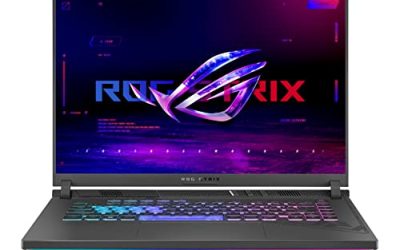
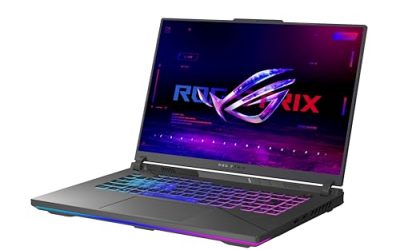
ASUS ROG Strix Scar Edition GL703GS-DS74

The Strix Scar Edition is the large-screen, older flagship option. A 17.3-inch Full HD panel at 144Hz with a 3ms response time gives fast-paced games more room than any 15.6-inch display here, and the listing highlights an Aura Sync RGB keyboard and 12V fans. At 6.5 pounds it is a desk-first desktop replacement rather than a daily carry.
An Intel Core i7-8750H works with an NVIDIA GeForce GTX 1070 with 8GB of GDDR5 graphics memory, so this is a GTX-era laptop rather than an RTX model. Storage combines a 256GB PCIe SSD with a 1TB FireCuda hybrid drive for a larger library. The operating system field states Windows 10 Home, and the included software field adds Windows 10 (64bit), so the version evidence is consistent in two places. Its warranty description names one year of international coverage with accidental damage protection terms.
Specs
- CPU: Intel Core i7-8750H, 6 cores, 2.2 GHz up to 3.9 GHz
- GPU: NVIDIA GeForce GTX 1070, 8GB GDDR5
- Display: 17.3-inch Full HD 1920 x 1080, 144Hz, 3ms
- RAM / SSD: 16GB DDR4 2666MHz / 256GB PCIe SSD plus 1TB FireCuda hybrid drive
- Ports: 5 x USB ports in total, 1 x HDMI, 1 x Ethernet, DisplayPort and Thunderbolt among the listed interfaces
- Operating system: Windows 10 Home
- Warranty: 1 year international warranty description stated in the listing, including accidental damage protection terms
Acer Predator Helios 300 PH317-53-7777, 17.3-inch

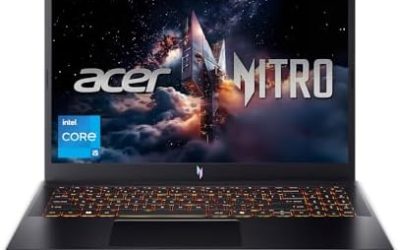
This Helios 300 is the 17.3-inch model in the Acer pair. The listing describes a Full HD IPS display at 144Hz with a 3ms overdrive response time and 300 nits of brightness, driven by an NVIDIA GeForce GTX 1660 Ti with 6GB of GDDR6 memory, plus fourth-generation AeroBlade 3D fans, a four-zone RGB keyboard, and PredatorSense software.
A ninth-generation Intel Core i7-9750H runs up to 4.5GHz, with 16GB of DDR4 and a 512GB PCIe NVMe SSD. The description adds expansion detail: two PCIe M.2 slots with one available, plus one available hard drive bay. On the operating system, the product information field lists Windows 10, and the included software field names Windows 10 Home — the two fields give the version at different levels of detail. The warranty description names a one-year International Travelers Limited Warranty.
Specs
- CPU: Intel Core i7-9750H, 6 cores, 2.6 GHz up to 4.5 GHz
- GPU: NVIDIA GeForce GTX 1660 Ti, 6GB GDDR6
- Display: 17.3-inch Full HD 1920 x 1080 IPS, 144Hz, 3ms, 300 nits
- RAM / SSD: 16GB DDR4 2666MHz / 512GB PCIe NVMe SSD
- Ports: 1 x USB 3.1 Type-C Gen 2, 2 x USB 3.1 Gen 1, 1 x USB 3.1 Gen 2, 1 x HDMI 2.0, 1 x Mini DisplayPort 1.4, Ethernet
- Operating system: Windows 10, with Windows 10 Home named in the included software field
- Warranty: One-year International Travelers Limited Warranty, as stated in the listing
- Upgrade options: One available PCIe M.2 slot and one available hard drive bay, as stated in the product description
Acer Predator Helios 300 PH315-52-710B, 15.6-inch

The smaller Helios 300 keeps the same core recipe in a 15.6-inch body: the same Intel Core i7-9750H and NVIDIA GeForce GTX 1660 Ti with 6GB of GDDR6, but a 15.6-inch Full HD IPS panel, still at 144Hz with a 3ms response time and 300 nits. At about 5.07 pounds for the system unit, it is the easier Acer to carry.
Memory and storage match the larger model, with the same expansion note and a stated maximum memory size of 32GB. This listing also gives the clearest operating system wording of the pair: the field states Windows 10 Home directly, repeated in the included software field. Choose it over the 17.3-inch model if portability matters more than screen size.
Specs
- CPU: Intel Core i7-9750H, 6 cores, 2.6 GHz up to 4.5 GHz
- GPU: NVIDIA GeForce GTX 1660 Ti, 6GB GDDR6
- Display: 15.6-inch Full HD 1920 x 1080 IPS, 144Hz, 3ms, 300 nits
- RAM / SSD: 16GB DDR4 2666MHz / 512GB PCIe NVMe SSD
- Ports: 1 x USB 3.1 Type-C Gen 2, 3 x USB 3.1 Gen 1, 1 x HDMI 2.0, 1 x Mini DisplayPort 1.4, Ethernet
- Operating system: Windows 10 Home
- Warranty: One-year International Travelers Limited Warranty, as stated in the listing
- Upgrade options: One available PCIe M.2 slot and one available hard drive bay stated in the description; maximum RAM size of 32GB stated in the listing
Frequently Asked Questions
Why buy a Windows 10 gaming laptop instead of a newer model?
Buy one when your games, peripherals, or work software are set up and supported on Windows 10, or when you want to change operating systems later on your own schedule. The value is compatibility and familiarity on day one. Always confirm the listing you order states Windows 10, because a similar model name can be sold with different software.
How do I verify the operating system version before ordering?
Read the operating system field in the product information, then check any included software or description line for a fuller version name. Each specs list here repeats the version exactly as its listing gives it, whether that is Windows 10, Windows 10 Home, or Windows 10 Home 64-bit. If the field names a different system, that configuration does not meet a Windows 10 requirement.
Are GTX graphics cards still worth considering for gaming?
They can be, depending on the games and settings you have in mind. The GTX 1070 and GTX 1660 Ti models here use dedicated graphics with 8GB and 6GB of memory respectively, paired with 144Hz Full HD panels, while the RTX 2070 Max-Q models add the newer RTX generation. Match the card to your library and display, and check each game’s own system requirements.
Can these laptops be upgraded later?
Some listings state upgrade details and some do not, so rely only on what the listing says. The Razer description states memory expansion up to 64GB and storage up to 2TB, the Zephyrus M15 listing gives a maximum memory size of 48GB, and both Acer descriptions state an available M.2 slot and an available hard drive bay. Where a listing gives no upgrade figure, this guide does not claim one.
Conclusion
Pick the Zephyrus M15 for the fastest panel and the largest single SSD, the Razer Blade 15 for a compact aluminium build with Thunderbolt 3, or the Strix Scar Edition for the largest screen and broadest port count. Choose between the two Helios 300 models by size: 17.3-inch for a desk, 15.6-inch for an easier carry. Whichever you choose, recheck the operating system field before you order, so the machine that arrives is the Windows 10 machine you set out to buy.