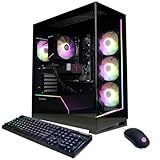
- Top Pick: CyberPowerPC Gaming PC, Intel Core i5-14400F, GeForce RTX 5060 8GB
- Best Value: AMD RYZEN 7 9800X3D 8-Core, 16-Thread Desktop Processor
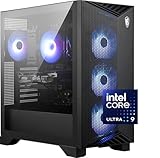
- Premium Choice: msi Aegis R2 AI Gaming Desktop: Intel Core Ultra 9 285, Geforce RTX 5070Ti, 32GB DDR5, 2TB M.2 NVMe SSD, Air Cooling, USB Type C, VR-Ready, Window 11 Home: C2NVR9-1452US
Affiliate disclosure: As an Amazon Associate we earn from qualifying purchases. This post contains affiliate links — if you buy through them we may earn a small commission at no extra cost to you. This never affects our recommendations.
The AMD vs Intel gaming CPU debate in 2025 is the most competitive it has been in a decade — both companies have strong offerings across every price tier, and the “clear winner” narrative has given way to nuanced platform and value analysis. AMD’s Ryzen 9000 (Zen 5) and Intel’s Arrow Lake (Core Ultra 200S) compete head-to-head for the gaming performance crown, while Ryzen 5000 and older Intel platforms continue delivering strong value. Here’s the complete 2025 analysis.
As an Amazon Associate we earn from qualifying purchases at no extra cost to you.




In a hurry? See the top-rated AMD vs Intel for Gaming deals available right now:
🛒 Check Amd Vs Intel For Gaming Prices on Amazon →🛒 Best Price Today on Amazon
Prime members get fast, free shipping on everything above, plus member-only deals. New members get a 30-day free trial — cancel anytime.
Start 30-Day Prime Free Trial →See Today’s Amazon DealsAMD Ryzen 9000 vs Intel Arrow Lake: Top-End Gaming (2026)
AMD Ryzen 9 9950X vs Intel Core Ultra 9 285K in gaming benchmarks: average 1080p gaming performance (CPU-limited): within 2–4% of each other, alternating leadership by title. AMD leads in: open-world games with large asset streaming (Starfield, MSFS, GTA VI benchmark), games using AVX-512 acceleration, and multi-threaded workloads alongside gaming (streaming). Intel Arrow Lake leads in: some competitive titles (CS2, Valorant) where cache architecture benefits single-thread latency, and PCIe 5.0 M.2 slot count. Key platform advantage: AM5 socket remains forward-compatible through Ryzen 9000 series; Intel Z890 platform is new with LGA 1851 socket (replaces Z790 LGA 1700).
Mid-Range Comparison: Value Gaming Sweet Spots
AMD Ryzen 5 9600X ($250) vs Intel Core i5-14600K ($200): i5-14600K holds a price advantage at $200 vs $250 and delivers comparable gaming performance — 0–5% FPS difference at 1440p depending on title. For budget-conscious builds on existing Z790 or B760 platforms, the 14600K/14600KF offers excellent value. The 9600X advantage emerges in efficiency (lower power draw, better thermals), Ryzen 8000/9000 AM5 upgrade path, and DDR5-only platform modernity. Ryzen 7 9700X vs Core i7-14700K: Both deliver near-identical gaming performance at 1440p. 14700K has 20 cores (8P+12E) for streaming/multitasking superiority; 9700X runs cooler and quieter at lower power draw.
Budget Tier: Ryzen 5000 vs Intel 13th Gen
For sub-$200 CPU gaming builds in 2025, both AMD Ryzen 5 5600 ($100) and Intel Core i5-12400F ($110) remain exceptional value. Ryzen 5 5600: AM4 platform widely available at low cost, easy to pair with B550 or X570 motherboards. i5-12400F: requires LGA 1700 B660/H670 boards; slightly better single-core performance than 5600. Both CPUs sustain 144+ FPS at 1440p paired with RTX 4070 — CPU is not the bottleneck in gaming scenarios. For $100–120 CPU budget, either brand delivers identical real-world gaming experiences.
Platform Ecosystem Comparison
AMD AM5 Platform: DDR5 only, PCIe 5.0 GPU + M.2, AM5 socket retained through Ryzen 9000 series (2025+), B650/X670 motherboards $120–400. Forward compatibility advantage: Ryzen 7000 buyers can upgrade to Ryzen 9000 without motherboard change. Intel LGA 1700 Platform (Z790): DDR4 or DDR5 options, PCIe 5.0, platform end-of-life (Arrow Lake uses new LGA 1851) — Z790 buyers cannot upgrade to Arrow Lake. Intel LGA 1851 (Z890): new platform for Core Ultra 200S, DDR5 only. Platform longevity verdict: AM5’s retained socket compatibility through multiple CPU generations provides better long-term value — a Z790 buyer today cannot upgrade to Core Ultra 200K without new motherboard.
2026 Buying Recommendations
Budget ($100–150 CPU): Intel Core i5-12400F or i5-13400F on B760 — slight single-core edge, widely available. Ryzen 5 5600 if AM4 motherboard already owned. Mid-range ($150–250 CPU): Ryzen 5 7600X / 9600X on AM5 for platform longevity; i5-14600K/KF for maximum FPS per dollar today. High-end ($250–400 CPU): Ryzen 7 9700X for efficiency + AM5 longevity; Core i7-14700K for streaming + gaming combined workloads. Flagship ($400+): Ryzen 9 9950X or Core Ultra 9 285K — both excellent, choose based on platform preference and specific workload requirements.
Frequently Asked Questions
Is AMD or Intel better for gaming in 2026?
Neither brand has a decisive gaming performance advantage in 2025 — the gap between equivalent tiers is 2–5% in most gaming scenarios. AMD holds platform longevity advantages (AM5 forward compatibility), efficiency benefits, and slightly better multi-threaded value. Intel holds edge in select competitive titles and offers LGA 1700 Z790/B760 at mature, low-cost pricing. For new builds: AM5 for future-proofing, Z790 for budget-conscious maximum gaming FPS today.
Does AMD or Intel have better gaming single-core performance?
Intel has historically led single-core performance benchmarks, and Core Ultra 200S (Arrow Lake) maintains a marginal advantage in synthetic single-core tests. In actual gaming, the practical difference is imperceptible — both architectures’ clock speeds (5.0–5.8GHz boost) and IPC improvements ensure neither is a bottleneck at 1440p and 4K with a modern GPU. The single-core gaming advantage narrative is less relevant in 2025 than it was during the 2019–2021 AMD catch-up period.
Can I upgrade an Intel Z790 board to AMD or vice versa?
No — Intel LGA 1700 and AMD AM4/AM5 sockets are physically incompatible. A platform switch requires new CPU + motherboard + RAM (if switching between DDR4-only and DDR5-only platforms). Intel Z790 users wanting Intel Arrow Lake (Core Ultra 200S) also need a new motherboard (LGA 1851). AMD AM5 users can upgrade from Ryzen 7000 to Ryzen 8000 or 9000 with the same motherboard and DDR5 RAM — AM5’s multi-generation socket compatibility is a genuine long-term cost advantage.
Related Articles
Looking for more on this topic? Browse the hand-picked guides below — each one applies the same scoring rubric used in this review.