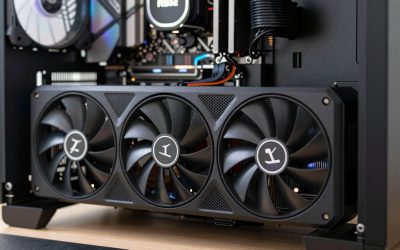
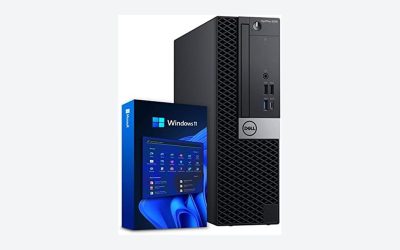
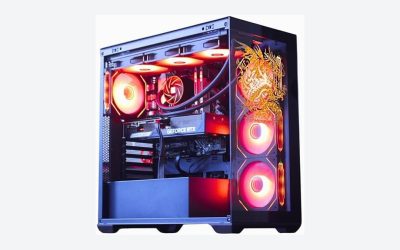
- Top Pick: STGAubron Gaming PC Desktop,Core I7,RTX 2060 6G,32G RAM,2TB SSD
- Best Value: CyberPowerPC Gaming PC, Intel Core i5-14400F, GeForce RTX 5060 8GB
- Premium Choice: CyberpowerPC Gamer Xtreme VR Gaming PC, Intel Core Ultra 5 225F, GeForce RTX 5060 8GB, 32GB DDR5, 2TB PCIe 4.0 SSD, WiFi Ready & Windows 11 Home
Affiliate disclosure: As an Amazon Associate we earn from qualifying purchases. This post contains affiliate links — if you buy through them we may earn a small commission at no extra cost to you. This never affects our recommendations.
The gaming PC vs console debate in 2025 has new dimensions: PlayStation 5 and Xbox Series X/S offer 4K gaming with enhanced performance modes, while PC gaming delivers higher frame rates, better visual fidelity, and unprecedented customization. Neither platform is universally superior — the right choice depends on your priorities, budget, gaming habits, and living situation. This guide provides honest analysis of both platforms to help you make the informed decision.
As an Amazon Associate we earn from qualifying purchases at no extra cost to you.




In a hurry? See the top-rated Gaming PC vs Console deals available right now:
🛒 Check Gaming Pc Vs Console Prices on Amazon →🛒 Best Price Today on Amazon
Prime members get fast, free shipping on everything above, plus member-only deals. New members get a 30-day free trial — cancel anytime.
Start 30-Day Prime Free Trial →See Today’s Amazon DealsPerformance Comparison
Frame Rate and Resolution
Gaming PCs with mid-range to high-end GPUs achieve 1440p at 144+ FPS and 4K at 60–120 FPS depending on game optimization. PS5 and Xbox Series X target 4K/60FPS with select titles hitting 120FPS in performance modes. High-end gaming PCs fundamentally outperform current-gen consoles in frame rate headroom — 240Hz competitive gaming is impossible on consoles. For 60FPS gaming at 1080p or 4K, the performance gap is smaller but PC retains advantages in visual settings (ray tracing quality, texture resolution) that console performance modes sacrifice.
Load Times
PS5’s custom SSD architecture loads games extremely quickly — the SSD speed advantage that PC held over PS4 is largely neutralized on PS5. Xbox Series X similarly uses fast NVMe storage. High-end PC NVMe drives (PCIe 5.0, 12,000+ MB/s) technically exceed console storage speeds, but real-world loading difference is marginal in most titles.
Cost Analysis
Upfront Cost
PS5 Disc: $499. Xbox Series X: $499. PC equivalent to console performance: $700–900 (including monitor). High-end gaming PC matching best console visual quality at PC frame rates: $1,200–1,500. The initial cost advantage favors consoles for equivalent visual quality gaming; PCs cost more upfront for equivalent or better performance.
Long-Term Cost Comparison
PlayStation Plus subscription: $80/year for online multiplayer + monthly games. Xbox Game Pass Ultimate: $180/year (includes 100+ game library). PC has no mandatory online subscription fee — Steam multiplayer is free. However, PC games rarely drop to $10 first-party prices; console exclusive titles hit $10–20 on PlayStation/Xbox sales within 1–2 years. Over 5 years, console subscription costs add $400–900 depending on services chosen. PC gaming’s free multiplayer and frequent Steam sales reduce long-term game spending for active players.
Game Library Comparison
Console Exclusives
PlayStation exclusives (God of War, Spider-Man, Horizon, The Last of Us) represent some of gaming’s highest-quality single-player experiences. Many PS5 exclusives eventually come to PC (1–3 year delay), but PlayStation VR2 experiences remain console-exclusive. Xbox exclusives launch day-and-date on PC via Game Pass — Xbox has no true platform exclusives versus PC. Nintendo Switch exclusives (Zelda, Mario, Pokémon) require Switch hardware entirely.
PC Gaming Library Advantages
PC gaming library vastly exceeds any console: Steam’s 50,000+ game catalog includes classic titles from the 1990s–2000s inaccessible on modern consoles, indie games that never reach console storefronts, and PC-only genres (strategy, simulation, MOBAs, traditional RTS). PC also supports emulation of older console libraries, effectively adding every classic platform’s game catalog to the PC library.
Convenience and Use Case
Console Advantages
Consoles win on setup simplicity and living room ergonomics. Plug into TV, create account, download games — gaming in 15 minutes. No driver updates, hardware compatibility research, or build complexity. Couch gaming from a distance is native console territory. Shared family systems are simpler on consoles. Game compatibility is guaranteed — every PS5 game works on every PS5.
PC Advantages
PC is the only gaming platform that doubles as a full productivity workstation — work, content creation, streaming, and gaming on one machine. Keyboard and mouse input provides precision advantages for FPS and strategy games. Upgradeable hardware extends the platform’s lifespan beyond fixed console generations. VR gaming with PC is significantly more capable than console VR due to processing power.
Frequently Asked Questions
Is PC gaming worth the extra cost over console?
For competitive FPS gamers: yes — mouse precision and high refresh rate advantages are substantial and unavailable on console. For single-player gaming enthusiasts: debatable — console exclusives provide content unavailable on PC, and the cost premium may not justify the visual improvement for 60FPS single-player gaming. For those who need PC for work anyway: yes — the incremental cost of gaming capability on a PC you already need is lower than buying a separate console.
Can you use a controller on a gaming PC?
Yes — Xbox controllers work natively via USB/Bluetooth on Windows. PS5 DualSense works via USB or Bluetooth with Steam native support and full haptic functionality. Most PC games support both keyboard/mouse and controller input, letting you choose the input method per game type. Playing action games with controller while switching to keyboard/mouse for strategy games is a genuine PC advantage over consoles’ single input paradigm.
Is PC gaming dying in favor of consoles?
No — PC gaming revenue consistently exceeds console gaming revenue globally. Steam’s active user base exceeds 30 million daily active users. The PC platform’s advantages in frame rate, visual quality, game library size, and free online play continue attracting new users. Handheld PC gaming (Steam Deck, ROG Ally) has opened a new market that bridges PC gaming and console portability, expanding rather than constraining the PC gaming ecosystem.
Related Articles
Looking for more on this topic? Browse the hand-picked guides below — each one applies the same scoring rubric used in this review.