- Top Pick: TEAMGROUP T-Force Delta RGB DDR5 Ram 32GB (2x16GB) 6000MHz PC5-48000 CL38 Intel XMP 3.0 & AMD Expo Compatible Desktop Memory Module Ram White FF4D532G6000HC38ADC01
- Best Value: Silicon Power Value Gaming DDR4 RAM 16GB (2x8GB) 3200MHz (PC4 25600) 288-pin CL16 1.35V UDIMM Desktop Memory Module with Heatsink Grey SU016GXLZU320BDAJ5
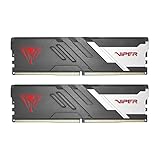
- Premium Choice: Silicon Power Value Gaming DDR5 64GB (2x32GB) 6000MT/s (PC5-48000) 288-pin CL30 1.35V UDIMM Desktop RAM Computer Memory w/Heatsink SU064GXLWU60AFDJAB
Affiliate disclosure: As an Amazon Associate we earn from qualifying purchases. This post contains affiliate links — if you buy through them we may earn a small commission at no extra cost to you. This never affects our recommendations.
DDR4 vs DDR5 for gaming is one of the most common questions for PC builders in 2025 — and the answer depends heavily on your platform choice, budget, and whether raw gaming performance or future-proofing matters most. Both memory generations are actively used in 2025 gaming builds, and the performance gap between them in games is smaller than marketing suggests. Here’s the complete DDR4 vs DDR5 gaming analysis.
As an Amazon Associate we earn from qualifying purchases at no extra cost to you.




In a hurry? See the top-rated DDR4 vs DDR5 for Gaming deals available right now:
🛒 Check Ddr4 Vs Ddr5 For Gaming Prices on Amazon →🛒 Best Price Today on Amazon
Prime members get fast, free shipping on everything above, plus member-only deals. New members get a 30-day free trial — cancel anytime.
Start 30-Day Prime Free Trial →See Today’s Amazon DealsDDR4 vs DDR5: Core Specifications Compared
DDR4 launched in 2014 and remains the standard for Intel 12th/13th/14th gen LGA 1700 and AMD AM4 platforms. Typical DDR4 gaming speeds: 3200–3600 MHz CL16–18, with 32GB kits costing $45–70. DDR5 launched in 2021 and is required for Intel 12th gen on Z690+, AMD Ryzen 7000 AM5, and Intel Core Ultra (Meteor Lake) platforms. Typical DDR5 gaming speeds: 5600–6400 MHz CL36–40, with 32GB kits costing $75–120. DDR5 offers higher bandwidth, lower per-module power draw (1.1V vs 1.35V DDR4), and native ECC on-die — but early DDR5 latencies were poor, a disadvantage that kit tuning has largely closed at 6000 MHz C30 speeds.
Gaming Benchmarks: DDR4 vs DDR5 Real-World Differences
In real gaming benchmarks (1080p CPU-limited scenarios), DDR5-6000 vs DDR4-3600: average FPS difference is 2–8% depending on title. Games most sensitive to memory bandwidth (open-world, streaming, large asset games): Starfield, Hogwarts Legacy, Microsoft Flight Simulator show 5–12% improvement on DDR5. Competitive titles (CS2, Valorant, CoD): 1–4% difference, within noise floor. At 1440p and 4K, GPU becomes the bottleneck — memory generation differences shrink to under 2% in typical gaming scenarios. Conclusion: DDR5 provides a measurable but not dramatic gaming performance advantage; the gains are larger in productivity workloads (20–35% in memory bandwidth-sensitive applications).
Platform Matters More Than Memory Generation
AMD AM4 (Ryzen 3000/5000): DDR4 only — no DDR5 option exists. Maximum DDR4-3800 for Infinity Fabric 1:1 ratio. Intel LGA 1700 (12th/13th/14th gen): DDR4 OR DDR5 selectable by motherboard — Z690/Z790 boards come in DDR4 and DDR5 variants at similar price. Choose DDR5 Z790 for new builds. AMD AM5 (Ryzen 7000/8000/9000): DDR5 only. Optimal speed: DDR5-6000 CL30 for Infinity Fabric 1:1 ratio — a known sweet spot confirmed by AMD. Intel Core Ultra (Arrow Lake): DDR5 only. Optimal: DDR5-6400+ with XMP/EXPO profile.
DDR4 vs DDR5: Cost Analysis 2026
The DDR5 premium over DDR4 has collapsed significantly since 2021. In 2022, DDR5 32GB kits cost $200+ vs $60 for DDR4. In 2025, DDR5 32GB 5600MHz kits are $75–90, while DDR4 32GB 3600MHz kits are $45–65. The premium is now $25–40 for a 32GB kit — marginal when building a $600–2000 system. For new builds on AM5 or Z790, the platform dictates your choice; the incremental cost is no longer a meaningful deterrent.
Which to Choose in 2026
If building new on AM5 or Z790 DDR5 platform: choose DDR5-6000 CL30 for AMD AM5 — this is the confirmed optimal configuration. For Intel Z790 DDR5: DDR5-5600 to 6400 with XMP profile. If upgrading an existing DDR4 platform: don’t switch for gaming — the performance gain doesn’t justify a platform/RAM replacement cost. If choosing between DDR4 and DDR5 Z790 boards: DDR5 at current prices for new builds, every time — same cost, better future-proofing, better bandwidth for future CPU generations.
Frequently Asked Questions
Is DDR5 worth it for gaming in 2026?
For new builds on compatible platforms (AM5, Z790 DDR5), yes — the price premium is now $25–40 for a 32GB kit, which is negligible in a $800+ build. The actual gaming performance benefit is modest (2–8%), but the platform future-proofing and productivity application gains justify the small premium. For upgrading an existing DDR4 system, the cost/benefit ratio doesn’t support a wholesale platform change just for DDR5.
What DDR5 speed is best for AMD AM5 gaming?
DDR5-6000 CL30 is the community-validated sweet spot for AMD Ryzen 7000/9000 AM5 platforms. This speed maintains 1:1 Infinity Fabric ratio (3000 MHz FCLK = 6000 MHz data rate), maximizing cache-to-memory bandwidth efficiency. DDR5-6400 and above requires 2:1 ratio on Ryzen 7000, which reduces Infinity Fabric efficiency and can hurt latency-sensitive workloads. For Ryzen 9000 (Zen 5), FCLK ceiling increases — DDR5-6400 CL32 may hit the new sweet spot.
Can I use DDR4 in an AM5 motherboard?
No — AMD AM5 is DDR5-only. The socket does not support DDR4 modules. If you want DDR4, you must use an AM4 platform (Ryzen 5000 series). Similarly, DDR5 Z790 motherboards cannot use DDR4 — the boards are hardware-differentiated at the DIMM slot level. DDR4 and DDR5 slots are physically keyed differently to prevent accidental insertion.
Related Articles
Looking for more on this topic? Browse the hand-picked guides below — each one applies the same scoring rubric used in this review.